  |
|
| Titles | Pokémon Super Mystery Dungeon ポケモン超不思議のダンジョン (Pokémon Chō Fushigi no Dungeon) |
| Platform | Nintendo 3DS (Game Card and Nintendo eShop download; StreetPass) |
| Developer | Spike Chunsoft |
| Publisher | Nintendo (The Pokémon Company in Japan) |
| Directors | Seiichiro Nagahata · Hironori Ishigami |
| Producers | Koichi Nakamura · Takato Utsunomiya · Kunimi Kawamura · Hitoshi Yamagami |
| Music | Keisuke Ito · Yasuhiro Kawagoe · Noriko Murakami |
| Players | Single player (rescues, Wonder Mail and StreetPass) |
| Genre | Roguelike dungeon crawler |
| Pokémon | 720 from Generations I–VI, Bulbasaur to Hoopa – every one can join the team |
| Heroes | 20 to choose from; the partner comes from the other 19 |
| Released | 17 September 2015 (Japan, Hong Kong, Taiwan) · 20 November 2015 (North America) · 19 February 2016 (Europe) · 20 February 2016 (Australia, New Zealand) |
| Re-releases | None (Nintendo eShop sales ended 27 March 2023) |
| Rating | ESRB E · PEGI 7 · CERO A · ACB G |
| Predecessor | Pokémon Mystery Dungeon: Gates to Infinity (Nintendo 3DS, 2012) |
| Successor | Pokémon Mystery Dungeon: Rescue Team DX (Nintendo Switch, 2020) – a remake of the first games |
| Sales | 1.22 million by March 2016 (Nintendo) · 332,975 in Japan by January 2021 |
Overview
 Released on Nintendo 3DS, Pokémon Super Mystery Dungeon is a roguelike and dungeon-crawling game, and the tenth Pokémon Mystery Dungeon game to be released in Japan – the seventh elsewhere, as the three WiiWare Adventure Squad games never left Japan. The game showcases 720 Pokémon, every species up to the sixth generation’s Hoopa (only Volcanion is missing), with 3D models and animations.
It marks the return of some features, such as the Hunger feature (the Belly), making dungeons far more challenging. The game also includes many new features, such as Mega Evolution and the Alliance attacks.
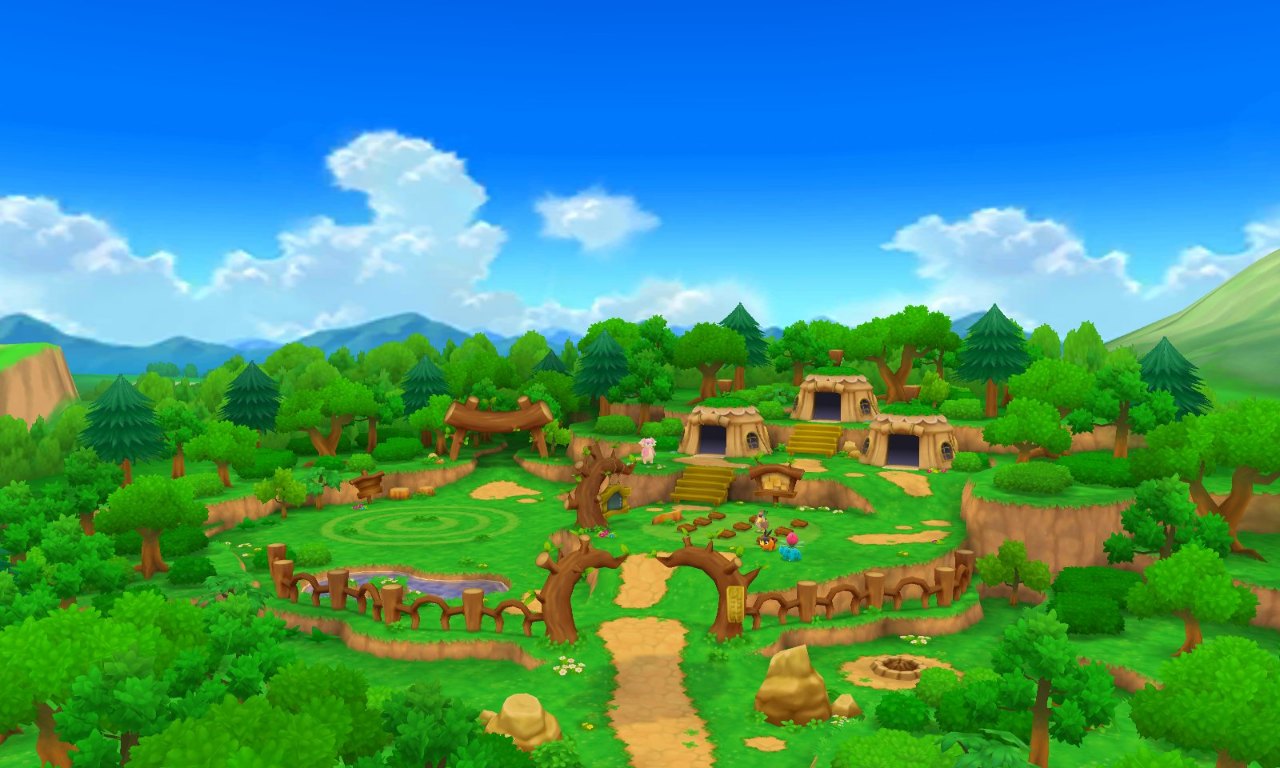
Several continents with their respective dungeons are now available, giving the player wider areas for exploration. The game’s plot is similar to those of all the Pokémon Mystery Dungeon games, with the player transforming from a human into a Pokémon and being transported to the Pokémon world, which they will have to save.
The Definitive Pokémon Mystery Dungeon Game!
Become a Pokémon, go on adventures, and save the world!
- All 720 species of Pokémon!
- An unknown peril in the world of Pokémon?
- Battle your way through dangerous dungeons!
— Official description
Quick Answers
The questions people ask about Pokémon Super Mystery Dungeon, answered first and explained further down the page.
How many Pokémon are in Pokémon Super Mystery Dungeon?
720 species: every Pokémon from Bulbasaur to Hoopa, which was the whole roster known when the game was made. Volcanion is the only Generation VI Pokémon missing. All 720 can be connected to your team through the Connection Orb, the biggest playable roster of any Mystery Dungeon game to date. More →
How do you recruit Pokémon in Super Mystery Dungeon?
Beating a Pokémon no longer makes it join you. Instead Pokémon ‘connect’ with you, mostly when you finish the requests (Expeditions) they post in the Connection Orb. Others connect when you talk to them, during story scenes, or as a knock-on from another connection, and travelling, fainted or fleeing Pokémon met in dungeons can connect too. More →
Who can you play as, and can you choose your partner?
You can be any of 20 Pokémon: the 18 first partners from Generations I to VI plus Pikachu and Riolu. A personality quiz suggests one, but you can turn its pick down and choose for yourself. Your partner is then picked from the remaining 19, using either the quiz or a straight choice. More →
Does Pokémon Super Mystery Dungeon have multiplayer?
No. The adventure is single-player only, with no co-op mode. Other players could help in smaller ways: rescuing a fainted team through Pelipper Island’s rescue requests and Wonder Mail, swapping helper Pokémon over StreetPass and, until August 2017, sharing Meowth Theater films online. More →
Can you still buy Pokémon Super Mystery Dungeon, and is it on Switch?
Only second-hand or as a redownload. The 3DS eShop stopped selling games on 27 March 2023, though past buyers can still download it again. It has never been ported to Switch or added to Nintendo Switch Online; the nearest Switch option is Pokémon Mystery Dungeon: Rescue Team DX, a remake of the first game. More →
How do you Mega Evolve in Super Mystery Dungeon?
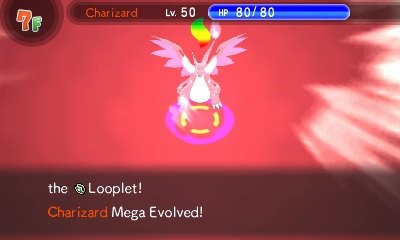
Through Looplets. Find an Awakening Emera, the rainbow-coloured one, in a dungeon and set it in the Looplet held by a Pokémon that has a Mega form, and that Pokémon Mega Evolves. Darkrai’s treasure, the Air Looplet, stops a Mega-Evolved Pokémon from going berserk. More →
Story
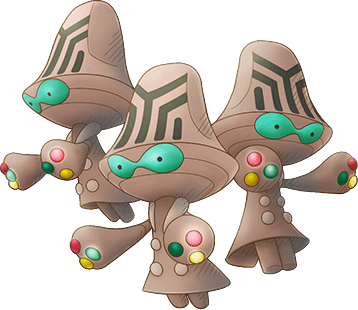
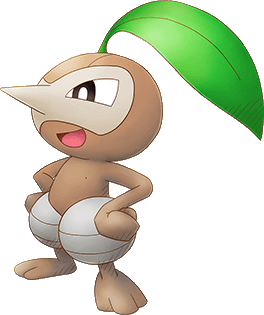
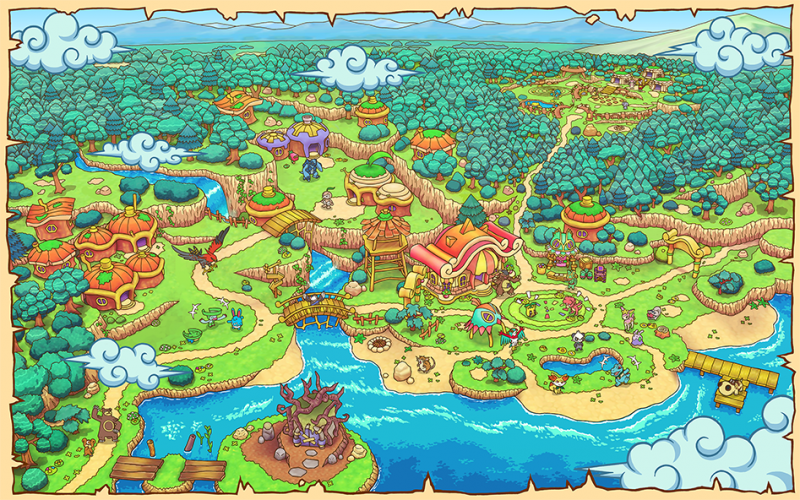
The game starts with the player transforming from a human into a child Pokémon and losing all memories of their human life. They get transported into the Pokémon world, and get attacked by three Beheeyem as soon as they arrive. While trying to escape, they meet Nuzleaf, who helps them lose the Beheeyem and takes them to Serene Village. Noticing that the player is very young, Nuzleaf enrols them in Serene Village’s school. There, they meet the partner Pokémon, who dreams of drawing a complete world map by joining the famous Expedition Society, an exploration group that only adult Pokémon can join.

The player learns that the partner, who turns out to be quite a troublemaker, was adopted by Carracosta, who found them along with the Harmony Scarves. The partner gives the player one of their scarves after the player earns their trust. During some of their adventures, the Pokémon come across Ampharos, who awards them Junior Expedition Society Badges. One day, Nuzleaf takes the player and the partner to the sacred Revelation Mountain in order to seek information on the player’s amnesia, but their expedition soon gets cancelled by the patrols there. The partner then convinces the player to join the Expedition Society in Lively Town, and the two head there. They reach their destination after a long and difficult journey, and soon find out that Ampharos was actually the Expedition Society’s leader. After talking to him, Ampharos removes the age-restriction rule and lets the player and the partner join the Expedition Society, becoming its youngest members.
After doing a few missions, the player hears rumours about how some Pokémon are being attacked and petrified. They later find Latias and Latios turned to stone after they fell from the sky, as they were petrified while flying. They also meet Entei, who blames the player for the chaos that’s happening. Some time later, Ampharos decides to take the Expedition Society to the island where Entei lives, to further investigate the issue concerning the player. When they get there, a fight ensues between Entei and the player and their partner. During the fight, the Harmony Scarves react strangely, allowing the player and the partner to reach their final evolution for a short period of time and giving them enough power to face Entei. Ampharos arrives and puts an end to the fight by calming both sides.
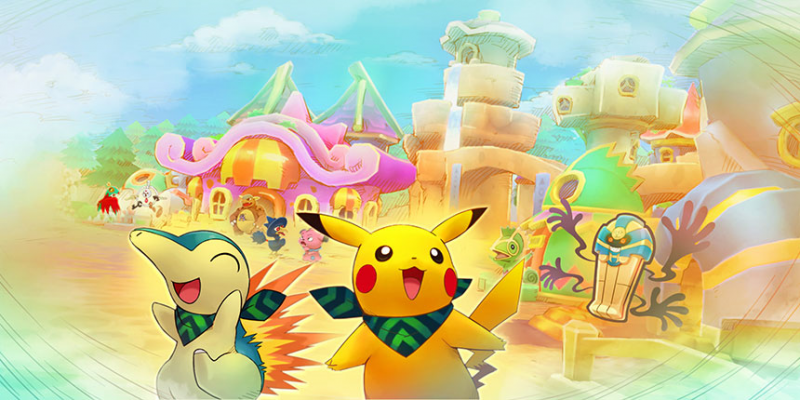

A few days later, the Pokémon of Lively Town start finding written warnings, stating that Entei will be the next victim of petrification and that only Legendary Pokémon are being targeted. The Expedition Society members hurry to Entei’s island, but they arrive too late, as they find him already turned to stone. Everyone starts suspecting the local thug, Krookodile, who’s known for his bad behaviour. The Expedition Society then forms two groups: one will look for a cure for the petrification, while the other, in which both the player and the partner are put, will go after Krookodile and bring him to justice. The chase after Krookodile leads the player and the partner to Revelation Mountain, where they meet Nuzleaf and find a shimmering lake at the mountain’s top. The Pokémon are unable to reach the lake, as it is protected by a pyramid-like barrier. Meanwhile, the team looking for a cure finds that the Luminous Water of the lake would reverse the petrification process.
Back with the player’s team, the partner finds some ancient runes near the lake and deciphers them to discover that the lake’s barrier can only be broken by a human. Suddenly, Krookodile appears, and the other two Legendary beasts, Suicune and Raikou, arrive seeking revenge for Entei. The player hurries and breaks the barrier, and Krookodile announces that Nuzleaf was the one who paid him to spread the warning messages across Lively Town. Nuzleaf admits that he’s the one behind the petrifications and calls on Yveltal, the Legendary Pokémon he serves, which turns Raikou, Suicune, the player, the partner and even Krookodile to stone. At the same time, the cure research team gets attacked by the Beheeyem and is eventually turned to stone too.
The Voidlands

The player and their partner wake up in the desolate Voidlands, the land to which petrified Pokémon are forcibly sent. The two regroup with Raikou, Entei, Suicune and the members of the Expedition Society. As the group ventures through the Voidlands, they find several ancient runes, which the partner deciphers again. The runes tell the story of Dark Matter, the ancient incarnation of all negativity, evil energy and darkness. This malicious force can turn Pokémon into stone and start feeding on their life energy. Dark Matter once tried to possess the Tree of Life and destroy the world. Luckily, it was stopped in time. The group tries to find a way out of the Voidlands, when they get attacked by Dark Matter’s servants, the Void Shadows: dark creatures that can take the shape of any Pokémon. Some of the group get captured, while the others run away and eventually find the Door of Light. This door is the exit that leads back to the real world, but it is guarded by many more of Dark Matter’s servants. A battle ensues, and what is left of the group tries to keep the Void Shadows busy while the player and the partner go through the Door of Light.
The player and their partner find themselves in the real world and soon learn that most of the citizens of Lively Town and Serene Village have been turned to stone. Nuzleaf has also stolen the Luminous Water from the lake and seeks to destroy it. Jirachi, the Expedition Society’s astronomer, seems to have worked with Ampharos to evacuate the shopkeepers from the towns and hide them in the organisation’s headquarters. Later, the player and the partner stumble upon one of the Beheeyem that attacked the player when they first came into the Pokémon world. They attack him, and the Beheeyem explains that he was under the influence of Dark Matter, who pushed him to do the evil deeds. He then says that he wants to guide the player and the partner to the Tree of Life. The two believe him and follow him. Unfortunately, as they reach the Prehistoric Ruins, they discover that it was a trap set by Nuzleaf.
Nuzleaf reveals that the player was once the human who helped defeat Dark Matter. He then states that he fooled everyone in order to gain their trust and get hold of the Luminous Water. That way, Dark Matter’s victory would be assured. Moreover, Nuzleaf states that he ordered the Beheeyem to attack the player, and that their Psychic attacks caused the player to lose their memories. Just as Nuzleaf tries to petrify the player, Ampharos, Celebi and Jirachi appear, and Celebi quickly teleports everyone to the Road to Primeval Forest, the way to the forest where the Tree of Life stands. There, Celebi retells the story of the human who worked with the Pokémon in order to put an end to Dark Matter’s evil actions. The human from the legend is confirmed to be the player, and it is believed that the Mythical Mew brought them back to the Pokémon world so that they can save the world once again. Furthermore, the player also learns that the scarves both they and the partner have were made with materials from the Tree of Life. The scarves hold a portion of the Tree’s power, which caused the two Pokémon to evolve for a moment.
The Tree of Life
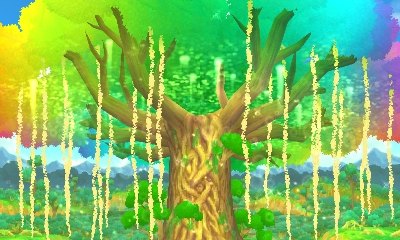
The Pokémon hurry toward the Tree of Life, in the centre of Primeval Forest. To their surprise, the tree is already dying, as Dark Matter has finally possessed it. The group then battles Yveltal, Nuzleaf and the Beheeyem, defeating them and freeing them from Dark Matter’s mind control. At that moment, Dark Matter lifts the Tree of Life into the sky and moves it toward the sun, while transporting Nuzleaf’s defeated group into the tree. Arceus contacts the player and their partner and urges them to enter the Tree’s roots. At the same time, Ampharos has brought several flocks of Flying-type Pokémon that attack the tree in the air, while three powerful Pokémon, Mega Mewtwo Y, Rayquaza and Deoxys, try to hold it in position. The player and the partner enter the tree’s roots in their evolved forms and move toward the tree’s core. On their way, the two save Nuzleaf and his group and ask them to leave.
Once they reach the core, they find Dark Matter, and a battle ensues, which the two win. But Dark Matter wasn’t fully destroyed and is able to regenerate. It turns the player and the partner back into their normal forms and sends out dark waves, which petrify the Pokémon trying to keep the tree in place. Moreover, Dark Matter kills the tree and mocks the player and the partner, as now there’s nothing left to fight for. But the two believe that there’s still hope and attack Dark Matter’s barrier. They are soon joined by Nuzleaf’s group, who seek redemption. As the petrified Pokémon call on the player not to give up, the group keeps striking the barrier until they shatter it. Dark Matter’s core shows up, and the player and their partner attack it, putting an end to the evil force. A few moments before being completely destroyed, Dark Matter states that it will return eventually, as there will always be darkness in some Pokémon’s hearts. Surprisingly, the partner accepts Dark Matter’s statement and tells it that it, too, has the right to exist. Then the partner and the player attack the core one last time, breaking it to pieces and finally putting an end to the chaos.
The two get teleported back to the Primeval Forest, where they meet Xerneas, the Tree of Life’s embodiment. Xerneas announces that all the petrified Pokémon are back to normal, and that Dark Matter has found peace and is gone forever. The Pokémon in Lively Town and Serene Village celebrate their success. Now that the crisis is over, the player knows that they have to return to the human world, but wants to stay here with their partner instead. The player goes to their partner to tell them how they plan to stay, but the latter says that Xerneas has returned their memories. It turns out that the partner fought Dark Matter with the player in the past and is the reincarnation of Mew. In their past battle, the player and Mew failed to completely destroy Dark Matter, so Mew took some countermeasures to prepare for Dark Matter’s return. Mew created the barrier around the Luminous Water and erased its own memories, to avoid making the same mistakes again. Now that their task is complete, the partner says farewell to the player and slowly fades away.

After the story
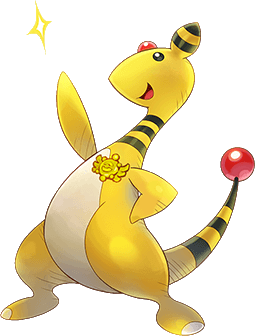
The player continues to work for the Expedition Society but is still saddened by the loss of their partner. Seeing the player in that state, Ampharos tells them to contact Xatu, who might be able to help. The player visits Xatu at the Sand Dune of Spirits. Xatu tells the player that he had a vision about Mew, and that Mew is the link to restoring the partner. The player seeks Mew in Mystery Jungle, but it seems that Mew doesn’t know who the player is, as all its memories are gone. Mew joins the Expedition Society and soon becomes friends with everyone. After doing some missions, the player wakes up and remembers that Mew was sick and they had to take it to Serene Village. There, they were attacked by some unknown Pokémon, and Mew was kidnapped.
After they meet Ampharos, the player learns that Mew’s kidnapper is trying to sacrifice Mew to prevent Dark Matter from ever returning. The player hurries to the Purifying Cave, where the sacrifice is to take place. They find Mew glowing and fading away, and discover that Nuzleaf and his group are responsible for the act. The player’s scarf resonates with the light emerging from Mew, and the partner appears. Xatu, Ampharos and Mawile appear, stating that this was all an act they set up in order to see how much the player wanted the partner to return: Xatu had planned it all, and Nuzleaf and the Beheeyem played the kidnappers to make amends. The player and their partner return to the Expedition Society, while Mew goes back to Mystery Jungle.
Who’s who
- The hero: A human turned into one of 20 young Pokémon, with no memory of the past. Raised by Nuzleaf in Serene Village, the hero joins the Expedition Society and turns out to be the same human who once stood against Dark Matter with Mew. Only a human can break the seal on Revelation Mountain’s Luminous Water, and Nuzleaf quietly steers the hero into doing exactly that.
- The partner: A troublemaking schoolmate adopted by Carracosta, who dreams of finishing a map of the whole world and joining the Expedition Society. The partner can read ancient runes, owns the pair of Harmony Scarves and shares one with the hero. After Dark Matter falls, the partner is revealed as Mew’s reincarnation and fades away, returning only at the end of the epilogue.
- Xatu: A Xatu who watches the sunset at the Sand Dune of Spirits. In the epilogue Ampharos sends the grieving hero to him, and his vision about Mew starts the search that leads to Mystery Jungle. Xatu had foreseen everything and designed the staged kidnapping of Mew to test whether the hero truly wanted the partner back.
- Xerneas: Xerneas appears after Dark Matter’s defeat to thank the heroes, confirm that every petrified Pokémon has been restored and give the partner back their memories. After the story it evolves Pokémon for the team at the Tree of Life, and it connects with the hero once 600 or more Pokémon are connected, handing over the Sky Looplet.
Pokémon
All the Pokémon up to the sixth generation’s Hoopa are available in the game – only Volcanion is missing – some of which appear as NPCs, and others as wild Pokémon and bosses. Every one of the 720 can eventually join the team through the Connection Orb.
Playable Pokémon
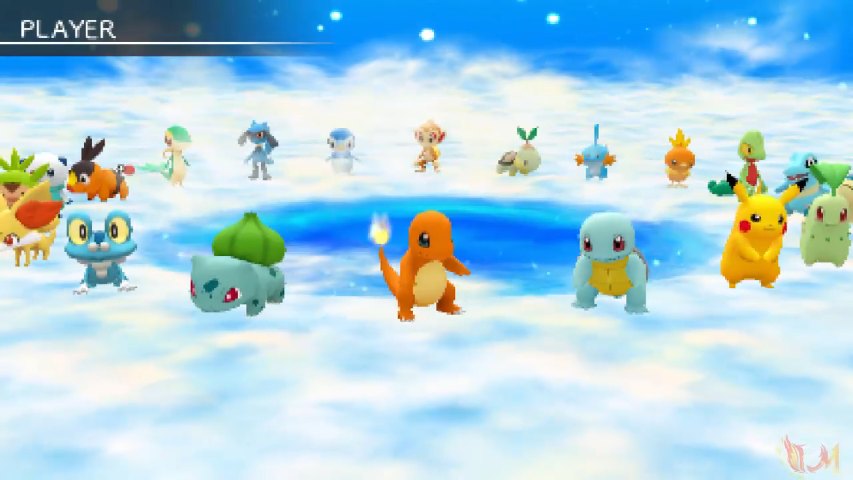
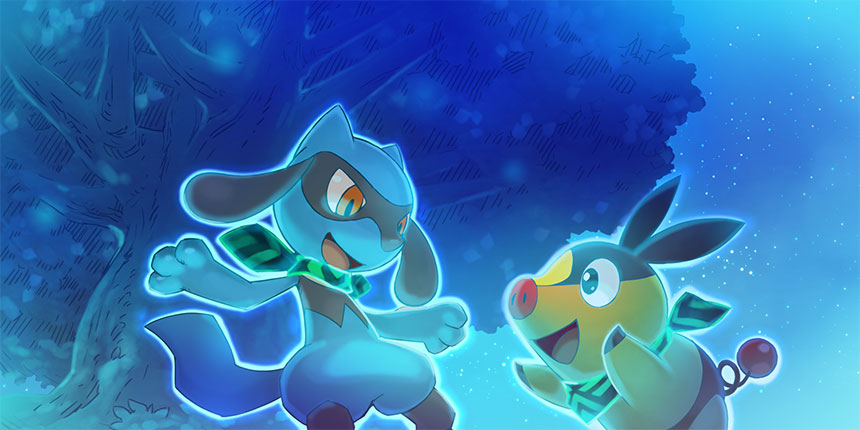
At the start of the game, the player may choose the old quiz method, which picks a Pokémon for the player after they answer a few quiz questions – and its pick can now be turned down. Or, they may directly select which Pokémon they want to play as. These are the 20 available playable Pokémon: the first partners of the six generations, plus Pikachu and Riolu.
 CharmanderFire
 CyndaquilFire
 TorchicFire
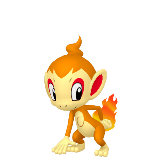 ChimcharFire
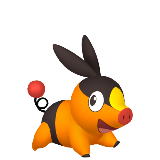 TepigFire
 FennekinFire
 SquirtleWater
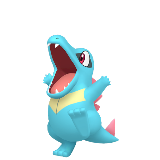 TotodileWater
 MudkipWater
 PiplupWater
 OshawottWater
 FroakieWater
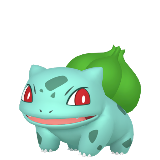 BulbasaurGrass/Poison
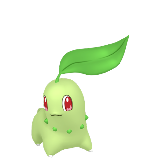 ChikoritaGrass
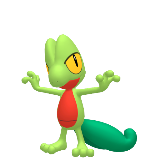 TreeckoGrass
 TurtwigGrass
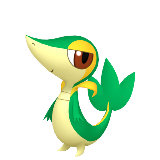 SnivyGrass
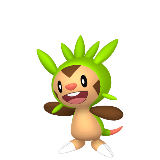 ChespinGrass
 PikachuElectric
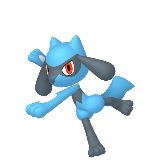 RioluFighting
Partner Pokémon
The player may select the partner Pokémon with the same methods used for the playable Pokémon’s selection. The partner can be selected from the same list as the playable Pokémon, minus the hero’s own species, leaving 19 to choose from.
Pokémon from Lively Town
Krookodile and Krokorok: Krookodile is the town’s thug and Krokorok is his lackey. The two have a bad reputation, as they are known for their mischievous acts, and they often loiter in Café Connection, unsettling the other customers.
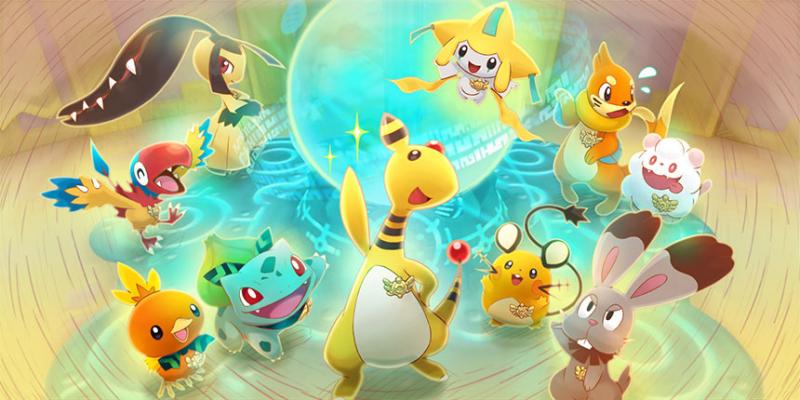
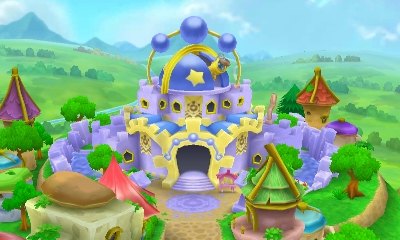
Pokémon from the Expedition Society:
| Pokémon | Role in the Expedition Society |
|---|---|
| Ampharos | The chief of the organisation |
| Jirachi | The astronomer |
| Swirlix | The cook, who makes the nightly dinner |
| Mawile | The archaeologist |
| Bunnelby | The on-foot and underground expeditions’ specialist |
| Archen | The sky expeditions’ specialist, despite being unable to fly |
| Buizel | The underwater expeditions’ specialist |
| Dedenne | Takes care of the communications |
The Shopkeepers
| Pokémon | Shop they run | Its services |
|---|---|---|
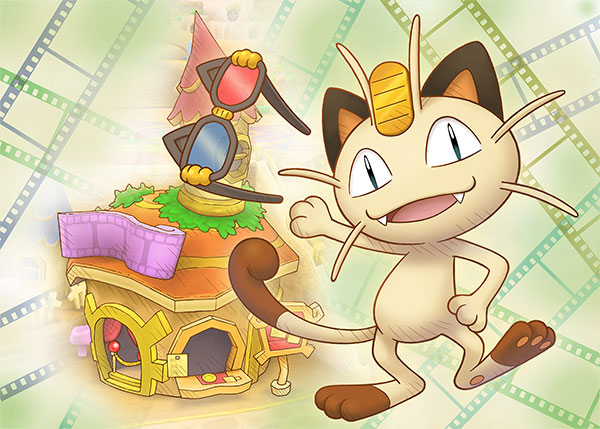
| Meowth | Meowth Theater | Allowed the player to film their adventures in five special film dungeons and watch them. The player could also watch the adventures of their friends, until an update closed the theatre in August 2017. |
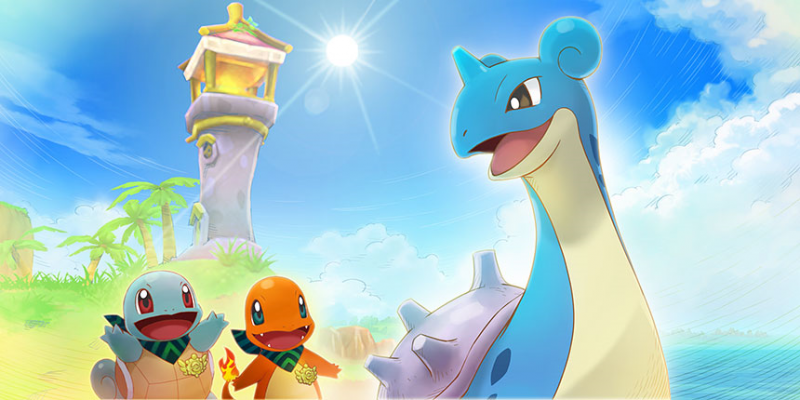
| Lapras | Lapras Travel Liner | It allows the player to travel from one continent to another, with more stops in the Sea of Wonders opening up as their Expedition Rank rises. |
| Kangaskhan | Café Connection | Here, the player can meet random Pokémon each day. The player sometimes gets automatically connected to these Pokémon. Some of the Pokémon might give the player a mission or a secret task. It’s also where Expedition rewards are collected, and there’s one in every town. |
| Kecleon | Kecleon Shop | The shop lets the player buy items such as food or TMs (the town shops only stock TMs after the epilogue). It is also where the player can sell items they don’t need. |
| Hawlucha | Hawlucha’s Slam School | Hawlucha will let the player’s team members relearn forgotten moves and change their Abilities, in exchange for Lucha Tokens. |
| Cofagrigus | Glorious Gold | The player can exchange the Gold Bars they have for Poké (555 each) or items here. Cofagrigus also sells rare items, including the Treasure Collection’s Looplets once he has connected with the team. |
| Klefki | Rockin’ Lock | Opens the player’s Treasure Boxes in exchange for Poké. |
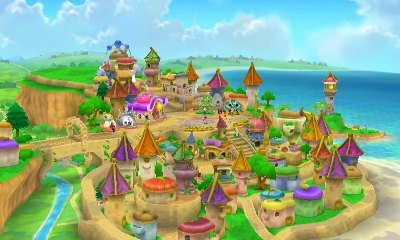

Pokémon from Serene Village
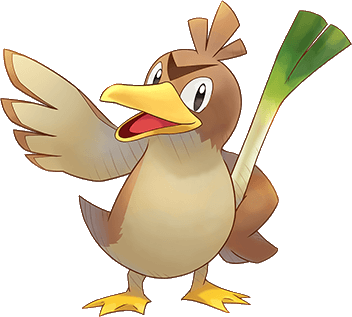
Simipour and Watchog: They are respectively the principal and the vice principal of the village’s school. While the easy-going Simipour cares about the Pokémon children’s education and their independence, Watchog focuses on keeping the school’s reputation perfect – and secretly wants the top job. And then, of course, there’s Farfetch’d: a very serious teacher who works at the village’s school.
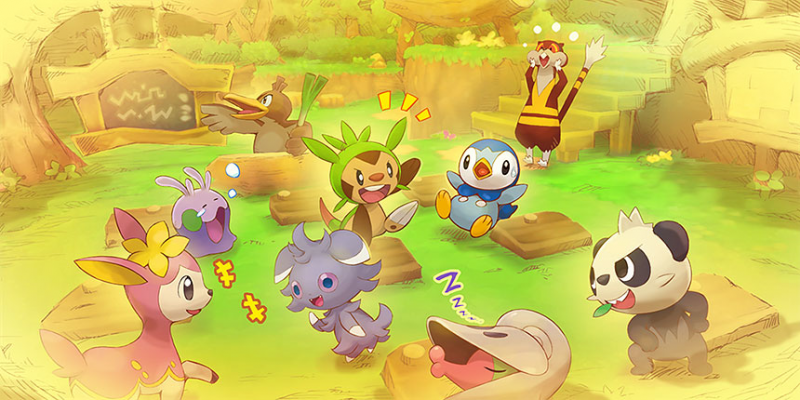
The school’s Pokémon children: Goomy, Deerling, Espurr, Pancham and Shelmet.
 Goomy#704
 Deerling#585
 Espurr#677
 Panchamthe class bully
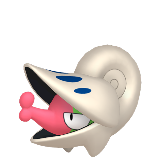 ShelmetPancham’s sidekick
Other townsfolk Pokémon:
- Audino: The doctor of the village and another teacher working at the school, where she teaches health.
- Nuzleaf: He adopts the player at the start of the game and takes care of them, letting them live in his house.
- Carracosta: The partner’s adoptive father.
Evil Doers
- Nuzleaf: He deceives the player while under the control of Dark Matter, leading them to break the barrier around the Luminous Water, which lets him steal it.
- The Beheeyem: They attack the player at the start of the game, under the orders of Nuzleaf, and their Psychic attacks wipe the player’s memories.
- Yveltal: A Legendary Pokémon controlled by Dark Matter. Nuzleaf and his group serve him.
- Dark Matter: An ancient dark force that feeds on the negative emotions of Pokémon, enabling it to control them. Dark Matter is the game’s final boss, who seeks to destroy the whole world by sending it into the sun.
Bosses
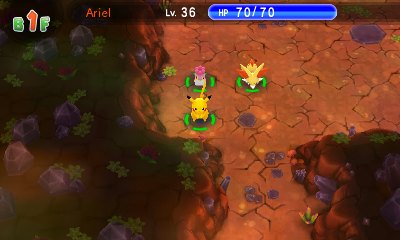
These are the bosses of the main story, in the order the player faces them. Most are fought at the end of a dungeon, but two of the battles happen at the Expedition Society itself.
| Boss | Where | Line-up | Notes |
|---|---|---|---|
| Gabite Dragon/Ground |
Drilbur Coal Mine | Gabite | The first boss of the main story, a lone Gabite at the end of the coal mine. Its Ground-type moves hit Fire-type and Electric-type heroes hard. |
| The Beedrill and the Combee Bug/Poison; Bug/Flying |
Nectar Meadow | Beedrill ×2, Combee ×3 (all female) | A swarm fight in which two Beedrill lead three female Combee. Fire, Flying and Rock moves are effective against both species. |
| The Poliwrath and the Poliwag Water/Fighting; Water |
Poliwrath River | Poliwrath ×3, Poliwag | Three Poliwrath brothers with a Poliwag in tow. Grass and Electric moves work on all four, and Psychic, Flying or Fairy moves add extra damage against the Poliwrath. |
| “Giratina” and the Litwick Psychic (Solosis); Ghost/Fire |
Ancient Barrow | Solosis disguised as Giratina, Litwick ×4 | The fearsome Giratina in Ancient Barrow is really a Solosis in disguise, supported by four Litwick. The real Giratina is not fought during the main story. |
| Jirachi Steel/Psychic |
Expedition Society, Lively Town | Jirachi | A fight against the Expedition Society’s own sleepy astronomer, held at the Society’s base in Lively Town, one of two story battles that take place there rather than in a dungeon. |
| Magmortar and the Magmar Fire |
Fire Island Volcano | Magmortar, Magmar ×4 | Magmortar and four Magmar block the climb up Fire Island Volcano before the meeting with Entei. Water, Ground and Rock moves are the obvious answer. |
| Entei Fire |
Fire Island Volcano | Entei | The battle in which the Harmony Scarves first react, briefly evolving the hero and partner into their final forms, until Ampharos steps in to stop the fight. |
| The Void Shadows Unknown |
Calm Craggy Area | Void Shadow ×4 | Shapeshifting servants of Dark Matter met in the Voidlands. Four start the fight, but they can split during it, so there are more to beat than first appears. |
| Fake Mega Tyranitar, the fake Mega Gengar and the Void Shadows Rock/Dark; Ghost/Poison |
Reverse Mountain | Fake Mega Tyranitar, fake Mega Gengar ×2, Void Shadow ×2 | The second Voidlands boss fight: Void Shadows wearing the shapes of Mega Tyranitar and two Mega Gengar, with two more shadows alongside them. |
| Beheeyem Psychic |
Expedition Society, Lively Town | Beheeyem | Back from the Voidlands, the heroes catch one of the three Beheeyem. After the fight he blames Dark Matter and offers to guide them to the Tree of Life, which turns out to be Nuzleaf’s trap. |
| Nuzleaf, Yveltal and the Beheeyem Grass/Dark; Psychic; Dark/Flying |
Road to Primeval Forest | Nuzleaf, Beheeyem ×2, Yveltal | The showdown outside the Tree of Life. Beating them frees all four from Dark Matter’s control, moments before Dark Matter carries them off and uproots the tree. |
| Dark Matter Unknown |
Tree of Life: Trunk | Dark Matter | Fought at the heart of the Tree of Life. After its first defeat it reverts the heroes to their normal forms, and its barrier has to be broken with help from Nuzleaf’s group before the core can be destroyed. |
Notable Pokémon
 Mew#151
 Ampharos#181
 Celebi#251
 Nuzleaf#274
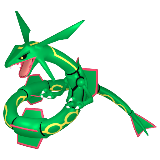 Rayquaza#384
 Sylveon#700
 Xerneas#716
 Yveltal#717
 Hoopa#720
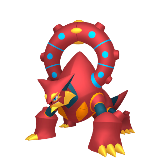 Volcanion#721
- Mew – The partner’s true identity; met again in Mystery Jungle during the epilogue.
- Ampharos – Chief of the Expedition Society, who hands the heroes the Connection Orb.
- Celebi – Teleports the heroes to safety in the story and joins the team at Master Rank.
- Nuzleaf – The hero’s guardian in Serene Village and the story’s main villain.
- Rayquaza – Helps hold back the Tree of Life; post-game boss at the top of Dragon Gate, giving the Wind Looplet.
- Sylveon – The client of the tutorial request that unlocks the Connection Orb for free use.
- Xerneas – Embodiment of the Tree of Life; connects once the hero has 600 connections.
- Yveltal – The Legendary that Nuzleaf serves, itself controlled by Dark Matter.
- Hoopa – The highest-numbered species in the game and the only Pokémon that cannot hold a Looplet.
- Volcanion – The one Generation VI Pokémon that does not appear at all.
Gameplay Features and Mechanics
Returning Features

Most of these features were removed in the recent Pokémon Mystery Dungeon games, but were once used in the very first ones:
- The Pokémon’s moves can be upgraded again, as their ranks increase. The higher the rank, the stronger the Pokémon’s moves – and the progress is shared by every team member who knows the same move. Some of the moves cannot be upgraded at all, like status moves, while moves based on other factors, such as a percentage of HP, can’t gain extra power.
- The Jukebox feature makes its return, allowing the player to listen to all of the game’s soundtracks and even those from the previous Pokémon Mystery Dungeon games.
- Party size now takes the Pokémon’s sizes into consideration, affecting the number of Pokémon that can be taken in a party.
- The Belly mechanic and the Deposit Box have also returned.
- Normal TMs can only be used once, while the rainbow-coloured ones have infinite uses.
- The playable Pokémon and the partner Pokémon can be chosen, once again, according to the player’s answers to the quiz.
- In certain dungeons, wild Pokémon can evolve if they knock out another Pokémon, including one of the player’s team members.
- Breakable walls, weather that wears off, rescues arranged at Pelipper Island and losing the Bag’s items and money on defeat all come back too.
New Features and Mechanics
- The Speed stat was added to the game and, unlike in the main game series, it affects accuracy and evasion rather than the Pokémon’s speed. How fast a Pokémon can move during their turn is decided by their Travel Speed stat.
- Quest rewards are no longer handed over on the spot: not every Expedition gives an item, and the rewards are delivered to Café Connection, where Kangaskhan sends them on to the Deposit Box.
- Many large Pokémon like Onix are made playable, and their size limits how many others can join the party. The biggest of all, the Gigantic Pokémon, take up nine tiles while moving in the dungeons, and only one of them can be in a team at a time.
- The team itself is now limited to three Pokémon, although guest Pokémon can join on top of that during some Expeditions.
- Many new stores are now available, like the Meowth Theater (closed by an update in 2017) and the Lapras Travel Liner.
- The main menu’s temporary save has been removed and the Progress Device has been added. This device allows the player to save their progress on any of a dungeon’s floors.
- New items which work in the same way as the Orbs have been added, and they’re called Wands. They can be stacked.
- The Expeditions are no longer random, but preset and unchangeable.
- Power-up items called Looplets have been added to the game, along with secondary items called Emeras. Emeras can be found in dungeons and set in the Looplets, giving the Pokémon passive skills or powering up some of their stats. They vanish when the team leaves the dungeon.
- The game is the first one in the series to feature Mega Evolution, triggered by the rainbow Awakening Emera.
- From Chapter 12, on some days three of the connected Pokémon become Motivated, and the player gets to know which ones they are at the start of the day. Motivated Pokémon earn triple the normal experience from dungeons and quests.
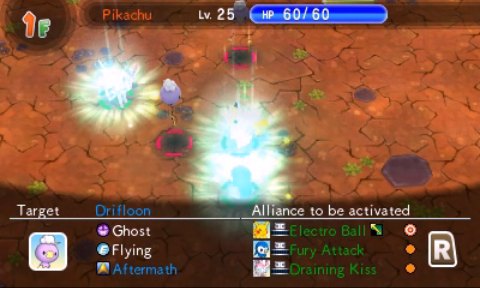
- A new group attack has been added to the game, known as the Alliance attack. This attack instantly teleports the Pokémon around the enemy and they unleash a devastating attack. This attack depletes the Belly bar. Normally, if one of the Pokémon is far away, the attack cannot be used, unless they hold an Alliance Looplet.
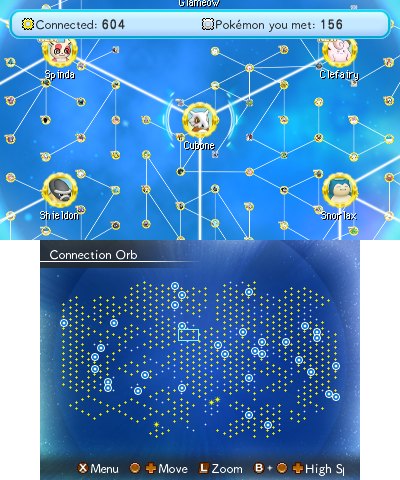
- The Connection Orb now replaces the Bulletin Board. Pokémon can now only be recruited, or more precisely ‘connected’, after finishing the requests they’re linked to in the Connection Orb. Some of the Pokémon get automatically connected as the player progresses through the story, or simply by speaking to them, like some of the Pokémon in Café Connection. There’s more on this in The Connection Orb below.
In depth: the fine print


The Connection Orb

Super Mystery Dungeon drops the old idea of recruiting Pokémon by beating them. Instead, every one of its 720 species sits somewhere in a web of friendships shown by the Connection Orb, a crystal that slots into the Expedition Gadget. Finishing a Pokémon’s request, talking to it or meeting it in a dungeon forms a connection, and each new link reveals neighbours to reach next. Expedition Rank opens more of the map, and the Legendary Pokémon wait at the far edges of the web.
- 720species to connect with
- 12Expedition Ranks
- 10,000points for Grand Master Rank
- 600connections to meet Xerneas


Legendary and Mythical connections
Most Legendary and Mythical Pokémon wait at the edge of the web in dungeons that open with Expedition Rank, spread across the continents and the Sea of Wonders. Many are bosses who connect after the first clear and leave a treasure Looplet behind: Rayquaza the Wind Looplet, Darkrai the Air Looplet, Kyogre the Sea Looplet and Groudon the Earth Looplet. These are the ones met in the story, through Connection Orb requests and in the dungeons that Expedition Rank opens up:
| Pokémon | Where they’re met | Unlocked by | How they connect |
|---|---|---|---|
| Entei | Fire Island Volcano (Sea of Wonders) | Main story | Fought in the story; connects later through the request “Meet up with Entei!” |
| Raikou | Isle of Light (Sand Continent) | Connection Orb request | “Meet up with Raikou!”; gives the Radiance Looplet |
| Suicune | Clear Lake (Mist Continent) | Connection Orb request | “Meet up with Suicune!”; gives the Tempest Looplet |
| Latias and Latios | Friendly Meadow (Grass Continent) | Connection Orb request | “Meet up with Latias and crew!”; gives the Red Looplet |
| Uxie, Mesprit, Azelf | Lake of Enlightenment, Heart Lake, Spring of Resolve | Connection Orb requests (Heart Lake opens at Silver Rank) | A “Meet up with…!” request for each |
| Celebi | Expedition Society base, Lively Town | Master Rank (8,000 points) | Joins as a rank reward; a Shiny Celebi connects through Grovyle’s request “Go find Celebi together!” |
| Mew | Mystery Jungle (Grass Continent) | Epilogue | Met during the epilogue story |
| Xerneas | Tree of Life (Sea of Wonders) | 600 connections | Talk to it; gives the Sky Looplet |
| Mewtwo | Island of Isolation (Mist Continent) | Gold Rank | Battle; beating it opens Meteorite Crater |
| Deoxys | Meteorite Crater (Mist Continent, 8 floors) | Defeating Mewtwo | Its four Formes roam the floors; connects after the first clear |
| Manaphy and Phione | Seafloor Ruins (Sea of Wonders, 17 floors) | Platinum Rank | Request to meet them on the final floor; gives the Blue Looplet |
| Kyurem | Altar of Ice (Sea of Wonders) | Diamond Rank | Boss battle; with Reshiram and Zekrom beaten too, it opens Altar of Ice: Depths |
| Dialga, Palkia, Rayquaza | Dragon Gate (Grass Continent, 23 floors) | Ace Rank | Bosses of floors 21, 22 and 23; all connect after the first clear; Rayquaza gives the Wind Looplet |
| Darkrai | Distress Mountain (Air Continent, 22 floors) | Ace Rank | Boss of floor 22; gives the Air Looplet |
| Tornadus, Thundurus, Landorus | Island of Storms (Sea of Wonders, 15 floors) | Ultra Rank | Fleeing Pokémon on random floors; knock them out before they escape |
| Reshiram and Zekrom | Sky Ruins (Grass Continent) | Hyper Rank | Fought together on entry; a one-time dungeon |
| Kyogre | Ocean Tempest (Sea of Wonders, 26 floors) | Master Rank | Primal Kyogre boss on the last floor; gives the Sea Looplet |
| Groudon | Magma Chamber (Grass Continent, 27 floors) | Master Rank | Primal Groudon boss on the last floor; gives the Earth Looplet |
| Yveltal | Buried Ruins (Mist Continent) | Grand Master Rank | Story antagonist; connects here and gives the Darkness Looplet |
| Zygarde | Apex Mountain (Sand Continent, 31 floors) | Grand Master Rank | Connection Orb request; gives the Time Looplet |
Regional Variations
Japan had Super Mystery Dungeon two months before North America and five months before Europe, and a few things differ between the regions:
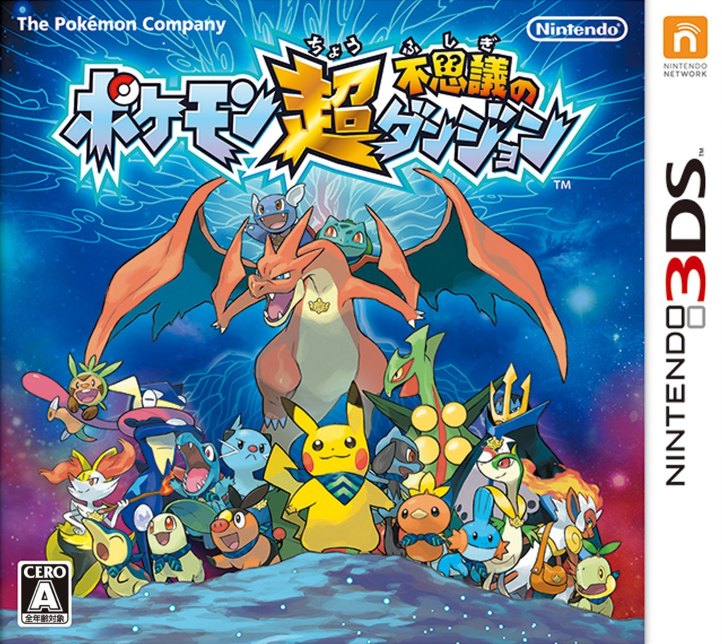
- The Japanese title, Pokémon Chō Fushigi no Dungeon, simply means Pokémon Super Mystery Dungeon. French copies are titled Pokémon Méga Donjon Mystère and Spanish copies Pokémon Mundo megamisterioso; the German, Italian and Portuguese releases keep the English name.
- Japan, Hong Kong and Taiwan got the game on 17 September 2015 and North America on 20 November 2015, but Europe waited until 19 February 2016 and Australia and New Zealand until 20 February 2016.
- Wonder Mail passwords, rescue codes and QR codes only work within their own region, and online features were region-locked, so even the Rolling Pass password is different in Japan, North America and PAL regions.
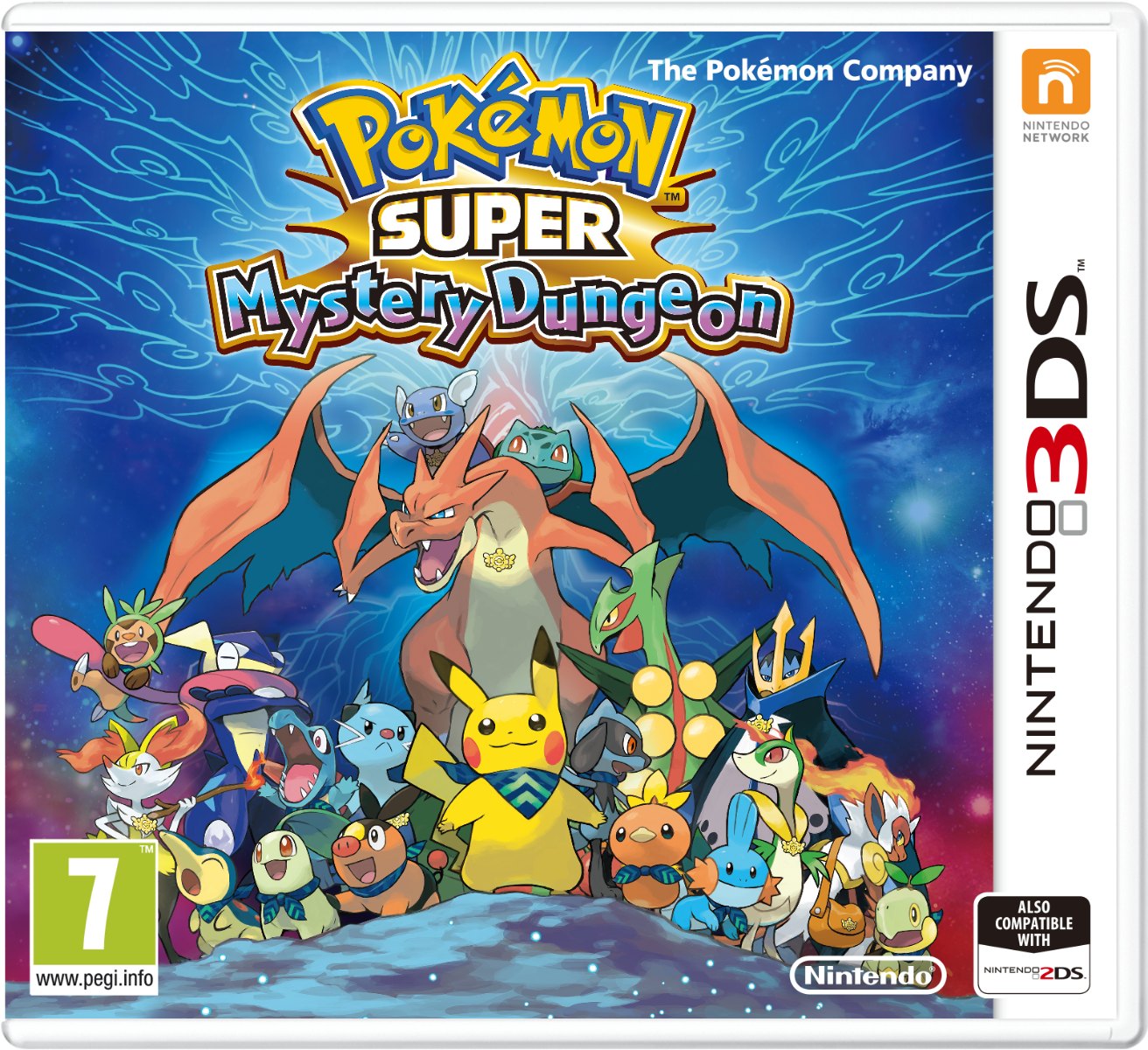
- Europe rated the game PEGI 7, the only Mystery Dungeon game not rated PEGI 3. It is ESRB E in North America, CERO A in Japan and G in Australia.
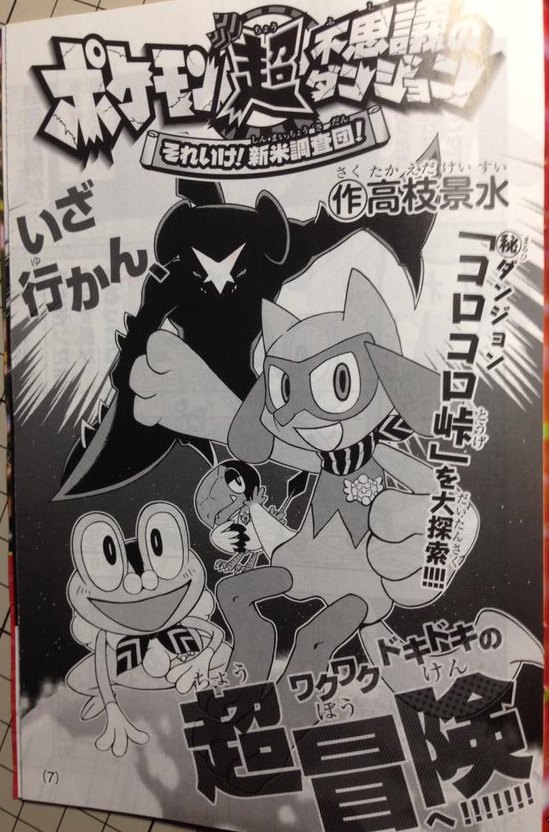
- In Japanese the Expedition Society is the Chōsadan (literally Investigation Team), Emeras are called Lapis, and Rolling Pass is CoroCoro Pass, named after the magazine whose manga it comes from.
- In Japan it is the tenth Mystery Dungeon game, but outside Japan it is only the seventh, because the three WiiWare Adventure Squad games of 2009 were never released elsewhere.
- Active Boeki localised the North American cover for its Southeast Asian and Middle Eastern release.
Left in the data
- Two unused music tracks: “In the Eyes of Our Allies”, apparently meant for the final battle, and “Move Ever Onwards”, an unused copy of Gates to Infinity’s “Pokémon Friends”, alongside other Gates to Infinity tracks that the Jukebox cannot play.
- An early world map with an extra island between the Air and Grass Continents, and with Fire Island Volcano and the Island of Storms in each other’s positions.
- A large debug menu that can set story flags, jump through the scenario, create items and Pokémon, edit stats and change the weather, plus separate test menus for cameras, cut scenes, quests and movement.
- Leftovers from Gates to Infinity, including minigame graphics and map data for the Paradise area, which suggest the game was built on its predecessor’s engine.
- Models of used-up TMs and HMs, even though TMs simply disappear after use, and two Emera skills, Second Chance and Targeted Attack, that never appear in normal play.
Glitches, exploits and oddities
A misleading message, a frozen camera, floating townsfolk and a touchy Kecleon:
Strong winds message error
When the strong winds weather condition takes effect, the message log announces that Flying moves have no weaknesses, rather than saying that Flying-type Pokémon have none. The weather itself behaves correctly, protecting Flying-type Pokémon from the moves that would normally be super effective against them; only the text describing it is wrong. It is purely a translation or text-entry slip, has no effect on battles, and is easy to miss because it only appears in the scrolling log during the few dungeons and battles that use strong winds.
Frozen camera after switching to a Gigantic Pokémon
If the player opens the room camera (Y and B) straight after switching control to or from a Gigantic Pokémon, the main game camera can lock in place. The room camera still moves freely, but the normal view stops following the leader. The likely culprit is the zoom effect that plays when control passes to a nine-tile Pokémon, which the game uses to fit the larger body on screen. The same fault survived into Pokémon Mystery Dungeon: Rescue Team DX on Switch, which shares much of its dungeon logic.
Floating townsfolk
In towns, talking to a non-player Pokémon and then quickly pushing it away can make it snap back to where it started. When this happens to Pokémon that stand in water, they can end up hovering in mid-air at an angle, tipped towards the camera so that they look larger than normal. The glitch is cosmetic only and the Pokémon return to normal after a scene change, but it is a well-known way to make the game’s townsfolk look odd in screenshots and videos.
Hostile Kecleon without a theft
As in other Mystery Dungeon games, damaging a neutral Kecleon by accident, for example with an explosion or an enemy thrown into it, turns the shopkeeper hostile and blocks any buying or selling. The player is not formally branded a thief until they walk out of the shop, so the usual theft alarm, music change and reinforcements do not happen straight away. Super Mystery Dungeon’s version differs slightly from the earlier games: a Blast Seed no longer sets it off.
Videos & media
Check out these videos from Pokémon Super Mystery Dungeon, including the overview trailer and two TV commercials.
The overview trailer.
A U.S. TV commercial.
A live-action TV commercial.
Trivia & facts
- Pokémon Super Mystery Dungeon is said to be linked to the previous games, as some of the dungeons from the previous games return in this one, like Destiny Tower and Zero Isle, while Pelipper Island is back as the place to arrange rescues.
- Unlike the other Pokémon Mystery Dungeon games, it’s the partner that disappears after the story ends and not the player.
-
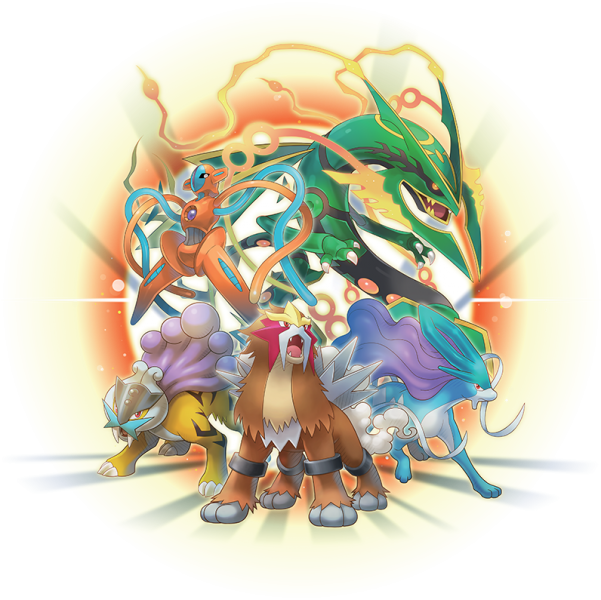
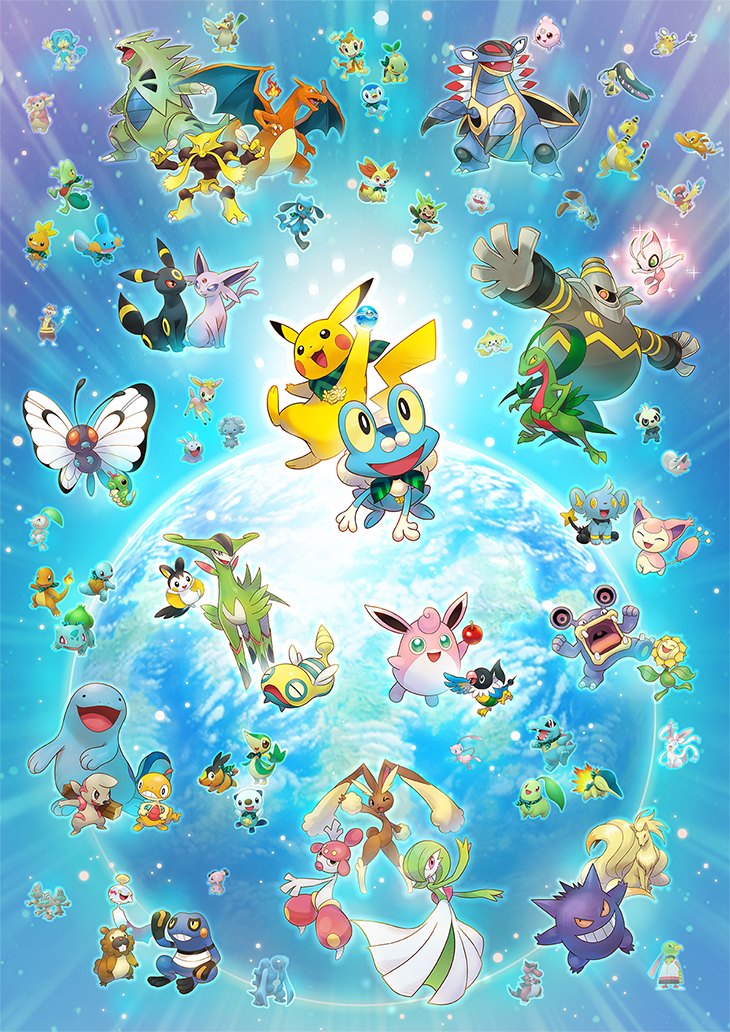
Some of the Legendary Pokémon in the game. The game offers the largest playable Pokémon selection in the series.
Further trivia
- The Expedition Gadget is shaped like a Bronzor, and a Bronzor in Sahra Town comments on the resemblance.
- Grovyle’s request “Go find Celebi together!” and Dialga’s link to Dusknoir in the Connection Orb are nods to Explorers of Time, Darkness and Sky.
- It is the first Mystery Dungeon game to include the Fairy type, introduced in Pokémon X and Y two years earlier.
Legacy
What came after
- Japanese launch (also Hong Kong and Taiwan) – 17 September 2015. Sold 151,823 copies in its first week, the best-selling game in Japan that week.
- North American launch – 20 November 2015. Released with the ESRB E rating.
- European launch – 19 February 2016. Five months after Japan, rated PEGI 7.
- Australian and New Zealand launch – 20 February 2016. Rated G by the ACB.
- Version 1.1.0 update – 30 August 2017. Shut down Meowth Theater’s online film sharing; Meowth now explains the service has ended.
- Successor: Pokémon Mystery Dungeon: Rescue Team DX – 6 March 2020. A Nintendo Switch remake of the first games rather than a sequel to Super Mystery Dungeon.
- Nintendo 3DS eShop purchases end – 27 March 2023. The download version can no longer be bought; past buyers can still redownload it.
- Nintendo 3DS online services end – 8 April 2024. The last Nintendo Network features, including online rescues, stopped working.
Where to play it today
Pokémon Super Mystery Dungeon has never been re-released, so it can only be played on a Nintendo 3DS or 2DS. The download version left sale when the 3DS eShop stopped taking purchases on 27 March 2023, although anyone who bought it can still redownload it, and boxed copies are easy to find second-hand. Meowth Theater film sharing was switched off in August 2017 and online rescues ended with 3DS online services in April 2024, but the full adventure, StreetPass and Wonder Mail passwords still work.
How it was made
Spike Chunsoft, the studio behind every Mystery Dungeon game since Red and Blue Rescue Team, developed the game, which was published by The Pokémon Company in Japan and Nintendo elsewhere. Seiichiro Nagahata and Hironori Ishigami directed it, with Koichi Nakamura, Takato Utsunomiya, Kunimi Kawamura and Hitoshi Yamagami producing, Shin-ichiro Tomie writing the scenario and Keisuke Ito, Yasuhiro Kawagoe and Noriko Murakami composing the music. Ken Sugimori drew the box illustration. Famitsu hinted at a new Pokémon game in April 2015, and The Pokémon Company and Nintendo announced Pokémon Super Mystery Dungeon on 21 May 2015, promising a late 2015 launch in Japan and North America and early 2016 in Europe. Gameplay was first shown in a Nintendo Direct on 31 May 2015, which also set the Japanese release date. Satoru Iwata, credited as an executive producer, died in July 2015, two months before the game came out.
Super Mystery Dungeon elsewhere

Sales & reviews
Sales figures
Within the first three weeks of its release, the game managed to sell around 216 thousand copies in Japan, while estimates put its first three weeks at 92 thousand in Europe and nearly 159 thousand in the USA. Sales continued to increase, reaching an estimated 350 thousand in Japan, 441 thousand in Europe and almost 467 thousand in the USA, for an estimated global total of 1.39 million copies.
Only the Japanese three-week figure comes from the retail charts: the other numbers are tracking-site estimates, and Nintendo has never published separate figures for North America or Europe (which got the game five months after Japan). Nintendo’s own figure is 1.22 million copies sold worldwide by 31 March 2016, and its results for that year named the game as one of its global hits. In Japan, it went straight to No. 1 on the Media Create chart with 151,823 copies in its launch week (14–20 September 2015), reached 215,733 after three weeks and 306,068 by 3 January 2016, and the weekly Japanese charts had it at 332,975 by January 2021.
- 1.22msold by March 2016 (Nintendo)
- 151,823Japan launch week, at No. 1
- 332,975sold in Japan by January 2021
- 69Metacritic, from 44 critics
Review scores
The game had a mixed reception, getting mostly average scores on major review websites, although it wasn’t reviewed on GameSpot or IGN’s main site (IGN Italia, IGN Spain and IGN Sweden did review it). Let’s take a look at some of these reviews:
- On GameRankings, which closed in 2019, the game received a score of 69.11%, over 23 reviews.
- On Metacritic, Pokémon Super Mystery Dungeon also received a score of 69/100, this time aggregated from 44 critics, which Metacritic rates as ‘mixed or average’.
- Overall, Pokémon Super Mystery Dungeon managed to capture the genre’s mechanics. But, similarly to the other games from the series, it soon gets repetitive and boring, as the requests and missions are very similar.
Critics split sharply. Japan’s Famitsu panel gave it 9 from every reviewer, and Destructoid called it a strong, light-hearted spin-off with well-built dungeon crawling. Spanish and Italian outlets were also warm, several calling it one of the series’ best. English-language reviewers were cooler: most liked the bigger story, the full 720-species cast and new ideas such as Looplets and Alliances, but complained that requests, dungeons and battles repeated themselves over a very long adventure. Nintendo Life found it tedious in stretches and best suited to players who enjoy grinding, Game Informer felt it fell well short of the main RPGs, and Metro GameCentral was harshest of all. The result was a Metascore of 69, solidly mixed. Players were kinder, giving it a Metacritic user score of 8.2.
Awards and honours:
Media & artwork
- Official artwork gallery from Pokémon Super Mystery Dungeon – many of the Pokémon and characters
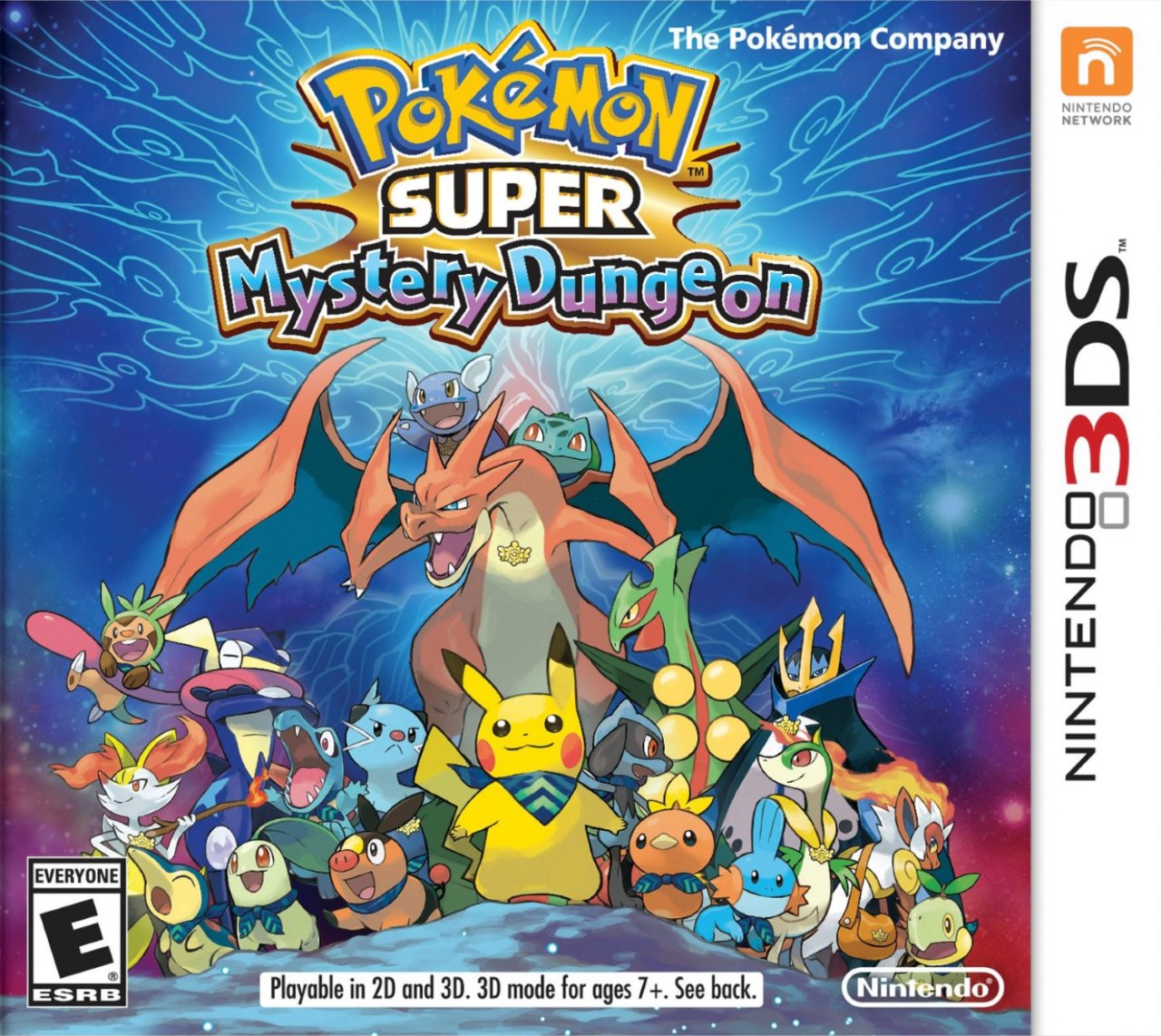
- Box art from Pokémon Super Mystery Dungeon, including regional variations
- Screenshots from Pokémon Super Mystery Dungeon
Further reading
More Mystery Dungeon and Nintendo 3DS links on the site: