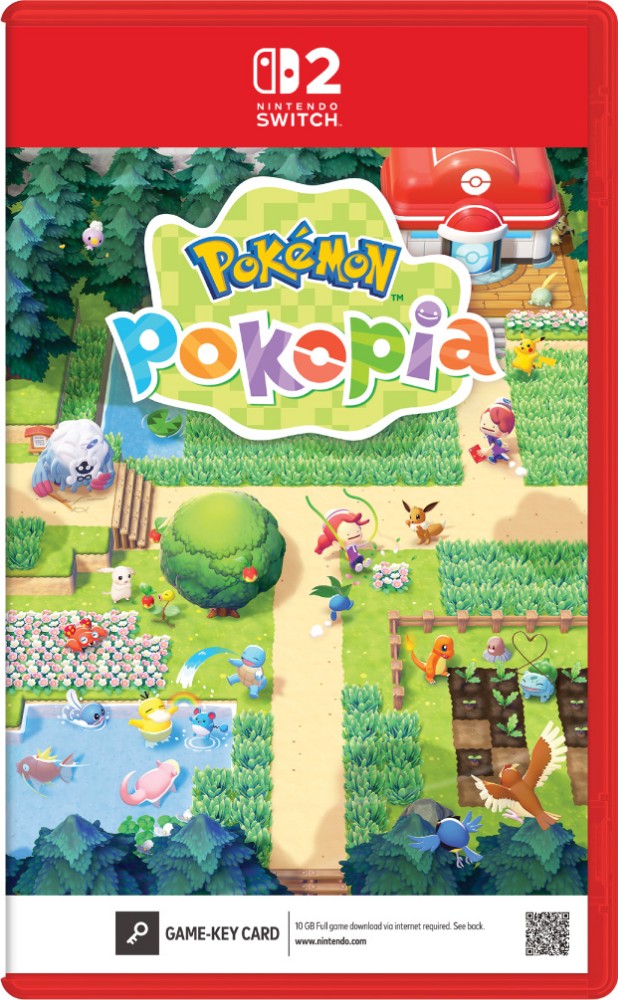
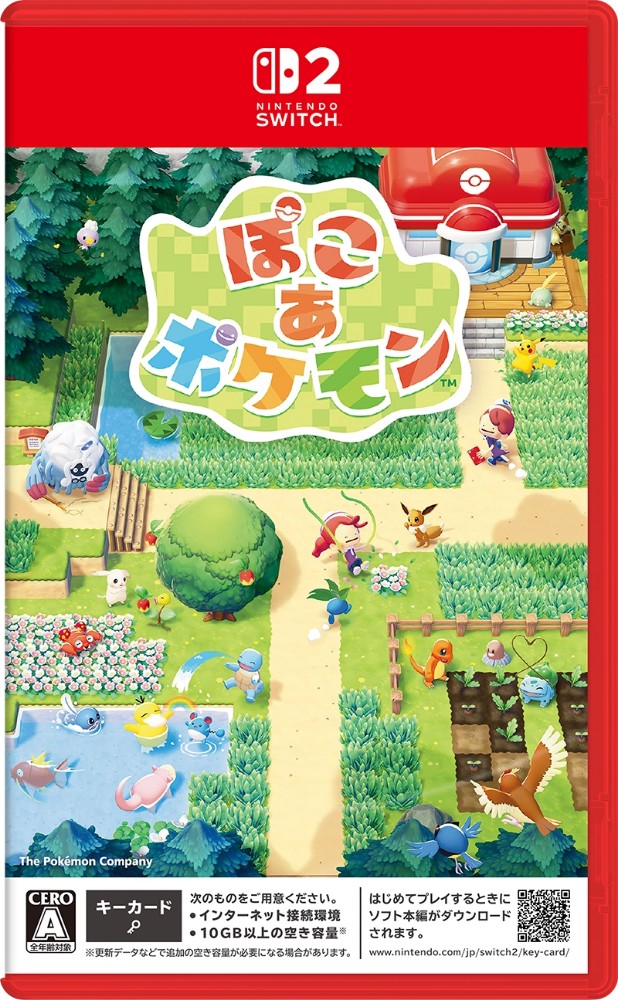
  |
|
| Titles | Pokémon Pokopia ぽこ あ ポケモン (Poco a Pokémon), often shortened to ぽこポケ |
| Platform | Nintendo Switch 2 (Game-Key Card or download; GameShare guests can also join from a Nintendo Switch) |
| Developers | Koei Tecmo Games (Omega Force) and Game Freak |
| Publishers | The Pokémon Company (Japan); Nintendo and The Pokémon Company (rest of the world) |
| Directors | Takuto Edagawa (chief director) · Shigeru Ohmori (concept and senior director) |
| Players | 1–4 (local wireless, or online with Nintendo Switch Online; GameShare guests) |
| Genre | Life simulation and sandbox building |
| Pokédex | 300 Pokémon, plus separate Event and Expansion Pass Pokédexes |
| Towns | Four story towns, plus Palette Town and the Expansion Pass town of Bubbly Basin |
| Released | 5 March 2026 (worldwide) |
| Expansion | Pokémon Pokopia Expansion Pass (paid, three parts): Part 1, Bubbly Basin, 5 August 2026; Part 2 due late 2026; Part 3 due 2027 |
| Rating | ESRB E · PEGI 3 · CERO A · ACB G · USK 6 |
| Sales | More than 5 million (August 2026); 2.2 million in its first four days |
Overview
 Pokémon Pokopia is a cosy life-simulation and building game for Nintendo Switch 2, released worldwide on 5 March 2026. Instead of a Trainer, you play as a Ditto that wakes up in a deserted, withered Kanto long after the people have gone, borrows a human shape and sets about bringing the land back to life, one patch of grass at a time. It was developed by Koei Tecmo’s Omega Force, the team behind Dragon Quest Builders 2, together with Game Freak, while The Pokémon Company planned the project and Nintendo published it outside Japan.
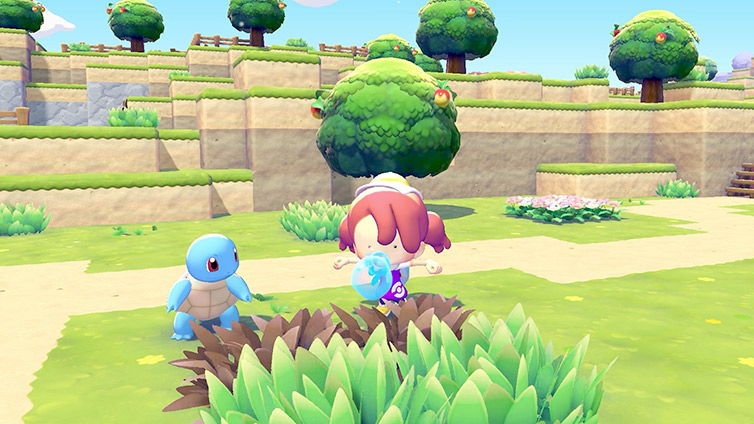
There are no battles and no Poké Balls. Ditto learns moves from the Pokémon it befriends and uses them as tools – Bulbasaur’s Leafage grows greenery, Squirtle’s Water Gun brings dry ground back to life – while it gathers materials, crafts furniture and puts up buildings. Pokémon return when Ditto builds a habitat they like, then stay on as residents who post requests, lend their specialties to building jobs and move into the homes you make for them.
The world runs on the console clock, with weather, a new Dream Island to explore every day and online Cloud Islands, and up to four players can build together. The idea came from Shigeru Ohmori, director of Pokémon Scarlet and Violet, and the game was first shown in a Nintendo Direct on 12 September 2025.
It went down extremely well. Its 89 on Metacritic makes it the highest-rated Pokémon game on the site, Famitsu gave it 39 out of 40, and it sold more than 2.2 million copies in its first four days and over 5 million by August 2026. It took the Grand Award at the Japan Game Awards 2026, and support continues with limited-time events and a three-part Expansion Pass, whose first part opened the underwater town of Bubbly Basin in August 2026.
Craft cosy towns with Pokémon!
Savour the slow life in Pokémon Pokopia – a relaxing life simulation game devoted to crafting, creating, and building – only for Nintendo Switch 2. Pokémon and people once lived happily together, but the world has withered and the humans are gone. The only remaining resident appears to be a lone Tangrowth. After waking from a long slumber, a peculiar Ditto decides to restore the desolate land using its transformation skills and its surprising new crafting abilities. Play as a Ditto and build a charming world alongside your Pokémon friends. After a satisfying day of crafting, building, and gardening, relax in your very own paradise or invite Pokémon and your friends to visit.
— Official description
Quick Answers
The questions people ask most about Pokémon Pokopia, answered briefly here and in more depth further down the page.
Is Pokémon Pokopia on the original Nintendo Switch?
No. Pokopia is exclusive to Nintendo Switch 2 and won’t run on the original Switch. The one way in for an original Switch owner is GameShare: a friend with the game on Switch 2 can share their session with you as a guest, for as long as that session lasts. More →

Can you battle or catch Pokémon in Pokopia?
No to both: there are no battles and no Poké Balls. Pokémon turn up when you build a habitat they like from the right mix of plants, rocks, water and furniture, and you befriend them instead. Friends teach Ditto their moves, help out with their specialties, post requests and can move into houses you build for them. More →
How many Pokémon are in Pokémon Pokopia?
The main Pokopia Pokédex has 300 numbered Pokémon, from Bulbasaur to Mew, and every one of them can be found in the game. Limited-time events fill a separate Event Pokédex, nine Pokémon strong by October 2026, and the Expansion Pass adds its own list of sea-dwelling Pokémon for Bubbly Basin. More →
Does Pokopia have multiplayer?
Yes. Up to four players can build together over local wireless or online, and online play needs a Nintendo Switch Online membership. You can also set up Cloud Islands, shared worlds your friends can visit with a Link Code even while you’re offline, and drop in on official Featured Cloud Islands. More →
Is the physical version of Pokopia a full cartridge?
No. The boxed edition is a Game-Key Card, which holds a licence rather than the game itself: the data downloads the first time you insert it, and the card has to stay in the console while you play. Pokopia was the first Nintendo-published game sold this way. More →

Does Pokémon Pokopia have DLC?
Yes. The paid Pokémon Pokopia Expansion Pass went on sale on 9 June 2026 and comes in three parts. Part 1, the underwater town of Bubbly Basin, arrived on 5 August 2026; Part 2, with accessories and more Pokémon, is due in late 2026; and Part 3 brings a new town in 2027. More →
Who made Pokémon Pokopia?
Koei Tecmo Games’ Omega Force developed it with Game Freak, and The Pokémon Company helped plan it. Game Freak’s Shigeru Ohmori came up with the concept, Takuto Edagawa of Koei Tecmo was chief director, and Nintendo published it outside Japan. More →
Is Pokopia worth playing, and how was it received?
Critics adored it. Its 89 on Metacritic is the highest any Pokémon game has managed there, it averages 90 on OpenCritic with 98% of critics recommending it, and Famitsu gave it 39/40. Reviewers loved the building loop and the warm writing, though some found the start slow and the real-time waits testing. More →
Story
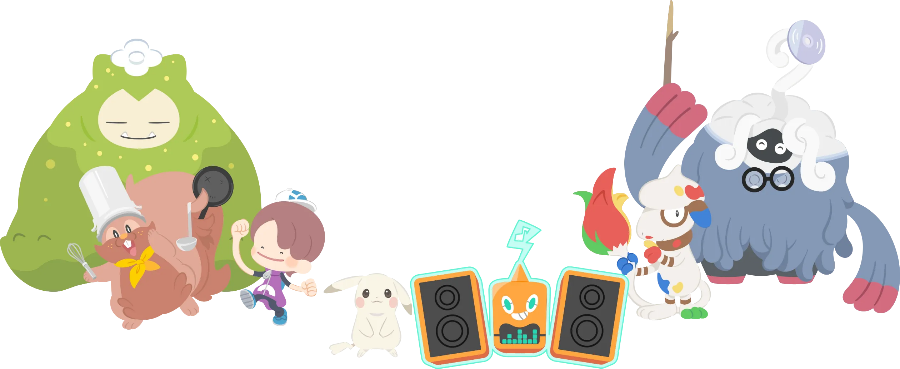
Pokopia opens in a cave in the Withered Wasteland, the parched ruins of what was once Fuchsia City. A Ditto tumbles out of a Poké Ball after a very long sleep and, remembering its Trainer, takes on a human shape. The only other soul around is a Tangrowth, soon known as Professor Tangrowth, who explains that the people and Pokémon vanished long ago and admits he still hopes the humans will come home one day.
With a Pokédex found in the ruins, Ditto starts restoring habitats, and each Pokémon that comes back teaches it something new. Freeing an Onix sealed inside a cave takes real rain, so Ditto coaxes a Slowpoke into yawning until a shower starts – enough to rouse Kyogre, which brings a proper downpour.
That opens the way to Bleak Beach, the cloud-covered remains of Vermilion City. Once Ditto gets a charging station working, the pale Pikachu Peakychu glows brightly enough to draw Raikou, which clears the sky and finally wakes Mosslax, a Snorlax that has slept so long it is covered in moss. In Rocky Ridges, the ash-buried old Pewter City, Ditto helps Chef Dente and DJ Rotom throw a party loud enough to wake Volcanion, which ends the night with fireworks. In the Sparkling Skylands, the floating fragments of Saffron City, Ditto and the Tinkaton engineer Tinkmaster rebuild the Silph Co. tower.
The final challenge
At the top of the rebuilt tower Mewtwo appears and points Ditto towards a disguised lighthouse back in the Withered Wasteland. Recordings left inside by a Team R grunt invite Ditto to an eight-part Team Initiation Challenge, and every task it completes earns a replica Badge. The last one calls for a precious photo, after which the lighthouse reveals itself as a rocket and blasts its cargo into space, where it is spotted by a human space station that appears to be home to Ditto’s Trainer.
Human Records scattered around the world fill in the rest: people left for space after climate disasters threatened famine, leaving their Pokémon in a modified PC Box designed to release them once stable habitats had returned.
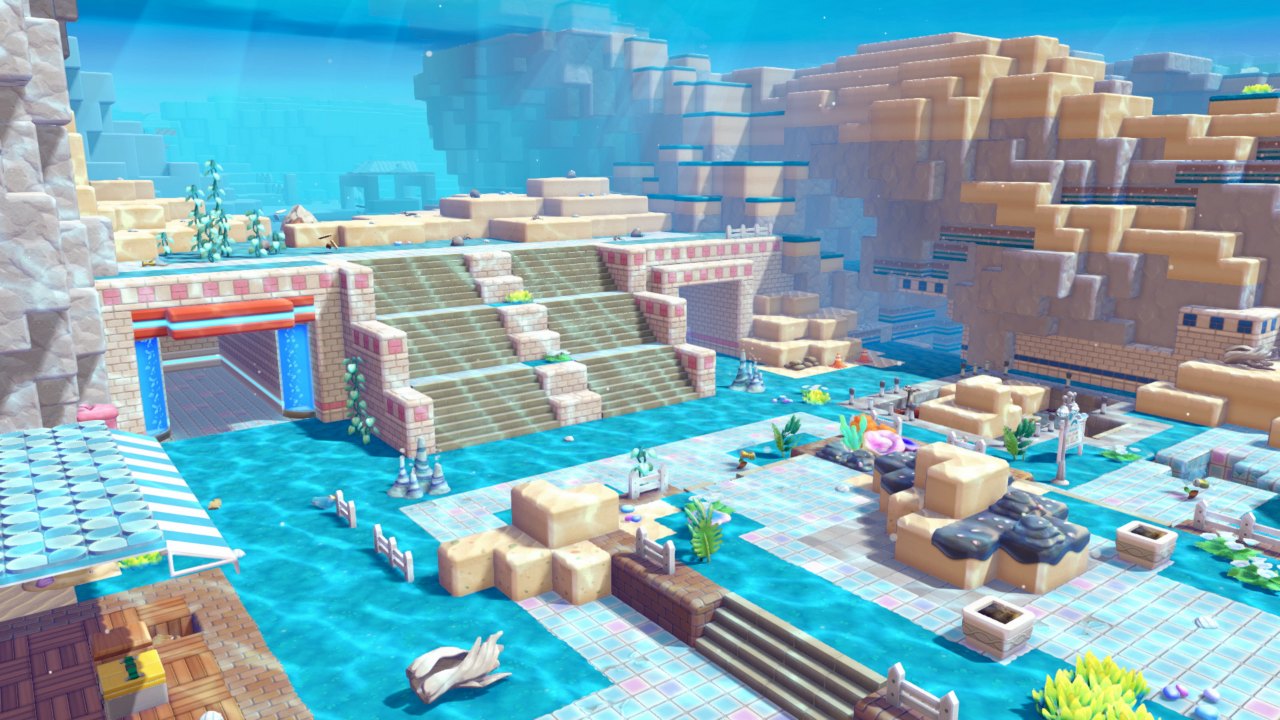
The Expansion Pass carries the story on. Once Ditto has learned Dive, a Popplio leads it through a sunken gate off Bleak Beach to Bubbly Basin, the drowned Cerulean City, and asks it to build a grand ocean temple.
Habitats: how Pokémon return
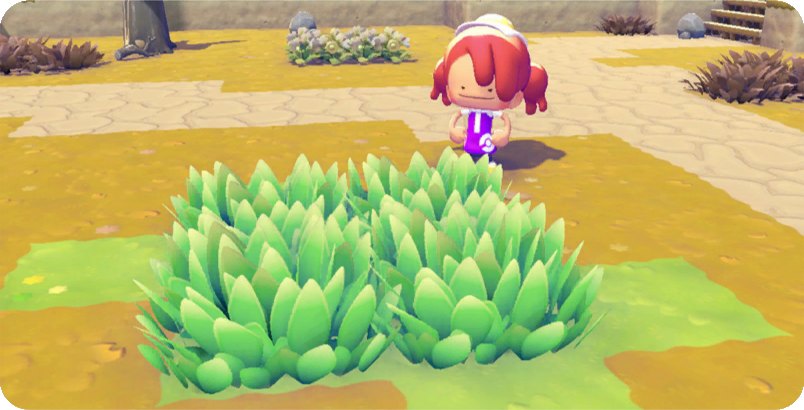
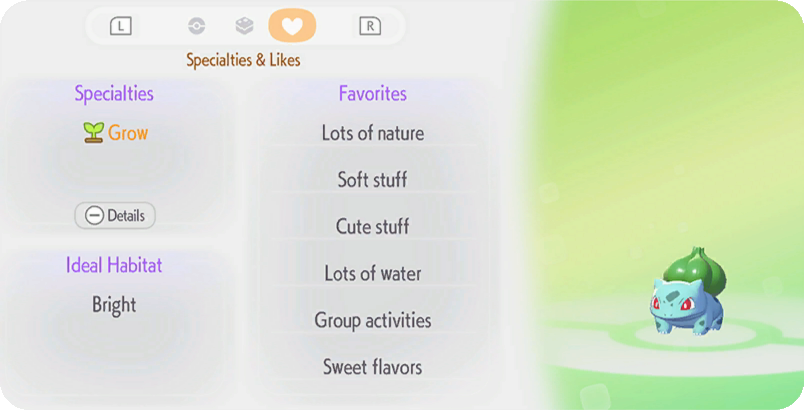
Habitats take the place of catching in Pokopia. A habitat is a small arrangement of terrain and objects that appeals to a particular group of Pokémon, and building one is the only way to bring most species back. The idea goes back to Shigeru Ohmori, who started at Game Freak as a map designer on Pokémon Ruby and Sapphire and wanted players to design homes for Pokémon themselves. The result turns filling the Pokédex into a gentle puzzle of plants, water, rocks and furniture, with every success logged in the Habitat Dex.
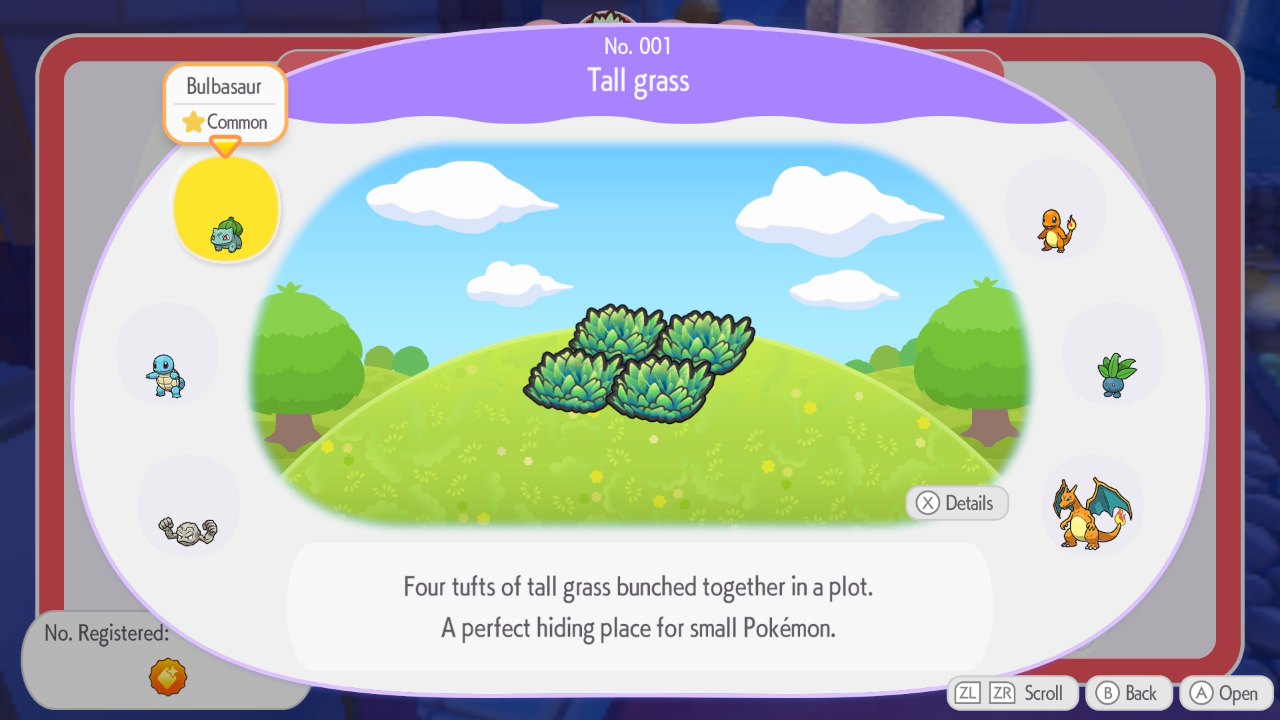
Ten habitats from the Habitat Dex
A sample from the Habitat Dex, from the very first patch of grass to the late furniture sets. Where a town is named, that Pokémon only comes to the habitat when it is built there:
| No. | Habitat | Requirements | Pokémon attracted |
|---|---|---|---|
| 001 | Tall grass | Tall grass ×4 | Bulbasaur, Charmander, Squirtle, Oddish, Geodude, Charizard |
| 002 | Tree-shaded tall grass | Large tree ×1, tall grass ×4 | Scyther, Bellsprout, Scizor, Skwovet, Pinsir, Heracross |
| 004 | Hydrated tall grass | Tall grass ×4, water ×2 | Squirtle, Cramorant (Palette Town), Sliggoo, Wartortle, Blastoise |
| 008 | Pretty flower bed | Wildflowers ×4 | Pidgey, Hoothoot, Combee, Magby (Palette Town), Eevee, Pidgeotto |
| 016 | Riding warm updrafts | Campfire (Burn) ×3 | Drifloon |
| 030 | Bed with a plush | Any bed ×1, any doll ×1 | Drifloon, Munchlax (Palette Town), Slowbro, Slowking |
| 037 | Smooth tall grass | Dry tall grass ×4, Smooth Rock ×1 | Onix |
| 180 | Nine flames | Firepit (Burn) ×9 | Ninetales |
| 182 | Gamer’s paradise | Gaming bed, iron table, gaming PC, gaming fridge, gaming chair | Metagross |
| 183 | Top pop | Pop art bed, pop art sofa, pop art table | Typhlosion |
Gameplay
Pokopia takes the gather, craft and build loop of sandbox games and gives it a Pokémon twist: almost everything Ditto does, from watering a field to smelting ore, depends on the Pokémon living nearby. Progress is measured by how lived-in and comfortable each town becomes.
- 300Pokémon in the Pokopia Pokédex
- 180+habitats in the Habitat Dex
- 32Pokémon specialties
- 1–4players, locally or online
Ditto and its moves




Building and crafting
Time, weather and things to do
Playing together
Towns
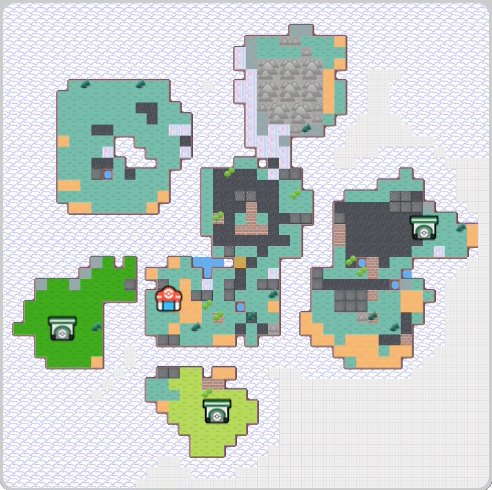
The base game spans four story towns, each built on the ruins of a Kanto city and each with its own Pokémon, materials and a broken-down Pokémon Centre to rebuild. A restored centre houses a shop, a healing machine and a 3D Printer, hosts event trades and can be moved later. Every town builds to a large project that needs many Pokémon working together, and finishing it opens the gate to the next. Earlier towns stay open for gathering and decorating, and Pokémon can be invited to live elsewhere.
| Town | Built on | What happens there | Legendary |
|---|---|---|---|
| Withered Wasteland | Fuchsia City | Ditto wakes up and meets Professor Tangrowth; a Slowpoke’s yawn and Kyogre’s rain free Onix | Kyogre |
| Bleak Beach | Vermilion City | A charging station lets Peakychu glow, Mosslax finally wakes, and Smearguru teaches painting | Raikou |
| Rocky Ridges | Pewter City, buried in ash | Rescuing Chef Dente and throwing a party with DJ Rotom | Volcanion |
| Sparkling Skylands | Saffron City, broken into floating islands | Rebuilding Silph Co. with Tinkmaster | Mewtwo, at the top of the tower |
| Palette Town | Three empty islands reached from the Withered Wasteland | No story: a free building space whose recipes unlock with its environment level | – |
| Bubbly Basin (Expansion Pass) | Cerulean City, sunk beneath the sea | Building a grand ocean temple for Popplio | – |


Characters
Pokopia’s people are long gone, so its cast is made up of Pokémon, several of them unique versions with their own names, designs and Pokédex entries.

Ditto
The player character: a Ditto let out of a Poké Ball after a long sleep, which takes a human appearance based on its memory of its Trainer. Its knack for copying lets it learn other Pokémon’s moves, and it becomes the driving force behind rebuilding the land. You choose its look and outfits, and the story hints that its Trainer is now living on a human space station.

Professor Tangrowth
A Tangrowth living alone in a cave in the Withered Wasteland, convinced he is the last resident left. He guides Ditto through the main missions and hands out story requests, all the while hoping the humans will return. He has his own Pokédex entry as a special form of Tangrowth.

Peakychu
A pale, washed-out Pikachu found on gloomy Bleak Beach and listed in the Pokédex as Pale Pikachu. It soaks up electricity, and once Ditto gets a charging station running, Peakychu glows brightly enough to attract Raikou, whose arrival clears the clouds that have kept the coast in darkness.

Mosslax
A Snorlax that has slept so long that moss has grown all over it, recorded in the Pokédex as Mossy Snorlax. It blocks the way at Bleak Beach until the clouds lift, and waking it is one of the area’s big story goals.

Smearguru
A paint-spattered Smeargle with a multicoloured tail brush who works under a gazebo at Bleak Beach and calls himself a starving artist. Bring him a Leppa Berry for red paint and he takes Ditto on as a pupil, teaching paint recipes and later painting patterns on to furniture. Meeting him is entirely optional.

Chef Dente
A Greedent cook trapped in his cliffside restaurant in Rocky Ridges, listed in the Pokédex as Cook Greedent. Once rescued, he teaches recipes for dishes that power up Ditto’s moves and helps organise the party that wakes Volcanion.

DJ Rotom
A Rotom living inside a stereo in a mine chamber in Rocky Ridges, recorded in the Pokédex as Stereo Rotom. Working with Chef Dente, it supplies the music for the area’s big party, which gets loud enough to rouse the Legendary Volcanion from the volcano.
Tinkmaster
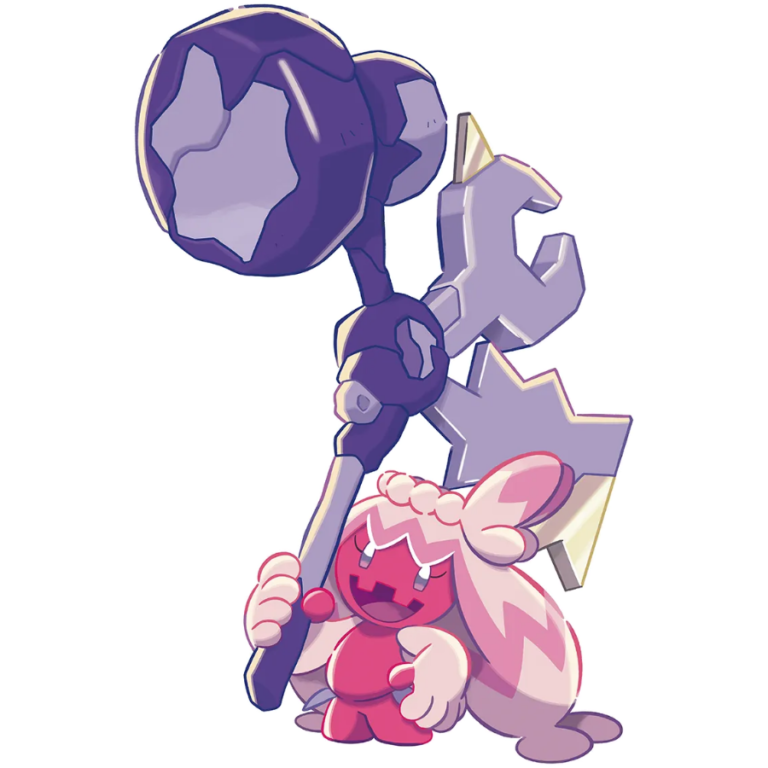
A Tinkaton engineer who has put together makeshift structures from salvage on the floating islands of the Sparkling Skylands. Tinkmaster leads Ditto and the Pokémon of every town in rebuilding a huge human tower, the old Silph Co. building, and appears in the Pokédex as Supervisor Tinkaton.

Popplio
The Expansion Pass guide. Popplio turns up at Bleak Beach once Ditto has learned Dive, leads it through a sunken gate to Bubbly Basin on the sea floor and asks it to build a grand ocean temple.
Team R’s recordings: Voice recordings left by a Team R grunt in a disguised lighthouse in the Withered Wasteland invite Ditto to the eight-part Team Initiation Challenge. Each completed task earns a replica Badge, and finishing the last sends the lighthouse into space as a rocket.
Pokémon
The main Pokopia Pokédex lists 300 Pokémon, every one of them obtainable, in its own order: it opens with the Kanto starters and closes with Mewtwo and Mew. Most come from Kanto and Johto, with picks from every later generation and a generous run of Legendary Pokémon. Story characters such as Professor Tangrowth, Peakychu and Mosslax have their own form entries, and Paldean Wooper is the only regional form. Nothing is ever caught: Pokémon arrive through habitats and stay as friends who teach moves and work with their specialties.
Story Pokémon
 Dittoyou
 TangrowthProfessor Tangrowth
 PikachuPeakychu
 SnorlaxMosslax
 SmeargleSmearguru
 RotomDJ Rotom
 GreedentChef Dente
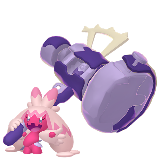 TinkatonTinkmaster
 PopplioExpansion Pass guide
Legendary and Mythical Pokémon
The Pokédex also has room for a long line of Legendary Pokémon, several of which have a hand in the story:
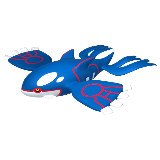 Kyogrebrings the rain
 Raikouclears Bleak Beach
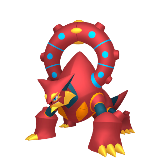 Volcanionends the party
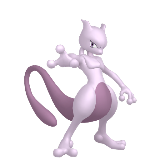 MewtwoPokopia No. 299
 MewPokopia No. 300
 Articuno#144
 Zapdos#145
 Moltres#146
 Entei#244
 Suicune#245
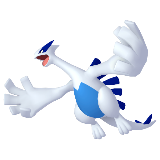 Lugia#249
 Ho-Oh#250
Event Pokémon
Limited-time events add Pokémon to a separate Event Pokédex, which had reached nine entries by October 2026. Those brought in so far include:
 HoppipMarch 2026
 SkiploomMarch 2026
 JumpluffMarch 2026
 JirachiJune 2026
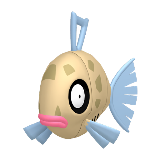 FeebasAugust 2026
 MiloticAugust 2026
 PumpkabooOctober 2026
 GourgeistOctober 2026
Updates, events & the Expansion Pass
Pokopia has been updated regularly since launch. Free patches have fixed bugs and raised building limits, limited-time events start in towns with a rebuilt Pokémon Centre, and Mystery Gift hands out extras, including a Ditto rug for anyone who buys the game by 31 January 2027.
The Expansion Pass
The paid Pokémon Pokopia Expansion Pass went on sale on 9 June 2026 and is being released in three parts. Part 1, Bubbly Basin, arrived on 5 August 2026 alongside Version 2.0.0, which added the move Dive, underwater building and new items. It opens an underwater town built on the sunken Cerulean City, with its own Pokédex of sea-dwelling Pokémon and new outfits for Ditto.
Part 2, due in late 2026, brings accessories for Pokémon, new furniture and more Pokémon but no new town; Part 3, the last, adds a new town in 2027. Buying the pass by 31 August 2027 adds 30 Rare Pokémetal, and Nintendo eShop also sells a bundle of the game and the pass.
Free updates and limited-time events
Free updates
| Version | Released | What changed |
|---|---|---|
| 1.0.1 | 4 March 2026 | Day-one patch with bug fixes, out the day before launch |
| 1.0.2 | 17 March 2026 | Fixed story-blocking bugs and made the paths through the Withered Wasteland and Bleak Beach clearer |
| 1.0.3 | 8 April 2026 | Fixed Dream Island travel, habitat relocation and Cloud Island errors |
| 1.0.4 | 22 April 2026 | Pokémon Centres can be moved during events; freezes and stalled requests fixed |
| 1.1.0 | 9 June 2026 | New conversations, the electric item limit doubled and about 40 bug fixes |
| 1.1.1 | 18 June 2026 | Fixed problems with the placed-item limit |
| 2.0.0 | 5 August 2026 | Dive, underwater building and new items, with Bubbly Basin for Expansion Pass owners |
Limited-time events
| Event | Dates | What it brought |
|---|---|---|
| First Featured Cloud Island | From 6 March 2026 (Japan) | An official island built from fan submissions |
| More Spores for Hoppip | 9–24 March 2026 | Hoppip, Skiploom and Jumpluff |
| April Fools’ Day quiz | 1 April 2026 | A Sudowoodo quiz with an inflatable Sudowoodo as the prize |
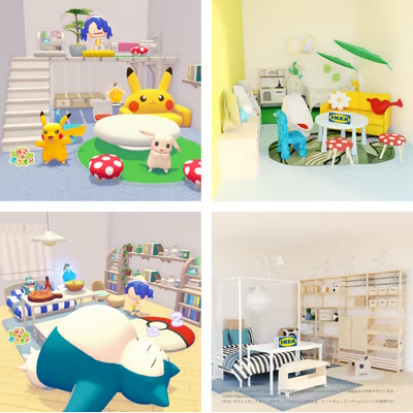
| IKEA Island | 3 April – 30 June 2026 (Japan) | A Cloud Island collaboration with IKEA Japan |
| Bulbasaur’s Jump Rope Contest | 19–27 April 2026 | A contest built on the jump rope activity |
| Sableye event | 29 April – 14 May 2026 | Crystal fragments to trade for items |
| Wish Upon a Jirachi | 23 June – 8 July 2026 | Jirachi and cosmic-themed furniture |
| Zorua’s Hide and Sneak Contest | 19–27 July 2026 | A contest built on hide-and-sneak |
| Fetching Scales for Feebas | 13–28 August 2026 | Feebas and Milotic |
| Pumpkaboo’s Sweet Surprises | 17 October – 1 November 2026 | Pumpkaboo, Gourgeist and spooky decor |
Regional Variations
Pokopia came out on the same day everywhere, in nine languages (Japanese, English, French, German, Italian, Spanish, Korean, and Simplified and Traditional Chinese), so the differences between regions are small:
- The Pokémon Company publishes the game in Japan; everywhere else, Nintendo publishes it together with The Pokémon Company.
- The Japanese title is ぽこ あ ポケモン (Poco a Pokémon), which players and the press shorten to ぽこポケ, rather than a version of the English name. The Korean title is 포켓몬 포코피아 (Pokémon Pokopia), and the Chinese releases keep the English title.
- Smearguru is called ドーブルせんせい (Doble-sensei) in Japanese, Doble being Smeargle’s Japanese name.
- Japan got a run of Featured Cloud Islands tied to local promotions, from the stars of the Japanese TV adverts to IKEA Japan and CoroCoro magazine (see In other media).
- Nintendo’s own sales tables count only copies sold outside Japan, where Nintendo is the publisher; Japanese sales are reported separately.
Glitches, exploits and oddities
Pokopia launched with its share of bugs, most of them fixed within weeks. These are the best known:
Squirtle stuck in a tree
Early in the story the request ‘Help make a home!’ could stall because Squirtle sometimes got wedged inside a tree and couldn’t finish its part of the job. The launch build also had a cracked bridge block that got in the way of the hunt for the Pokémon Centre, a sequence that stopped Professor Tangrowth repairing his bridge, and a Rotom event in Rocky Ridges that wouldn’t trigger. Version 1.0.2 fixed all of them on 17 March 2026 and made the routes through blocked paths in the Withered Wasteland and Bleak Beach clearer.
Dream Island detour to Palette Town
At launch, a trip to a Dream Island could drop Ditto in Palette Town instead. Other early problems included dark screens when moving between towns or when the date changed, habitats that could no longer be moved, construction that wouldn’t finish until the next day, seasonal Pokémon disappearing from Cloud Islands and errors when creating a new Cloud Island. Version 1.0.3 sorted them out on 8 April 2026 and partly fixed controllers that kept on vibrating.
Ludicolo in two places at once
Until Version 1.1.0, a Ludicolo could be duplicated so that the same Pokémon appeared in more than one town at once. The 9 June 2026 update fixed it along with about 40 other bugs, among them cooking stopping halfway, Pokémon Centre and Poké Mart transactions ending early, Hoppip and its evolutions refusing to fly, clipping at the Chansey habitat and a freeze during a Skyland Building 4F event.
Items lost when the host changed
In multiplayer, items could vanish when hosting duties passed from one player to another, and goods bought from a Cloud Island shop could disappear too; both were fixed in Version 1.1.0 on 9 June 2026. Before that, Version 1.0.4 had fixed Cloud Island Pokémon Centres not offering trades, a freeze at the Pokémon Centre PC and indestructible platforms left behind after picking up a relocation kit.
Videos & media
The launch trailer, a tour of the developers’ own island and the Expansion Pass trailers:
The launch trailer, from March 2026.
Developers from Game Freak, Koei Tecmo and The Pokémon Company show off an island they built together.
The Expansion Pass reveal, setting out its three parts.
A first look at Dive and the underwater town of Bubbly Basin.
The launch trailer for Bubbly Basin, Expansion Pass Part 1.
A preview of Expansion Pass Part 2 and its accessories for Pokémon.
Trivia & facts
-
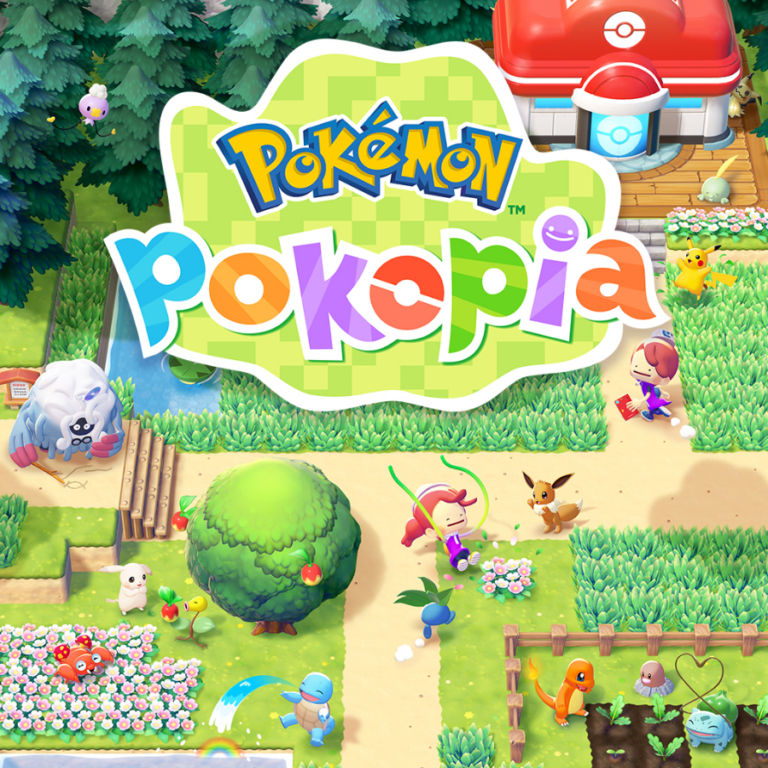
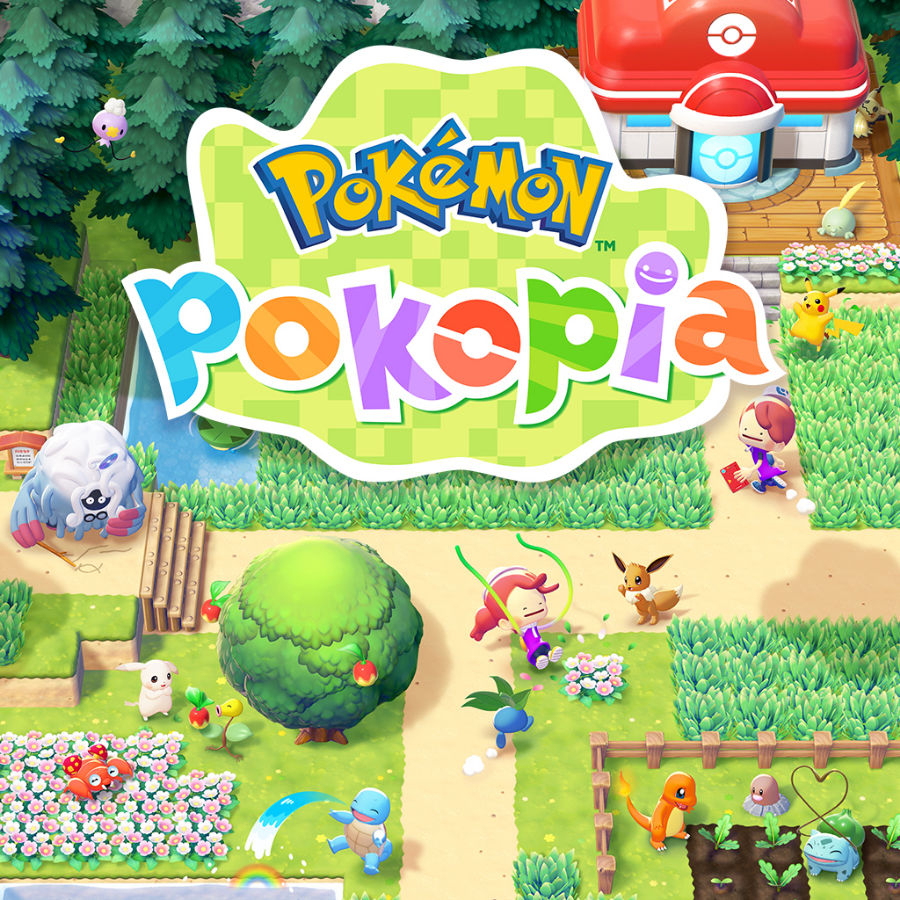
The game’s icon. Pokopia was the first Pokémon game released only for Nintendo Switch 2.
- It was also the first Nintendo-published game sold on a Game-Key Card, even though Nintendo had earlier said it didn’t plan to use the format for its own titles.
- The game marked Koei Tecmo’s return to Pokémon, 14 years after Pokémon Conquest.
-
The Japanese logo. The Japanese title, Poco a Pokémon, echoes “poco a poco”, the Italian and Spanish phrase for “little by little”: a good fit for a game about rebuilding a world bit by bit.
- Bleak Beach is built on the ruins of Vermilion City, and the wreck of the S.S. Anne still lies in its harbour.
- Despite the name, Palette Town looks nothing like the Pallet Town of the core games, and it has no story of its own.
- The Pokopia Pokédex starts like the National Pokédex, with Bulbasaur, Ivysaur and Venusaur, but soon goes its own way, finishing with Mewtwo at No. 299 and Mew at No. 300.
- Paldean Wooper is the only regional form in the main Pokédex.
- Smearguru is the only specially designed Pokémon in the game that the story never requires you to meet.
- Pokopia uses the newer item names Rainbow Feather and Silver Feather, introduced in Pokémon Scarlet and Violet even though neither item could be obtained in those games.
- Famitsu gave it 39 out of 40, with three of its four reviewers awarding a perfect 10.
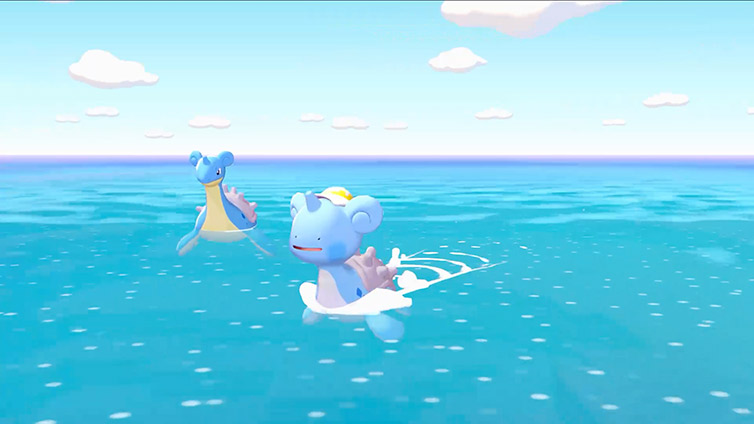
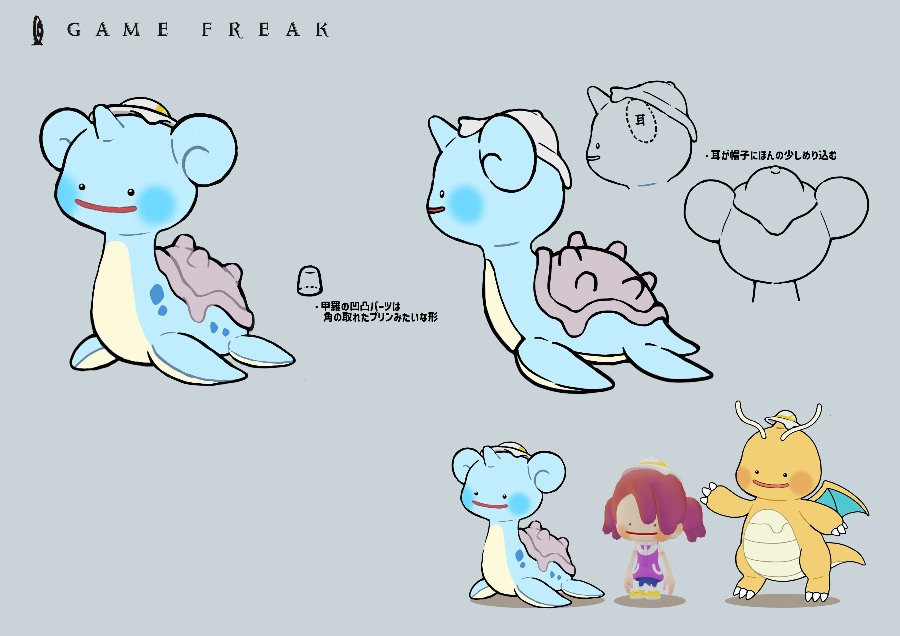
- Early concept art shows Ditto transforming wholesale into Pokémon such as Lapras and Dragonite, rather than taking on a human shape.
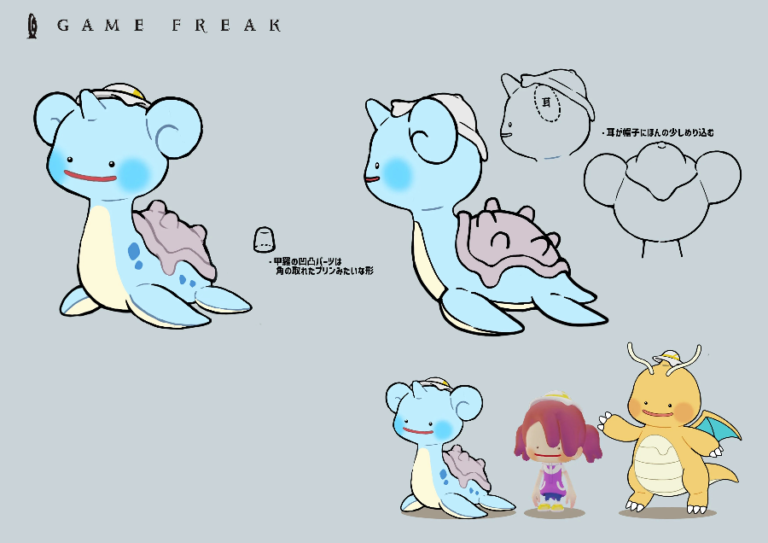
Concept art: Ditto as Lapras 
Concept art: Ditto as Dragonite

Legacy
What came after
- Worldwide launch – 5 March 2026. Released on the same day in every region, in nine languages
- 2.2 million in four days – 12 March 2026. Nintendo announced worldwide sales of more than 2.2 million, a million of them in Japan
- Over 4 million sold – 8 May 2026. Nintendo’s annual results put sales above 4 million
- Expansion Pass on sale – 9 June 2026. The three-part paid DLC went on sale alongside Version 1.1.0
- Bubbly Basin – 5 August 2026. Expansion Pass Part 1 arrived with Version 2.0.0, adding Dive and underwater building
- 5 million sold – 14 August 2026. Nintendo and The Pokémon Company announced sales of more than 5 million
- Japan Game Awards Grand Award – September 2026. The top prize at the Japan Game Awards 2026, presented during Tokyo Game Show
- Expansion Pass Part 2 (upcoming) – due late 2026. Accessories for Pokémon, new furniture and more Pokémon, but no new town
- Expansion Pass Part 3 (upcoming) – due 2027. The final part, with a new town
Where to play it today
Pokopia is easy to get hold of in October 2026. It is sold as a download from Nintendo eShop and My Nintendo Store and in shops as a Game-Key Card, which still needs an internet download and has to stay in the console while you play. Either way you need a Nintendo Switch 2, and online play and Cloud Islands need a Nintendo Switch Online membership. The game is still actively supported: the Pumpkaboo’s Sweet Surprises event runs until 1 November 2026, and Expansion Pass Part 2 is due in late 2026.
How it was made
Pokopia started as a pitch from Shigeru Ohmori, director of Pokémon Scarlet and Violet, who suggested a spin-off while that game was still in development. A former map designer, he wanted it to let players create Pokémon habitats for themselves.
Game Freak had never made a sandbox building game, so The Pokémon Company suggested Koei Tecmo’s Omega Force, the studio behind Dragon Quest Builders 2. Ohmori is credited as concept and senior director, with Koei Tecmo’s Takuto Edagawa as chief director.
The game was revealed in a Nintendo Direct on 12 September 2025. Its release date and US$69.99 price were confirmed on 11 November 2025, together with the news that the boxed edition would be a Game-Key Card; digital pre-orders opened the next day, and an extended trailer on 13 November introduced Professor Tangrowth, Peakychu, Mosslax, Smearguru, the customisation options and GameShare. The developers gave interviews to VGC and Taiwan’s GNN in February 2026, a developer island tour went up on the official Pokémon YouTube channel shortly before launch, and the day-one patch, Version 1.0.1, arrived on 4 March 2026, the day before release.
In other media
Sales & reviews
Sales figures
Pokopia was a hit from day one. On 12 March 2026 Nintendo announced that more than 2.2 million copies had been sold worldwide in the first four days, physical and digital combined, a million of them in Japan. Nintendo’s annual results on 8 May put the total above 4 million, and on 14 August Nintendo and The Pokémon Company announced that it had passed 5 million: by VGC’s reckoning, roughly one copy for every five Switch 2 consoles sold at the time. Nintendo’s own top-selling titles table showed 3.68 million as of 30 June 2026, but that figure only counts copies sold outside Japan, where Nintendo is the publisher. Even so, it ranked fourth among Nintendo’s Switch 2 releases, behind Mario Kart World, Donkey Kong Bananza and Pokémon Legends: Z-A – Nintendo Switch 2 Edition.
- 2.2msold in the first four days
- 5m+sold by August 2026
- 89on Metacritic, the highest for a Pokémon game
- 39/40from Famitsu
Review scores
Pokopia earned the best reviews of any Pokémon game to date. Nintendo Life called it “the freshest Pokémon experience in a long time”, while GameSpot’s Steve Watts found that it “gives you a massive amount to do and a story that propels you forward”. The scores, from the most generous down:
Pokopia was met with near-universal acclaim. Critics reached for comparisons with Minecraft, Animal Crossing, Dragon Quest Builders and Viva Piñata, and GameSpot argued that it fixed weaknesses in both Animal Crossing and Dragon Quest Builders. The loop of finding Pokémon, learning their moves and reshaping the land was called cosy and hard to put down, and the habitat system was singled out for turning catching into environmental puzzles. Reviewers also enjoyed the toy-like art, the warm and often funny writing, the mystery of where the humans went and the sheer amount to do, and Nintendo Life found it ran smoothly on Switch 2. The complaints were about a slow start, real-time waits for big builds, tedious ingot crafting late on, awkward storage management, fiddly Rock Smash aiming, limited couch co-op and a few Pokémon that look odd in the art style. TheGamer’s 3/5 was a rare lukewarm verdict.
Awards and honours:
- Japan Game Awards 2026: the Grand Award, plus an Award for Excellence (September 2026)
- Golden Joystick Awards 2026: nominated for Console Game of the Year (the winners are announced on 11 November 2026)
Media & artwork
Further reading
More Switch 2, Kanto and cosy Pokémon links on the site: