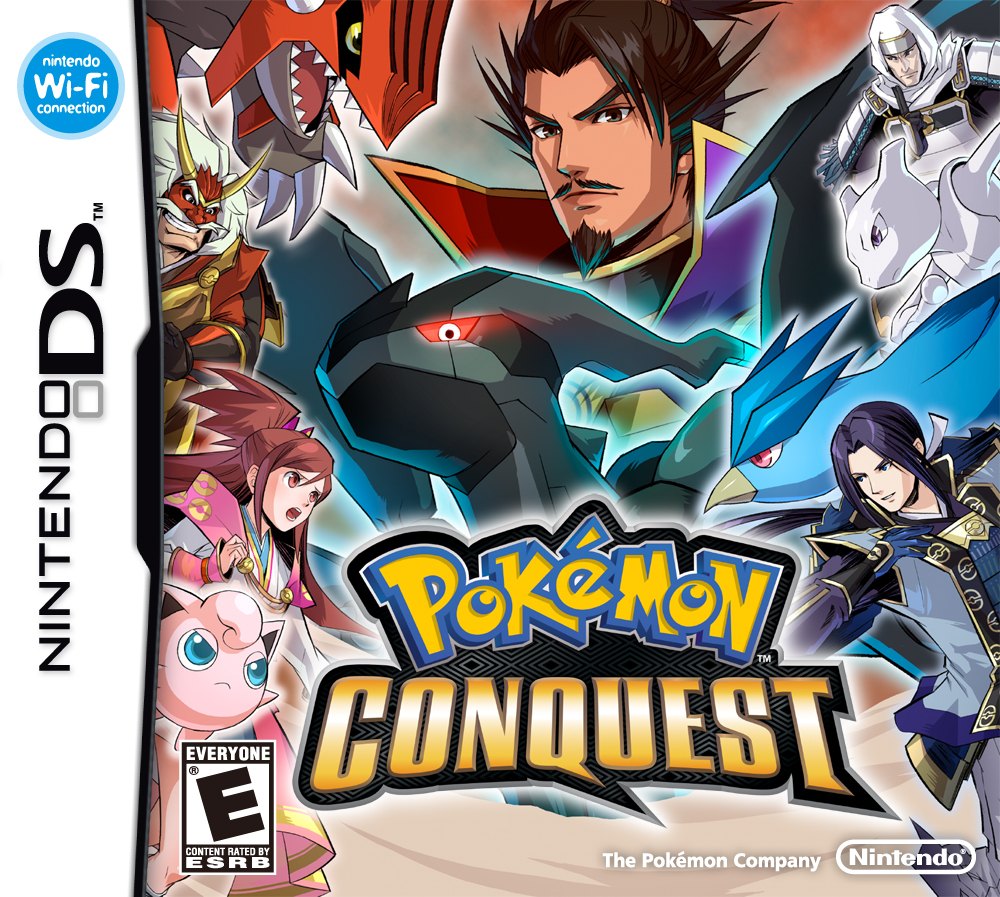
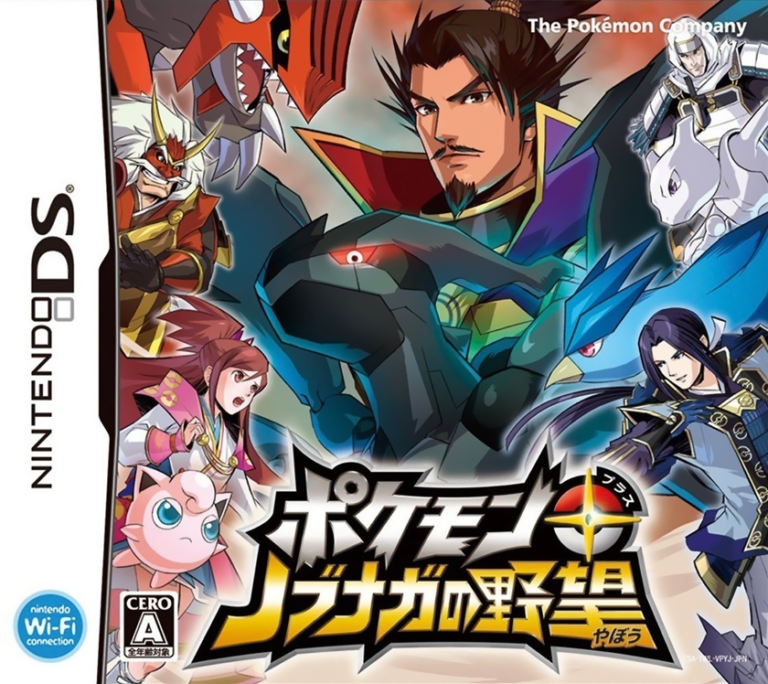
  |
|
| Titles | Pokémon Conquest ポケモン+ノブナガの野望 (Pokémon Purasu Nobunaga no Yabō) Also known as Pokémon + Nobunaga’s Ambition |
| Platform | Nintendo DS (Nintendo DSi-enhanced) |
| Developer | Koei Tecmo (then Tecmo Koei Games) |
| Publisher | Nintendo (The Pokémon Company in Japan) |
| Director | Osamu Mieda |
| Producers | Hisashi Koinuma · Toshio Miyahara · Takato Utsunomiya; general producer Kou Shibusawa |
| Sound | Shin-ichiro Nakamura (sound director) |
| Players | 1–2 (two-player battles over DS Wireless) |
| Genre | Turn-based tactical role-playing game |
| Pokémon | 200 from Generations I–V, ten of them Legendary or Mythical |
| Stories | 38: The Legend of Ransei, 34 post-game stories and 3 downloadable ones |
| Released | 17 March 2012 (Japan) · 18 June 2012 (North America) · 21 June 2012 (Australia) · 27 July 2012 (Europe) |
| Re-releases | None – not on Nintendo Switch Online or any download service (October 2026) |
| Rating | ESRB E · PEGI 3 · CERO A · ACB G |
| Sales | 345,374 in Japan by December 2013 · an estimated 1.02 million worldwide |
Overview
 Released on the Nintendo DS, Pokémon Conquest, also known as Pokémon + Nobunaga’s Ambition, is a turn-based strategy game and a crossover with the Nobunaga’s Ambition game series, portraying the unification of the Ransei region, a land inspired by feudal Japan during the Sengoku period.
It is the first Pokémon game in this genre, featuring 200 Pokémon from the first five generations. The game has a rather unique gameplay and storyline, where both Japanese-style Warlords and Pokémon work together to unite the divided Ransei region.
Pokémon Conquest was officially revealed at the Jump Festa 2012 event on 17 December 2011, after the first CoroCoro Magazine of 2012 had teased a surprise announcement. CoroCoro’s February 2012 issue then gave the first details, and the game’s official website launched not long after.
Warlords and Pokémon unite to conquer the land!
— Official description
Quick Answers
The questions people ask about Pokémon Conquest, answered first and explained further down the page.
How do you recruit Warlords and Warriors in Pokémon Conquest?
Knock out their Pokémon in one of three ways: within four turns, with a super-effective move, or without it damaging any of your team. For a Warlord, the finishing blow must also come from another Warlord’s Pokémon. Knockouts by poison or field hazards never count, and an enemy army’s Warriors only join once you take its last kingdom. More →

How many Pokémon are in Pokémon Conquest?
Exactly 200, taken from the first five generations. Eevee is first in the Gallery and Rayquaza is last. Ten are Legendary or Mythical: Terrakion, Articuno, Registeel, Groudon, Dialga, Mewtwo, Reshiram, Zekrom, Arceus and Rayquaza. Apart from Arceus in the main story, these only appear in special encounters, each tied to a particular Warlord. More →
How do you evolve Eevee in Pokémon Conquest?
Each Eeveelution has its own rule. Vaporeon, Jolteon and Flareon need Eevee’s Warrior to hold a Water Stone, Thunderstone or Fire Stone while its link rises. Espeon and Umbreon need 70% link in Illusio or Yaksha. Leafeon needs 94 Defense in Greenleaf, and Glaceon needs 91 Attack in Nixtorm. Keiji gives you all three stones during the main story. More →
How many stories are there in Pokémon Conquest?
There are 38. The Legend of Ransei is the main story, and you can’t replay it. Beating it opens eight more, which unlock the rest of the 34 post-game stories on the cartridge, ending with The Two Heroes of Ransei. Three more, for Keiji, Okuni and Ranmaru, were downloadable. That makes 37 to choose from, one per Warlord. More →
Can you still get the downloadable stories and Reshiram?
Yes, on North American copies. Nintendo Wi-Fi Connection closed in May 2014, but the passwords still work. They unlock The Free Spirit’s Path (EDw8w2HaRn), A Date With Destiny (gauRnak2nR), A Fate Born of Beauty (2aL38Ek2Rx) and the Hideyoshi and Reshiram event (2rz3XFEKxR). Japan only had these over Wi-Fi. More →
Is Pokémon Conquest on Nintendo Switch Online?
No. As of October 2026 it has never been re-released. It isn’t on Nintendo Switch Online, and it never came to the Wii U’s DS Virtual Console. The only way to play it is the original DS Game Card, which works on a DS, DS Lite or DSi and on every 3DS and 2DS model. More →
Story
The story starts out with the player picking to play either as a male or a female, then choosing a name for their character, who’s the newest Warlord in the Ransei region and the ruler of the Aurora Kingdom.
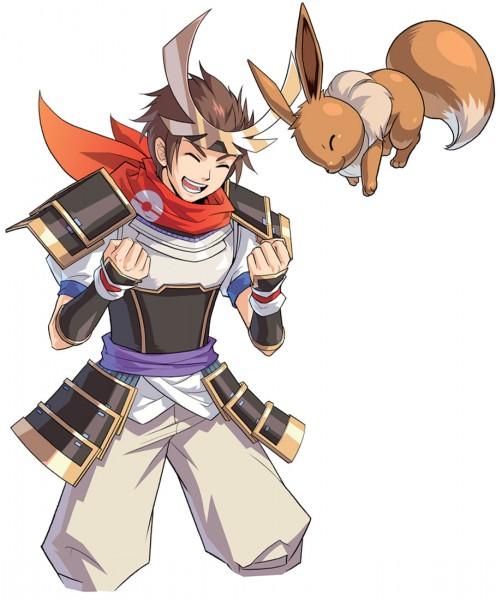
The region is divided into seventeen Kingdoms, where a Warlord governs each one of them. The region is also home to a legend that foretells the return of a mighty being that created the whole region, once it is finally united. After being mocked by the three Warlords Masanori, Mitsunari and Kiyomasa, who find the player unworthy of such a title, the underrated Warlord gets challenged by two Warriors from the Kingdom of Ignis. A girl named Oichi joins the player’s side in the battle, and together they beat the Warriors. She then entrusts the player with the responsibility of uniting the feuding Kingdoms, all while teaching them most of the game mechanics and tricks.
The player starts by first conquering the three Kingdoms of Ignis, Greenleaf and Fontaine, in order, crushing their respective Warlords Hideyoshi, Motonari and Motochika. As the player progresses as a Warlord, they learn how to recruit other Warlords to team up with them, along with new wild Pokémon.
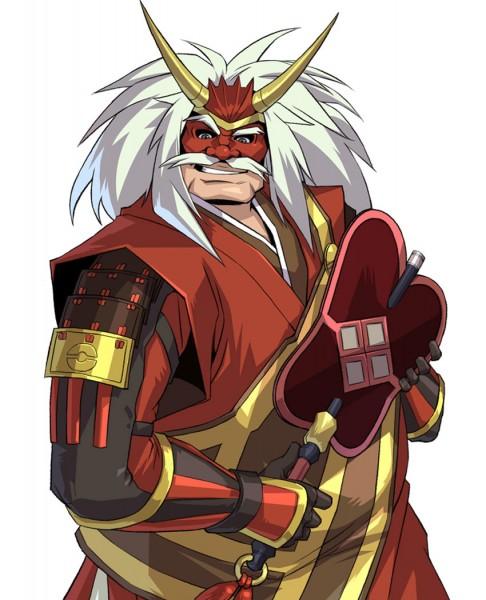
They decide, next, to conquer the Violight, Chrysalia and Pugilis Kingdoms, ruled respectively by Ginchiyo, Yoshimoto and Yoshihiro. Once that is done, the Kingdom of Illusio governed by Kenshin and the Kingdom of Terrera governed by Shingen become available for conquest. As the player decides to attack either one of them, the selected Kingdom responds with an attack on one of the player’s border Kingdoms, forcing them to go and defend it. Succeeding in defending their Kingdom, the player transforms into a stronger Warrior and goes on to defeat the two rivals, winning both of them over to the player’s side. As Kenshin and Shingen join the player’s party, the famous Nobunaga, who turns out to be Oichi’s brother, appears and reveals that he too seeks to reunite the whole region under his supreme rule.
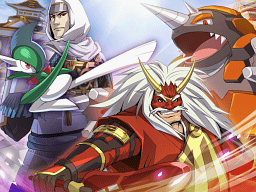
The player continues to conquer the rest of the Kingdoms in the area – Cragspur, Avia, Viperia and Yaksha – and obtains throughout the process three evolutionary stones from Keiji, the Fire, Water and Thunder Stones, that can be used to evolve Eevee. Now that all the available Kingdoms are defeated, Ieyasu, Nō and Mitsuhide, who are Nobunaga’s strongest Warlords, appear with their respective Kingdoms Valora, Spectra and Nixtorm. Beating them gives the player access to the last Kingdom, Dragnor, where Nobunaga resides.
With the final Kingdom under control, strange lights shoot out from different parts of the region toward a tower in Dragnor, where the player finds the Legendary Arceus, the awaited creator from the legend. The player successfully links up with Arceus, but is then, once again, confronted by Nobunaga and five of his Warlord followers – Nō, Ieyasu, Mitsuhide, Hideyoshi and Ranmaru – revealing that his true motive was to get Arceus to appear and then defeat it. The real final challenge takes place between the player and the six Warlords, from which the player emerges as the victor and ultimately reunites the region and restores peace to the land. Arceus then disappears, stating that it is destined to meet with the player again.
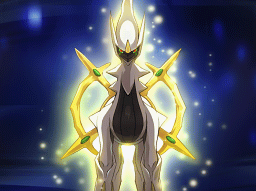

Completing the main scenario, The Legend of Ransei, will unlock the post-game stories, in the form of different smaller missions, each with their own short storylines.
The road to Dragnor, battle by battle
| Battle | Where | Notes |
|---|---|---|
| Two Ignis Warriors Opening battle · Fire |
Aurora (south of the south-western peninsula) | The first battle in the game. Mitsunari, Kiyomasa and Masanori have just mocked the Hero, and Oichi steps in to help and explains the controls. |
| Hideyoshi Kingdom Warlord · Fire |
Ignis (just north of Aurora) | The first kingdom you conquer. Hideyoshi turns up again later in the story, and by the final battle he is fighting for Nobunaga with an Infernape. |
| Motonari Kingdom Warlord · Grass |
Greenleaf (south-western coast) | The second conquest. With the Motochika and Motonari event, he and Motochika join automatically once Greenleaf and Fontaine have both fallen. |
| Motochika Kingdom Warlord · Water |
Fontaine (east side of the south-western peninsula) | The third conquest. He carries a shamisen, and his Rank II Warrior Skill is Rebellion. His post-game story, The Rebel, asks you to defeat Nobunaga’s army before a deadline. |
| Ginchiyo Kingdom Warlord · Electric |
Violight (middle of the west coast) | One of the second group of three kingdoms, with Chrysalia and Pugilis. |
| Yoshimoto Kingdom Warlord · Bug |
Chrysalia (westernmost kingdom) | A courtly Warlord partnered with the Pineco line, ruling one of the second group of three kingdoms. |
| Yoshihiro Kingdom Warlord · Fighting |
Pugilis (west of central Ransei) | A battle-hungry veteran whose Rank II Warrior Skill is the Satsuma war cry ‘Chesto!’. Once Pugilis falls, Illusio and Terrera open up. |
| Kenshin Rival Warlord · Psychic |
Illusio (north of central Ransei) | If challenged, he invades one of the Hero’s kingdoms instead. Holding it triggers the Hero’s transformation, and Kenshin and Shingen then both side with the Hero. |
| Shingen Rival Warlord · Ground |
Terrera (south of central Ransei) | Kenshin’s rival. The pair’s feud runs through their stories, The Joy of Battle and Archenemies. |
| Ujiyasu Kingdom Warlord · Rock |
Cragspur (centre of the south-eastern peninsula) | A fatherly old campaigner with a cane, met after Nobunaga first appears. His story is That Which He Holds Dear. |
| Nene Kingdom Warlord · Poison |
Viperia (middle of the east coast) | A ninja who mothers Hideyoshi’s retainers, partnered with the Golbat line. Her Warrior Skill Nene Ninpō keeps its Japanese name in English. |
| Kotarō Kingdom Warlord · Dark |
Yaksha (southern tip of the south-eastern peninsula) | A mischievous ninja who rules the Dark kingdom. His story, A Shroud of Darkness, is one of the first eight unlocked. |
| Masamune Kingdom Warlord · Flying |
Avia (base of the north-eastern peninsula) | One of the four kingdoms taken after Nobunaga first appears, along with Cragspur, Viperia and Yaksha. |
| Nō Nobunaga’s general · Ghost |
Spectra (north-eastern coast) | The first of Nobunaga’s three generals. They only appear once every other kingdom apart from Dragnor is under the Hero’s control. |
| Ieyasu Nobunaga’s general · Steel |
Valora (south-western edge of the north-eastern peninsula) | A steady, defensive Steel-type general partnered with Aggron. Beating him is one of the three conquests needed before Dragnor opens. |
| Mitsuhide Nobunaga’s general · Ice |
Nixtorm (far north) | The last of the three generals, fighting alongside his Lapras. Nixtorm is also the kingdom where Eevee can evolve into Glaceon. |
| Nobunaga Final Warlord · Dragon |
Dragnor (middle of the north-eastern peninsula) | Dragnor is the seventeenth and last kingdom. Taking it sends pillars of light from across Ransei to the tower where Arceus waits. |
| Arceus Legendary encounter · Normal |
Tower in Dragnor | Not a normal fight: the aim is to link the Hero with Arceus, the creator of Ransei. Once you succeed, Nobunaga’s army attacks. |
| Nobunaga’s army Final battle · Mixed |
Tower in Dragnor | A full six-on-six battle against Nobunaga and five of his Warlords. You win by knocking out all six enemy Pokémon, which ends The Legend of Ransei. |
Pokémon
Pokémon Conquest offers a variety of Pokémon from the first five generations – exactly 200 of them, ten of which are Legendary or Mythical – which the player can befriend and set as partners for their Warlords. Some of these Pokémon can only be obtained through special ways, like the Swarm Pokémon and the Legendary ones.
Befriend a Pokémon
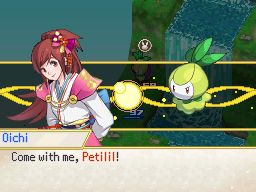
When there are wild Pokémon present on the battlefield, the player will notice a medal above them, which shows their compatibility and how much Link they can achieve with the current Warlord, whose Pokémon the player is moving. The medal’s colour refers to the degree of compatibility between the Warlord and the wild Pokémon. If they’re compatible, the player can choose the link option after getting close to them. This will trigger a minigame, where the player has to hit A as each energy ball goes through the circle. Successfully hitting the button while the energy ball is in the middle of the circle will increase a gauge that needs to be filled up completely to befriend the Pokémon. The befriended Pokémon will then join the player’s side, disappearing from the battlefield.
Link works like levels in the main series: a percentage up to 100% that rises through battles and visits to kingdom locations. Every 20% raises the Pokémon’s move rank, from +1 at 20% to +S at 100%, and a 100% link is a Perfect Link – each Warrior has one evolution line that can reach it. Each Warrior can link with only one wild Pokémon per battle, and an unfinished gauge keeps its progress for a later turn, as long as it is filled before the battle ends.
Medals and their respective achievable Link
| Medal | Achievable Link |
|---|---|
| Red Cross | Not compatible (0%) |
| No medal | 1% – 49% (linking is still possible) |
| Bronze Medal | 50% – 69% |
| Silver Medal | 70% – 89% |
| Gold Medal | 90% – 100% |
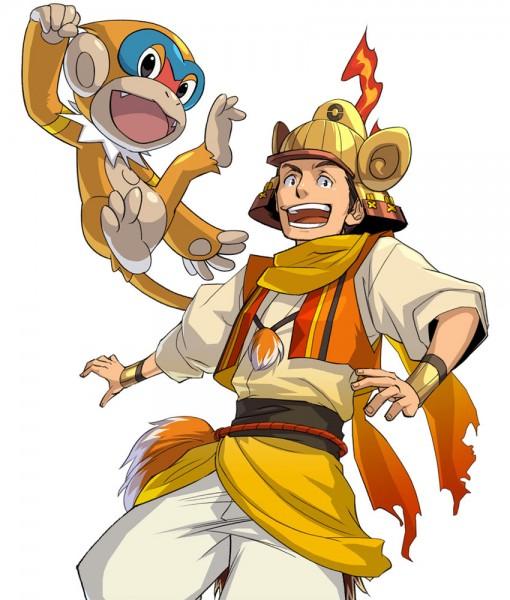
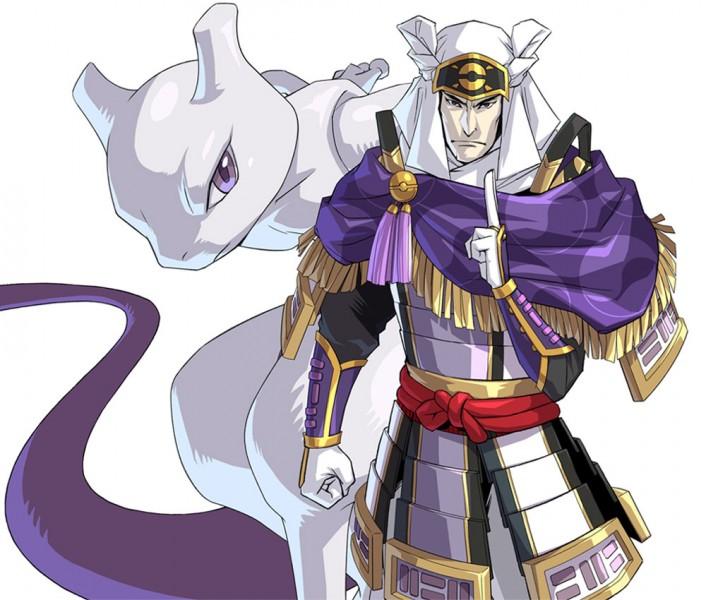
Some of the Warlords and their partners


Swarm Pokémon
During the game, the player will get randomly informed that some wild Pokémon are swarming a certain area, which will appear in one of the Kingdoms. The swarms, which last for the whole month of in-game time, are the only place to find these specific Pokémon:
 BeldumValora, Illusio
 AnorithChrysalia
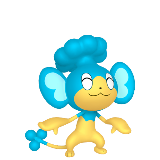 PanpourFontaine
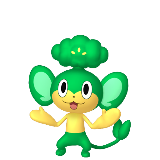 PansageGreenleaf
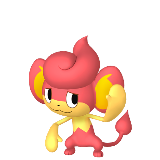 PansearIgnis
 SneaselNixtorm, Yaksha
 EeveePugilis, Terrera, Cragspur, Viperia, Valora
 EmolgaViolight
 DrifloonSpectra
 GibleDragnor, Terrera
 AudinoAurora
 CroagunkViperia
Regular swarms are rare. Each one takes over a single location for the month, always in a kingdom that matches the Pokémon’s type, and none happen during The Legend of Ransei. Eevee swarms are the exception: they turn up more often, in the parks of the five kingdoms above, but only while the Hero is in the player’s army without an Eevee link.
Legendary Pokémon

Throughout the post-game stories, the player might receive a notice of a weird Pokémon appearing in a new area, in one of the Kingdoms. The weird Pokémon will turn out to be a Legendary one, and the player has only one chance to befriend it, since it won’t appear again if the player fails. These are the Legendary Pokémon and the Warlords they link best with:
 ArticunoMitsuhide
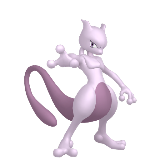 MewtwoKenshin
 RegisteelIeyasu
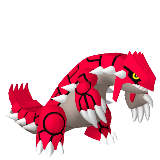 GroudonShingen
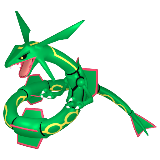 RayquazaNobunaga
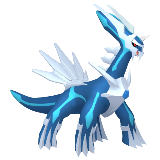 DialgaTadakatsu
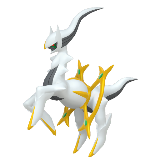 ArceusThe player
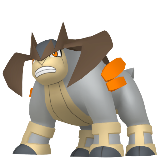 TerrakionKeiji
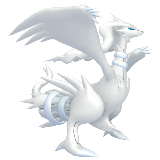 ReshiramHideyoshi
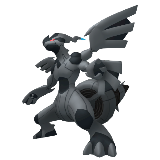 ZekromNobunaga
Nobunaga is the only Warlord with two Legendary partners, and most of these pairings only become Perfect Links at the Warlord’s higher rank – Rank II, or Rank III for the Hero and Hideyoshi. Arceus is met in the main story, while Reshiram was only available through the Hideyoshi and Reshiram event, after which it returns to Ignis every April.
Password Pokémon
The game features a password system, where players can enter different codes with which many Pokémon are unlocked. Unlike other games, where passwords unlock the Pokémon instantly, passwords here only make sure that the Pokémon’s encounter or event will happen for sure. Once the Pokémon’s password is entered, the player will be told about that Pokémon swarming in one of their Kingdoms the following month.
Pokémon passwords for the Japanese version
| Pokémon | Password |
|---|---|
| Eevee | 0エレフレ8カ0 |
| Pansear | ネ8フニミゼテラ |
| Panpour | ズヂメ7メボオ6 |
| Pansage | レロロカ8ロヂガ |
| Pikachu | メキト7ア8オト |
| Emolga | テヘビトカ1リミ |
| Oshawott | 2ゾ2ケグヘロヒ |
| Snivy | 8トセギモビセヒ |
| Riolu | セ9タフロヂロイ |
| Chimchar | ママフ1ヲ0ゾチ |
| Axew | ドルリヘ8トナヤ |
| Gible | ゾボエ1ナナボコ |
| Sneasel | コレキ1カキテゾ |
| Whimsicott | ヲイベカ0カビへ |
| Misdreavus | ヨヂボマ0ノネハ |
| Larvitar | カボエ7ロオボヒ |
| Croagunk | 28セメフフロヒ |
| Audino | セ6ゼチ86ヤヒ |
| Deino | リヂビ4サ8ボメ |
| Darmanitan | 28セメハクハ1 |
| Dratini | キエメヒメカ0ド |
| Gyarados | レルル6カミルフ |
| Beldum | カマ8メカセヂキ |
| Lapras | エ8カクゾ9トオ |
| Larvesta | ホヂ84カチトミ |
| Lilligant | 8メセヤモビナフ |
| Scyther | トロ06カロラデ |
Pokémon passwords for the international version
| Pokémon | Password |
|---|---|
| Eevee | 2rz3XFCKmR |
| Axew | BqWxXEK3xg |
| Larvitar | Lpu3ggCYk8 |
| Gible | LTb3n3RYJ8 J3mmJr9rX8 |
| Snivy | XyADXkr138 |
| Riolu | Shw8mxRAJR |
| Chimchar | RKGBxzC2n8 DNB3x2gCgk |
| Misdreavus | mnKX3qwrZR |
| Musharna | iMYXwqtHgL |
| Beldum | CMqkZRRSRX |
| Sneasel | Rc338MpqLx |
| Pikachu | urALRZwvRg FZP8GqRZRR |
| Deino | PKSRGpCPZJ 8rf3XPwvJw |
| Pansage | q5wwwxHD8n 6xSG8UCAZR |
| Panpour | CNZF3wpq3x |
| Pansear | niE33w9rwM |
| Dratini | Sr5Z5GqAgR |
| Cinccino | vVALFrGTXX |
| Darmanitan | pK5RgzqLG8 |
| Croagunk | LKpk8FRQR8 |
| Emolga | Jnm3kqgN8X |
| Zoroark | 6iYmwq1Y8w |
| Lilligant | RwGxLbHRRk |
| Larvesta | yQAw81qxGR |
| Oshawott | frCLRpXG88 |
| Gyarados | mq2xRVNgRL |
| Lapras | GfV33RVN3F |
| Scyther | 8GV3LMGrnM |
Story and event passwords
| Story or event | Password |
|---|---|
| The Free Spirit’s Path Keiji’s story | EDw8w2HaRn |
| A Date With Destiny Okuni’s story | gauRnak2nR |
| A Fate Born of Beauty Ranmaru’s story | 2aL38Ek2Rx |
| Motochika and Motonari event | J2TRZXPUm3 |
| Hideyoshi and Reshiram event | 2rz3XFEKxR |
Setting and Characters
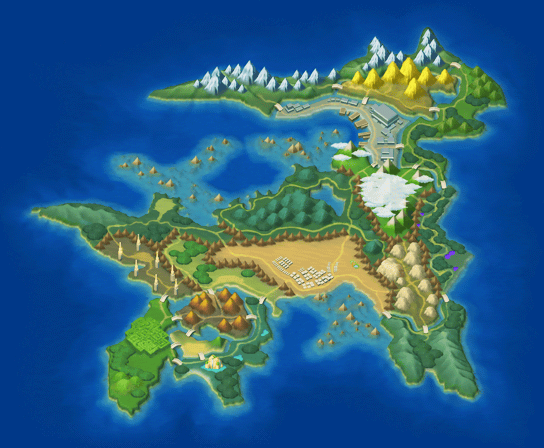
The game takes place in the Ransei region, a big island shaped like Arceus (which is actually its creator), filled with many mountainous areas and surrounded by sea. It is divided into 17 Kingdoms, each of them ruled by a Warlord that uses one of the 17 Pokémon types.
Kingdoms of the Ransei region
| Kingdom | Warlord | Type | Perfect Link |
|---|---|---|---|
| Aurora | The player | Normal | Eevee and its evolutions (Arceus at Rank III) |
| Ignis | Hideyoshi | Fire | Monferno, Infernape |
| Greenleaf | Motonari | Grass | Servine, Serperior |
| Fontaine | Motochika | Water | Dewott, Samurott |
| Pugilis | Yoshihiro | Fighting | Gurdurr, Conkeldurr |
| Violight | Ginchiyo | Electric | Luxio, Luxray |
| Chrysalia | Yoshimoto | Bug | Pineco, Forretress |
| Terrera | Shingen | Ground | Rhyperior |
| Illusio | Kenshin | Psychic | Gallade |
| Cragspur | Ujiyasu | Rock | Boldore, Gigalith |
| Viperia | Nene | Poison | Golbat, Crobat |
| Yaksha | Kotarō | Dark | Zorua, Zoroark |
| Avia | Masamune | Flying | Rufflet, Braviary |
| Valora | Ieyasu | Steel | Aggron |
| Spectra | Nō | Ghost | Misdreavus, Mismagius |
| Nixtorm | Mitsuhide | Ice | Lapras |
| Dragnor | Nobunaga | Dragon | Hydreigon |
Who’s who
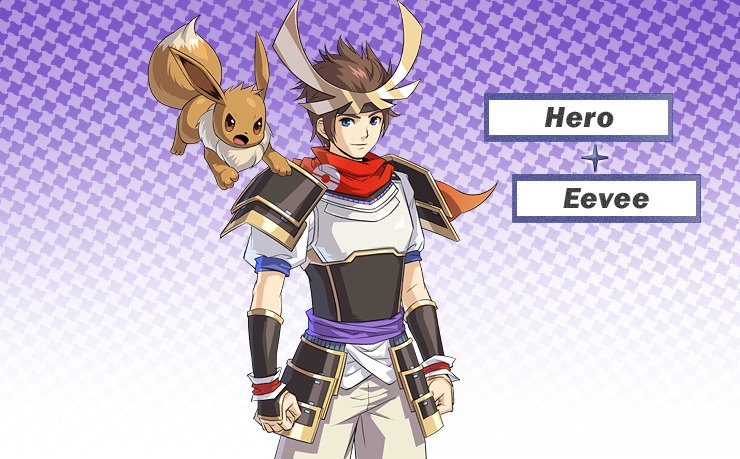
Hero / Heroine
A young, untried Warlord who starts with an Eevee. Their Perfect Links are Eevee and all its evolutions, and Arceus once they reach the third rank. The Hero transforms partway through The Legend of Ransei. The third rank takes an 80% link with an Eeveelution in the final story, The Two Heroes of Ransei. Their Warrior Skills are Top Speed, Courage and Motivate.
- Keiji: A carefree wanderer. In the main story he gives the Hero the Fire, Water and Thunder Stones that let Eevee become Flareon, Vaporeon or Jolteon. His Perfect Link line is Bastiodon, and at Rank II he also links with Terrakion, which appears in Cragspur. His own story, The Free Spirit’s Path, was one of the three downloadable stories.
Oichi, Nobunaga and the other Warlords – and the real people they’re based on – are covered in The Real Warlords Behind Ransei.
Befriending characters

The player may befriend both common Warriors, found randomly in the different Kingdoms, and the actual Warlords ruling the Kingdoms. To befriend a Warrior, the player has to knock out their Pokémon in one of three ways: within 4 turns, with a super-effective move, or without it damaging any of the player’s Pokémon. Warlords need the same, plus the knockout must come from another Warlord’s Pokémon. Knockouts from poison or battlefield hazards never count, and the Warriors of an enemy army can only be recruited when the battle takes that army’s last Kingdom. Some Warlords also depend on scenario progression before becoming available for recruitment.
After the battle, a Warrior who leaves impressed has been recruited, while a disappointed farewell means the chance was missed.
The Real Warlords Behind Ransei
Almost every Warlord in Pokémon Conquest is based on a real figure from Japan’s Sengoku, or ‘Warring States’, period, which ran from the late 1400s to around 1600. Rival lords fought for control of the country until Oda Nobunaga, Toyotomi Hideyoshi and Tokugawa Ieyasu unified it one after another. Here is who they really were.
The three unifiers

Warlord: Nobunaga
The first of Japan’s three great unifiers. Nobunaga crushed rival clans with bold tactics and massed firearms, and he controlled much of central Japan when his general Akechi Mitsuhide turned on him at Honnō-ji temple in Kyoto in 1582.
Partners: Hydreigon, with Zekrom and Rayquaza at Rank II
The final opponent of The Legend of Ransei. Like the real Nobunaga, he wants the whole land under his rule.

Warlord: Hideyoshi
Hideyoshi rose from humble beginnings to become Nobunaga’s best general. He avenged his lord’s death and finished unifying Japan in 1590. He was mocked as ‘Saru’, or ‘monkey’, for his looks.
Partners: Chimchar at the start; Monferno and Infernape, and Reshiram at Rank III
His monkey partners refer to that nickname, and his Rank III Warrior Skill, Great Uniter, refers to his place in history.
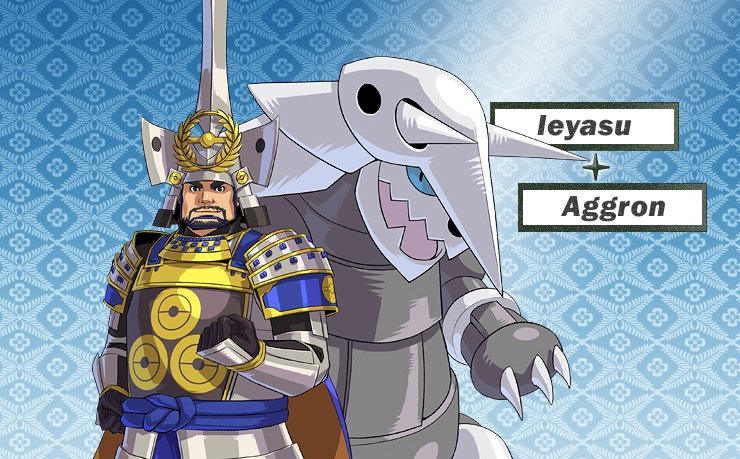
Warlord: Ieyasu
The patient third unifier. After winning the Battle of Sekigahara in 1600, he became shogun in 1603. The Tokugawa shogunate he founded ruled Japan until 1868.
Partners: Aggron, with Registeel at Rank II
His story is called The Burden of Peace, and it asks you to gather 100 Pokémon.
Rivals and generals

Warlord: Shingen
The ‘Tiger of Kai’. His banner carried the motto Fūrin Kazan, short for ‘swift as wind, quiet as forest, fierce as fire, immovable as mountain’, taken from Sun Tzu. He fought Uesugi Kenshin five times at Kawanakajima.
Partners: Rhyperior, with Groudon at Rank II
His Rank II Warrior Skill is Fūrin Kazan, one of the few Japanese terms kept in the English version, and his story with Kenshin is called Archenemies.

Warlord: Kenshin
The ‘Dragon of Echigo’, a devout follower of the war god Bishamonten and one of the most celebrated generals of his time. He is best remembered for his long rivalry with Takeda Shingen.
Partners: Gallade, with Mewtwo at Rank II
His story, The Joy of Battle, is a race with Shingen to be first to five victories.

Warlord: Mitsuhide
One of Nobunaga’s most trusted generals, until he attacked his lord at Honnō-ji in 1582. Less than two weeks later, Hideyoshi defeated him at the Battle of Yamazaki, and he was killed as he fled.
Partners: Lapras, with Articuno at Rank II
His story, Tragic Determination, is about defeating Nobunaga’s army, and he has special lines when he meets Hideyoshi in battle.

Warlord: Masamune
The ‘One-Eyed Dragon’ of northern Japan. He lost an eye to smallpox as a child and became one of the most powerful lords of the north before founding the city of Sendai.
Partners: Rufflet and Braviary
His Rank II Warrior Skill is called One-Eyed Dragon, and his story is The Dragon’s Dream.

Warlord: Yoshimoto
A powerful lord known for his refined, courtly tastes. He was killed at the Battle of Okehazama in 1560 by Nobunaga’s much smaller army.
Partners: Pineco and Forretress
His story, PokéMari & Me, puns on kemari, the courtly ball game.
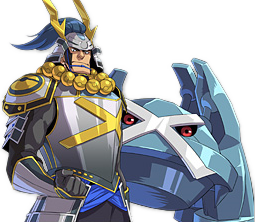
Warlord: Tadakatsu
One of Tokugawa Ieyasu’s leading generals. He is said to have fought in more than fifty battles without ever being seriously wounded.
Partners: Dialga, at Rank II
That story title and his Warrior Skill, Unrivaled, both refer to his reputation for coming through dozens of battles without a serious wound.

Warlord: Yukimura
A Sanada clan commander who became a legend for his last stand against the Tokugawa at the Siege of Osaka in 1615, where he died.
Partners: Charmeleon and Charizard
His story is one of the first eight that open once The Legend of Ransei is over.

Warlord: Hanbei
A brilliant strategist for Hideyoshi who died of illness, often said to be tuberculosis, while still in his thirties, during the siege of Miki Castle.
Rank II: Reached only with his fellow strategist Kanbei in the same kingdom
A nod to the real Hanbei and Kanbei, who served Hideyoshi together as his two great strategists.
The women of the Warring States
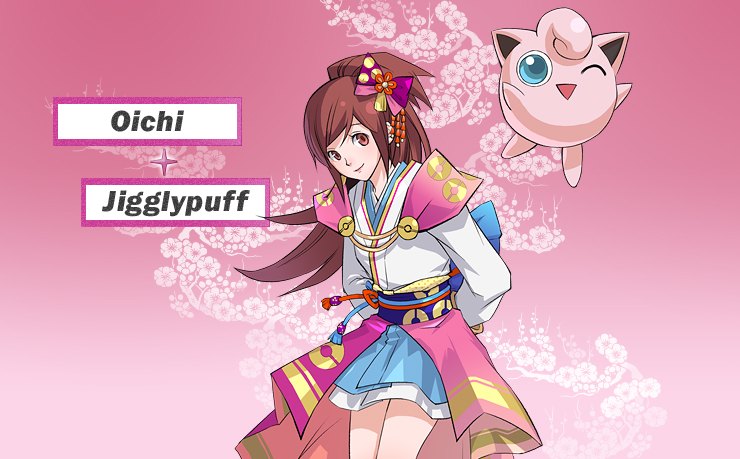
Warlord: Oichi
Nobunaga’s younger sister, famous for her beauty. She married the warlord Azai Nagamasa and later Shibata Katsuie, and she died with Katsuie when his castle at Kitanoshō fell in 1583.
Partners: Jigglypuff, which she can evolve into Wigglytuff
In the main story she turns out to be Nobunaga’s sister, and her own story is The Rose of Ransei.
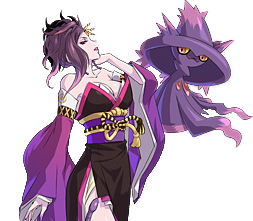
Warlord: Nō
Nobunaga’s wife, a daughter of Saitō Dōsan, lord of Mino. Their marriage sealed an alliance, but almost nothing is recorded about her later life.
Partners: Misdreavus and Mismagius
Her mysterious history suits her role as ruler of the Ghost kingdom. Her story is Ransei’s Legendary Beauty.
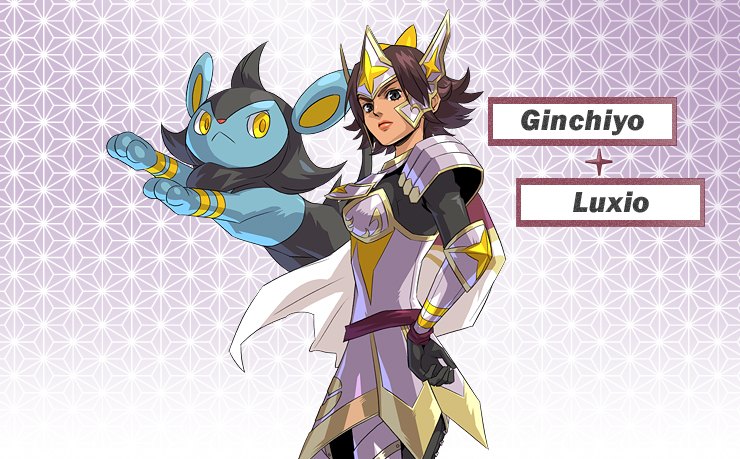
Warlord: Ginchiyo
Her father, Tachibana Dōsetsu, made her head of the Tachibana clan while she was still a child, which was very rare for a woman at the time.
Partners: Luxio and Luxray
Like her namesake, she leads in her own right, as the Warlord of Violight. Her story is Pride and Precociousness.
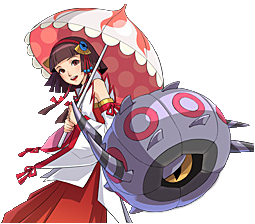
Warlord: Okuni
A shrine dancer who is credited with creating kabuki in Kyoto at the start of the 1600s.
Rank II Warrior Skill: Kabuki Dance
Her story was one of the three downloadable ones, and it can still be unlocked with a password.
Gameplay and Features
In order to reunite Ransei, the player has to defeat many Warlords and Warriors. When a character is defeated and the recruitment conditions are met, they join the player’s ranks and their Pokémon become available. The player may switch the Warlords’ Pokémon and try to find them better partners; having a Pokémon that can reach a perfect Link with the Warlord will allow them to be extremely strong, stat-wise, and to evolve thoroughly.
Overworld Map Mechanics
On the overworld map, the player has different functionality at their disposal, which increases as the game progresses. Any available area may be selected on the map, giving the player information about the Kingdom itself and its inhabitants. The player can enter a selected Kingdom, within which there are several sub-areas, including fields, caves and wild areas containing wild Pokémon. There are also civilised places, where the player may interact with the citizens, like the shopkeepers.

Battle Mechanics

The battles take a turn-based strategy format, where players can use up to six Pokémon at a time, with their respective Warlord partners. Each Pokémon has only one move, instead of four, and mostly from its own type. The battles between Pokémon still obey the weakness and resistance mechanics featured in the main series. Moreover, Warlords have Warrior Skills, each usable once per battle, that influence their Pokémon by increasing their stats or even helping them recover faster – separate from the Pokémon’s own Abilities. To win the battle, all the opponent’s Pokémon must be knocked out, or the player must reach their goal in the mission.
Monthly Action
Each month, every Warrior in the player’s army has one monthly action, with which they can do one of several activities. Aside from battling, a Warrior’s monthly action can be spent buying an item from the in-game shop. One should notice that browsing the shop without buying any item won’t consume the monthly action. The player can also use the monthly turn to train the Pokémon, increasing their Link with their Warlord.
In-Game Events
At the start of every month, various people will appear on the overworld map, informing the player of the events occurring in the different Kingdoms. These are the events that the player might encounter:
- A Professor appears once, in May of the first year, and educates the player about ranks, evolution and abilities.
- When a Warlord isn’t used for a prolonged period of time, they might try to attract the player’s attention by giving them a special item.
- A firework festival will start at the beginning of a new year, if the player has already found the Fireworks item.
- The player might be informed of a Legendary Pokémon’s location. This only happens after finishing the main story.
- A merchant might sometimes visit the player, selling rare items such as evolution stones and rare equipment.
- Bandits steal items, and random citizens will contact the player and ask them to help retrieve a stolen item.
- If the player becomes much stronger than their neighbours, the enemy Kingdoms will grow considerably stronger too.
- Sometimes, farmers might appear and ask for a donation of 1,000, 2,500 or 5,000 gold – whichever is the most the player can afford. After three donations they hold a festival that raises Energy and give three items, and the third donation decides how rare they are: 1,000 gold brings Lv. 2 shop items, 2,500 brings Lv. 3 shop items, and 5,000 brings equipment otherwise only sold by the merchant. Turning them down three times causes a rebellion that lowers Energy.
- Extreme weather conditions might hit the Ransei region: rainstorms in May, heat waves in August and snowstorms in November, which respectively maximise the Energy of Water-, Fire- and Ice-type Pokémon.
Warlords and Pokémon Evolutions
Both Pokémon and Warlords can evolve in Pokémon Conquest. For a Warlord to evolve, they need to reach a set Link, usually 60–80%, with a particular Pokémon, most often their perfect match. When that is done, they’ll undergo a transformation, changing their appearance and increasing their stats.
A transformation also raises the Warlord’s link caps and brings a new Warrior Skill. Some Warlords need more than the link: Kenshin and Shingen, for example, each need the other’s story cleared first. Only the Hero and Hideyoshi have a third rank, and in The Legend of Ransei nobody transforms except the Hero, who changes at a fixed point in the story.
As for Pokémon evolution, most Pokémon will evolve upon raising their stats to a certain amount, while others will require a different process. Certain Pokémon need their Warrior to hold an item, such as the Metal Coat or Water Stone, and be used in battle – trade evolutions such as the Metal Coat ones also need a knockout that would recruit a Warrior. Others require raising the Link percentage to a specific number.
There are no levels, so a level-up evolution becomes a stat target – Spheal, for instance, evolves when its HP reaches 138 – and some evolutions only happen in a kingdom of the right type. Evolution is only checked after an action the player chooses, not after one that’s delegated.
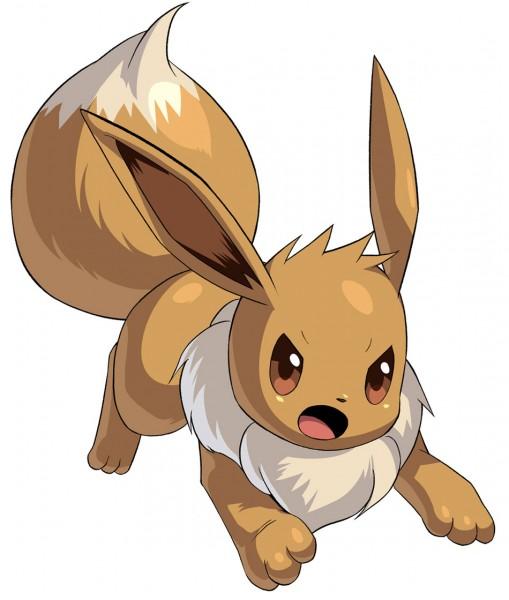
Furthermore, the player’s starter Pokémon, Eevee, has a unique evolution process, as it can evolve into seven different Pokémon, depending on various conditions. Vaporeon, Jolteon and Flareon need Eevee’s Warrior to hold a Water Stone, Thunderstone or Fire Stone while its Link rises. Espeon and Umbreon need a 70% Link in Illusio or Yaksha. Leafeon and Glaceon come from being deployed in Greenleaf or Nixtorm while meeting a stat target: 94 Defense for Leafeon and 91 Attack for Glaceon.
 VaporeonWater Stone held
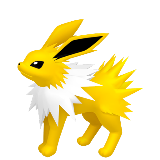 JolteonThunderstone held
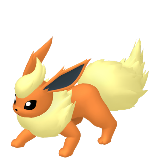 FlareonFire Stone held
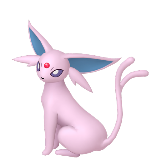 Espeon70% Link in Illusio
 Umbreon70% Link in Yaksha
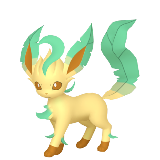 Leafeon94 Defense in Greenleaf
 Glaceon91 Attack in Nixtorm
After Story Missions
They are the post-game stories, unlocked after defeating Nobunaga in the main storyline. The player will encounter many new Warlords within these missions, along with their Pokémon, which can be added to the player’s ranks. Only 8 missions are available at first, and many more get unlocked as the player finishes them, reaching a total of 34 missions on the cartridge. Three more were downloadable: Keiji’s The Free Spirit’s Path, Okuni’s A Date With Destiny and Ranmaru’s A Fate Born of Beauty.
After Story Missions, their goals and their unlocking conditions
| Mission | Goal | Unlocking condition |
|---|---|---|
| Tragic Determination Mitsuhide |
The army of Nobunaga must be defeated before January of Year 4 | One of the first 8 |
| Happily Ever After Hideyoshi |
Unite all of Ransei | One of the first 8 |
| The Joy of Battle Kenshin |
Be first to 5 victories, in a race with Shingen | One of the first 8 |
| The Burden of Peace Ieyasu |
Gather 100 Pokémon | One of the first 8 |
| The Way of the Warrior Yukimura |
Unite all of Ransei | One of the first 8 |
| Pride and Precociousness Ginchiyo |
Unify 7 Kingdoms | One of the first 8 |
| A Shroud of Darkness Kotarō |
Unify 8 Kingdoms | One of the first 8 |
| Not Worth Fighting Over (1) | Unify 4 Kingdoms | One of the first 8 |
| The Rose of Ransei Oichi |
Unify 7 Kingdoms | Finish Not Worth Fighting Over (1) |
| Not Worth Fighting Over (2) | Unify 4 Kingdoms | Finish Not Worth Fighting Over (1) |
| Not Worth Fighting Over (3) | Unify 4 Kingdoms | Finish Not Worth Fighting Over (2) |
| All Grown Up | Unite all of Ransei | Finish Tragic Determination |
| Ransei’s Legendary Beauty Nō |
Unify 7 Kingdoms | Finish Tragic Determination |
| The Visionary’s Quest | Befriend 100 Pokémon | Finish The Reluctant Genius |
| The Reluctant Genius Hanbei |
Unify 8 Kingdoms | Finish Happily Ever After |
| Teaching Them a Lesson | Unify 8 Kingdoms | Finish Happily Ever After |
| Love is a Battlefield | Unify 7 Kingdoms | Finish The Joy of Battle |
| Land of Love and Righteousness Kanetsugu |
Unite all of Ransei | Finish The Joy of Battle |
| A Ninja Amongst Ninjas | Unify 8 Kingdoms | Finish The Burden of Peace |
| The Unparalleled Warrior Tadakatsu |
Unite all of Ransei | Finish The Burden of Peace |
| Time for Battle! | Unify 8 Kingdoms | Finish The Way of the Warrior |
| Archenemies Shingen |
Be first to 5 victories, in a race with Kenshin | Finish The Way of the Warrior |
| Blowing in the Wind | Unite all of Ransei | Finish Pride and Precociousness |
| The Final Gamble | Unite all of Ransei | Finish Pride and Precociousness |
| The Rebel Motochika |
Defeat Nobunaga’s army before January of Year 4 | Finish A Shroud of Darkness |
| That Which He Holds Dear Ujiyasu |
Recruit 40 Warriors | Finish A Shroud of Darkness |
| This One Goes Out to My Fans | Unite all of Ransei | Finish All Grown Up |
| Grace and Beauty | Unify 8 Kingdoms | Finish The Unparalleled Warrior |
| PokéMari & Me Yoshimoto |
Recruit 40 Warriors | Finish Archenemies |
| Putting the Books Down | Befriend 100 Pokémon | Finish Blowing in the Wind |
| The Dragon’s Dream Masamune |
Unite all of Ransei | Finish Land of Love and Righteousness |
| Simply the Best Kai |
Unify 8 Kingdoms | Finish That Which He Holds Dear |
| The Road to Conquest Nobunaga |
Unite all of Ransei | Finish 9 missions |
| The Two Heroes of Ransei The player |
Unite all of Ransei | Clear the stories of all 16 senior Warlords |
Multiplayer Feature
Pokémon Conquest also offers a multiplayer mode, thanks to the wireless feature of the Nintendo DS. Players may battle each other, with the host being the one who manages all the match details, like the area where it will take place and the Pokémon Link limit – either no cap or a cap from 10% to 100% in steps of 10. They may also choose whether they’ll be attacking or defending, or they might let it be randomly chosen.
Regional Variations
Japan had the game three months before North America and four before Europe, and a few things changed along the way:
- The Japanese title, Pokémon + Nobunaga’s Ambition, became Pokémon Conquest abroad, because the Nobunaga’s Ambition series is little known outside Japan. The logo was redesigned to match.
- Several names were shortened or changed in English: Aya-gozen became Aya, Nōhime became Nō, Inahime became Ina, Kaihime became Kai and Jōun became Shōun. Kai’s Warrior was renamed Shimoyama to avoid a clash.
- Some Warrior Skills and Abilities were renamed, but Shingen’s Fūrin Kazan and Nene’s Nene Ninpō kept their Japanese names.
- The title screen’s ‘PUSH START BUTTON’ became ‘PRESS START’, the copyright line was redone in a different font, and the Alchemist building’s rooftop sign changed from a pill to a bottle.
- Japanese Pokémon passwords are eight characters of katakana and numbers. The English version uses ten-character, case-sensitive codes, and the two sets were handed out through different shops, magazines and websites.
- Japan got the three extra stories over Wi-Fi only, between March and June 2012. North America had them from July to December 2012, and passwords were also issued, so North American copies can still unlock them today.
- The European release is in English only, with no French, German, Italian or Spanish translation.


Left in the data
- The game data contains many unused graphics, including a credits screen that names nobody and a stray Growlithe image.
- Leftover text from the main-series games, including Pokémon names and items, sits unused in the data.
- An unused description beginning ‘A legend, passed down through generations…’ may have been meant to introduce The Legend of Ransei, and the stored description of Kenshin’s story The Joy of Battle is cut off partway through.
- Three unused items, stored between the Harmony Drum and the Metal Mirror, would have slightly, moderately or greatly raised the chance of recruiting Warriors.
- Several ‘dummy’ items can be brought out with cheats. They show up only on the equipment screen, can’t be selected, and mostly reuse story descriptions as their text.
Glitches, exploits and oddities
An anti-piracy lockout that catches legitimate backups, a password quirk and an evolution that always wins:
Anti-piracy lockout
The game checks whether it is running on an emulator or a flash cartridge, and if it is, it freezes straight after booting. This was meant to stop pirated copies, but it also caught out players using legitimate backups in the years after release. Some emulators later added workarounds. On real hardware the check never triggers, so an original Game Card in any DS, DSi, 3DS or 2DS console works normally.
‘Password already used’ for a password never entered
There are 64 hidden slots for Pokémon passwords, and every password is assigned to one of them. Some Pokémon have more than one password, and the same slot can be shared by codes for different Pokémon. Once a slot is used, any other password linked to it is rejected with a ‘password already used’ message, even though the player has never typed it. The slots can only be cleared by erasing the save. Story and event passwords use a separate system and aren’t affected.
Stat evolution beats item evolution
Some Pokémon can branch in more than one way. Snorunt can become Glalie by stats or Froslass with a Dawn Stone, and Kirlia can become Gardevoir by stats or Gallade with a Dawn Stone. If the Pokémon meets the stat target, that evolution always wins, even when its Warrior is holding the stone. The workaround is to lower the Pokémon’s Energy so its stats drop below the target for a while. With the stat route out of the way, the stone evolution can happen.
Videos & media
Videos from Pokémon Conquest, including the announcement trailer, a TV commercial and the opening/intro.
The US TV commercial for Pokémon Conquest.
The announcement trailer for Pokémon Conquest.
The intro/opening – definitely worth a watch to give you a feel for the game.
Trivia & facts
-
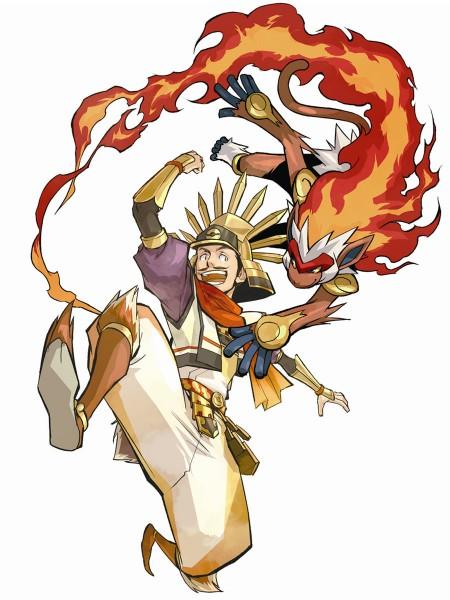
Hideyoshi and Infernape. The Perfect Link of Hideyoshi with Monferno and Infernape is a reference to the real Toyotomi Hideyoshi, who was often called ‘Saru’ or ‘Kozaru’, meaning ‘monkey’ and ‘little monkey’ in Japanese, as he resembled one physically.
- A Pokémon crossover with Fire Emblem was once suggested too – but it was Fire Emblem that missed out. In a 2016 interview about Tokyo Mirage Sessions #FE, Nintendo’s Hitoshi Yamagami recalled that Kaori Ando had suggested a Fire Emblem and Pokémon crossover; the Pokémon side had already proposed the project that became Pokémon Conquest, so Fire Emblem was paired with Shin Megami Tensei instead.
- The Warlord Hanbei was given the lowest Power of all, a reference to the real-life Takenaka Hanbei, who was a sick man, often said to have suffered from tuberculosis, and who died of it in 1579, in his mid-thirties. Another reference is made in the game at the end of his story, The Reluctant Genius, as he appears to be somewhat sick.
- It’s the only Pokémon game since Hey You, Pikachu! to be released only in Japanese and English, as the European version is in English only.
Further trivia
- It is the only Pokémon spin-off that is Nintendo DSi-enhanced. On a DSi, it can use WPA and WPA2 networks to download stories, an advantage that disappeared when Nintendo Wi-Fi Connection closed in 2014.
- It was the last Pokémon spin-off released for the Nintendo DS in Japan and North America.
- Ransei has 17 kingdoms for two reasons: the first Nobunaga’s Ambition (1983) was fought over 17 provinces, and there were 17 Pokémon types before Fairy arrived in 2013.
- The Ponigiri that raise a Pokémon’s Energy get their name from ‘Pokémon’ and onigiri, the Japanese rice ball.
- Kanetsugu’s story, Land of Love and Righteousness, and his Warrior Skill, Love and Honor, refer to the real Naoe Kanetsugu’s famous helmet, which bore the kanji for ‘love’ (愛).
Legacy
What came after
- Japanese release as Pokémon + Nobunaga’s Ambition – 17 March 2012. Published by The Pokémon Company. It topped Media Create’s chart in its launch week.
- First Japanese downloadable story, The Free Spirit’s Path – 24 March 2012. Three stories (Keiji, Okuni, Ranmaru) were distributed one after another over Wi-Fi until 8 June 2012.
- North American release as Pokémon Conquest – 18 June 2012. Published by Nintendo, with Pokémon passwords from GameStop, Toys ‘R’ Us, Nintendo Power and other promotions.
- Australian release – 21 June 2012. Released three days after North America.
- European release – 27 July 2012. Released in English only, with no other European languages.
- North American downloadable stories and events – July to December 2012. The three stories, and from 13 August the Hideyoshi and Reshiram event, were offered over Wi-Fi until 31 December 2012, alongside passwords.
- Koinuma hints at unused material – 22 May 2013. When a fan asked about a sequel, Koinuma replied that a lot of material had been left unfinished. Ishihara also left the door open if fans asked for one, but no sequel has followed.
- Nintendo Wi-Fi Connection shuts down – 20 May 2014. Wi-Fi downloads ended. Japan’s two events had been available until 19 May 2014. North American copies can still unlock everything with passwords.
Where to play it today
As of October 2026, Pokémon Conquest is still only available as its original Nintendo DS Game Card. It has never been sold digitally, and it isn’t on Nintendo Switch Online. The cartridge works on any DS, DSi, 3DS or 2DS console. Wi-Fi downloads stopped in 2014, but North American copies can still unlock all the extra stories and events with their passwords. Emulators and flash carts set off the game’s anti-piracy lockout.
How it was made
The idea came from Tsunekazu Ishihara, president of The Pokémon Company and a long-time fan of Koei’s Nobunaga’s Ambition. He put it to Koei Tecmo producer Hisashi Koinuma, while Koei founder Kou Shibusawa, a Pokémon fan himself, became general producer. Osamu Mieda directed. Koei Tecmo handled the programming, art and sound, and the two companies wrote the design documents together. Koinuma said the hardest part was setting the difficulty so that Pokémon fans could get into a strategy game. It was the second Nintendo and Koei Tecmo collaboration, after the Murasame Castle mode in Samurai Warriors 3, and most character designs came from Samurai Warriors 3. Pokémon Conquest was confirmed for North America on 4 April 2012, less than three weeks after its Japanese launch.
Passwords in print and in shops

Sales & reviews
Sales figures
Within three months of its release, the game sold an estimated 10 thousand copies in Europe and nearly 244 thousand in the USA. The sales continued to rise, reaching an estimated 50 thousand in Europe and almost 511 thousand in the USA, while Japan’s tracked total reached 345,374 copies by the end of 2013, with an estimated global total of 1.02 million copies.
In Japan, the game sold 172,027 copies in its first week on Media Create’s chart (12–18 March 2012, with only two days on sale), making it the country’s best-selling game that week, and about 242,000 after two weeks. It had passed 341,000 by the end of 2012. In the United States it was the seventh best-selling game of June 2012 on NPD’s all-format chart, in its launch month. Neither Nintendo nor The Pokémon Company has published a worldwide total, so the 1.02 million figure is an estimate from a third-party tracker.
- 172,027Japan, launch week (Media Create)
- 345,374Japan, by December 2013
- 7thUS chart, June 2012 (NPD)
- 1.02mworldwide (estimate)
Review scores
The game was, for the most part, very well received, receiving some exceptionally high scores on major review websites. Let’s take a look at these scores:
- Audrey Drake from IGN found the game very entertaining, with its fun and diverse mechanics, rating it 9.0/10, the equivalent of ‘Amazing’ on the IGN scale.
- Heidi Kemps of GameSpot also enjoyed the game, finding it quite unique and stating “Pokemon Conquest’s concept and setting are unique, and the curiosity factor alone adds a good amount of appeal and fun to a fairly standard strategy RPG.”, while rating the game 6.5/10, which equates to ‘Fair’ on the GameSpot scale.
- On GameRankings (which closed in 2019), Pokémon Conquest received a high score of 81.97% over 29 reviews, while on Metacritic it scored a Metascore of 80 from 40 critics.
- DetroitDJ reviewed the game on behalf of Pokémon Dungeon and wasn’t as impressed… scoring it 2 out of 5 stars.
- Overall, the game was one of a kind and successfully merged the worlds of Nobunaga’s Ambition and Pokémon, creating a game that would please (most) fans of both.
Critics liked it more than they expected to. Many were won over by an odd pairing they had doubted. IGN called it a thoughtful, masterful take on a Pokémon RPG. Nintendo Power said it was not the Pokémon adventure players expect, but one well worth playing. Famitsu praised how approachable it was for younger players, its replay value and its blend of Pokémon with Japanese history. Nintendo Life thought it nearly flawless apart from a modest roster and a thin story, and ranked it among the series’ best spin-offs. GameSpot and Polygon were cooler. GameSpot enjoyed the kingdom-building and collecting but found the battles slow, easy and limited by the one-move system. Overall, reviews settled in the low eighties.
Awards and honours:
Media & artwork
- Official artwork gallery from Pokémon Conquest – a large gallery featuring many of the Pokémon from the game
- Box art from Pokémon Conquest, including regional variations and editions
- Screenshots from Pokémon Conquest
Further reading
More Nintendo DS spin-offs and related pages on the site: