  |
|
| Titles | Hey You, Pikachu! ピカチュウげんきでちゅう (Pikachū Genki Dechū) |
| Platform | Nintendo 64, with the Voice Recognition Unit and microphone (both in the box) |
| Developer | Ambrella |
| Publisher | Nintendo |
| Producer | Tsunekazu Ishihara |
| Music | Miki Obata |
| Players | Single player |
| Genre | Virtual pet / voice-controlled life simulation |
| Pokémon | 32 species, plus a Togepi Egg |
| Released | 12 December 1998 (Japan) · 6 November 2000 (North America) · never released in Europe or Australia |
| Re-releases | None – not on Virtual Console or Nintendo Switch Online (October 2026) |
| Rating | ESRB E |
| Successor | Pokémon Channel (GameCube, 2003), its spiritual successor |
| Sales | About 1.83 million worldwide |
Overview
 Released on the Nintendo 64, Hey You, Pikachu! is a 3D virtual pet game that introduced, for the first time, the VRU (Voice Recognition Unit), allowing the player to interact with Pikachu through actual voice commands. The game offers quite good graphics, with Pikachu having a wide range of animations, making it feel somewhat alive and real. Hey You, Pikachu! successfully portrays its genre, with soothing music and sounds that fit its innocent vibe perfectly, as it mainly targets a young audience.
The game takes place between Viridian City and Pewter City, where the player is asked to test one of Professor Oak’s new inventions, called the PokéHelper. This invention allows the player to talk to the Pokémon around them. The player encounters Pikachu in Viridian Forest and forms a strong bond with it. Through the rest of the game, Pikachu lives at the player’s home, and together they complete missions and adventures on a daily basis. The missions fall under three levels (Pikachu’s Discovery Days, Pikachu’s Play Days and Pikachu’s Daring Days) that are reached from different parts of the player’s house. Within the missions, Pikachu is asked to interact with its surroundings, including objects and other Pokémon, through a wide variety of voice commands, as it understands around 200 words and phrases.
Once Pikachu’s friendship with the player reaches its peak, Professor Oak declares that Pikachu, as a wild Pokémon, has to be released. The player has to say goodbye to Pikachu in the forest where they first met, and then the credits roll. Although the game has supposedly ended, after the credits Pikachu returns to the player’s home and the game continues as usual – presumably to dry the tears of the trainer who has just parted with it.
For the first time ever you can actually talk to your favorite Pokémon. Tag along with Pikachu as it goes through its daily routines, taking field trips, going fishing and having picnics, becoming better friends with each passing day. The more you speak, the closer friends you’ll be!
Talk into the microphone, see Pikachu react. Your voice travels to Pikachu through the N64 Voice Recognition Unit and microphone-both included.
Pal around with Pikachu – together you’ll gather cooking ingredients, fish for favorite water Pokémon, and even hunt for buried treasure on a deserted island.
Speak to Pikachu using a variety of key words and phrases. Friendship is based on communication, and there’s plenty to talk about!
— Official description
Quick Answers
The questions people ask about Hey You, Pikachu!, answered first and explained further down the page.
How many words does Pikachu understand in Hey You, Pikachu!?
Roughly 200 words and phrases, the figure GameSpot gave in its 2000 review. Words Pikachu knows are printed in red in PokéHelper descriptions, and the set it listens for changes from scene to scene, so a word that works in one place can be ignored in another. Some sources quote a 256-word database instead. More →
Can you play Hey You, Pikachu! without the microphone?
Not properly. The whole game is built around the Voice Recognition Unit, which came in the box with its microphone and plugs into the fourth controller port. Without it an animated no-microphone warning appears and Pikachu cannot hear a word. The units are region-locked, so a Japanese VRU will not work with the American cartridge. More →
Was Hey You, Pikachu! ever released in the UK or Europe?
No. It came out only in Japan on 12 December 1998 and North America on 6 November 2000. Getting the voice recognition to cope with the many accents and languages of PAL territories proved too difficult, so Europe and Australia never got it. UK players need an imported NTSC copy, an NTSC console and the matching VRU. More →
Is Hey You, Pikachu! on Nintendo Switch Online?
No. As of October 2026 it has never been re-released: it skipped the Wii and Wii U Virtual Console and is not part of the Nintendo 64 library on Nintendo Switch Online. Its dependence on the Voice Recognition Unit makes it an awkward fit for modern systems, so the original cartridge is still the only official way to play. More →
How do you get to Cobalt Island in Hey You, Pikachu!?
Play the piñata game at Cobalt Coast on Pikachu’s Play Days. Steer Pikachu, blindfolded by a cap, until it smashes the Poké Ball piñata at least twice in one visit, and Venusaur hands over the Harmonica. Playing it calls Lapras, who carries Pikachu and the player across to Cobalt Island for the Treasure Hunt. More →
Does Hey You, Pikachu! have an ending?
Yes. Once Pikachu is very fond of the player it sets off on an errand of its own, and afterwards Professor Oak says a wild Pokémon belongs in the wild. The player says goodbye in the forest where they met and the credits roll. Pikachu then turns up at the house again, and everyday play carries on. More →
Characters

Professor Oak
A very important character in the Pokémon games and the anime series. He’s a Pokémon Professor who lives in the Kanto region and studies the relationships between Pokémon and humans. Professor Oak is famous for his research on wild Pokémon and the different inventions he’s come up with – for example the PokéHelper the player uses in Hey You, Pikachu! to help the professor with his research. Within the game he also reappears several times during the missions, commenting on the mission itself and the player’s actions, and giving advice.
The player’s Mom
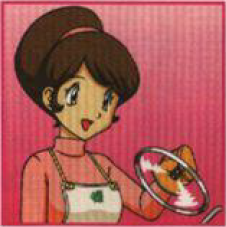
She appears at the start of the game and hands the player their PokéHelper, while reminding them of the test they have to carry out for Professor Oak. She also bakes the cupcakes in the Tool Box.
The player
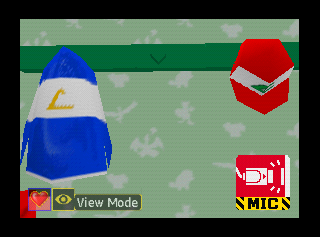
Unlike almost every other Pokémon game, the player in Hey You, Pikachu! is never shown, nor are we given any description of his looks. All we know is that he’s a local from the area between Viridian City and Pewter City who helps Professor Oak with his research. The player befriends Pikachu, with whom he shares days of adventure and fun. Although Pikachu does all the actions on screen, it mainly interacts with its surroundings under the player’s commands and is affected by their words.
Pikachu
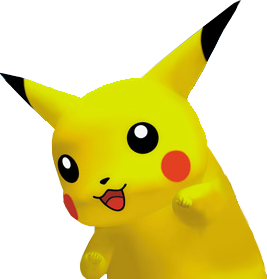
A wild Pikachu from Viridian Forest that befriends the player and moves into the family home. It is voiced by Ikue Ōtani, who also voices Pikachu in the anime. It loves praise and apples, sulks at insults, uses Thundershock, Thunderbolt and Thunder on command and has firm opinions about food. Its moods and occasional stubbornness were designed to make it feel like a friend with a mind of its own rather than a pet.


Talking to Pikachu: the Voice Recognition Unit
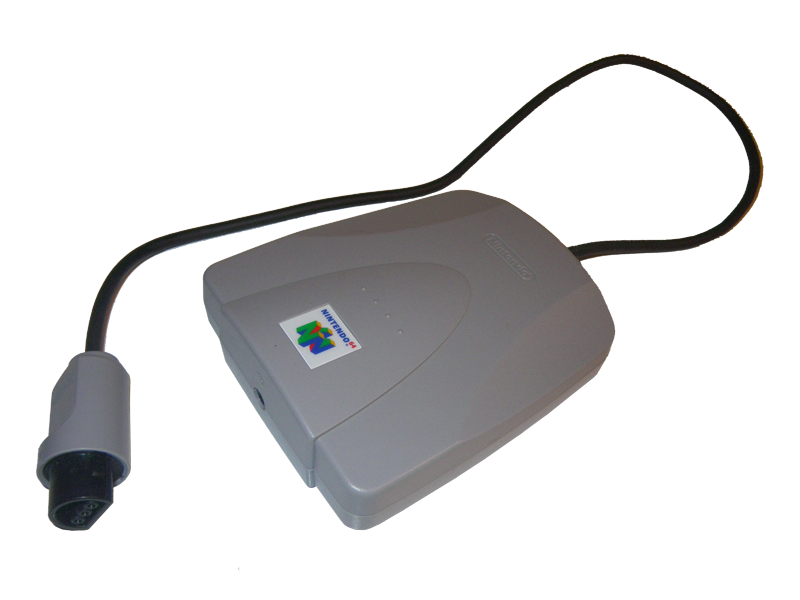
Everything in Hey You, Pikachu! happens through the player’s voice. The game came boxed with the Voice Recognition Unit (VRU, called the VRS in Japan) – a small module that plugs into the fourth controller port – and a microphone that clips onto the controller. Only one other game ever used it: Taito’s Japan-only train simulator Densha de Go! 64.
Pokémon
Although the game revolves mainly around Pikachu, several other Pokémon are featured – 32 species in all, plus a Togepi Egg:
 Pikachu#025
 Bulbasaur#001
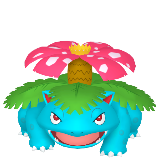 Venusaur#003
 Charmander#004
 Squirtle#007
 Caterpie#010
 Metapod#011
 Butterfree#012
 Oddish#043
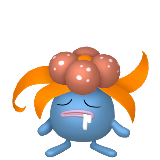 Gloom#044
 Vileplume#045
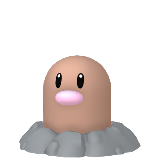 Diglett#050
 Poliwag#060
 Poliwhirl#061
 Abra#063
 Tentacool#072
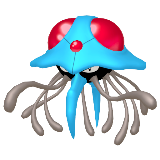 Tentacruel#073
 Slowpoke#079
 Magnemite#081
 Haunter#093
 Krabby#098
 Kingler#099
 Horsea#116
 Seadra#117
 Goldeen#118
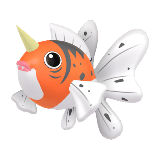 Seaking#119
 Staryu#120
 Starmie#121
 Magikarp#129
 Lapras#131
 Dratini#147
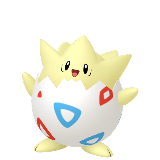 Togepi#175
Notable Pokémon
Thirty-two species appear, Pikachu included: 31 from the original 151 plus Togepi from Generation II, with a Togepi Egg besides. None are battled or caught in the usual way. Bulbasaur cooks, Venusaur hosts the piñata game, Squirtle and Poliwhirl look after the Poliwag, Magnemite carries ingredients, Abra runs the shops and Lapras ferries the player to Cobalt Island, while Water types such as Magikarp, Goldeen, Krabby, Horsea and Dratini turn up on the end of a fishing line. Each one has its own PokéHelper entry.
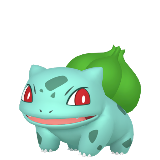
- Bulbasaur – Chef of the Pokémon Picnic in Ochre Woods, cooking whatever four ingredients arrive.
- Venusaur – Hosts the piñata game at Cobalt Coast and awards the Harmonica that calls Lapras.
- Caterpie – Needs feeding with roses in Viridian Forest; evolves via Metapod into Butterfree, who leaves a gift.
- Oddish – Watered in Springleaf Field to evolve; one oddity keeps growing until it towers over Pikachu.
- Diglett – Pops up in Springleaf Field and sometimes tries to trip Pikachu.
- Abra – Runs the two shops where Pika Points are spent and looks after the mysterious egg.
- Lapras – Summoned by the Harmonica to carry Pikachu and the player to Cobalt Island.
- Dratini – A rare catch at the fishing holes that earns a comment from Professor Oak.
- Togepi – The only non-Kanto species; hatches from the egg and makes its video game debut here.
Levels
As mentioned earlier, the game offers three levels, each with its own difficulty and reached from a different part of the house. All the levels are shown as differently drawn maps, giving access to different locations, and each map has its own background music. The levels are as follows:
Pikachu’s Discovery Days
Reached from the player’s bedroom, it is the easy difficulty level, drawn like a child’s wax-crayon picture. It shows six locations, three of which are fishing holes, and it is the only level from which the fishing holes can be chosen:
- Viridian Forest: A thick forest between Viridian City and Pewter City. It is where the player first met Pikachu, and where Professor Oak gave him basic training. The ‘Caring for Caterpie’ activity takes place in Viridian Forest.
- Ochre Woods: A large forest shown in autumn. Both the ‘Gone Fishing’ and ‘Pokémon Picnic’ missions can take place in Ochre Woods. It is a great place to gather crops and the location of one of Abra’s Shops. The woods also contain some fun features, such as the secret caves, the Togepi Egg that hatches after a number of missions, and the dancing Magnemite.
- Ochre Fishing Hole: The fishing hole in Ochre Woods. Seaking can be caught here.
- Springleaf Field: A grassy area with a few scattered flowers and trees. The ‘Field Trip’ activities take place in Springleaf Field, which is a great place to gather raspberries and sunflowers. A second Abra’s Shop can also be found here.
- Cobalt Fishing Hole: The fishing hole on the Cobalt Coast, widely seen as the best in the game, where Krabby and Kingler can be caught.
- Olivine Fishing Hole: The fishing hole at Olivine Lake – a better spot than the one in Ochre Woods, but still behind the Cobalt Fishing Hole. Dratini is said to be found here.
Pikachu’s Play Days
Reached from the front gate of the player’s house, it is the intermediate difficulty level, drawn as a coloured-pencil sketch. It offers five locations:
- Cobalt Island: A small island full of treasure. It is only unlocked after breaking the piñata at least twice in the ‘Piñata Party’ activity. The ‘Treasure Hunt’ activity takes place on the island: when Pikachu is near a treasure chest, the player reads the sign beside it and repeats its instruction to Pikachu to open it. The island is also a great place to gather coconuts, bananas and spiny shells.
- Cobalt Coast: A sunny beach where the ‘Piñata Party’ activity takes place.
- Olivine Lake: A large lake where different Pokémon live. The ‘Gone Fishing’ and ‘Little Lost Poliwag’ activities take place here. It is also where Squirtle, Poliwhirl and a mischievous Haunter turn up during the Poliwag missions.
- Ochre Woods.
- Springleaf Field.
Pikachu’s Daring Days
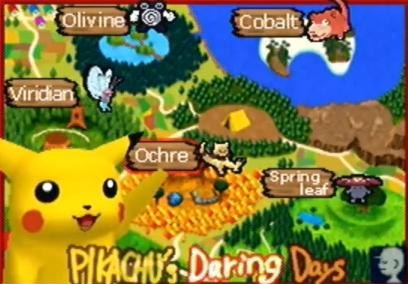
Reached from the side gate of the player’s house, it is the hard difficulty level, with quite an elaborate map showing five different locations:
- Viridian Forest.
- Ochre Woods.
- Springleaf Field.
- Cobalt Island.
- Olivine Lake.
There is one more secret location that can be unlocked within this level by saying its name at the map screen: Professor Oak’s Special Training. It is first visited when Professor Oak teaches the player how to use the different view modes, and it can only be replayed this way.
Mission Types
The levels offer different types of missions, and some missions change their location: doing a mission a second time unlocks a larger part of the area, and some missions take place in different parts of the same location depending on whether they’re being played for the first, second or third time. The missions are as follows:
- Pokémon Picnic: Aided by the player, Pikachu has to help Bulbasaur collect four ingredients (three different ones, one of which is doubled) that are essential for Bulbasaur’s meal preparation. Once an ingredient is found, it can be sent to Bulbasaur via Magnemite. At the end of the mission, the player gets to watch the Pokémon react to Bulbasaur’s cooking.
- Caring for Caterpie: As the name suggests, Pikachu has to take care of a number of Caterpie (one to five). Pikachu and the player have to keep the Caterpie busy while feeding them. Once a Caterpie has been fed enough bloomed roses, it evolves into a Metapod, which later evolves into a Butterfree. At the end of the mission, the Butterfree reward Pikachu with a coloured jewel, a balloon, a glass marble or a ruby.
- Little Lost Poliwag: The player and Pikachu have to find five lost Poliwag and safely return them home, with Squirtle’s help (the Poliwag’s mother, Poliwhirl, joins in later). The challenge comes from the dead ends that may hide more lost Poliwag, and the Haunter that scares many of them off – a Thunderbolt chases it away.
- The Piñata Party: Pikachu, blindfolded with Ash’s cap, has to smack open a Poké Ball piñata. Doing so at least twice in one visit makes Venusaur reward Pikachu with a Harmonica that calls Lapras. Lapras then takes the player and Pikachu to Cobalt Island.
- Treasure Hunt: In this mission Pikachu has to dig up treasures and open them. The treasures contain a variety of rewards, including a toy sword that can be used to decorate the player’s room. This mission can only be played after unlocking the island in the Piñata Party.
- Gone Fishing: These missions take place at the three different fishing holes. Pikachu has to catch different Water-type Pokémon of different sizes, and earns a Fishing Flag for catching six or more Pokémon in a day at a hole.
- Field Trip: Unlike the other missions, this one has no goal or purpose other than for the player and Pikachu to relax and have fun. Pikachu can greet and water the Oddish there. Watered Oddish evolve into Gloom and then Vileplume, except for one strange one that just keeps growing, until it’s ten times Pikachu’s size.
In depth: the fine print

Items
There are a lot of items in the game, some of which Pikachu uses to interact with other Pokémon or its surroundings. The items can be grouped into the following categories:
Crops, found mainly in Ochre Woods:
- Carrot: Pikachu will generally eat the carrots it finds.
- Corn: It can be turned into popcorn if Pikachu uses Thundershock or Thunderbolt on it.
- Onion: Selling one will make plenty available in the player’s garden at home. Also, Pikachu sneezes when it smells onion.
- Pumpkin: Pikachu throws pumpkins away, as it despises them.
- Sweet Potato: Using Thunderbolt on one bakes it, and Pikachu will eat it.
Common Items
- Apple: Found in Ochre Woods.
- Cattail: Found in Viridian Forest.
- Jumbo’Shroom: Found in Ochre Woods. Can be cooked and eaten by Pikachu.
- Lily: A flower found in Viridian Forest and Springleaf Field. Can be eaten by Pikachu.
- Mushroom: Found in Ochre Woods and Springleaf Field. Can be cooked and eaten by Pikachu.
- Rosebud: Used to feed the Caterpie, rosebuds can only be found on the trees of Viridian Forest.
- Skunk Blossom: Found in Viridian Forest and Springleaf Field. Once one is sold, another appears in the player’s garden at home.
- Sunflower: Found in Springleaf Field. Once one is sold, a sunflower appears in a pot in the player’s garden.
- Sunny’shroom: A mushroom that Pikachu can eat.
Rare Items:
- Ruby: Awarded by the Butterfree.
- Sapphire: Found in treasure chests.
- Topaz: The special reward from the Field Trip, for evolving the Oddish into Vileplume.
Special Items:
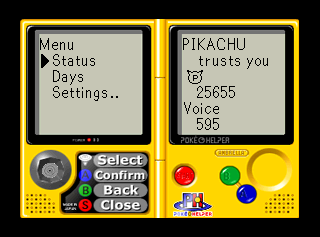
- PokéHelper: A device that helps the player locate Pikachu and understand its mood.
- Pika Points: The currency used in the game. Extra Pika Points can be earned by selling items collected in or awarded after missions.
- Beach Ball: Used to play with Pikachu.
- Tool Box: Serves as the main inventory for common items.
- Light Bulb: Bought at Abra’s Shop. If Pikachu touches it, it lights up.
- Fishing Hook: The hook Pikachu uses at the fishing holes.
- Lucky Hook: Another fishing hook, with a better chance of catching better Pokémon.
- Harmonica: Earned after breaking the piñata at least twice. It summons Lapras, who takes the player and Pikachu to Cobalt Island.
- Megaphone: Professor Oak’s first PokéHelper, which he gives to the player. It can be used to talk to Pikachu from further away or to knock objects down.
- Watering Can: Mainly used to water the Oddish. The player starts with a small can, and a much bigger Watering Jug holding 40 waterings can be bought at Abra’s Shop.
- Fishing Flags: Earned at each fishing hole by catching six or more Pokémon in a day. They are displayed on the wall of the player’s room.
Abra’s Shop
A strange shop run by an Abra, which sells everything from common to special items, paid for in Pika Points. It can be found in two places: Springleaf Field and Ochre Woods. Sometimes Pikachu picks up and eats edible items of its own accord, instantly costing the player.
Pokémon Quiz
A small mini-game in which the player helps Pikachu guess the Pokémon shown on the screen. The player has to clearly say the Pokémon’s name. The mini-game is played in the player’s room by telling Pikachu ‘Pokémon Quiz’ (most guides give ‘Quiz Time!’). The Pokémon Quiz appears to be stored on an N64 cartridge in the player’s room, and there look to be several copies.
Regional Variations
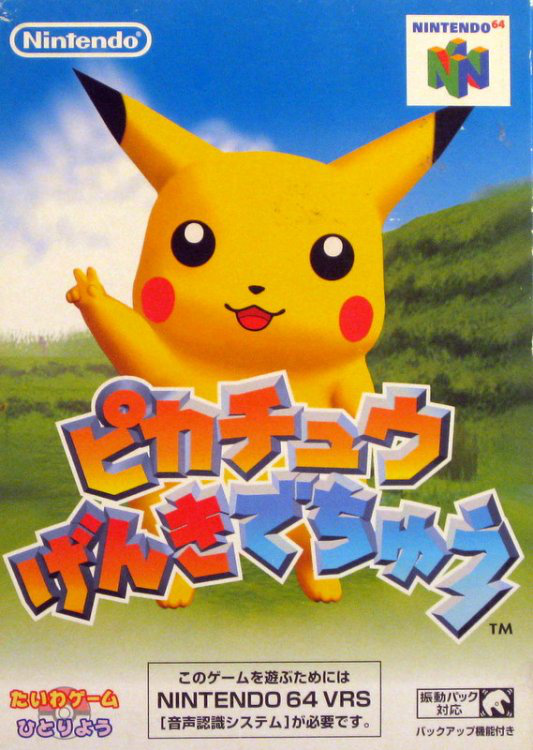
Hey You, Pikachu! only ever came out in Japan and North America – getting the voice recognition to cope with the many accents and languages of Europe proved too difficult. There are subtle differences between the US and Japanese versions; here are a couple of examples:


In the Japanese version of the game, the player’s shoes can be seen outside the patio doors, whereas in the US version they cannot. This is because in Japan it pretty much goes without saying that people take off their shoes before entering their homes, whereas in the US some people are a little more open to leaving them on!


Similarly, in the Tool Box the Japanese version contains a rice ball (onigiri), which the US version replaces with a cupcake.
For a comprehensive list of all the regional differences between the US and Japanese versions, check out TCRF’s page on Hey You, Pikachu!. The main ones:
- Names: the Japanese title is Pikachū Genki Dechū and the PokéHelper was the Pocket Helper. Places use Japanese colour names, as in the main series: Tokiwa Forest (Viridian Forest), Akane Forest (Ochre Woods), Moegi Plain (Springleaf Field), Asagi Lake (Olivine Lake), Suō Coast (Cobalt Coast) and Suō Island (Cobalt Island).
- The Cobalt Coast game in Japan is suikawari, the beach pastime of splitting a watermelon with a stick while blindfolded, with Pikachu wearing Ash’s cap over its eyes. The English version swapped it for a Poké Ball piñata, and the consolation prize changed from a drink-can ring pull to a bottle cap ring.
- Food and plants: the onigiri (rice ball) in the Tool Box became a cupcake; the Japanese aubergines became corn, so popcorn exists only in English; Viridian Forest’s horsetails became cattails; and Springleaf Field’s morning glories were recoloured to pass as bluebells.
- The player’s home: the shoes left outside the sliding door in Japan were removed for North America, the bedroom console’s Super Nintendo-style cartridges were redrawn as Nintendo 64 games, and the Japanese Pokémon Shōnen magazines became “Pokémon & You”, now with a different Pokémon on each cover.
- Most Pokémon cries were replaced to match the English dub of the anime; only a handful, including Pikachu, Caterpie and Butterfree, kept their Japanese cries.
- The English version shows a speech bubble whenever it hears the player, not just when words are aimed at Pikachu, and its no-microphone warning is larger, animated and buzzes, because the small Japanese icon was easy to miss.
- The VRU is region-locked: the Japanese VRS will not work with the American cartridge, and the American unit will not work with the Japanese game.
Left on the cartridge
- An unused entryway area (genkan) can be loaded with GameShark codes (US 800AE503 0001, Japan 800B2C83 0001). It shows the words “Macro Test” at the top; in the US build Bulbasaur sits in the middle of the room while Pikachu carries a pink purse, and in the Japanese build a message soon says there is still no response.
- In the Japanese version, three doors in the house still carry Pocket Helper descriptions of where they lead (the player’s room, a locked entrance to Springleaf Field and the garden), although pressing A on them does nothing.
- A debug-style counter appears when an item’s name is said to Pikachu, reading “NUT 0 FRUIT 0” and ticking up as nuts or fruit are picked up.
- Plenty of developer text survives on the cartridge, including heap and memory reports, model-loading notices, EEPROM save messages, microphone errors and CPU exception dumps.
Glitches, exploits and oddities
A Pikachu that melts when the cartridge is tilted, a hidden crash screen and some very short commands:
Cartridge-tilt distortion
Tilting the cartridge in its slot while the game runs scrambles the data being read, and Hey You, Pikachu! reacts in memorable fashion: Pikachu’s face and body stretch, cave in and twist into shapes far removed from a cute mascot. A 2014 video by YouTuber Chadtronic showing the effect was picked up by Kotaku, which likened the mangled Pikachu to an animatronic from Five Nights at Freddy’s. It is not something to try on a treasured copy, because tilting can damage both cartridge and console.
Built-in crash screen
When the game hits a fatal error it does not simply freeze: a basic crash handler prints diagnostic information across the top of the screen. The cartridge also holds a large store of leftover developer messages covering memory heaps, model loading, save data and processor exceptions, along with microphone start-up warnings such as “Initializing Mic failed” and the cryptic “ERROR: Strange flow”. Seeing the crash readout is rare in normal play, but it is a useful clue for anyone testing old cartridges.
One-syllable commands
The recogniser matches sounds rather than meaning, and speedrunners have found it will accept single syllables such as “a”, “da” or “ra” in place of longer words. At RTA in Japan 2019 the runner Spins used these sounds throughout, deliberately annoyed Pikachu before starting by saying “I hate it” and “Raichu”, and steered clear of slow reactions such as the one triggered by “I love you”, reaching the credits of the Japanese version in 1:11:44.
Videos & media
A selection of videos about Hey You, Pikachu! on the Nintendo 64.
A Japanese TV commercial for Hey You, Pikachu!
A US TV commercial for Hey You, Pikachu!
The second US TV commercial.
Trivia & facts
- If the player insults Pikachu – telling it ‘I hate you’, for instance – it gets angry and leaves the house. It will be back the next day, though.
- Some objects are affected by the player’s voice, like the toy in the bedroom that moves when he says ‘Toy’.
- In the player’s room, there’s a coat rack on which Ash Ketchum’s outfit can be seen. This suggests the player might actually be Ash – or maybe just a fan. His cap is also used to cover Pikachu’s eyes in the ‘Piñata Party’.
- Sometimes Pokémon react to the Megaphone, running away from its noise.
- The plants shown on the title screen are not available in the game.
- Hey You, Pikachu! is one of the few Pokémon games without ‘Pokémon’ in its title, alongside the Detective Pikachu games and Pokkén Tournament.
- Hey You, Pikachu! and Densha de Go! 64 are the only two Nintendo 64 games that use the VRU – and as Densha de Go! 64 never left Japan, Hey You, Pikachu! was the only VRU game released in North America.
- In Japan the game is called ピカチュウげんきでちゅう (Pikachū Genki Dechū), which is a pun on ピカチュウげんきです, meaning ‘Pikachu is fine’.
Further trivia
- Togepi made its video game debut here, almost a year before Pokémon Gold and Silver; the PokéHelper calls it an unknown Pokémon not listed in the Pokédex.
- Pikachu is voiced by Ikue Ōtani, the same actress who voices it in the anime.
- A long-standing playground rumour said Pikachu would sulk if the player mentioned “PlayStation” or “Sony”. It does not, as neither word is in its vocabulary, though calling it an “electric rat” really does make it angry.
- Producer Tsunekazu Ishihara described it as the game least suited to the idea of strategy, and no strategy guide was published for it in Japan.
- The in-game maps put the sea to the north-east of Viridian Forest, where Cobalt Coast and Cobalt Island lie, and only the crayon map for Pikachu’s Discovery Days shows the houses of Pewter City.
- The cartridge in the bedroom console is labelled “Robocom”, possibly an early name for Custom Robo; the US version trims the label so it looks like a real Nintendo 64 cartridge.
- The ending, in which Pikachu is returned to the wild but chooses to come back, is widely seen as a nod to the anime episode “Pikachu’s Goodbye”.
Legacy
What came after
- Shown at Nintendo Space World ‘97 – 21 November 1997. Playable at the show (21 to 23 November 1997), where visitors could talk to Pikachu for the first time.
- Japanese release as Pikachū Genki Dechū – 12 December 1998. Sold with the VRS voice recognition unit and microphone.
- Densha de Go! 64 released – 30 July 1999. Taito’s Japan-only train simulator becomes the only other game to support the VRS.
- North American release as Hey You, Pikachu! – 6 November 2000. Bundled with the VRU and microphone at a suggested price of about $80; no PAL release followed.
- Pokémon Channel (GameCube) released in Japan – 18 July 2003. Ambrella’s spiritual successor keeps the Pikachu-companion idea without the microphone; Springleaf Field and Cobalt Coast return.
- PokéPark Wii: Pikachu’s Adventure released in Japan – 5 December 2009. Another Pikachu-led game for younger players, often described as a spiritual follow-up.
- RTA in Japan 2019 speedrun – December 2019. A run of the Japanese version reaching the credits in 1:11:44 drew wide attention in Japan.
- Nintendo 64 games arrive on Nintendo Switch Online – 25 October 2021. The Expansion Pack library launched without Hey You, Pikachu!, which has never been added.
Where to play it today
The only official way to play is the original Nintendo 64 cartridge with its Voice Recognition Unit and microphone, ideally bought boxed and complete. The game was never sold in Europe, so UK players need an American (or Japanese) copy, an NTSC console from the same region and a VRU that matches the game, because the units are region-locked. There is no Virtual Console or Nintendo Switch Online version as of October 2026.
How it was made
Hey You, Pikachu! was the first game from Ambrella, a studio founded in 1996 to work on conversation-based games, and the first title that Marigul Management, a joint venture between Nintendo and Recruit, was involved in. Ambrella’s staff were part of the voice recognition project from early on: they built their first prototype at home, wiring a microphone into a Nintendo 64 with parts bought in Akihabara, before the idea was reworked around Pikachu and accepted by Nintendo. The finished VRS uses a voice-processing chip made by NEC. Producer Tsunekazu Ishihara stressed that it was not a pet-raising game; Pikachu was meant to be a friend the player talks with. The game was playable at Nintendo Space World ‘97 in November 1997, a year before its Japanese launch. In North America it was first announced as Pikachu VRS before being renamed, and Bill Trinen handled the localisation.
Hey You, Pikachu! elsewhere


Sales & reviews
Sales figures
Although the game mainly targeted younger Pokémon fans, it was fairly successful, selling a good number of copies: around 1.83 million units in total, about half of them in Japan.
Those are VGChartz estimates (about 930,000 in Japan and 830,000 in North America); Japanese sources put the Japanese figure lower, at around 700,000. Supplies of the voice-recognition hardware were limited, and with the microphone in the box the game cost about $80 in the US.
- 1.83mworldwide (estimate)
- 930kJapan (estimate)
- 830kNorth America (estimate)
- ~200words Pikachu understands
Review scores
Hey You, Pikachu! had a mixed reception, with reviews ranging from glowing to dismissive. Let’s take a glimpse at these reviews:
- Fran Mirabella III from IGN didn’t like the game much, as only a young audience would enjoy such a game, saying “I found this game to be extremely boring. It’s good for some laughs for about 10 minutes”. Yet he still rated the game 6/10, which equates to ‘Okay’ on their scale.
- Frank Provo liked the game a lot, grading it 8.3/10, the equivalent of ‘Great’ on the GameSpot scale. He admitted, though, that “Hey You, Pikachu! for the Nintendo 64 is a game that will likely be overlooked by people who consider themselves to be hard-core game players.”
- Hey You, Pikachu! also got a fair score of 55.09% on GameRankings (which closed in 2019), and has 57/100 on Metacritic.
- Overall, the game did pretty well, and was a successful first experiment with a virtual pet Pokémon game. It led to a similar game, Pokémon Channel, on the GameCube.
Critics were split. Most were charmed by how alive Pikachu seemed, with lively animation and a wide range of reactions, and the novelty of actually talking to a Pokémon won over many younger players. The trouble lay in the microphone: tuned to children’s higher voices, it left plenty of adult players being ignored, and the activities were slight and slow to unfold. GameSpot’s Frank Provo was the most enthusiastic, concluding that “Its price tag may be steep, but there is limitless replay value to be found in the hands of the right audience.” IGN felt the novelty wore off quickly, while Game Informer and EGM marked it down hard. Next Generation’s Greg Orlando said it “tastes just like chicken made of glucose”, and GamePro saw it as one for small children or adults with a child’s love of Pokémon.
Awards and honours:
Media & artwork
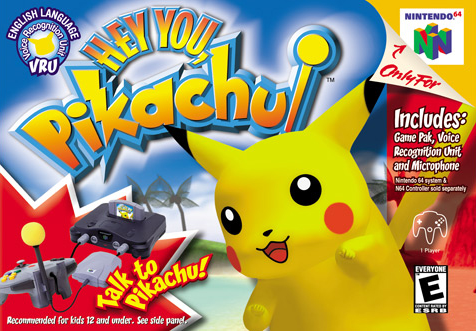
- Box art from Hey You, Pikachu!, including its regional variations
- Screenshots from Hey You, Pikachu!
Further reading
More Nintendo 64 Pokémon games on the site: