  |
|
| Titles | Pokémon Pikachu · Pokémon Pikachu 2 GS ポケットピカチュウ (Poketto Pikachū) ポケットピカチュウカラー 金・銀といっしょ! (Poketto Pikachū Karā Kin Gin to Issho!) Pokémon Pikachu Color (Europe) |
| Platform | Stand-alone pedometer toys; Pikachu 2 GS links by infrared to a second unit or to a Game Boy Color running Pokémon Gold and Silver or Pokémon Crystal |
| Developer | Jupiter Corporation |
| Publisher | Nintendo |
| Players | 1 · Pikachu 2 GS: infrared swaps with a second unit or a Game Boy Color |
| Genre | Virtual pet / pedometer |
| Launch price | ¥2,500 and US$19.95 (Pokémon Pikachu) · ¥3,000 before tax (Pocket Pikachu Color) |
| Currency | Watts: one for every 20 steps |
| Unlocks | 7 vehicles on the original · 11 Mystery Gift prize tiers on Pikachu 2 GS |
| Power | One CR2032 coin cell |
| Released | Pokémon Pikachu: 27 March 1998 (Japan) · 2 November 1998 (North America) · 22 January 1999 (Australia) · 1999 (Europe) Pikachu 2 GS: 21 November 1999 (Japan) · 16 October 2000 (North America) · 2000 (Europe, Australia) |
| Predecessor | None |
| Successor | The Pokéwalker (2009, with HeartGold and SoulSilver) · Pokémon GO Plus (2016) and GO Plus + (2023), for Pokémon GO |
| Sales | No official figures; the original was hard to find in Japanese shops in spring 1998 |
Overview
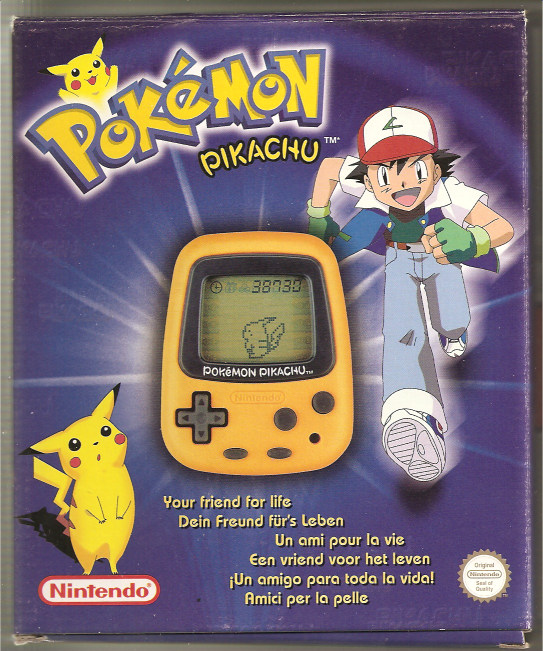
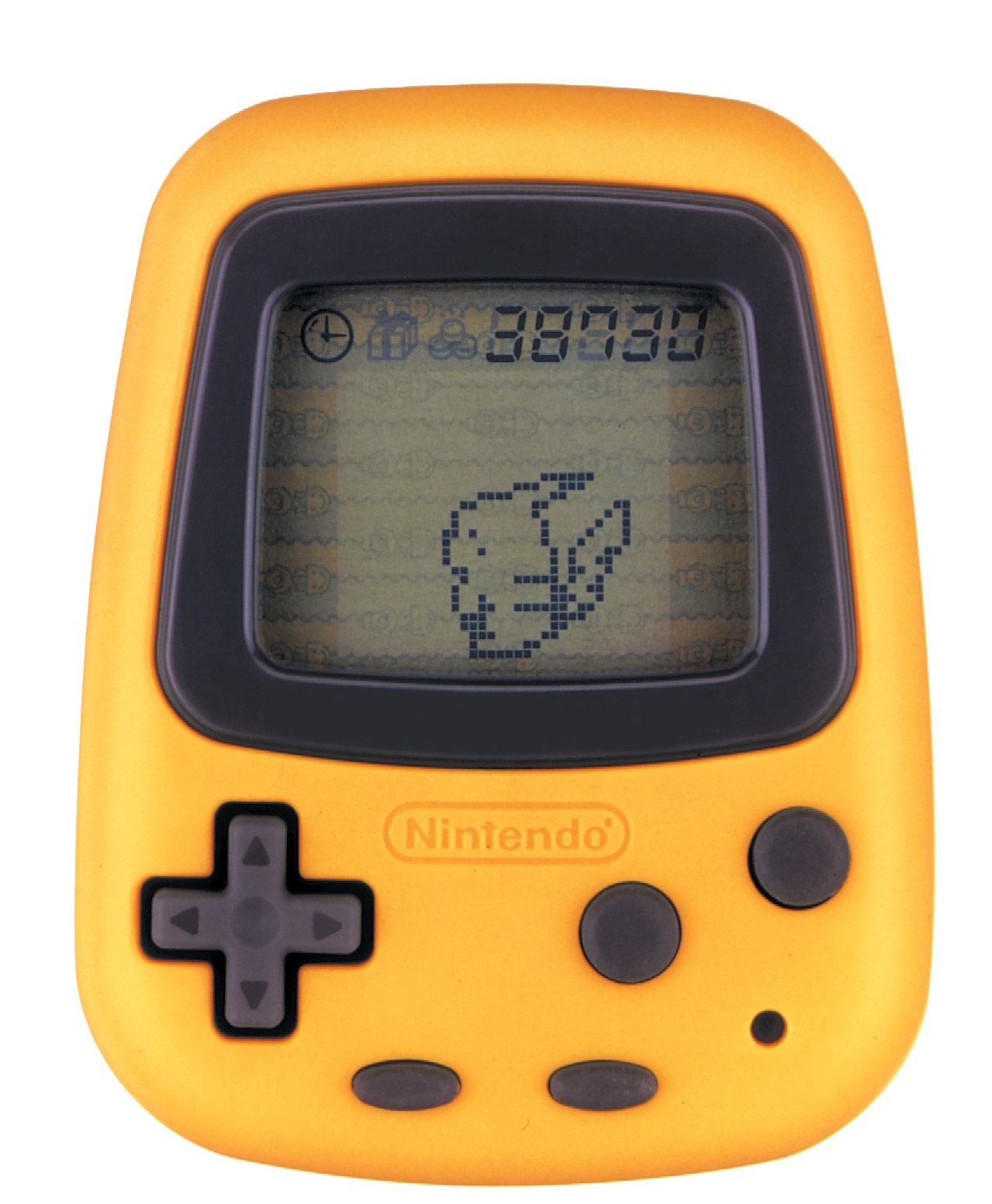 Pokémon Pikachu, known in Japan as Pocket Pikachu, is a virtual pet you carry in your pocket: a step counter with a Pikachu living inside it. Developed by the Kyoto studio Jupiter Corporation and published by Nintendo, the little yellow unit, shaped like a miniature Game Boy, went on sale in Japan on 27 March 1998 for ¥2,500 and reached North America on 2 November 1998 for US$19.95. A redesigned follow-up, Pocket Pikachu Color: Kin Gin to Issho!, arrived in Japan on 21 November 1999, the same day as Pokémon Gold and Silver, and came west in 2000 as Pokémon Pikachu 2 GS in North America and Pokémon Pikachu Color in Europe.
Both devices clip to a belt or slip into a pocket and count your steps, and every 20 steps earns one watt, the electricity Pikachu runs on. Watts can be given to Pikachu as presents to win its friendship, or gambled on a built-in mini-game: a slot machine on the original, a high-or-low card game on the sequel. Pikachu keeps its own timetable in the meantime, eating, playing, bathing and sleeping at set hours, and how it behaves depends on how far its owner walks and how generous they are. Big lifetime totals unlock new scenes, from tricycles to stilts.
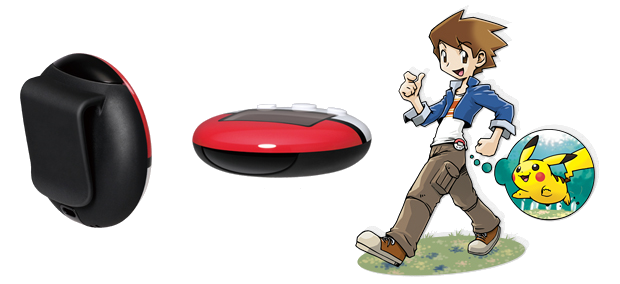
The second model added a colour screen and an infrared port, so watts could be swapped with a friend’s unit or beamed into Gold, Silver and Crystal through Mystery Gift, where they turn into items ranging from a letter to a Rare Candy. That made Pikachu 2 GS the first Pokémon walking gadget to feed rewards into the main games. The idea came back with the Pokéwalker bundled with HeartGold and SoulSilver in 2009, which kept the same rate of one watt per 20 steps, and again with the Pokémon GO Plus and GO Plus + accessories for Pokémon GO.
In Japan, Pocket Pikachu was a craze in its own right. It was hard to find in the shops through its first spring, publishers brought out more than a dozen guides and walking diaries for it, and Nintendo reused the hardware for two more pocket pets, Pocket Hello Kitty and Pocket Sakura.
Quick Answers
The questions people ask most about Pokémon Pikachu and Pikachu 2 GS, answered first and explained in more detail further down the page.
Can you still buy Pokémon Pikachu or Pikachu 2 GS in 2026?
Not new. Neither device has been reissued since the original runs between 1998 and 2000, so second-hand is the only option, and Japanese and Western units both turn up regularly. Each takes a single CR2032 coin cell, so a working unit usually needs nothing more than a fresh battery, although ageing screens and step sensors do sometimes give out. More →
How many steps does it take to earn a watt?
Twenty, on both devices. Every 20 steps the sensor counts adds one watt, and shaking the unit counts as walking. Watts can be given to Pikachu as presents or staked on the mini-game, and on Pikachu 2 GS they can also be beamed to another unit or to Pokémon Gold, Silver and Crystal. The Pokéwalker later used exactly the same rate. More →
How do you send watts from Pikachu 2 GS to Pokémon Gold, Silver or Crystal?
First unlock Mystery Gift in the game by talking to a character on the fifth floor of the Goldenrod Department Store, then save. After that, choose Mystery Gift from the title menu on a Game Boy Color, pick Send under the present icon on Pikachu 2 GS, set the number of watts, line up the two infrared ports and confirm. More →
What items can Pikachu 2 GS send to the Generation II games?
That depends on how many watts you send. A token amount brings Eon Mail, and each band of 100 watts after that brings something better: a Berry, a Bitter Berry, a Great Ball, a Max Repel, an Ether, a MiracleBerry, a Gold Berry, an Elixer and a Revive. Send 999 watts and the prize is a Rare Candy, and there is no daily limit on transfers. More →
Does Pikachu 2 GS work with a Game Boy Advance or the 3DS Virtual Console?
No. The link uses the infrared port that only the Game Boy Color has: earlier Game Boys never had one, and the Game Boy Advance left it out. The 3DS Virtual Console versions of Gold, Silver and Crystal have no Mystery Gift option either, so you need a Game Boy Color and an original cartridge from the same region as the device. More →
Will a Japanese Pocket Pikachu Color work with an English copy of Pokémon Gold?
No. The Mystery Gift link is region-locked, and pairing a device with a cartridge from another region only produces a communication error. A Japanese Pocket Pikachu Color needs a Japanese copy of Kin, Gin or Crystal, and a Western Pikachu 2 GS needs a Western cartridge. Watts can still be swapped with another unit from the same region. More →
What is the difference between Pokémon Pikachu and Pikachu 2 GS?
The original has a black-and-white screen, a slot machine and no way to link up. Pikachu 2 GS adds a colour screen and an infrared port, used for swapping watts and alarm tunes with other units and for sending items to the Generation II games, plus a seven-day step log, a 64-note alarm composer, a high-or-low card game and a completely redrawn set of animations. More →
Is there a sequel or successor to Pokémon Pikachu?
Not under the same name, but the idea lived on. The Poké Ball-shaped Pokéwalker that came with HeartGold and SoulSilver in 2009 kept watts and the infrared link, and Pokémon GO Plus (2016) and Pokémon GO Plus + (2023) brought walking rewards to smartphones, the second of them also tracking sleep for Pokémon Sleep. More →
The two devices
Nintendo made two Pikachu pedometers, and they have a lot in common. Both are pocket-sized, borrow the Game Boy’s buttons and keep a Pikachu on the screen that lives by the clock, and both run on watts earned at one for every 20 steps. The differences are in the details: the second model has a colour screen, an infrared port, a new mini-game and an entirely new set of animations.
What both devices share
Pokémon Pikachu (1998)
| Pokémon Pikachu | At a glance |
|---|---|
| Japanese title | ポケットピカチュウ (Poketto Pikachū, “Pocket Pikachu”) |
| Released | 27 March 1998 (Japan) · 2 November 1998 (North America) · 22 January 1999 (Australia) · 1999 (Europe) |
| Launch price | ¥2,500 (Japan) · US$19.95 (North America) |
| Made by | Jupiter Corporation, for Nintendo |
| Genre | Virtual pet / pedometer |
| Hardware | Yellow Game Boy-shaped shell, monochrome LCD, one CR2032 cell; 62.5 × 49.6 × 28 mm and 40 g with the battery |
| Mini-game | Slot machine, 5 watts a spin |
| Links | None |
 Jupiter Corporation, for Nintendo
The first model is the simpler of the two, and in some ways the purer idea. A yellow pedometer the shape of a tiny Game Boy, it weighs 40 grams with its battery and shows Pikachu on a black-and-white screen, going about a daily timetable of meals, play, television, showers and sleep and reacting whenever the unit is shaken.
Watts can be spent in just two ways: given to Pikachu as presents, or gambled on a single-row slot machine whose jackpot of three 7s pays 500 watts. Friendship rises with gifts and walking and sinks with neglect, and lifetime step totals unlock new vehicles and pastimes, from a toy car at 25,000 steps to stilts at 400,000, with lessons and a computer still to come after that.
- A resettable step counter that runs to 99,999, alongside the lifetime total
- A slot machine at 5 watts a spin, with 500 watts for three 7s
- Four everyday moods, plus a rock-bottom state in which Pikachu disappears from the screen
- Seven vehicles unlocked by lifetime steps between 25,000 and 400,000, and new pastimes at home
- A clock with a single alarm, and no link features of any kind
Pikachu’s day, moods and milestones
Presents are chosen under the gift icon: the control pad picks any number of banked watts, and Pikachu’s thanks depend on the size of the gift. Bigger presents raise friendship further and open up new pastimes:
| Watts given | Pikachu’s reaction |
|---|---|
| 0 | Pulls a face |
| 1–99 | Yawns |
| 100–299 | Gives a round of applause |
| 300–699 | Blows hearts, turns a backflip or writes a thank-you letter |
| 700–999 | Shows off with a trumpet, a piano, ball-balancing, a swim or a hang-glider |
 PikachuThe pet on both devices
 MagikarpA symbol on the slot reels
Pokémon Pikachu 2 GS (1999–2000)
| Pokémon Pikachu 2 GS | At a glance |
|---|---|
| Japanese title | ポケットピカチュウカラー 金・銀といっしょ! (Poketto Pikachū Karā Kin Gin to Issho!, “Pocket Pikachu Color: Together with Gold and Silver!”) |
| Western titles | Pokémon Pikachu 2 GS (North America) · Pokémon Pikachu Color (Europe) |
| Released | 21 November 1999 (Japan) · 16 October 2000 (North America) · 2000 (Europe, Australia) |
| Launch price | ¥3,000 before tax (Japan) |
| Credits | Nintendo, Creatures, Game Freak and Jupiter |
| Hardware | Game Boy Color-style shell, colour LCD, infrared port, one CR2032 cell |
| Mini-game | High-or-low card game, 5 watts a round |
| Links | Another Pikachu 2 GS, or a Game Boy Color running Pokémon Gold and Silver or Pokémon Crystal |


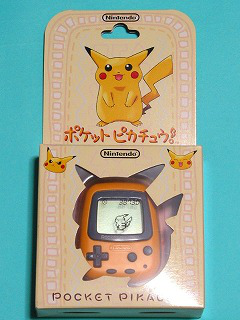
The second model went on sale in Japan on the same day as Pokémon Gold and Silver, and its full Japanese name, Pocket Pikachu Color: Kin Gin to Issho!, spells out the connection. The formula is the original’s, but the shell now echoes the Game Boy Color, the screen is in colour, and an infrared port lets the unit talk to other devices.
Pikachu’s whole routine was redrawn, with yo-yos, swings, fishing trips and fireworks before bed. Friendship now has five named levels and drops whenever the owner walks fewer than 100 steps in a day, and a high-or-low card game takes over from the slot machine. Watts can be swapped with another unit or sent to Gold, Silver or Crystal through Mystery Gift, for prizes up to a Rare Candy at 999 watts.
- Colour screen and infrared port; the link to the Generation II games needs a Game Boy Color
- Mystery Gift items from Eon Mail to a Rare Candy, with no daily limit
- A high-or-low card game at 5 watts a round
- A seven-day step log and a seven-digit lifetime total
- An alarm composer for melodies of up to 64 notes, which can be shared with another unit
- A Continue option that keeps watts, steps and friendship through a battery change
A new routine, five levels of friendship and a card game
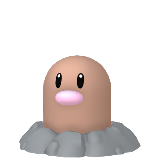 DiglettDug up in the sandpit
 PoliwagHooked while fishing
Watts, steps and the Mystery Gift link
Watts are what hold the whole family together. Earned at a fixed rate of one for every 20 steps, they buy Pikachu’s friendship and pay for the mini-games, and on Pikachu 2 GS they became the first bridge between a Pokémon walking toy and the main series: beamed into Pokémon Gold, Silver or Crystal by infrared, they turn into Mystery Gift items that get better the more watts are sent. The same unit of exercise carried over to the Pokéwalker a decade later.
- 20steps for every watt, on both devices
- 5watts a go on either mini-game
- 11Mystery Gift prize tiers
- 999watts for a Rare Candy
Earning and spending watts
Mystery Gift with Gold, Silver and Crystal
Pikachu 2 GS was the first Pokémon walking gadget to reach into the main games. In Pokémon Gold and Silver and in Pokémon Crystal, watts beamed across by infrared become Mystery Gift items, a feature those games otherwise used for swapping presents between two cartridges.

What the watts buy
The prize depends on the number of watts sent, in bands of 100. A token amount brings Eon Mail and 900 to 998 watts a Revive, while the full 999 watts earns a Rare Candy. Halfway up, the 600 band gives a MiracleBerry, the Generation II berry that cures any status problem. Every tier:
| Watts sent | Item in Gold, Silver and Crystal | Japanese name | What it does |
|---|---|---|---|
| 1–99 | Eon Mail | メール | A letter for a Pokémon to hold |
| 100–199 | Berry | きのみ | Restores 10 HP |
| 200–299 | Bitter Berry | にがいきのみ | Cures confusion |
| 300–399 | Great Ball | スーパーボール | Catches better than a Poké Ball |
| 400–499 | Max Repel | ゴールドスプレー | Keeps weak wild Pokémon away for 250 steps |
| 500–599 | Ether | ピーピーエイド | Restores 10 PP to one move |
| 600–699 | MiracleBerry | きせきのみ | Cures any status problem |
| 700–799 | Gold Berry | おうごんのみ | Restores 30 HP |
| 800–899 | Elixer | ピーピーエイダー | Restores 10 PP to every move |
| 900–998 | Revive | げんきのかけら | Revives a fainted Pokémon with half its HP |
| 999 | Rare Candy | ふしぎなアメ | Raises a Pokémon’s level by one |

Unit to unit, and the watt after Pikachu

 Poké Radar searches at 10 a time and for
 dowsing at 3, and unspent watts travel back to the game, where growing totals open up new routes.
Pokémon

Pikachu is the only Pokémon you raise on either device. It is on every screen, and its moods, hobbies and vehicles supply all the variety. A handful of others make cameo appearances: Magikarp is a symbol on the original’s slot reels, and on the second model Pikachu can dig up a Diglett in the sandpit or hook a Poliwag while fishing, while at the lowest level of friendship it hides away inside a Poké Ball. Pikachu’s career as a companion carried on in Hey You, Pikachu!, where players talk to it through a microphone.
The walking gadgets that followed widened the cast enormously. The Pokéwalker lets players take any Pokémon from HeartGold or SoulSilver out for a walk and catch others on themed routes, and two more Pokémon are tied to the successors:
 JirachiOpens a special Pokéwalker route
 SnorlaxNightcap Snorlax via GO Plus +
Regional Variations
The two devices changed names, colours and shells on their way around the world:
- The devices were renamed for the West: Pocket Pikachu became Pokémon Pikachu, and Pocket Pikachu Color: Kin Gin to Issho! became Pokémon Pikachu 2 GS in North America and Pokémon Pikachu Color in Europe.
- The standard Japanese Pocket Pikachu Color has a clear shell with white buttons, and Japan also had several limited editions, among them a pearly silver-white shell sold at Pokémon Centers and clear and solid blue versions sold through particular retailers.
- In North America, Pikachu 2 GS came in a sparkly silver shell printed with “GS” and “Pokémon Pikachu 2”, while Europe’s Pokémon Pikachu Color has a transparent shell with black buttons.
- The Mystery Gift link is region-locked, so each unit pairs only with Generation II cartridges from its own region; watts swapped between two units from the same region are unaffected.
- The release order differed too: the original reached Australia in January 1999, well before Europe, while the second model took almost a year to leave Japan.
Videos & media
Three official presentations that follow the walking idea into the smartphone era, with the Pokémon GO Plus and GO Plus + accessories.
The September 2015 press conference that revealed Pokémon GO and its Pokémon GO Plus wearable, a distant descendant of Pocket Pikachu.
The May 2019 press conference where Pokémon Sleep and the Pokémon GO Plus + were first announced.
The Pokémon Presents of 27 February 2023, which brought Pokémon GO Plus + back into view ahead of its July 2023 launch.
Trivia & facts
- Reach 450,000 steps on the original and Pikachu starts English lessons, answering the textbook sentence “THIS IS A PEN.” with a cheerful “PIKA PI PI CHU!”. Its maths class is a little less ambitious: the sum on the board is 9 + 2.
- When Pikachu takes to a bicycle on the original, its legs are too short to reach the pedals, and the bike’s lamp is switched on.
-

Pokémon Pikachu 2 GS. Walking 1,000,000 lifetime steps with Pikachu 2 GS brings up a special screen of Pikachu holding a congratulations sign, which can be called up again from the clock screen.
- The original rewards the truly dedicated too: a thank-you letter from Pikachu can appear when the lifetime total reaches 999,999 steps.
- Pikachu 2 GS gives Gold, Silver and Crystal players a dependable way to get a MiracleBerry, the Generation II cure-all that is otherwise very hard to come by.
- Pikachu 2 GS’s big main button is modelled on the Game Boy Color’s A button, one of several touches that make the second model look like a shrunken Game Boy Color.
- Nintendo of America promoted the original’s launch with a press release titled “Take a Walk on the Pokémon Side With Pokémon Pikachu”.
-

A Rare Candy turns up on the Pokéwalker. The exchange rate has never changed: Pocket Pikachu set it at 20 steps a watt in 1998, Pikachu 2 GS kept it, and the Pokéwalker was still using it in 2009.
- Watts outlived the Pikachu pedometers altogether: Pokémon Sword and Shield reused the name for one of the Galar region’s in-game currencies.
Legacy
What came after
- Early press coverage – January 1998. GameSpot reports on the upcoming Pocket Pikachu two months before it reaches Japanese shops
- Pocket Pikachu launches in Japan – 27 March 1998. A yellow, Game Boy-shaped unit at ¥2,500
- Pocket Hello Kitty – 21 August 1998. A pink, Sanrio-licensed version of the original hardware, in Japan
- Pokémon Pikachu launches in North America – 2 November 1998. Priced at US$19.95
- Australian launch – 22 January 1999. The original arrives in Australia
- European launch – 1999. The original reaches European shops
- Pocket Pikachu Color launches in Japan – 21 November 1999. On the same day as Pokémon Gold and Silver; ¥3,000 before tax
- Pocket Sakura – 23 June 2000. A Sakura Wars virtual pet built on the Color hardware, published by Media Factory
- Pokémon Pikachu 2 GS launches in North America – 16 October 2000. In a sparkly silver shell; links with the English Gold and Silver
- Pokémon Pikachu Color in Europe and Australia – 2000. Europe’s version has a transparent shell and black buttons
 The Pokéwalker – 12 September 2009. A Poké Ball-shaped pedometer packed with every copy of HeartGold and SoulSilver, which launched in Japan that day
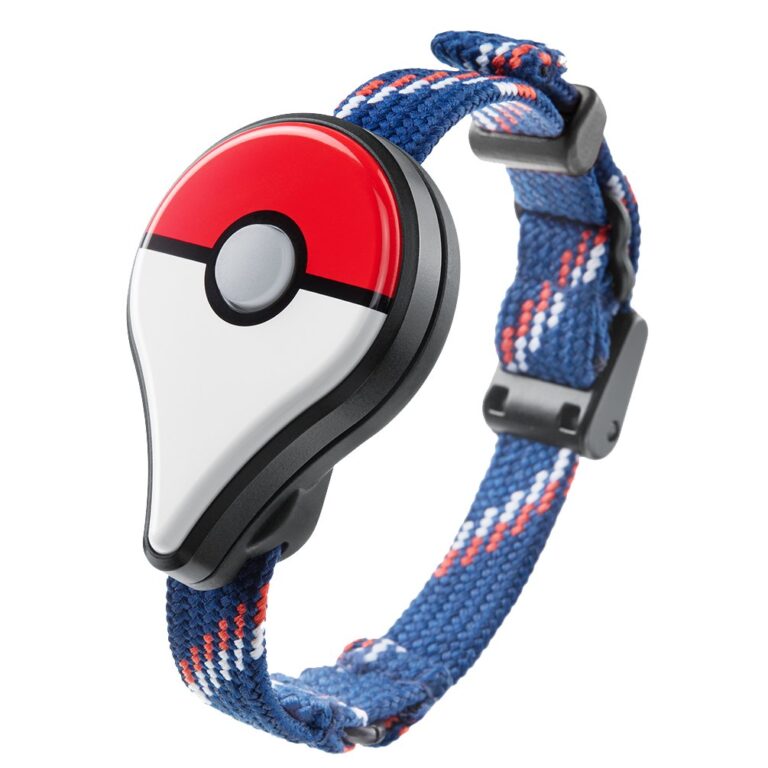 Pokémon GO Plus – 16 September 2016. A Bluetooth wearable that brings walking rewards to Pokémon GO
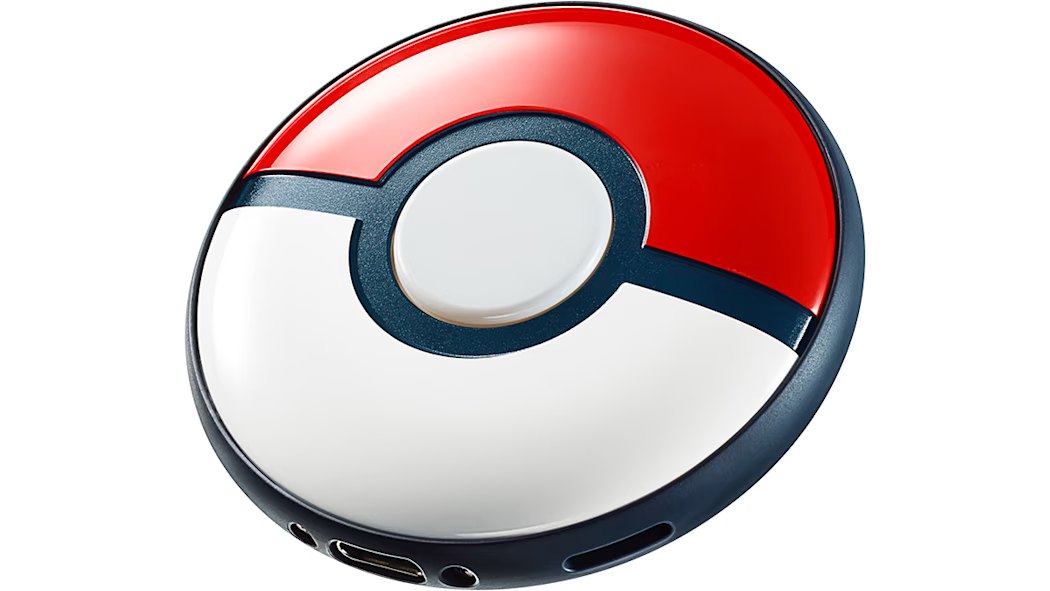
 Pokémon GO Plus + – 14 July 2023. A rechargeable device for Pokémon GO and Pokémon Sleep; Europe followed on 21 July 2023
Where to play it today
Both devices are long out of production and have never been reissued or turned into a digital version, so the only way to own one in 2026 is second-hand, where Japanese and Western units both turn up regularly. Each runs on a standard CR2032 coin cell and usually springs back to life with a fresh battery, although old screens and step sensors can fail. Pikachu 2 GS can still send Mystery Gift items to original Gold, Silver and Crystal cartridges on a Game Boy Color from the same region, but not through a Game Boy Advance, and the 3DS Virtual Console versions, which went off sale when the 3DS eShop closed for purchases on 27 March 2023, have no Mystery Gift option. The walking idea itself carries on in Pokémon GO and its GO Plus + accessory.
How it was made
Pocket Pikachu was developed for Nintendo by Jupiter Corporation, the Kyoto company that also made Pokémon Pinball, and its casing was designed inside Nintendo. It arrived in the wake of the virtual pet boom led by Bandai’s Tamagotchi and borrowed the idea of rewarding exercise from Hudson’s Tekuteku Angel, but it dropped the feeding and cleaning chores of other pets in favour of walking. GameSpot was already reporting on the device in January 1998, two months before its Japanese launch on 27 March, and Nintendo of America announced the November release with a press release of its own.
The sequel was timed to launch alongside Pokémon Gold and Silver on 21 November 1999 and is credited to Nintendo, Creatures, Game Freak and Jupiter. Its two big additions, the colour screen and the infrared port, were what tied it to those games, turning the watts walked on the device into items for a main-series adventure for the first time.
Successors, spin-offs and cameos



Popularity & reception
Sales and success
There are no official sales figures for either device, but the original’s success in Japan is plain from the way it was received. Launched at ¥2,500 at the height of the Pokémon boom, Pocket Pikachu was so popular that many fans spent the spring of 1998 hunting for one, and Nintendo built on that success with Pocket Pikachu Color, priced at ¥3,000 before tax and timed to arrive with Gold and Silver. In North America the original sold for US$19.95, and Pikachu 2 GS followed it there in October 2000.
What players and the press said
Neither device was scored by the big review outlets, which treated them as toys rather than games, but the coverage has been warm. Looking back, GamesRadar called the original “a great idea from 1998 that combined pedometer with virtual pet” and, in its history of the Pokémon games, saw a clear line from it to later hardware: “the inspiration for the later Pokewalker and 3DS system is quite obvious”. The Punished Backlog‘s look back put the sequel’s big upgrade simply: “The GS version had a color screen so you could see Pikachu in all his bright yellow glory.”
The two devices were judged on charm rather than depth, and they had plenty of it. In Japan the original is remembered as an affordable, explosive hit from the peak of the Pokémon boom, and later retrospectives have cast it as a forerunner of Pokémon GO for marrying Pokémon to walking. Western writers liked the simple appeal of a pedometer joined to a virtual pet that, unlike its Tamagotchi rivals, never needed feeding or cleaning, and enjoyed the way Pikachu’s attitude changed with how well it was treated. GamesRadar pointed out that the first model sold well enough to earn a sequel timed for Gold and Silver, and singled out that sequel’s colour screen and infrared link.
Further reading
The games Pikachu 2 GS links with, the walking gadgets that followed and more of Pikachu’s own adventures: