
  |
|
| Titles | Pokémon Rumble U ポケモンスクランブルU (Pokémon Sukuranburu Yū, ‘Pokémon Scramble U’) |
| Platform | Wii U – Nintendo eShop download only (¥1,800 · $17.99 · £13.49); NFC figures read by the Wii U GamePad |
| Developer | Ambrella |
| Publisher | Nintendo (The Pokémon Company in Japan) |
| Director | Norio Matsumura |
| Producers | Hitoshi Yamagami · Shusaku Egami · Takato Utsunomiya (executive producers Satoru Iwata and Tsunekazu Ishihara) |
| Music | Miki Obata |
| Players | 1–4 (local, on one Wii U); no online play |
| Genre | Action RPG / beat ’em up |
| Generation | Generation V |
| Pokémon | 649 (Generations I–V) |
| Stages | 70 stages in 21 areas, across six hubs |
| NFC figures | 23 in the international range, plus 7 Japan-only giveaways |
| Released | 24 April 2013 (Japan) · 29 August 2013 (North America) · 16 August 2013 (Australia) · 15 August 2013 (Europe) |
| Re-releases | None; Wii U eShop sales ended on 27 March 2023 |
| Rating | ESRB E · PEGI 7 · CERO A · ACB PG |
| Predecessor | Pokémon Rumble Blast (Nintendo 3DS, 2011) |
| Successor | Pokémon Rumble World (Nintendo 3DS, 2015) |
| Sales | No official figures (download only) |
Overview
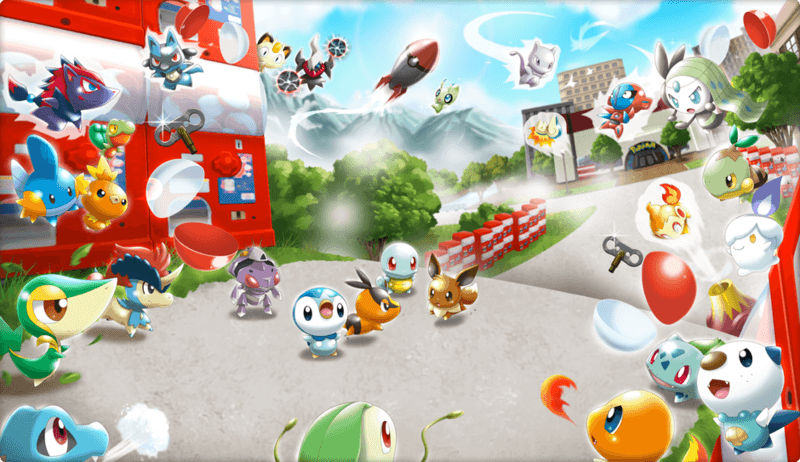
 Pokémon Rumble U is a beat ’em up game and the third title in the Pokémon Rumble series, and the first Wii U game to use the GamePad’s NFC (Near Field Communication) reader, which allows you to scan Pokémon figurines, unlocking their respective Pokémon. Pokémon Rumble U, also called Pokémon Scramble U when roughly translated from Japanese, shares a lot of mechanics with its predecessor Pokémon Rumble Blast.
The game has a small element of story to it. The story begins when, after a mishap, some Pokémon capsules from a Toy Shop are swept down a river, and the four Pokémon Pikachu, Oshawott, Snivy and Tepig emerge from them and have to find their way back to the shop, battling several enemies in different arenas on their way.
The arenas can now have as many as 100 Pokémon fighting at the same time, with a Boss Pokémon battle at the end of most stages. Beating the boss will allow the player to advance through the game and unlock the next stage. Additionally, the game brings back the four-player multiplayer of the original Pokémon Rumble (Rumble Blast had two-player co-op), allowing up to four players to play the arenas together.
Many new Pokémon have been added to the game, and they’re still featured with chibi-like 3D models. The graphics of the models themselves have improved compared to the other two Rumble games, and the same also applies to their animations and the skill animations, as many visual effects have been added. On the sound level, some new music tracks were added, although they still sound similar to the previous ones, and much of the soundtrack is reused from earlier Pokémon games.
All the fun of the Pokémon Rumble series comes to Wii U!
Pokémon Rumble U is the tale of the Toy Pokémon’s great adventure: after a mishap in the Toy Pokémon Shop, a few Pokémon capsules are swept down a river and washed up on a strange riverbank. Our heroes set out to find their way back to the Toy Pokémon Shop. Along the way they discover all is not right: can you help them discover why some of the Toy Pokémon are fighting each other, and what the enemy Pokémon are plotting?
Up to four players can enjoy multiplayer battles, featuring co-operative play to defeat the strongest enemies with teamwork, or friendly competitions to see who can defeat and befriend the most Pokémon.
Pokémon Rumble U features every last one of the 649 Pokémon that have been discovered as far as Pokémon Black Version 2 and Pokémon White Version 2, and hundreds of moves to master in battle. And the more Pokémon you defeat, the more Pokémon you can befriend, each with different strengths and weaknesses that will shape your battle strategy.
Other surprises and pick-ups will crop up along the way – which will help strengthen the team, restore health, or cause damage to the opponents. Pikachu and friends will encounter Giant Bosses, and players can even use the Wii U GamePad to set off Touch Bombs when faced with many Pokémon in battle at once!
- Featuring all 649 Pokémon discovered up to Pokémon Black Version 2 and Pokémon White Version 2
- Co-operative and competitive multiplayer modes let you share the fun with friends
— Official description
Quick Answers
The questions people ask about Pokémon Rumble U, answered first and explained further down the page.
Do you need the NFC figures to play Pokémon Rumble U?
No. The whole game, all 649 Pokémon and every stage can be completed without a single figure. Figures add a stronger, customisable Pokémon that you can level up with coins and carry between consoles, and they make early stages easier, but nothing in the story or the Battle Arena is locked behind them. More →
How many Pokémon are in Pokémon Rumble U and how do you get Arceus?
All 649 Pokémon from Red and Blue up to Black 2 and White 2 can be befriended. Arceus is the last piece of the puzzle: it is the challenge prize for The Final Battle Royale, the Mewtwo stage in the Wondrous Battle Arena’s Challenge Battle, and it cannot be found anywhere else. More →
Can you still buy or play Pokémon Rumble U?
It can no longer be bought. The game was a Wii U download only, and the Wii U eShop stopped selling games and redeeming download codes on 27 March 2023. If you bought it before then you can still redownload it to a Wii U, and your NFC figures still work with the GamePad. More →
Do amiibo work with Pokémon Rumble U?
Only in a limited way. Rumble U predates amiibo and was never sold as amiibo-compatible. Because the game will read any NFC chip held against the GamePad, an amiibo calls in a temporary Helper Pokémon, just like a contactless card would. It does not become the character on the figure and cannot be trained. More →
How many players can play Pokémon Rumble U, and is there online play?
Up to four people can play together on one Wii U, with player one on the GamePad or a Wii Remote and everyone else on Wii Remotes held sideways. Play is co-operative, but each stage ends with a scramble for falling coins and a ranking. There is no online multiplayer, and single-player supports Off-TV Play. More →
What unlocks after you finish the main story of Pokémon Rumble U?
After Melodious Woodland the toys reach the Toy Shop, which has four areas ending at the Sealed Door and a Black Kyurem boss. Beating the game opens the Wondrous Battle Arena’s Chill Battle and Challenge Battle; Variety Battle opens through in-game tasks, and its Secret Ruins stage needs all 649 Pokémon. More →
Story
In a toy shop full of wind-up Pokémon, an accident knocks a batch of Pokémon capsules into a river. Four of them, Pikachu, Snivy, Tepig and Oshawott, wash up on a strange riverbank and set off to find their way back. Their journey takes them across four very different play areas. Sparkly Playland runs from the Dream Gate through jungle, adventure and wonder areas; Blue Sky Park adds a hill, a busy square and a flower garden; the Transit Museum is all model railways, a locomotive café and a gallery of vehicles; and the Mysterious Forest ends with Meloetta’s concert in Melodious Woodland. Along the way the four realise something is wrong: toy Pokémon everywhere are fighting each other, and the enemy Pokémon appear to be plotting something. Every Pokémon they defeat can be befriended, so the little band grows into an army as it heads for home.
Back at the Toy Shop, the heroes battle through the Entranceway, the Toy Collection and the Secret Warehouse to a Sealed Door. Behind it, in the stage The Place to Return To, White Kyurem stands in the way before Black Kyurem waits as the final boss. With the toys home, the Wondrous Battle Arena opens for post-game challenges, ending with Mewtwo and the reward of Arceus.
Who’s who

Pikachu
One of the four toy Pokémon swept out of the Toy Shop at the start, and the face of the game on its artwork and eShop icon. Pikachu also had the Japanese pre-order figure, the Pokémon Center’s ‘Punching’ Pikachu, and is the challenge prize for The Forest of Memories in the post-game.
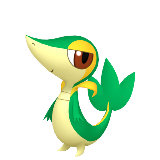
- Snivy: The Grass-type Unova starter, washed up on the riverbank alongside Pikachu, Tepig and Oshawott. Snivy’s fully evolved form Serperior is one of the most common faces in the game, appearing as an early boss, a challenge prize and a password Pokémon in all three regions.
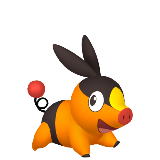
- Tepig: The Fire-type Unova starter in the original group of four. Its final evolution Emboar returns as the boss of Walking a Thin Line in the Secret Warehouse and as one of the three co-bosses in the Battle Arena’s A Battle in the Tower.
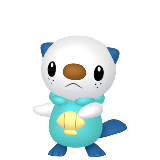
- Oshawott: The Water-type Unova starter completing the group. Oshawott was a popular password Pokémon: Japan’s Pokémon Smash! TV show gave one out, and the English versions have four Oshawott codes between them, including a Shiny one with Razor Shell and Swords Dance.
- Black Kyurem: Waits behind the Sealed Door at the end of the Toy Shop in The Place to Return To, with White Kyurem fought first as a mid-boss. Both forms were also made as promotional NFC figures, distributed differently in Japan, North America and the UK.
- Meloetta: The Mythical Pokémon headlining A Lively Concert, the last stage of Melodious Woodland and the end of the four main story hubs. It changes between its Aria and Pirouette Formes during the fight, and clearing all of the stage’s challenges earns Deoxys.
Pokémon
All the Pokémon from the first to the fifth generation are present in the game, with a total of 649 Pokémon. They can be obtained by befriending them, as challenge prizes, through passwords or through the NFC feature.
Befriending Pokémon
Once the player clears a stage, they are given Poké Balls containing some of the Pokémon they beat in the last run. There are four types of Poké Ball and they are as follows:
- Red Poké Ball: Awarded at the end of a stage. It unlocks a normal-level Pokémon from the last battle.
- Gold Poké Ball: Also awarded at the end of a stage. It unlocks a Pokémon of a higher level than the last battle played.
- Crystal Poké Ball: It can be either awarded after fulfilling the challenge tasks of the last battle (challenge prizes always come in one), or as a random reward at the end of the level, like the two previous types. It unlocks a Pokémon of a much higher level than the played battle.
- Master Ball: A rare Poké Ball that is sometimes dropped onto the battlefield. If it is thrown at a Pokémon, they’ll be automatically befriended. The Pokémon caught will also have a level similar to those found in Gold or Crystal Poké Balls.
Pokémon passwords
These are passwords revealed on the official game pages, printed in Nintendo magazines or, in Japan, handed out by the TV show Pokémon Smash!, CoroCoro, Famitsu Live and the Pokémon Daisuki Club website. They vary from one region to another, and unlock different Pokémon:
Passwords for the Japanese region
| Password | Pokémon |
|---|---|
19876976 |
Piplup |
74465213 |
Bulbasaur (Famitsu Live) |
20448123 |
Snivy (Shiny) |
63664750 |
Oshawott (Pokémon Smash!) |
27453665 |
Rotom |
10599899 |
Samurott |
26495673 |
Charizard (Blast Burn, Dragon Claw; CoroCoro) |
94839985 |
Gyarados (Shiny) |
71098343 |
Snorlax (Strength, Flamethrower) |
98993224 |
Stunfisk |
28563923 |
Eelektross |
51830476 |
Garchomp (Shiny) |
69283763 |
Hydreigon |
11009560 |
Dragonite |
13540269 |
Zoroark |
94720173 |
Chandelure |
10986334 |
Serperior (Frenzy Plant, Dragon Tail) |
Passwords for the North American region
| Password | Pokémon |
|---|---|
72679922 |
Piplup |
94283937 |
Bulbasaur |
23906908 |
Oshawott (Razor Shell, Tail Whip) |
45507682 |
Oshawott (Razor Shell, Swords Dance) |
16713311 |
Magikarp |
60536114also listed as 60536144 |
Gyarados |
55149930 |
Snivy |
07461322 |
Serperior |
04417308 |
Rotom |
65501535 |
Whimsicott |
80889856 |
Samurott |
91698319 |
Dragonite |
68110948 |
Charizard |
97988814 |
Garchomp |
88508880 |
Eelektross (Shiny; Thunderbolt, Coil) |
78871053 |
Eelektross (Shiny; Crunch, Discharge) |
17171075 |
Tepig |
79702521 |
Chandelure |
52051808 |
Sableye |
04811884 |
Zoroark |
43265987 |
Snorlax |
02337796 |
Stunfisk |
73442047 |
Dunsparce |
78897697 |
Hydreigon (Dark Pulse, Dragon Pulse) |
93173657 |
Hydreigon (Dark Pulse, Draco Meteor) |
53658779 |
Haxorus |
Passwords for the European region
| Password | Pokémon |
|---|---|
66972109 |
Piplup |
08040585 |
Bulbasaur |
94582250 |
Snivy (Leaf Tornado, Iron Tail) |
89648783 |
Oshawott (Shiny; Razor Shell, Swords Dance) |
39027380 |
Oshawott (Razor Shell, Tail Whip) |
33076260 |
Tepig |
80992047 |
Whimsicott |
58505654 |
Rotom |
58973354 |
Stunfisk |
75614557 |
Sableye |
31682288 |
Zoroark |
86228367 |
Chandelure |
59227108 |
Snorlax |
68514585 |
Dunsparce |
20089534 |
Magikarp (Shiny) |
97209964 |
Gyarados |
50958047 |
Eelektross (Thunderbolt, Coil) |
94530956 |
Eelektross (Shiny; Crunch, Discharge) |
41775214 |
Dragonite |
46585756 |
Garchomp (Shiny) |
13307436 |
Charizard |
23740396 |
Serperior |
87818558 |
Samurott |
55188682 |
Hydreigon (Dark Pulse, Draco Meteor) |
15137328 |
Haxorus |
The NFC feature
As mentioned earlier, with the help of the NFC feature, players can scan the Pokémon figurines they bought at stores and unlock the Pokémon in the game. These Pokémon will come as a stronger version of those present in the game, and they can be given a special trait, which makes them glow with a special aura in battle. They can also be customised, as their stats, moves and traits can be upgraded with the coins earned in battle. The figurines can also play the role of a Pokémon Storage system, since the player’s customised and enhanced Pokémon are written back to the figurines, which lets you use them on a friend’s console. Even if you’re already in a battle, holding another NFC card against the GamePad will call in a Helper Pokémon to fight alongside you for a while!
The full list of figures, and how they were sold in each region, is in The NFC figures below.
Notable Pokémon
Pokémon Rumble U contains all 649 Pokémon known at the time, from Bulbasaur to Genesect, every one of them a wind-up toy that can be befriended and played. Most join by being defeated in battle; others come as fixed challenge prizes, through region-specific passwords, or from NFC figures, which bring in stronger and trainable versions. Several Legendary and Mythical Pokémon turn up early as challenge rewards, Arceus is held back for the last Challenge Battle stage, and a secret post-game stage waits for players who collect all 649.
 Pikachu#025
 Snivy#495
 Tepig#498
 Oshawott#501
 Keldeo#647
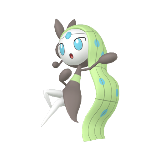 Meloetta#648
 Kyurem#646
 Genesect#649
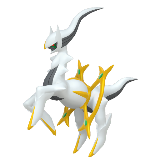 Arceus#493
- Pikachu – Starting hero, Japanese Pokémon Center pre-order figure with the Punchy trait, and a post-game challenge prize.
- Snivy – One of the four starting heroes; a Shiny Snivy was a Japanese password.
- Tepig – One of the four starting heroes; its evolution Emboar is a Toy Shop boss.
- Oshawott – One of the four starting heroes and the subject of five password codes across the regions.
- Keldeo – First boss of the game in Wet and Wild Battle, and the prize for clearing the Sealed Door.
- Meloetta – Boss of A Lively Concert, switching Formes mid-fight.
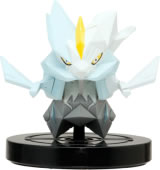
- Kyurem – Black Kyurem is the final story boss; Black and White Kyurem were the promotional NFC figures.
- Genesect – Series 2 figure, rare red secret figure in Series 3, five Japan-only promo variants, and a Challenge Battle prize.
- Arceus – Only obtainable from The Final Battle Royale against Mewtwo.
The NFC figures
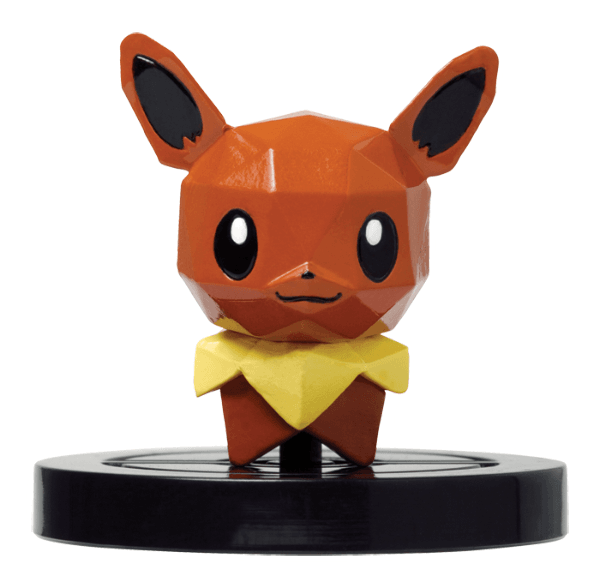
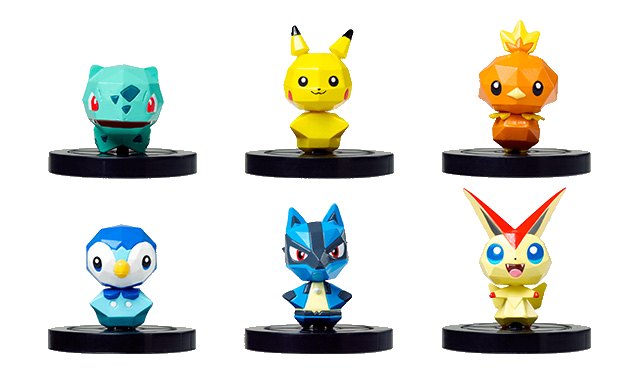
Pokémon Rumble U was the first Wii U game to use the NFC reader built into the GamePad, a year and a half before amiibo. Small plastic figures, styled like the game’s wind-up toys, were sold blind in capsules: three waves of seven in Japan, then all 21 at once in the West, plus Black and White Kyurem as promotional extras and a run of Japan-only giveaways. Setting a figure on the GamePad brings its Pokémon into the game, and any training you give it is written back to the figure.
- 30figures in all, 23 of them released outside Japan
- 3Japanese waves, April to June 2013
- $3.99a blind capsule at GameStop (£3.99 at GAME)
- 19months before amiibo used the same reader

Series, sets and shops
Japan got the figures first, in three monthly waves from Pokémon Center capsule machines; North America and the UK had the whole range from launch day, each through a single retailer:

| Set | Region | Released | How it was sold | Price | Figures |
|---|---|---|---|---|---|
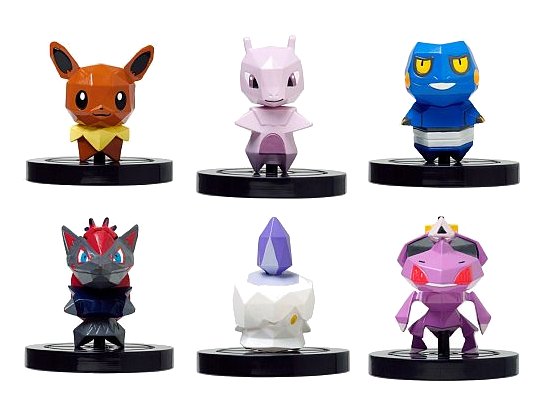
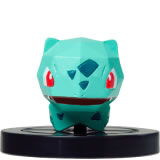
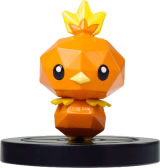
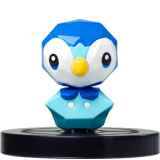
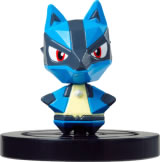
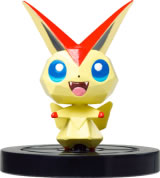
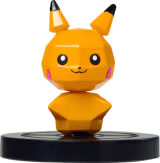
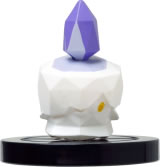
| Series 1 | Japan | 24 April 2013 | Capsule machines in Pokémon Centers | ¥200 | Bulbasaur, Pikachu, Torchic, Piplup, Lucario, Victini; secret: Shiny Pikachu |
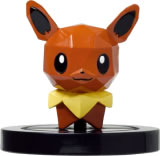
| Series 2 | Japan | 25 May 2013 | Capsule machines in Pokémon Centers | ¥200 | Eevee, Mewtwo, Croagunk, Zoroark, Litwick, Genesect; secret: Shiny Eevee |
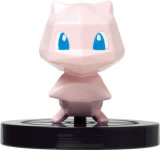
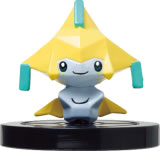
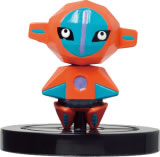
| Series 3 | Japan | 21 June 2013 | Capsule machines in Pokémon Centers | ¥200 | Mew, Celebi, Jirachi, Deoxys (Normal Forme), Darkrai, Shaymin (Land Forme); secret: red (Shiny) Genesect |
| Pokémon Center Pikachu | Japan | Pre-orders, 20 March to 23 April 2013 | With a pre-ordered Pokémon Center download card | ¥1,800 (card) | ‘Punching’ Pikachu: Punchy trait, ThunderPunch, DynamicPunch |
| Pokémon Smash! Lucario | Japan | Broadcast 28 April 2013 | Postcard prize draw, 200 made | Free | Lucario: Pokémon Smash! trait, Aura Sphere |
| Genesect Army | Japan | Broadcast 19 May 2013 | Postcard prize draw, 100 sets | Free | Red Genesect (ExtremeSpeed); Burn, Chill, Douse and Shock Drive Genesect |
| Kyurem promos | Japan | August 2013 | Capsule machines at the Pokémon Game Show’s temporary Pokémon Center | – | Black Kyurem (Freeze Shock, Fusion Bolt), White Kyurem (Ice Burn, Fusion Flare); Gift trait |
| Full range | North America | 29 August 2013 | Blind capsules, GameStop only (not Canada) | $3.99 | All 18 standard figures plus Shiny Pikachu, Shiny Eevee, red Genesect |
| Kyurem promo | North America | 29 August 2013 | One with a Rumble U download card from GameStop | With card | Black Kyurem or White Kyurem |
| Full range | UK | 15 August 2013 | Blind ‘Gacha Balls’, GAME only | £3.99 | All 18 standard figures plus the three shiny secret figures |
| Special edition | UK | 15 August 2013 | GAME stores and website | £19.99 | Download code, Black or White Kyurem, one mystery figure, double-sided poster |
Every figure
Here is every figure in the international range, with its set number. Each series has six figures plus a rare secret one, and two promotional Kyurem figures complete the set:
Series 1

Series 2




Series 3

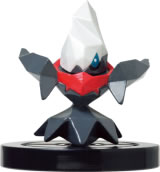
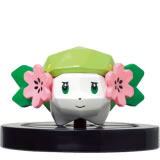
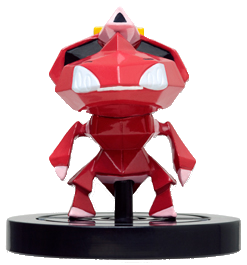
Promotional Kyurem
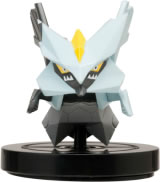
Japan-only promotions


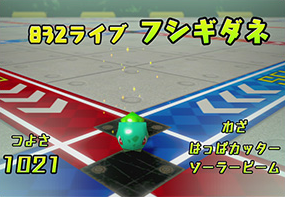
Japanese TV and online broadcasts also gave out password Pokémon, revealed on air:

Locations & Arenas
There are four main locations, each having three or four arena battles, followed by the Toy Shop and the post-game Wondrous Battle Arena. Successfully clearing an arena battle unlocks the next one. Arenas are composed of different stages, most of them with a boss the player must defeat, along with a set of challenges that will unlock a special Pokémon once completed.
- 6hubs, including the Toy Shop and the Battle Arena
- 21areas to clear
- 70stages in all
- 43stages in the four main hubs
Sparkly Playland
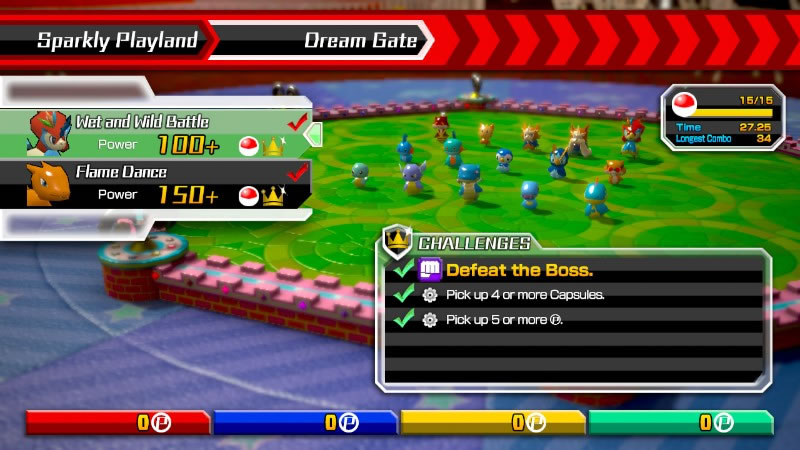
- Dream Gate: It is the first arena battle the player will encounter. It has two stages, the “Wet and Wild Battle” stage, where they will battle the boss Pokémon Keldeo, and the second one, the “Flame Dance” stage, where they’ll battle Charizard as a boss. The first stage must be completed in order to move to the second one. Completing all the challenges of the first stage will unlock Blastoise, while clearing all those of the second stage will unlock Typhlosion.
- Jungle Area: Within this arena, there are three different stages: “Serperior Jungle”, “Dangerous Rockets” and “In Trouble? Tap Away!”, with their respective bosses Serperior, Luxray and Salamence. Like all the arena battles, finishing a stage unlocks the next. Clearing all the challenges of the first stage unlocks Sceptile, while finishing those for the second one unlocks Haxorus, and as for the third stage, Snorlax will be the challenge reward.
- Adventure Area: It also has three stages: “Sweet, Light, and Fluffy”, “Unexpected Land” and “Grab and Go!”, with their respective bosses Altaria, Groudon and Torterra. Tympole is the challenge reward for the first stage, Garchomp for the second and Conkeldurr for the third.
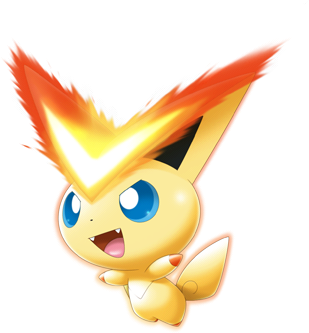
- Wonder Area: Another arena with three stages: “Go Big or Go Home!”, “Pokémon Outbreak!” and “Haunted Playland”, with their respective bosses Victini, Archeops and Chandelure. Machamp can be obtained upon clearing the challenges for the first stage, Tauros for the second one and Giratina for the third.
Blue Sky Park

- Aquatic Hill: Within this area the three bosses Manaphy, Typhlosion and Gyarados are fought, in their respective stages: “The Colorful Park”, “The Floors Are Hot!” and “Magikarp is All You Need”. Clearing the challenges for the first stage will award Stunfisk, Zapdos for the second stage and Magikarp for the third one.
- Frenzy Square: The three bosses Seedot, Meowth and Walrein are fought within their respective stages: “Make a Big Splash!”, “Guard the Fort!” and “Race against the Clock”. Lapras will be awarded for completing the challenges for the first stage, Moltres for the second and Articuno for the third.
- Flower Garden: The three bosses Clefable, Duskull and Celebi are fought in their respective stages: “Festival on Mount Moon”, “Guardians of the Flower Patch” and “The Garden at the End of Time”. Darkrai is the reward for the first level’s challenges, Volcarona for the second and Shaymin, in its Sky Forme, for the third.
Transit Museum
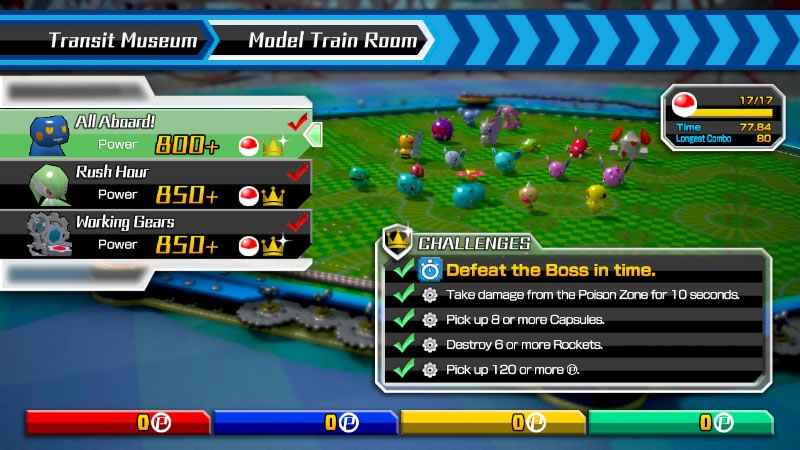
- Model Train Room: Here Venusaur, Gardevoir and Klinklang are respectively battled in “All Aboard!”, “Rush Hour” and “Working Gears”. Regirock is awarded after finishing the challenges of the first level, Rhyperior for the second and Registeel for the third.
- Locomotive Café: Only one boss, Electrode, will be fought here, in the final stage. There are three stages: “Dash Race!”, “Bonus Round!” and “Boom! Boom! Boom!”. Togepi is awarded after clearing the challenges in the first stage, Unown (the Z form) for the second and Whismur for the third.
- Vehicle Gallery: An arena where the four bosses Hydreigon, Milotic, Tynamo and Sigilyph are fought within their respective stages: “Spike Ball Alert!”, “Slithering Trains”, “The Electrifying Tynamo” and “A Flowing Desert”. The Pokémon rewards for the stages’ challenges are, in order: Tropius, Serperior, Palkia and Dragonite.
- Conductor Room: Within this arena the player will fight the bosses Magnezone, Abomasnow and Rayquaza within the stages “Rumbling Magnetic Motors”, “Frozen Runway” and “King of the Sky”. The challenge rewards for the stages are, in order, Raikou, Regice and Tornadus.
Mysterious Forest

- Verdant Plaza: An arena with two bosses, Dragonite and Sceptile, found in the second and third stages. The first stage is “Four Seasons in the Forest”, the second one “Battle Royale” and the third “Green Hide-and-Seek”. The challenge rewards for the stages are, in order, Uxie, Azelf and Mesprit.
- Magical Lake: The bosses Zoroark, Wigglytuff, Infernape and Garchomp are fought here in their respective stages: “Protect Pichu in the Forest”, “Let’s Sing a Song”, “Dual Launchers” and “In Need of Trees”. The challenge rewards for the different stages are, in order: Pichu, Suicune, Entei and Landorus.
- Melodious Woodland: The final arena battle of the four main locations. There are three stages: “A Colossal Throwdown”, “Major Clean-Up” and “A Lively Concert”, with their respective bosses Regigigas, Spiritomb and Meloetta. The challenge rewards for the three stages are, in order: Giratina (this time in its Origin Forme), Metagross and Deoxys.
Toy Shop
After Melodious Woodland the toys finally make it back to the Toy Shop, the fifth hub. Its four areas, the Entranceway, the Toy Collection, the Secret Warehouse and the Sealed Door, hold 11 stages, and the last of them, The Place to Return To, pits the heroes against White Kyurem and then Black Kyurem, the final boss of the story.
| Stage | Boss | Challenge prize |
|---|---|---|
| A Fateful Showdown! Entranceway · stage 1 of 3 |
Ursaring | Dusknoir |
| Battle Royale – Cage Match Entranceway · stage 2 of 3 |
Tyranitar | Thundurus |
| The Hidden Basement Entranceway · stage 3 of 3 |
Gigalith | Groudon |
| Launch to Victory! Toy Collection · stage 1 of 4 |
Darmanitan (Standard Mode) | Virizion |
| A Very Chaotic Battle! Toy Collection · stage 2 of 4 |
Dialga | Jirachi |
| Guided by Pichu Toy Collection · stage 3 of 4 |
Gengar | Cresselia |
| The Sword for Justice Toy Collection · stage 4 of 4 |
Cobalion | Terrakion |
| Fighters on Ice Secret Warehouse · stage 1 of 3 |
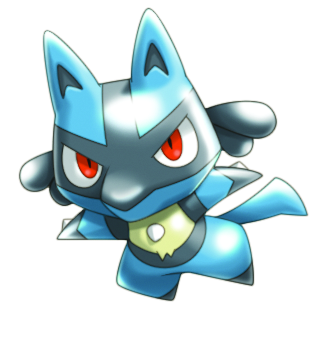
Lucario | Victini |
| The Enemies Within Secret Warehouse · stage 2 of 3 |
Samurott | Lugia |
| Walking a Thin Line Secret Warehouse · stage 3 of 3 |
Emboar | Ho-Oh |
| The Place to Return To Sealed Door · the only stage |
Black Kyurem White Kyurem is fought first, as a mid-boss |
Keldeo (Ordinary Form) |
Wondrous Battle Arena
The post-game arena has three courses. Variety Battle (seven stages) opens through in-game tasks and includes A Battle in the Tower against Serperior, Emboar and Samurott together, plus the Secret Ruins, which open once all 649 Pokémon are collected. Chill Battle (five stages) opens after the story and gives prizes like Reshiram and Pikachu. Challenge Battle (four stages) is the toughest, rewarding Genesect, Zekrom and Mew before The Final Battle Royale against Mewtwo, whose prize is Arceus.
| Stage | Boss | Challenge prize |
|---|---|---|
| A Battle in the Tower Variety Battle · stage 1 of 7 |
Serperior, Emboar and Samurott the three Unova starters together |
Smeargle |
| Get 1,000 Combos! Variety Battle · stage 3 of 7 |
Five co-bosses at once | Linoone |
| Pokémon on a Roll Variety Battle · stage 4 of 7 |
Golem | Frost Rotom |
| Empoleon the Great Variety Battle · stage 5 of 7 |
Empoleon | Kyogre |
| It’s Drill Time! Variety Battle · stage 6 of 7 |
Rhyperior | Shaymin (Sky Forme) |
| Unidentified Flying Objects Chill Battle · stage 1 of 5 |
Deoxys (Attack, Defense or Speed Forme) changes from play to play |
Chingling |
| Garden Keepers Chill Battle · stage 2 of 5 |
Tropius | Mow Rotom |
| The Three Little Tepig Chill Battle · stage 3 of 5 |
Mightyena | Magby |
| Fever! Chill Battle · stage 4 of 5 |
Heat Rotom | Reshiram |
| The Forest of Memories Chill Battle · stage 5 of 5 |
Three Butterfree | Pikachu |
| Lord of the Bugs Challenge Battle · stage 1 of 4 |
A Bug-type boss that changes from play to play, such as Beautifly, Dustox, Mothim, Galvantula or Accelgor | Genesect |
| Open Entry Battle Royale Challenge Battle · stage 2 of 4 |
Breloom, Garchomp or Thundurus Hoenn, Sinnoh and Unova versions |
Zekrom |
| The Battle for Sky and Land Challenge Battle · stage 3 of 4 |
Lugia (sky battle) or Ho-Oh (land battle) | Mew |
| The Final Battle Royale Challenge Battle · stage 4 of 4 |
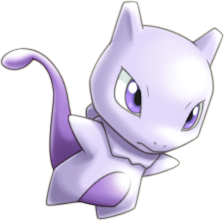
Mewtwo | Arceus |
Variety Battle’s two other stages are I Dunno, Audino, which has no boss, and the Secret Ruins.
Battle Items
Pokémon Rumble U’s battles are full of items, which will randomly spawn on the battlefield. Each item offers a beneficial effect and assists the player in clearing the stages faster.
| Items | Effects |
|---|---|
| Master Ball | Damages the Pokémon hit and automatically befriends them |
| Firework | Summons four ally Pokémon |
| Random Boost Key | Boosts one of the Pokémon’s stats |
| Assembly Horn | Regroups the ally Pokémon at the player’s location |
| Big Key | Doubles the attack and makes the Pokémon a giant |
| Grab Bag | Transfers some of the allies’ money to the player |
| Heal Candy | Heals the player and their close allies by 50% of their maximum HP |
| Major Heal Candy | Heals the player and their allies within a larger field radius by 50% of their HP |
| Stopwatch | Freezes the enemies for a short period of time |
| Trap | Lures Pokémon to it and immobilises them |
| Spotlight | Puts a spotlight over an enemy, which makes all the other enemies attack it |
| Dice | A dice that causes a random effect to happen, whether enhancing the player’s stats or the enemy’s stats, or even altering the battlefield itself |
| Vacuum | Brings all the items within range to the user |
Regional Variations
Pokémon Rumble U came out in Japan first, under its Japanese series name, and a few things differ between the regions:
- The Japanese title is Pokémon Scramble U, matching the series’ Japanese name; it was published in Japan by The Pokémon Company and by Nintendo everywhere else.
- Japan had the game almost four months early, on 24 April 2013, with Europe following on 15 August, Australia on 16 August and North America on 29 August 2013.
- Password codes are different in every region and so is the line-up: Japan has 17 password Pokémon, while North America and Europe have 26 each, and every English-version password Pokémon carries the Gift trait.
- The game’s leftover debug text was fully translated into English for the North American and European builds but is mostly Japanese in the Japanese build, and the two builds carry different internal version numbers.
- Launch prices were ¥1,800 in Japan, $17.99 in North America and £13.49 for the UK download code.
- The NFC figures were sold differently in every region, and seven of them never left Japan: see Series, sets and shops.
Left in the data
- A message file of developer debug strings (debug.msbt) sits in each language folder; the North American and European builds have it fully in English, the Japanese build mostly in Japanese.
- A version text file records internal build numbers, trunk 28043 for the North American release and trunk 27520 for the Japanese one, pointing to a version-control system used during development.
- Several empty sub-folders appear to be meant for localisation files on little-endian hardware such as the 3DS, which the Wii U does not use; they were left in the shipped game.
- The Japanese release contains leftover shader_bin files at the root of the game data, holding SDK project files and fragments of proprietary source code.
Videos & media
Check out these videos of Pokémon Rumble U, including trailers and the intro video.
The Japanese gameplay trailer.
The opening / intro video, showing the game’s back story.
The Nintendo eShop trailer.
Trivia & facts
- Even though it was never stated by Nintendo, amiibo figures, such as the Super Smash Bros. ones, work with Pokémon Rumble U’s NFC feature. The amiibo in question don’t turn into the character on the figure, though: like any other NFC chip, each one calls in a temporary Helper Pokémon, which can’t be kept or trained.
- Meloetta, the last boss of the Mysterious Forest, switches between its Aria Forme and its Pirouette Forme during the battle.
- Unlike in the other Rumble games, befriended Pokémon can’t have special traits. Traits are only found on the Pokémon from NFC figures and on password Pokémon, which come with the Gift trait.
- The Shiny Pokémon have nothing special compared to their normal versions.
- The NFC feature can read other NFC-compatible cards while playing, such as contactless e-money and transit cards. Doing so will call in a Helper Pokémon, with different cards calling different Pokémon, and the card’s own data is never changed. Some cards can’t be read at all.
Further trivia
- Pokémon Rumble U is the only original Pokémon game made for Wii U; the console’s other Pokémon release, Pokkén Tournament, was a port of an arcade game.
- Its soundtrack reuses music not just from the first two Rumble games but also from Hey You, Pikachu!, Pokémon Channel, Pokémon Dash and Pokémon PC Master.
- Giratina is a challenge prize twice: from Haunted Playland in the Wonder Area, and in its Origin Forme from A Colossal Throwdown in Melodious Woodland.
- Japan’s Pokémon Daisuki Club website ran a tie-in mini-game, Capsule Catch, from 26 April 2013, in which players netted falling toy capsules to earn passwords for special Pokémon such as Stunfisk.
- The game cannot trade or battle with the main-series games; its Pokémon live only in Rumble U and on the figures.
Legacy
What came after
- Announced in Japan as a Wii U download title – 15 February 2013. First reported by CoroCoro a few days earlier; NFC figure support was revealed in March 2013
- Japanese release and NFC figure Series 1 – 24 April 2013. ¥1,800 on the eShop; first figures in Pokémon Center capsule machines the same day
- NFC figure Series 3 completes the Japanese set – 21 June 2013. Series 2 had followed on 25 May 2013; Series 3 added Mew, Celebi, Jirachi, Deoxys, Darkrai, Shaymin and the rare red Genesect
- European release – 15 August 2013. GAME sold the figures and a £19.99 special edition in the UK
- Australian release – 16 August 2013
- North American release – 29 August 2013. $17.99; figures sold only at GameStop, not in Canada
- amiibo launch on Wii U – 21 November 2014. North American date. Nintendo’s own figure line used the same GamePad reader that Rumble U had pioneered; Rumble U treats amiibo like any other NFC chip
- Successor Pokémon Rumble World released – 8 April 2015. Free-to-start Nintendo 3DS follow-up with 719 Pokémon
- Wii U eShop purchases end – 27 March 2023. The game and its download codes can no longer be bought or redeemed; redownloads continue
- Wii U online services end – 8 April 2024. No effect on the game, which only ever had local multiplayer
Where to play it today
Pokémon Rumble U can no longer be bought. It was only ever sold as a Wii U download, and the Wii U eShop stopped taking purchases and redeeming download codes on 27 March 2023, so old download cards and codes no longer work. Anyone who bought it can still redownload it to a Wii U, and the NFC figures still work with the GamePad. It has never been ported to Switch, and its multiplayer was always local, so the end of Wii U online services changed nothing.
How it was made
Pokémon Rumble U was made by Ambrella, the studio behind the earlier Rumble games and Hey You, Pikachu!, and directed by Norio Matsumura. Hitoshi Yamagami, Shusaku Egami and Takato Utsunomiya produced it, with Satoru Iwata and Tsunekazu Ishihara as executive producers, Junichi Masuda among the game-design advisers and Miki Obata handling sound. CoroCoro first revealed the game in February 2013 as a download-only Wii U title with all 649 Pokémon, four players and up to 100 Pokémon on screen, and it was officially confirmed for a spring release on 15 February. In mid-March CoroCoro then revealed that it would be the first Wii U game to use the GamePad’s NFC reader, with figures sold at Pokémon Centers for ¥200 each. It launched in Japan on 24 April 2013, and Western release dates were announced on 17 July 2013.
Pokémon Rumble U elsewhere

Sales & reviews
Sales figures
No official sales numbers were ever released for Pokémon Rumble U, in Japan, North America or Europe.
As a download-only game, it never appeared in the Media Create or Famitsu charts, which counted boxed software, and neither Nintendo nor The Pokémon Company has published download sales for it, or sales totals for its NFC figures.
- ¥1,800on the Japanese eShop
- $17.99in North America (£13.49 in the UK)
- 49on Metacritic, from 22 critics
- 6/10from Nintendo Life and Destructoid
Review scores
Pokémon Rumble U wasn’t really very well received. In fact, it was given mixed, average and negative reviews on major review websites. Let’s take a look at these reviews:
- Will Greenwald of PC Magazine thought the game was repetitive and “the arenas are all shaped the same and there’s so little variety in the action”, rating it 2/5, which equates to ‘Fair’ on their scale.
- Chris Carter from Destructoid thought the toys were a fun addition to the game, but still believed that Pokémon Rumble U is only a game a die-hard Pokémon fan will like, giving it a 6/10, the equivalent of ‘Alright’ on their scale.
- Neither IGN nor GameSpot reviewed the game, but GameRankings (which closed in 2019) had it at 48.82% from 17 reviews, while it received 49 from 22 critics on Metacritic. Both review scores are considered below average, especially for a Pokémon game.
- Overall, the game wasn’t as good as the fans expected it to be, as it merely copied the features of its predecessor and only improved the graphics, ending up as a monotonous game.
Critics mostly landed in the middle. Nearly everyone liked how cheerful and generous the game is, with all 649 Pokémon to collect, constant rewards and toy-box visuals, and several found it good fun in short bursts or with three friends on the sofa. The common complaint was depth: battles boil down to mashing one or two buttons, arenas feel alike and the stage structure repeats for hours, which led PCMag and Joystiq to give it some of its lowest marks. The NFC figures were seen as a neat but optional extra, and reviewers noted that the game is fully playable without them. Nintendo Life summed it up as a decent multiplayer game rather than an essential Pokémon one, and Official Nintendo Magazine called it slight but full of energy.
Media & artwork
- Official artwork gallery from Pokémon Rumble U – the toy Pokémon models
- Screenshots from Pokémon Rumble U
Further reading
More Rumble, Ambrella and Wii U links on the site: