  |
|
| Titles | Pokémon Shuffle · Pokémon Shuffle Mobile ポケとる (PokéToru) · ポケとる スマホ版 (PokéToru Sumaho-ban) |
| Platform | Nintendo 3DS (Nintendo eShop, download only) · iOS & Android (as Pokémon Shuffle Mobile) |
| Developer | Genius Sonority |
| Publisher | Nintendo (3DS, outside Japan) · The Pokémon Company (3DS in Japan; iOS and Android worldwide) |
| Director | Shunsuke Takagi |
| Producers | Manabu Yamana · Takato Utsunomiya · Kazunori Sugiura · Naoto Ueoka · Shinya Takahashi · Hitoshi Yamagami |
| Music | Tsukasa Tawada |
| Players | 1 |
| Genre | Match-three puzzle, free-to-play with in-app purchases |
| Generation | Generations VI & VII |
| Stages | 700 Main, 53 Expert and 700 UX Stages (150 Main and 20 Expert at launch), plus Survival Mode and Special Stages |
| Pokémon | 802 species, plus more than 60 Mega forms |
| Released | 3DS: 18 February 2015 (Japan, North America, Europe, Australia) · Mobile: 25 August 2015 (Japan, Hong Kong, Taiwan) · 31 August 2015 (North America, UK; iOS) · 1 September 2015 (Australia) · 20 January 2016 (South Korea, France, Germany, Italy, Spain) |
| Re-releases | None (no Nintendo Switch or Nintendo Switch Online version) |
| Rating | ESRB E · PEGI 3 · CERO A · ACB G |
| Predecessor | Pokémon Battle Trozei (3DS eShop, 2014), the follow-up to Pokémon Trozei! |
| Successor | Pokémon Café Mix (2020; later Pokémon Café ReMix) |
| Downloads | Over 6.5 million on 3DS by July 2017 · over 10 million mobile installs on Google Play |
Overview
 Pokémon Shuffle is a free-to-download puzzle game for the Nintendo 3DS and mobile devices, and forms part of the Generation VI & VII side series. The game was released for the Nintendo 3DS on 18 February 2015, and later in the year for mobile devices, arriving in Japan on 25 August and in North America and the UK on 31 August.
The game is played on a 6×6 board of Pokémon icons, and its simple yet addictive aim is to match three or more of the same Pokémon by moving the icons around the board; each time you do this, you’ll do damage to the opposing Pokémon. Every level of the game is the equivalent of a battle against a Pokémon in the wild, and when you match three+ Pokémon icons you do damage to that wild mon! Matching three icons will remove them from the board and everything will shuffle down, so you’ve always got 36 icons on the board (unless disruptions prevent that).
There is a maximum number of moves you have to complete each level in – the number of moves remaining shows in the bottom left corner – and defeating the Pokémon within the allocated number of moves for that level gives you a chance to catch it and add it to your team. As the player earns S Ranks on the Main Stages, they unlock Expert Stages, where only the boldest of shufflers dare tread; these stages do not have a maximum number of moves but instead have a time limit you have to complete each level in.
The player begins with five hearts (almost used like play credits), and every time a level is attempted it costs a heart, whether or not the level is successfully completed. Hearts do regenerate, but only at a rate of one every half an hour, and a maximum of five hearts can be regenerated. Using StreetPass on the 3DS is another way of receiving hearts; the game will always use up hearts that were regenerated before ones obtained via StreetPass. Pokémon Shuffle is a freemium app, so real money can be used to purchase Jewels, which can then be spent on hearts, coins or extra moves and time to bypass the hearts system. On the 3DS, Jewels could only be bought until the Nintendo eShop closed for purchases on 27 March 2023; the mobile version still sells them.
Get ready for the latest Pokémon puzzle game!
Match three or more Pokémon to clear them from the screen and damage the opponent Pokémon. But watch out—your moves are limited, so use them wisely! With no time limit, you can create the best matches to deal out maximum damage. With many popular Pokémon, including some Mega-Evolved Pokémon, this is the perfect puzzle game for fans and for new players who want to get in on the Pokémon fun.
— Official description
Quick Answers
The questions people ask about Pokémon Shuffle, answered first and explained further down the page.
Can you still play Pokémon Shuffle in 2026?
Yes. Pokémon Shuffle Mobile is still running on smartphones and needs an internet connection. The 3DS version still works if it is already installed, but the eShop stopped selling it on 27 March 2023 and its servers closed on 31 March 2023, ending check-ins, competitions and Jewel purchases. More →
How many stages are there in Pokémon Shuffle?
The finished game has 700 Main Stages across 23 areas, 53 time-limited Expert Stages and 700 UX Stages, which are tougher versions of the Main Stages. On top of those come Survival Mode and the rotating special stages, which have repeated on a 24-week cycle since February 2018. More →
How do you unlock Expert Stages and UX Stages?
Expert Stages unlock through S Ranks earned on Main Stages: S Ranks on 12 different Main Stages open the first three, and more appear as your S Rank count grows. UX Stages need two things: clearing Main Stage 700 and holding 500 S Ranks. Repeat S Ranks on the same stage do not add to the count. More →
How do you get Mega Stones in Pokémon Shuffle?
Most come from beating a Trainer’s Mega Pokémon, usually the boss at the end of an area, such as Mega Audino on Stage 10 or Mega Rayquaza on Stage 300. Others are Mission Card or Trainer rank prizes, and 13 of the 48 stones come from rotating competitive stages and Escalation Battles. More →
What are the differences between the 3DS and mobile versions?
They are separate games with separate saves and passcodes. The mobile version always needs the internet, replaces StreetPass with Facebook or Friend Code heart sharing, has sharper graphics, charges more Coins for items and Great Balls, and gives 5 Hearts rather than a Jewel for a first Mega boss win. Competition rankings are kept separately. More →
Is Pokémon Shuffle on Nintendo Switch?
No. Shuffle only came out on 3DS, iOS and Android, and it has never been released on Switch or Nintendo Switch Online. The nearest equivalent is Pokémon Café Mix, later renamed Pokémon Café ReMix, another free-to-play Pokémon puzzle game from Genius Sonority, released on Switch and smartphones in June 2020. More →
Differences between the Mobile and 3DS versions

- The mobile version requires an internet connection to play; the 3DS version doesn’t.
- In the mobile version you can turn on push notifications in the app, which will notify you when hearts are regenerated.
- Where 3DS users can use StreetPass to obtain extra hearts and unlock more playtime, mobile users can use Facebook integration to obtain mini hearts. Non-Facebook users can send each other Friend Codes to obtain mini hearts. Each mini heart received fills up a bar called the Friend Gauge, and when the bar is fully filled up a heart is awarded.
- Passcodes from the 3DS version do not work with the mobile version.
- When you complete your first battle against a Trainer with a Mega-Evolved Pokémon in the mobile version, you get five hearts as a reward instead of the Jewel you’d get in the 3DS version.
- Competitive rankings and prize tiers were kept separately for the two versions, and the mobile version adds a ranking among your friends as well.
- There is a monthly spending cap on the mobile version of the game: every account is limited to 1,000 purchase points a month (about ¥10,000, or roughly US$80), and players under 13 outside Asia can’t buy Jewels at all.
A few more differences between the two versions
- The two versions are separate games with separate saves, so progress can’t be carried over from one to the other.
- Sending a mini heart fills a quarter of the Friend Gauge and receiving one fills a tenth. Friend Codes for players without Facebook arrived in mobile version 1.6.0, and players under 13 can’t use the friend features.
- The mobile version has sharper graphics and a stage map that scrolls vertically.
- Items and Great Balls cost more Coins on mobile, and some Coin rewards are smaller: 20 Coins rather than 30 for a repeat clear, and up to 10,000 rather than 30,000 from Meowth’s weekend coin stage.
- Jewels buy more hearts on mobile, and a mobile player can hold up to 300 Jewels, against 150 on the 3DS.
Stages
Pokémon Shuffle contains an impressive 1,450+ fixed stages, which are broken down into five categories: 700 Main Stages, 53 Expert Stages, 700 UX Stages, a number of limited-availability Special Stages and Survival Mode. That’s the finished game – it launched in February 2015 with 150 Main Stages and 20 Expert Stages, and the rest arrived in updates until new content ended in February 2018.


Amelia
Amelia (Japanese: アミリア; German: Klara) is a journalist with orange hair and green eyes who acts as the game’s guide. She walks new players through Puerto Blanco, explaining matches, Support Pokémon, catching and Mega Evolution, then leaves after the first Sandy Bazaar stage to write up the player’s journey. She returns briefly at Night Festival with a gift and her star ratings for each Pokémon.
The Main Stages follow a linear order, and the current stage must be beaten in order to unlock and move on to the next one; these stages are move-limited. Stages follow a path through various areas with their own themes and music, 23 areas in all. The more S Ranks you obtain as you progress through the Main Stages, the more Expert Stages you will unlock, where you’ll face off against much tougher mons that work on a time limit instead of a number of moves. Defeating the same mon with S Ranks multiple times doesn’t count toward unlocking these.

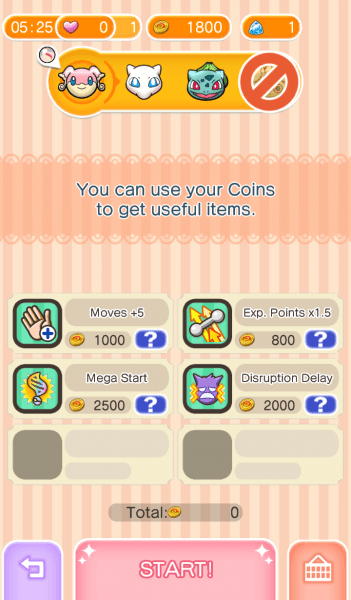

Expert Stages – like Main Stages but usually more difficult, and time-limited instead of move-limited. Like Main Stages, Expert Stages require hearts to play.
The Special Stages were changed each week that you checked in online and downloaded the new data to your app; these stages can be either move-limited or time-limited. Since 13 February 2018 they have followed a built-in 24-week cycle instead, which 3DS copies keep running offline even after the servers closed on 31 March 2023. In order to access Special Stages you must first complete the tutorial, which essentially just means playing through the first 11 levels of Pokémon Shuffle and listening to Amelia’s tips. Sometimes Special Stages can require a set number of coins to play rather than hearts.
Survival Mode – this is one hell of a challenge for even the greatest of Shufflers. Complete 150 Main Stages to unlock this mode. The player will be subjected to a long run of consecutive stages – 60 of them since the mode was rebuilt on 25 July 2017 – and once they’ve chosen their initial Support Pokémon for the first one, they don’t get to change them. The stages are a randomised selection drawn from the first 300 Main Stages. Luckily you don’t have to complete the whole thing in order to get some rewards: when you achieve certain milestones you’ll be rewarded – even if you don’t finish the run.
Upon completing a stage you usually have the chance to catch the Pokémon. Each Pokémon has its own catch rate %, and the more moves you had left at the end of the level, the more bonus catch percentage chance you’ll get. The Pokémon in the Mega Evolution and competition levels are excluded from this and cannot be caught. In the case of timed stages, the amount of time you had left will contribute toward your catch percentage in the same way as moves remaining.
Ranks & unlocking Expert and UX Stages
Each time a level is successfully completed, the player is awarded one of four ranks: C, B, A or S, S being the best possible and C being the worst. The rank the player is awarded is based on how many moves (or how much time) the player had left when they cleared the stage. The best rank the player has attained on a stage will display on the overworld – this applies to Main and Expert Stages but not Special Stages.
- S Rank is the highest/best rank and can be obtained by completing a stage with 50% or more of its moves or time remaining. Puzzle Main Stages only have a single way you can win, so will nearly always award an S Rank when beaten.
- The Moves +5 and Time +10 power-ups don’t affect catch percentage, but they do affect the rank awarded.
- Obtaining lots of S Ranks in Main Stages will help the player unlock more Expert Stages: S Ranks on 12 different Main Stages open the first three, and 500 S Ranks, with Stage 700 cleared, open the UX Stages.
- S Ranks obtained in the main stage path will unlock Expert Stages; however, S Ranks obtained in these Expert and Special Stages don’t unlock anything further.
Events & Special Stages
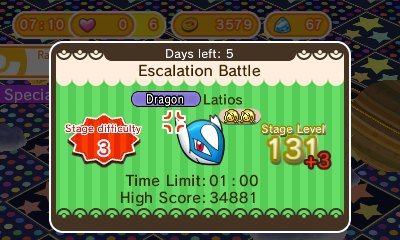
The rotating Special Stages come in several flavours, and since February 2018 they have all come round again on the same 24-week loop:
Support Pokémon
When you capture Pokémon you can take them along with you in the battles to come. Ideally you’ll want to choose Pokémon with a type advantage against the Pokémon you are about to battle; you’ll also want to put a Pokémon for which you own a Mega Stone in the first, or leftmost, slot to enable it to Mega Evolve and use its enhanced abilities in battle – only the leftmost Pokémon can Mega Evolve.
Most Main Stages allow you to take four Support Pokémon with you; however, there are stages that only allow three. If a player has fewer Pokémon than the number of Support Pokémon allowed on a stage, or if the player chooses to take fewer than the maximum number allowed, then stages will add their own Support Pokémon. Some stages may add their own forced Support icons after the start.


Default Support Pokémon include either Pidgey, Happiny, Azurill or Pichu on most stages, added in that order.
Optimise button
Hitting the Optimize button on the Support Pokémon selection screen before starting a stage will quickly choose the best Support Pokémon for that stage based on several factors:
- The first support slot will be filled with a Pokémon capable of Mega Evolution (i.e. you have its Mega Stone). Where you have multiple Pokémon capable of Mega Evolution, the one with the strongest type advantage against the opposing Pokémon will be selected (super effective would take priority over normal effectiveness, for example).
- Pokémon with the best base Attack Power and type advantage (and thus the best damage) will fill the remaining slots. Where multiple Pokémon have the same Attack Power and effectiveness, the slots will be randomly filled from those mons.
- Where the player has no Pokémon capable of Mega Evolution, all slots will be filled based on damage (Attack Power, best type advantage).
Catching Pokémon
When the player defeats a Pokémon they’ve not yet caught, they get a shot at catching it. Each Pokémon has its own set base rate of how difficult it is to catch, but the player can tilt the scales in their favour by doing really well on stages and earning a catch bonus based on the number of moves they didn’t use in the stage. In the case of timed battles, it’s an increased bonus catch percentage chance based on every three seconds remaining on the timer when the stage was cleared.

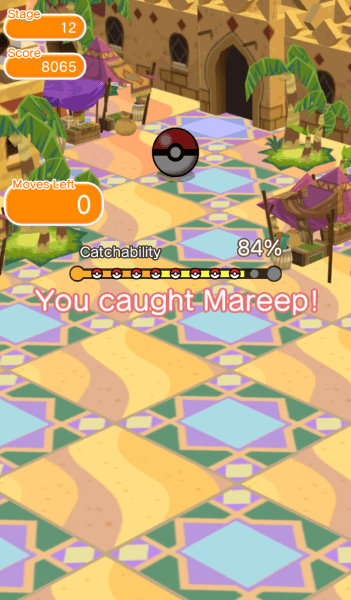

Moves or time remaining that came from a Moves +5 or Time +10 will not count toward the bonus, so if you used a Moves +5 and had five moves left, these five moves won’t count towards your catch bonus. The one time an item/power-up does help toward the catch bonus is if the player ran out of moves or time and used a Jewel to get more: any moves or time left over from the Jewel usage DOES count toward bonus catch percentage.
If the attempt to catch the mon fails with a standard Poké Ball, the player can opt to buy a Great Ball, which will double the catch rate. Great Balls cost 2,500 Coins for 3DS users and 3,500 Coins for mobile users. Should the attempt with the Great Ball fail, more can be purchased; however, the catch rate won’t improve any further after that initial double. A Poké Ball icon will display on the map screen next to any stage where you already caught the mon – remember, you gotta catch ’em all.
Notable Pokémon
By the end of its updates Pokémon Shuffle featured 802 species, from Bulbasaur to Marshadow, more than any other self-contained Pokémon game except Pokémon GO. Each appears as a square icon with a single type, a base Attack Power and a Skill, and can be taken into battle as a Support Pokémon once caught. On top of the species come more than 60 Mega forms, including shiny and Halloween versions, plus costume, ‘Winking’ and Celebration variants, many tied to limited events.
 Mew#151
 Mewtwo#150
 Lucario#448
 Giratina#487
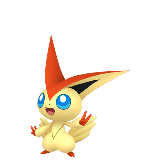 Victini#494
 Meowth#052
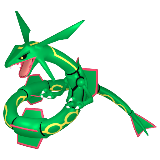 Rayquaza#384
 Kyogre#382
 Pikachu#025
 Marshadow#802
- Mew – Star of the ‘Launch Special: Meet Mew’ stage on day one, 18 February 2015.
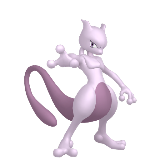
- Mewtwo – Mega Mewtwo Y guards Stage 150, the last launch stage, and Mega Mewtwo X guards Stage 350.
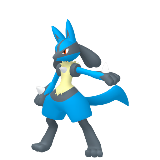
- Lucario – Mega Lucario was the first competitive stage, from 15 March 2015.
- Giratina – The first Escalation Battle, starting on 8 June 2015 (3DS) and 28 September 2015 (mobile).
- Victini – Hosts the weekly Tons of Exp. Points stage used to level up Support Pokémon.
- Meowth – Its weekend A Chance for Coins stage is the main way to farm Coins.
- Rayquaza – Mega Rayquaza is the Stage 300 boss; every player was given a Rayquaza in December 2016.
- Kyogre – Primal Kyogre is the boss of Stage 700, the final Main Stage.
- Pikachu – Appears in many costume variants, including caps, Legendary costumes and 12 monthly Celebration Pikachu.
- Marshadow – The last Pokémon added; it only became catchable in July 2018, five months after the final update.
Mega Pokémon

Whenever a player reaches certain stages – every 10th level in the first three areas (Stages 10, 20 and 30), and after that usually the last stage of an area, plus a few mid-area stages – they get the chance to take on a Trainer’s Mega Pokémon. As you’d expect, these mons are tougher than your average, but the rewards are also greater: defeating a Mega mon will yield you that Pokémon’s own Mega Stone (beat Mega Audino and you get Audinite). The primary Pokémon in the player’s line-up can utilise an appropriate Mega Stone during a level to Mega Evolve once its Mega Gauge has filled up, granting it a Mega Effect – which differs from one Pokémon to the next – that can clear out lots of squares and gain lots of points in quick succession compared to its normal version.
There are 48 Mega Stones in all. Main Stage bosses hand out 24 of them, Mission Cards and Trainer rank prizes cover several more, and 13 come from rotating competitive stages and Escalation Battles. The ten that were only ever competition prizes can no longer be won on the 3DS, as its competitions ended when the servers closed on 31 March 2023. A Mega Gauge fills as the lead Pokémon’s icons are matched, and the Mega Speedup Enhancement makes it shorter.
The Main Stage bosses
Every area boss on the Main Stage route, with the Mega Stone each Mega boss gives on its first defeat. Types are the single types they use in Shuffle:
| Stage | Area | Boss | Type | Mega Stone |
|---|---|---|---|---|
| 10 | Puerto Blanco | Mega Audino The first Mega boss and the end of Amelia’s tutorial area. Its Mega Effect erases every Pokémon within one space of the match, which makes it a useful early lead. |
Normal | Audinite |
| 20 | Sandy Bazaar | Mega Kangaskhan Closes the second area. Like every launch-day boss it was available from 18 February 2015, and beating it for the first time on 3DS also paid out a Jewel. |
Normal | Kangaskhanite |
| 30 | Night Festival | Mega Sableye Final stage of the third and last ten-stage area. A Halloween ‘Spooky’ Mega Sableye later appeared as a special-stage variant. |
Dark | Sablenite |
| 45 | Isla Asul | Mega Slowbro Areas grow to 15 stages from here. Slowbro is Water/Psychic in the main series but takes its Psychic type in Shuffle. |
Psychic | Slowbronite |
| 60 | Rainbow Park | Mega Lopunny End of Rainbow Park. Lopunny is one of several Mega Evolutions from Omega Ruby and Alpha Sapphire that were in the game from launch. |
Normal | Lopunnite |
| 75 | Galerie Rouge | Mega Altaria Closes Galerie Rouge, the French-named ‘red gallery’ area and the sixth stop on the map. Altaria is Dragon/Flying in the main series and Dragon-type in Shuffle. |
Dragon | Altarianite |
| 90 | Sweet Strasse | Mega Mawile Sweet Strasse, the sweet-themed seventh area, was called Bonbon Boulevard until version 1.2.0 renamed it on 26 May 2015. Mega Mawile takes the Steel type in Shuffle. |
Steel | Mawilite |
| 105 | Silbern Museum | Mega Ampharos Boss of Silbern Museum, the German-named ‘silver’ museum and the eighth area. Mega Ampharos keeps the Electric type rather than its main-series Dragon secondary type. |
Electric | Ampharosite |
| 120 | Mt. Vinter | Mega Glalie Final stage of the snowy Mt. Vinter, whose name comes from the Scandinavian word for winter. A ‘Winking’ Mega Glalie variant with its own Mega Effect was added later. |
Ice | Glalitite |
| 135 | Castle Noapte | Mega Gengar The boss of Castle Noapte, whose name is Romanian for ‘night’. Clearing this stage also opens Escalation Battles, and Mega Gengar’s effect erases every Mega Gengar icon on the board. |
Ghost | Gengarite |
| 150 | Jungle Verde | Mega Mewtwo Y The final stage at launch. Clearing it unlocks Survival Mode; its Mega Effect erases up to ten icons of one Psychic-type Pokémon. |
Psychic | Mewtwonite Y |
| 180 | Wacky Workshop | Mega Aerodactyl Wacky Workshop was the first area added after launch, arriving in two batches on 23 March and 13 April 2015, and the first with 30 stages rather than 15. |
Rock | Aerodactylite |
| 210 | Pedra Valley | Mega Heracross Pedra Valley arrived in three batches between May and July 2015. A December 2015 patch briefly made Mega Heracross need more than 100 icons to Mega Evolve. |
Bug | Heracronite |
| 240 | Albens Town | Mega Medicham Albens Town was added in three batches from August to October 2015, with its last ten stages arriving on 19 October 2015. Mega Medicham is Fighting-type in Shuffle. |
Fighting | Medichamite |
| 300 | Roseus Center | Mega Rayquaza Stage 300 arrived on 19 January 2016. Mega Rayquaza’s effect erases up to ten icons of one Pokémon of a different type. |
Dragon | Meteorite |
| 350 | Desert Umbra | Mega Mewtwo X Desert Umbra’s 50 stages all arrived on 16 February 2016, two days before the game’s first anniversary. Mega Mewtwo X uses its Fighting type in Shuffle. |
Fighting | Mewtwonite X |
| 400 | Violeta Palace | Mega Scizor Violeta Palace was added in one 50-stage batch on 26 April 2016, alongside an Ultra Challenge against Zygarde’s Complete Forme. Mega Scizor is Bug-type in Shuffle. |
Bug | Scizorite |
| 420 | Blau Salon | Mega Tyranitar One of four mid-area Mega stages, added with Blau Salon on 26 July 2016. A shiny Mega Tyranitar later starred in a 2017 competition. |
Rock | Tyranitarite |
| 450 | Blau Salon | Hoopa (Unbound Form) The first area boss that is not a Mega Pokémon. Blau Salon’s 50 stages arrived together on 26 July 2016. |
– | – |
| 500 | Graucus Hall | Mega Metagross Stage 500 arrived on 1 November 2016, completing Graucus Hall, which had begun on 20 September 2016. Mega Metagross is one of three Steel-type Mega bosses on the map. |
Steel | Metagrossite |
| 530 | Nacht Carnival | Mega Salamence A mid-area Mega boss from the 20 December 2016 batch, which also gave every player a free Rayquaza. Salamence takes its Flying type in Shuffle. |
Flying | Salamencite |
| 550 | Nacht Carnival | Mega Aggron Nacht Carnival’s final stages arrived on 14 February 2017; the March 2017 update 1.4.0 removed them by mistake until a same-day fix. |
Steel | Aggronite |
| 580 | Prasino Woods | Mega Gallade Prasino Woods began on 25 April 2017, in the update that brought in the first Sun and Moon Pokémon, Litten and Mimikyu, as special-stage challenges. |
Fighting | Galladite |
| 600 | Prasino Woods | Mega Sharpedo Stage 600 arrived on 13 June 2017, completing Prasino Woods, whose name comes from the Greek word for green. Mega Sharpedo is Water/Dark in the main series but Dark-type in Shuffle. |
Dark | Sharpedonite |
| 620 | Zaffiro Coast | Mega Abomasnow The last Mega Stone handed out on a Main Stage, added on 8 August 2017. Abomasnow is Grass/Ice in the main series but Ice-type in Shuffle. |
Ice | Abomasite |
| 650 | Zaffiro Coast | Yveltal (shiny) Boss of Zaffiro Coast, whose name is Italian for ‘sapphire’. Its first 40 stages arrived in August and October 2017, making it one of the last areas added before new content ended. |
– | – |
| 700 | Marron Trail | Primal Kyogre The final Main Stage, completed by the last content update on 13 February 2018. Beating it is one of the two conditions for unlocking UX Stages. |
Water | – |



Disruptions
The primary aim of the disruptions placed by enemy Pokémon is to prevent you doing damage to them as quickly, or even to try and stifle the player so much that they can’t defeat the enemy Pokémon in their remaining number of moves or within the time limit. Disruptions will be placed in random tiles or a selected area and can come in the form of simple blockages or enemy Support Pokémon.
Triggers

Disruptions will be deployed by the enemy Pokémon throughout each stage. As you progress through the levels, disruptions will become more frequent and more difficult to deal with. Each Pokémon you are fighting has a countdown box near the top left next to the score box; if this countdown box says 3, for example, it means that after the next three moves the enemy Pokémon is planning to throw down a disruption. The enemy mon’s starting countdown varies from stage to stage, and there are a few stages where it starts at 0.
Some disruptions are simply pre-set on the boards when they first load. Guess that wild mon must have anticipated being attacked by passing 3DS and mobile users! Other disruptions can be triggered by miscellaneous events, such as the player getting a low combo score, the opponent’s HP dropping past a set point or a set number of moves going by.
If the player’s Pokémon Mega Evolves during the stage, that turn won’t count toward the countdown timer. Likewise, if your move triggers a status effect it won’t influence the disruption countdown, and the countdown stays paused while the opponent is asleep, frozen, paralysed or stunned – this works the same way on the 3DS and mobile versions. Skills like Mind Zap and Astonish can also interact with the countdown counter/timer too.
Skills such as Barrier Bash and Rock Break can deal with certain types of disruptions, and Mega Effects erase any disruptions on the icons they hit.
Types of disruptions
There are six different types of disruptions in Pokémon Shuffle – let’s check them out.
| Disruption | Description |
|---|---|
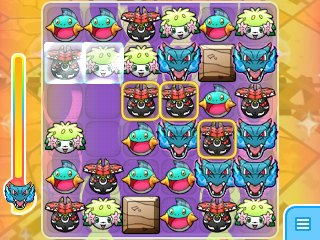
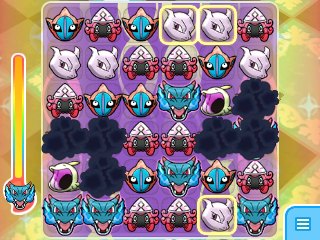
| Rock | A square block that can be erased by making a match adjacent to it – directly above, below or beside it, as diagonals don’t count. A Rock also falls when the icons below it are cleared. |
| Block | A square metallic block that can’t be erased by adjacent matches like a Rock can. Disappears five moves after appearing; the Block Smash Skill and Mega Effects also remove it. |
| Barrier | A square ice block that covers and freezes an icon in place, preventing it and any tiles above from falling, possibly creating empty tiles. Matching a frozen Pokémon icon will remove the Barrier, but the icon will remain for matching again. A Barrier on a Mega Pokémon’s icon isn’t removed by matching it. |
| Black Cloud | A black cloud that covers and hides a Pokémon icon, but does not prevent it from being moved. The Cloud Clear Skill removes it. |
| Coin | Grants bonus Coins after clearing the stage if matched by the player or in a combo (100/300/500/700 for a 3/4/5/6 match); nothing is paid if the stage isn’t cleared. |
| Non-Support | A Pokémon icon not on the player’s Support Pokémon team, usually of the same type as the target Pokémon. If a stage adds a Non-Support Pokémon and it is already on the player’s team, the default Pokémon will be added instead. The Eject Skill removes them. |
 Rock
 Block
 Barrier
 Black Cloud
 Coin

Attacks, Types & Skills

Like in the main series Pokémon games, every Pokémon has a type, a base attack power and an initially known Skill, Shuffle’s version of an Ability.
Attacks
All Pokémon begin with a base attack stat. As levels are completed, Pokémon gain XP; this XP helps them level up, become stronger and in turn raises their base attack stat.
Types
Every Pokémon in Pokémon Shuffle has a single type, so where Magnemite might be Electric/Steel type in the main games, it would be just Electric in Shuffle. Nearly all Pokémon will use their base type from the main games, although there are exceptions: Mega Slowbro is Psychic, Mega Mewtwo X is Fighting and Mega Sharpedo is Dark. Any Pokémon who were Normal/Flying type, however, are all Flying type only in Shuffle.
The damage done by one type of Pokémon to another will be influenced by its effectiveness, like so:
- Not very effective – 0.5x base damage
- Normal effectiveness – 1x base damage
- Super effective – 2x base damage
There are no zero-damage immunities: a matchup that would be an immunity in the main series is simply not very effective, so a Normal-type attack still does half damage to a Ghost-type.
Certain types of Pokémon are also immune to certain status effects, as below:
- Dark, Dragon, Fighting, Ghost, Grass, Ice, Rock and Steel types are immune to falling asleep by use of a Sleep Charm.
- Dragon, Fire, Ghost, Ground, Poison, Rock and Water are immune to being burned.
- Electric, Fairy, Fighting, Fire, Ghost, Ice, Poison, Psychic and Steel are immune to being frozen.
- Dragon, Electric, Fairy, Flying, Ghost, Poison, Psychic and Steel are immune to being paralysed.
- Ghost, Ground, Poison, Rock and Steel are immune to poison.
- Bug, Dark, Dragon, Fighting, Grass, Ground, Ice, Poison, Rock and Steel are all immune to being spooked by Spookify.
Skills
Each Pokémon has its own Skill that can assist you in certain situations, either by doing more damage to your opponent or by clearing disruptions along the way.
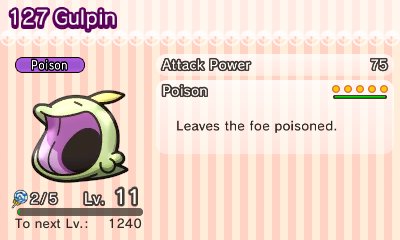
Enhancements
Enhancements are permanent upgrades applied from the Pokémon list. They couldn’t be bought with Coins or Jewels; they came as rewards from Trainer rank milestones, Mission Cards, Survival Mode and special, escalation and competitive stages:
- Raise Max Level: lifts a Pokémon’s level cap by one, with between 5 and 20 usable depending on the species.
- Level Up: grants exactly one level.
- Exp. Boosters S, M and L: add 50, 200 and 1,000 Exp. Points.
- Mega Speedup: shrinks a Mega Gauge by one icon, so the Pokémon Mega Evolves sooner.
- Skill Swapper: added in June 2016, lets eligible Pokémon change to a different Skill.
 Raise Max Level: lifts a Pokémon’s level cap by one, with between 5 and 20 usable depending on the species.
 Level Up: grants exactly one level.


 Exp. Boosters S, M and L: add 50, 200 and 1,000 Exp. Points.
 Mega Speedup: shrinks a Mega Gauge by one icon, so the Pokémon Mega Evolves sooner.
 Skill Swapper: added in June 2016, lets eligible Pokémon change to a different Skill.
In-Game Currency
There are three types of currency in Pokémon Shuffle: Coins, Hearts and Jewels.
Coins – Players are rewarded coins for successfully completing a stage, even if you don’t manage to catch the Pokémon after. Generally the rewards are 100 Coins for Main Stages, 300 for Expert and 200 for Special Stages (first-time clears only). A reduced number of coins is awarded for completing stages for a second time: on the 3DS version this is 30 Coins and on mobile it is 20 Coins.
 Coins – Players are rewarded coins for successfully completing a stage, even if you don’t manage to catch the Pokémon after. Generally the rewards are 100 Coins for Main Stages, 300 for Expert and 200 for Special Stages (first-time clears only). A reduced number of coins is awarded for completing stages for a second time: on the 3DS version this is 30 Coins and on mobile it is 20 Coins.
In stages where Coin disruptions occur there is scope to gain an additional bonus coin reward. Like hearts, coins are sometimes given as gifts. Coins can be used to purchase in-game items and to unlock some Special Stages. The maximum number of coins a player can have at any one time is 99,999 (First World Problems). Sometimes there are Special Stages, like the very rich Meowth, that award lots of coins compared to Main Stages – up to 30,000 a play on the 3DS and 10,000 on mobile.
Hearts – Hearts are essentially credits used to play levels. In most cases when a level is played one heart will be used up, and as mentioned previously a heart will regenerate every half an hour. Additional hearts can be obtained as gifts, via use of StreetPass (3DS) or Facebook actions (mobile), in exchange for Jewels or even as rewards for completing certain stages. Non-Facebook mobile users can exchange codes with friends in-game to gain hearts too.
 Hearts – Hearts are essentially credits used to play levels. In most cases when a level is played one heart will be used up, and as mentioned previously a heart will regenerate every half an hour. Additional hearts can be obtained as gifts, via use of StreetPass (3DS) or Facebook actions (mobile), in exchange for Jewels or even as rewards for completing certain stages. Non-Facebook mobile users can exchange codes with friends in-game to gain hearts too.
Hearts will only regenerate if you are below the normal maximum of five. On the 3DS, extra hearts from gifts, StreetPass and Jewels are stored separately from regenerated ones, and a player can hold up to 99 of them; on mobile, the two kinds share a combined cap of 99.
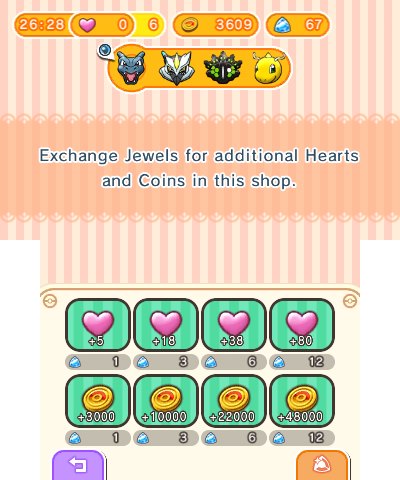
Jewels – This is the game’s premium currency. Most microtransactions using real currency are based on acquiring Jewels. These can be used to buy additional moves or time to complete stages and can be exchanged for hearts or coins. Mobile players exchange real-world cash for Jewels in the Jewel Shop, whereas 3DS players could empty their pockets for Jewels in the Nintendo eShop until it closed for purchases on 27 March 2023. A player can hold up to 150 Jewels on the 3DS and 300 on mobile.
 Jewels – This is the game’s premium currency. Most microtransactions using real currency are based on acquiring Jewels. These can be used to buy additional moves or time to complete stages and can be exchanged for hearts or coins. Mobile players exchange real-world cash for Jewels in the Jewel Shop, whereas 3DS players could empty their pockets for Jewels in the Nintendo eShop until it closed for purchases on 27 March 2023. A player can hold up to 150 Jewels on the 3DS and 300 on mobile.
On the 3DS there were fixed upper maximum spends per month for users under 18 years old. These limits were US$80, €100, £80, AU$150, NZ$150 or ¥10,000. In the mobile version, every account – whatever the player’s age – is capped at 1,000 purchase points (about ¥10,000) a month, and players under 13 outside Asia can’t buy Jewels at all.
The launch prices of Jewels were as below:
3DS prices (historical: no longer on sale)
| Jewels | UK | USA | Europe | Japan |
|---|---|---|---|---|
| 1 | £0.89 | $0.99 | €0.99 | ¥100 |
| 6 (5+1) | £4.49 | $4.99 | €4.99 | ¥500 |
| 12 (9+3) | £8.09 | $8.99 | €8.99 | ¥950 |
| 35 (25+10) | £22.49 | $24.99 | €24.99 | ¥2,500 |
| 75 (48+27) | £42.99 | $47.99 | €47.99 | ¥4,800 |
Mobile prices (launch era)
| Jewels | UK | USA | Europe | Japan |
|---|---|---|---|---|
| 1 | £0.79 | $0.99 | €0.99 | ¥120 |
| 4 (2+2) one-time offer |
– | – | – | ¥240 |
| 6 (5+1) | £3.99 | $4.99 | €4.99 | ¥600 |
| 8 (4+4) one-time offer |
– | – | – | ¥480 |
| 10 (8+2) | £5.99 | $7.99 | €7.99 | ¥960 |
| 26 (20+6) | £14.99 | $19.99 | €19.99 | ¥2,400 |
| 56 (40+16) | £29.99 | $39.99 | €39.99 | ¥4,800 |
| 105 (70+35) certain periods only |
– | – | – | ¥8,400 |
| 118 (80+38) certain periods only |
N/A | $79.99 | €79.99 | ¥9,800 |
Items & Power-ups
The following items can be used to assist you in battle or to help you gain more from successfully completing a battle. The maximum number of items of any single type that a player can hold is 99.
| Name | Description | Mobile cost | 3DS cost | Notes |
|---|---|---|---|---|
| Attack Power ↑ | Attack power gets doubled for the duration of that stage. | 5,000 Coins | 3,000 Coins | Can only be used in certain Special Stages and in UX Stages. |
| Complexity -1 | One less type of Pokémon, rock or block will appear. | 9,500 Coins | 9,000 Coins | Can’t be used in 3-Pokémon Stages, Survival Mode or a few other Special Stages. |
| Disruption Delay | Slows down the opposing Pokémon’s ability to cause disruptions. | 2,000 Coins | 1,500 Coins | Can only be used where an opponent is capable of using disruptions at the start of a stage. |
| Exp. Points ×1.5 | XP gain awarded at the end of the stage is multiplied by 1.5x. | 800 Coins | 300 Coins | Cannot be used in stages that don’t grant XP. |
| Mega Start | The Pokémon in your leftmost support slot will begin the stage already Mega Evolved. | 2,500 Coins | 2,000 Coins | Only available if your leftmost Pokémon has a Mega Stone. |
| Moves +5 | The player is granted an extra five moves to complete the stage in. | 1,000 Coins | 800 Coins | Can’t be used in competitive stages. Still counts towards the rank awarded. |
| Time +10 | Ten seconds are added to the countdown timer in timed stages. | 1,000 Coins | 800 Coins | Doesn’t affect catchability bonus. Can’t be used in competitive stages; still counts towards the rank awarded. |
 Attack Power ↑
 Complexity -1
 Disruption Delay
 Exp. Points ×1.5
 Mega Start
 Moves +5
 Time +10

Check-ins

3DS users could check in once a day; essentially, check-in was just loading the game with the internet connected in order to receive a reward. Days didn’t work based on everyone’s local time, though – they went on every 24 hours server time, so check-ins reset daily at 6:00 AM UTC. Check-ins stopped for good when the 3DS servers closed on 31 March 2023.
Checking in once every so often would get you 500 Coins each time, but if a player logged in ten times consecutively, the tenth check-in would reward 1,000 Coins – sort of like the daily PokéStop and catch bonuses in Pokémon GO. The second check-in per server day didn’t grant any further coins, nor did it count toward the consecutive-day login to get the ten-day reward. But it does show admirable dedication 😉
From January 2018 the coin rewards gave way to a 15-day check-in card, with Hearts, items and Enhancements along the way and a Jewel on day 15, and a player returning after 30 days away was given 30 Hearts plus Coins.
Checking in synchronised your copy of Pokémon Shuffle with the host server versions, thus changing/updating which Special Stages were available to you to be in line with the server. So that’s what check-in meant to 3DS users.
For mobile users there is no ‘check-in’ as such, but Pokémon Shuffle Mobile will run its own update checker when the game is loaded; if updates are available they will be applied automatically. The mobile version cannot be loaded without access to an internet connection or a suitable mobile network.

Shuffle’s service history
Pokémon Shuffle was built as a live service. For three years the 3DS and mobile versions gained new Main Stages almost every month and fresh special stages every week, delivered through check-ins and automatic data updates. New content ended on 13 February 2018, when the game switched to a fixed 24-week loop of returning events. The 3DS servers closed on 31 March 2023, but Pokémon Shuffle Mobile is still live in October 2026. These are the milestones along the way.
- 700Main Stages by the end (150 at launch)
- 13 Feb 2018the last new content
- 31 Mar 20233DS servers closed
- LiveShuffle Mobile, October 2026
Milestones at a glance
| Date | Platform | Milestone |
|---|---|---|
| 14 January 2015 | 3DS | Pokémon Shuffle announced as a free-to-play eShop game |
| 18 February 2015 | 3DS | Worldwide launch with 150 Main Stages and 20 Expert Stages |
| 15 March 2015 | 3DS | First competitive stage: Mega Lucario |
| 23 March 2015 | 3DS | First new area: Wacky Workshop (Stages 151–165) |
| 20 April 2015 | 3DS | First Pokémon Safari |
| 8 June 2015 | 3DS | First Escalation Battle (Giratina); Mega Speedup introduced |
| 25 August 2015 | Mobile | ポケとる スマホ版 (PokéToru Smartphone Version) launches in Japan, Hong Kong and Taiwan |
| 31 August 2015 | Mobile | Pokémon Shuffle Mobile reaches iOS in North America and English-speaking Europe |
| 20 January 2016 | Mobile | Launch in South Korea, France, Germany, Italy, Spain and other European markets |
| 23 March 2016 | 3DS | Version 1.3.0: Survival Mode, Mission Cards and Enhancements (mobile in April) |
| 17 May 2016 | 3DS | Skill Gauge and Skill Boosters: Skills can reach level 5 |
| 25 April 2017 | 3DS | Prasino Woods (Stages 551–580) and the first Sun and Moon Pokémon, Litten and Mimikyu |
| 25 July 2017 | 3DS | Survival Mode rebuilt; 6.5 million 3DS downloads celebrated |
| 9 January 2018 | 3DS | Version 1.5.0: Trainer rank and 15-day check-in card (mobile 7 February) |
| 13 February 2018 | 3DS & mobile | Final content update completes Main Stage 700; 24-week event cycle begins |
| July 2018 | 3DS & mobile | Marshadow, the last Pokémon, becomes catchable in week 23 of the cycle |
| 31 January 2020 | Mobile | Withdrawn in Vietnam |
| 27 March 2023 | 3DS | Nintendo eShop closes for purchases: no new downloads or Jewel sales |
| 31 March 2023 | 3DS | Shuffle’s 3DS servers close: check-ins and competitions end |
| 4 June 2026 | Mobile | Latest Google Play update; the mobile game is still live |
| 1 January 2038 | 3DS | Due: scheduled end of the offline special-stage calendar |
Three years of updates, and after


Regional Variations
Shuffle’s names, publishers, release dates and spending rules differ from region to region:
- The Japanese title is ポケとる (PokéToru) and the smartphone version is ポケとる スマホ版 (PokéToru Smartphone Version); the West uses Pokémon Shuffle and Pokémon Shuffle Mobile, and Korea, which only received the mobile game, uses 포켓몬 셔플 모바일.
- The 3DS version launched on the same day, 18 February 2015, in Japan, North America, Europe and Australia, with no Korean release.
- The mobile version was rolled out over 17 months: Japan, Hong Kong and Taiwan on 25 August 2015; North America and English-speaking Europe on 31 August 2015; mainland China (iOS only) on 25 September 2015; South Korea plus France, Germany, Italy, Spain, Austria, Belgium, Luxembourg and Switzerland on 20 January 2016; Macau on 16 January 2017.
- The 3DS version was published by The Pokémon Company in Japan and by Nintendo everywhere else; the mobile version is published by The Pokémon Company worldwide.
- Amelia keeps her name in English, Italian and Spanish but is Amélia in French and Klara in German.
- Outside Asia, mobile players under 13 cannot buy Jewels or use the friend features, and every mobile account is held to roughly ¥10,000 of purchases a month.
- The mobile game was withdrawn in Vietnam on 31 January 2020 and from the mainland Chinese App Store, while it carries on in other territories.
Left in the data
- The final February 2018 data still holds 35 Pokémon that were never released, and graphics for Overcast Form Cherrim and Zen Mode Darmanitan survive even though their data entries were deleted.
- Version 1.5.0 contains a working but unused Heart Limit+1 item; up to five could be applied to a save, permanently raising the regenerating Heart cap to 10.
- Drop Rate Increase, a Special Shop item sold on mobile, has its text and icon in the 3DS files but never went on sale there.
- The save data contains flags for amiibo scans, which suggests amiibo support was planned at some point.
- Several leftovers from Pokémon Battle Trozei remain, including a placeholder alternate-form icon built from Trozei’s Bulbasaur with Japanese text over it, and an unused Shiny Genesect enemy graphic meant for Expert Stage 51.
Glitches, exploits and oddities
Launch-week patches, a broken first competition and other slips from three years of updates:
Launch-week patches
Shuffle needed fixing almost immediately. Version 1.0.2, released two days after launch on 20 February 2015, closed a loophole that let players field any Pokémon at any time, and on 21 February every player was handed a free Jewel as an apology for a glitch. On 6 March version 1.1.0 blocked players from tampering with QR codes, but it also cut off access to special stages until version 1.1.1 restored them later the same day.
The 9,999,999-point Mega Lucario contest
The very first competitive stage, against Mega Lucario from 15 March 2015, broke within two days. A glitch produced scores of 9,999,999 and stopped players from submitting their results at all, so version 1.1.4 went out on 17 March to repair it. On 27 March version 1.1.6 followed up by giving a Jewel to some of the players who had won the Lucarionite.
Mega Heracross’s 100-icon gauge
Version 1.2.27, released on 22 December 2015 with the Roseus Center stages, accidentally set Mega Heracross’s Mega Gauge so high that more than 100 matched icons were needed before it could Mega Evolve, which made the Heracronite almost useless. Version 1.2.28 fixed it the same day. Mega Gauge sizes were tuned many times afterwards: in April 2017 version 1.4.6 cut the requirement for a dozen Megas, taking Venusaur from 15 icons to 12.
Survival Mode’s 99 moves and a guaranteed Emboar
Version 1.3.4 on 29 March 2016 introduced two bugs at once: Survival Mode, then only six days old, could hand players 99 moves, and Emboar’s stage was given a 100% catch rate. The Emboar error was closed by version 1.3.5 on 5 April, and the Survival Mode fix arrived with version 1.3.6 on 12 April, alongside the Zygarde Escalation Battle that introduced ‘angry’ Pokémon.
Brute Force and the April 2017 rebalance
Version 1.4.6 on 4 April 2017 reworked dozens of Skills and Mega Evolutions but broke Brute Force, the Skill that turns not-very-effective hits into normal damage. Three days later version 1.4.7 reverted the change, losing the intended damage boost along with the bug, and toned down Non Stop+ at the same time. On 1 May players were compensated with a Skill Swapper and five Skill Booster M.
Videos & media
Check out these videos relating to the Pokémon Shuffle Mobile & 3DS versions. The videos include trailers for each of the game’s versions. I don’t think there have been any TV commercials for it, though, as it’s a freemium game – if I’m wrong please let me know! 🙂
Pokémon Shuffle Trailer (3DS Version)
Pokémon Shuffle Trailer (Mobile Version)
Trivia & facts
-
The Japanese PokéToru logo. Pokémon Shuffle is actually known as PokéToru (ポケとる, a combination of Pocket Monsters and the word toru (とる), which possibly means ‘to capture’) in Japan. For the mobile version, Pokémon Shuffle Mobile is called PokéToru Smartphone Version (ポケとる スマホ版) in Japan.
Further trivia
- Many area names borrow colour words from other languages: Puerto Blanco (Spanish ‘white’), Galerie Rouge (French ‘red’), Jungle Verde (‘green’), Blau Salon (German ‘blue’), Prasino Woods (Greek ‘green’) and Marron Trail (French ‘chestnut’).
- Damage numbers are capped differently on screen: 9,999 on the bottom screen and 99,999 on the top-screen hit display.
- Since the 3DS servers closed, changing the console’s date or time locks the special stages, and check-in can no longer restore them.
- From March 2017 the Alola starter Pokémon replaced the original artwork on the 3DS HOME Menu icon and title screen.
Legacy
What came after
- Nintendo 3DS launch (Nintendo eShop, free) – 18 February 2015. Released the same day in Japan, North America, Europe and Australia
- Pokémon Shuffle Mobile launches in Japan – 25 August 2015. Also Hong Kong and Taiwan; North America and English-speaking Europe followed on 31 August 2015
- Mobile launch in South Korea and the major European language markets – 20 January 2016. France, Germany, Italy, Spain, Austria, Belgium, Luxembourg and Switzerland
- Final content update – 13 February 2018. Completed Main Stage 700; special stages switched to a repeating 24-week cycle
- Pokémon Café Mix – 23 June 2020. Genius Sonority’s next free-to-play Pokémon puzzle game, for Switch and smartphones; later renamed Pokémon Café ReMix
- 3DS eShop closes for purchases – 27 March 2023. No new downloads or Jewel purchases on 3DS; earlier downloaders can still redownload
- 3DS servers for Pokémon Shuffle close – 31 March 2023. Check-ins and competitive stages end; downloaded special stages keep cycling offline
- Nintendo ends 3DS online services – 8 April 2024. Affects 3DS online play generally; StreetPass is local and still works
- Pokémon Shuffle Mobile still available – October 2026. Google Play listing updated June 2026, with more than 10 million installs
Where to play it today
Pokémon Shuffle Mobile is still live in October 2026: it remains a free smartphone download, needs a constant internet connection and still sells Jewels. The 3DS version was withdrawn when the Nintendo eShop stopped sales on 27 March 2023, though earlier downloaders can redownload it. Its servers shut on 31 March 2023, ending check-ins and competitions, but installed copies still play offline, with special stages cycling until 2038. A redownloaded copy installs version 1.5.0, though, and with check-ins gone it can never receive Main Stages 641 to 700 or the UX Stages. There is no Switch or Nintendo Switch Online version.
How it was made
Pokémon Shuffle was developed by Genius Sonority, the studio behind Pokémon Colosseum, Pokémon XD and Pokémon Battle Trozei, and its icon style follows Battle Trozei, several of whose sprites remain in the files. Shunsuke Takagi of The Pokémon Company directed, with Manabu Yamana of Genius Sonority, Naoto Ueoka of The Pokémon Company and Hitoshi Yamagami of Nintendo among the producers. Satoru Iwata and Tsunekazu Ishihara were executive producers, Tsukasa Tawada handled sound and Creatures’ Atsuko Ujiie directed the Pokémon icon art. Nintendo announced the free-to-play 3DS game on 14 January 2015, and the press quickly labelled its Jewel economy Nintendo’s most thorough free-to-play design yet. A smartphone version was announced on 29 June 2015, and a closed Android test for the first 10,000 Japanese applicants ran from 30 June to 14 July.
Pokémon Shuffle elsewhere


Sales & reviews
Downloads
As a free-to-play game, Shuffle was measured in downloads rather than sales. The 3DS version passed 3.5 million downloads in its first ten weeks, and each milestone was marked with a special stage: Celebi for 3.5 million on 27 April 2015, Shaymin for 4 million on 25 May and Manaphy for 4.5 million on 22 June. Famitsu reported 5 million downloads worldwide on 14 September 2015, two weeks after the mobile launch in the West, and The Pokémon Company celebrated more than 6.5 million 3DS downloads on 25 July 2017 by giving every 3DS player 10,000 Coins, 30 Hearts and a shiny Tyranitar. Pokémon Shuffle Mobile shows more than 10 million installs on Google Play alone.
- 6.5m+3DS downloads by July 2017
- 10m+mobile installs on Google Play
- 56on Metacritic, 3DS (16 critics)
- 802Pokémon species to collect
Review scores
To me, Pokémon Shuffle is a quick and fun game you can play a few rounds of if you’re a generally busy person. Yes, it has premium features and microtransactions, but I’ve personally never paid a penny playing it and I really enjoy it – but alas, I am just one guy, and here’s what other reviewers and major sites had to say about Pokémon Shuffle.
- Christian Donlan of Eurogamer, whilst not providing an actual numeric score (Eurogamer had stopped scoring its reviews that month), gave a rather scathing review of Shuffle and referred to it as “A dull puzzler, undermined by the grasping philosophy behind its business model as much as the actual amount of money it could cost you.”
- Nintendo Life’s Morgan Sleeper was a bit more forgiving, scoring Shuffle a respectable 7 out of 10 in his review: “Pokémon Shuffle is a fantastic match-three puzzle game marred by an uncharacteristically sleazy suite of microtransactions”.
- Over 16 critic reviews on Metacritic, Pokémon Shuffle scores a Metascore of 56/100 on the 3DS, while the mobile version scores 62 from four critics.
- Whilst the review scores are not particularly impressive for this title, I would say that the main source of criticism is the premium/paid-for features, and I feel a bit like Shuffle has been compared to the playability of non-premium games rather than against other freemium titles, against which it stands up pretty well to me.
Critics mostly enjoyed the puzzling and disliked the business model. Reviewers praised the strategy of picking Support Pokémon for type advantages, the satisfaction of chaining combos into Mega Evolutions, and the sheer number of Pokémon to collect. The Hearts system drew the heaviest criticism: one Heart every 30 minutes cut sessions short, and the later stages seemed tuned to push players towards paying Jewels for extra moves, extra time and Great Balls. Nintendo Life rated it a fine match-three game let down by sleazy microtransactions, Destructoid felt the payments spoiled everything enjoyable about it, and Eurogamer found it dull as well as grasping. The 3DS version averages 56 on Metacritic from 16 reviews and the mobile version 62 from four, while players kept downloading it in their millions.
Awards and honours:
Media & artwork
- Official artwork gallery from Pokémon Shuffle – a giant gallery featuring all the Pokémon from the game
- Electronic covers and app icons from Pokémon Shuffle
- Screenshots from Pokémon Shuffle
Further reading
More puzzle games, free-to-play 3DS games and mobile links on the site: