
  |
|
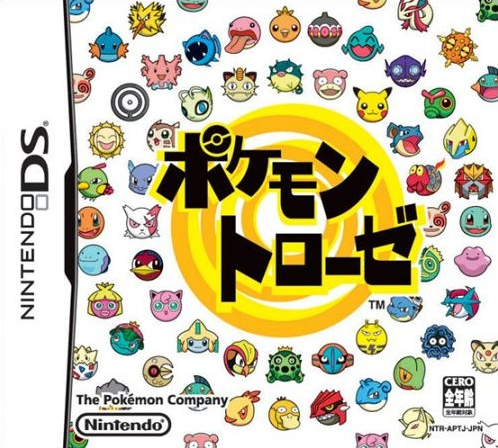
| Titles | Pokémon Trozei! (North America) · Pokémon Link! (Europe) ポケモントローゼ (Pokémon Torōze) |
| Platform | Nintendo DS (DS Wireless Communications and DS Download Play) |
| Developer | Genius Sonority |
| Publisher | Nintendo |
| Director | Manabu Yamana |
| Producers | Kunimi Kawamura · Hitoshi Yamagami |
| Music | Tsukasa Tawada |
| Players | 1–2 (DS Wireless; a second player can join through DS Download Play) |
| Genre | Puzzle |
| Pokémon | 386, from Bulbasaur to Deoxys (413 Trozei List entries) |
| Adventure | 36 stages, five Phobos Generals and Baron Phobos |
| Released | 20 October 2005 (Japan and Taiwan) · 6 March 2006 (North America) · 28 April 2006 (Australia) · 5 May 2006 (Europe) · 17 May 2007 (South Korea) |
| Re-releases | None – never on Virtual Console or Nintendo Switch Online |
| Rating | ESRB E · PEGI 3+ · CERO All ages · OFLC G · GRB All |
| Predecessor | None in the series; the previous Pokémon puzzle game was Pokémon Puzzle Challenge (Game Boy Color, 2000) |
| Successor | Pokémon Battle Trozei (Nintendo 3DS eShop, 2014) |
| Sales | 303,555 in Japan by the end of 2006 (Media Create); about 590,000 worldwide (estimate) |
Overview
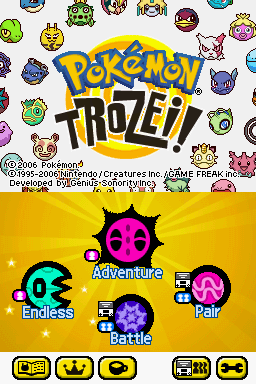 Pokémon Trozei! is a puzzle game which was initially released for the Nintendo DS on 20 October 2005 in Japan. It followed in North America on 6 March 2006 and Australia on 28 April 2006, made it to Europe on 5 May 2006 and finally reached South Korea on 17 May 2007.
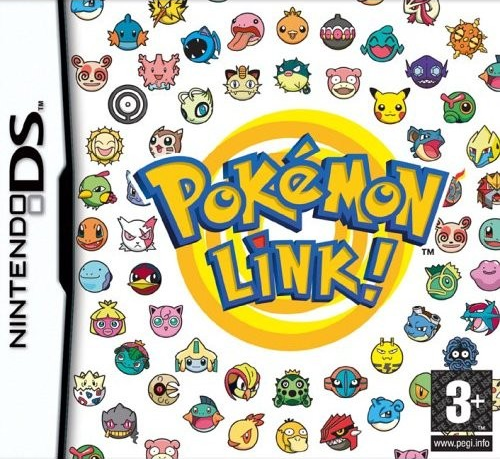
In Europe, Pokémon Trozei! is known as Pokémon Link!, a name Nintendo of Europe announced in March 2006 along with the game’s 5 May release date.
During a Nintendo Direct on 13 February 2014, it was announced that Pokémon Trozei! was getting a sequel, a Nintendo 3DS eShop exclusive known as Pokémon Battle Trozei in Japan and North America and Pokémon Link: Battle! in Europe and Australia. It came out the following month.
Experience endless Pokémon puzzle action in this brand-new puzzle game!
Using the stylus, slide Pokémon puzzle pieces. Line up four in a row (vertically or horizontally) to make a “Trozei” and clear the screen. It’s easy to learn, with fun and addictive play for all ages!
— Official description
Quick Answers
The questions people ask about Pokémon Trozei!, answered first and explained further down the page.
How many Pokémon are in Pokémon Trozei!?
All 386 Pokémon that existed in 2005, from Bulbasaur (#001) to Deoxys (#386). The in-game Trozei List actually has 413 entries, because each of the 28 Unown letters gets its own slot. A Pokémon is logged the first time you Trozei it in any mode, not just in the Adventure. More →

How do you unlock Forever Mode?
Finish the Adventure to open Hard Adventure, then beat Baron Phobos at the Phobos Secret Fort: Phobosphere on Hard. Forever Mode uses the wider 7 x 5 field, asks for five matching Pokémon before a Trozei counts and drops pieces roughly twice as fast as normal, so it is the toughest test in the game. More →
How do you get legendary Pokémon and complete the Trozei List?
Legendaries are tied to Agent Cards: each new save is given one rare Pokémon, which stays the same even after a reset. To log the others you have to swap Agent Cards with other players through Espionage mode, which means meeting at least 21 different copies of the game for a full list. A finished list turns red and sparkles. More →
Is Pokémon Link! different from Pokémon Trozei!?
No, it is the same game. Pokémon Link! is simply the European name, used in the English, French, German, Italian and Spanish releases. In those versions the word Trozei becomes Link throughout, so the modes become Link Battle and Pair Link and the demo is Pokémon Link! Mini. North America kept the Pokémon Trozei! name. More →
Can you still play Pokémon Trozei! today? Is it on Nintendo Switch Online?
Only on the original cartridge. It has never appeared on Virtual Console or Nintendo Switch Online, and no re-release has been announced. The DS Game Card still works in any DS, DS Lite or DSi, and in every Nintendo 3DS and 2DS model, which also handle its local wireless and Download Play features. More →
Does Pokémon Trozei! link with Pokémon Mystery Dungeon: Blue Rescue Team?
Yes. If a copy of Trozei! and a copy of Blue Rescue Team pass each other with their wireless features switched on, the Trozei! copy is given Prize Coins and the Mystery Dungeon copy is given an item. Prize Coins are what Mr. Who charges to play in his den, so the link helps you hunt rarer Pokémon there. More →
Story
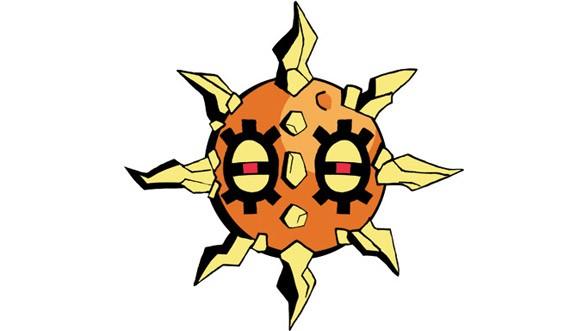
The story follows Lucy Fleetfoot, who is an agent for an organisation called SOL; the Pokémon sigil for this organisation is Solrock. Lucy reports to her superior, Professor P, who is the top agent in SOL.
At the beginning of the story, Lucy is briefed by the Professor that she is going to need to infiltrate the Phobos Battalion, specifically at their Secret Storage locations, where they are holding many stolen Pokémon in their Poké Balls. The Phobos Battalion, however, have been very busy, and the number of Poké Balls they’ve stolen is beyond measure; hence, carrying them wouldn’t be realistic. Luckily, SOL have developed a new device called the Trozei Beamer, which Lucy is equipped with before she leaves for her mission.
Lucy heads to the lab to do some training on how to use the Trozei Beamer, which will be used to teleport the stolen Pokémon back to safety. Once she has mastered its technique, Lucy sets off on her mission to return the stolen Pokémon.
Shortly after Lucy departs, Professor P gets in contact and lets her know he has located one of the Phobos Battalion’s secret sites. Lucy, being pretty fleet of foot, sneaks into the site no problem and, using the Trozei Beamer, beams all the stolen Pokémon back to HQ. The process is repeated at a couple more Phobos sites until Professor P makes contact with important news: the SOL Satellite has located one of the Phobos Mobiles, the infamous Phobos Train!
Lucy makes haste to travel to the Phobos Train, boards it and begins beaming out as many Pokémon as she can back to HQ. Unfortunately, and perhaps due to her haste, General Buzz, the feared leader of the Phobos Train, catches her in the act and a battle ensues.

General Buzz drops Jammer Balls into spaces where Pokémon should be, making it more difficult to beam Pokémon to safety. He also has the ability to push the Trozei Left counter all the way back up to 50 if he isn’t stunned and it’s below 10. Another ability he uses will make the screen dark and turn all the Pokémon into silhouettes, making them more difficult to match up – the dastardly fiend.
Beyond the Phobos Train
The Train is only the first of five Phobos Mobiles. Each time the SOL Satellite tracks down another, Lucy boards it and beats its General: Avery on the Phobos Jet, Grock on the Phobos Drill, Aquarella on the Phobos Sub and Boolum on the Phobos Walker, with more Secret Storages and Huge Storages raided in between. Along the way she meets Mr. Who, an odd collector who has picked up Poké Balls dropped by the Phobos Mobiles and will let her try for them in exchange for Prize Coins.
With the Generals beaten, Lucy storms the Phobos Secret Fort, home of the Battalion’s flying fortress, the Phobosphere, and defeats their leader, Baron Phobos, who loses every stolen Poké Ball.
Who’s who

Lucy Fleetfoot
The game’s heroine and SOL’s agent in the field. Nintendo’s Japanese site describes her as an athletic, highly capable agent who can be a little scatterbrained but is very clever and full of unconventional ideas. She works with her partner Pokémon Aipom and Manectric, and swaps her agent gear for a civilian outfit and a pink beret at the Agent Café.
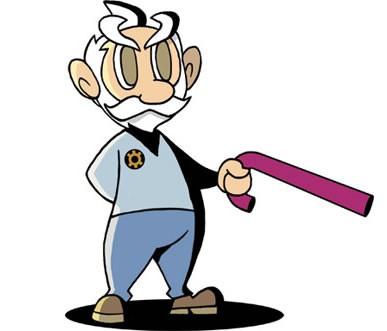
Professor P
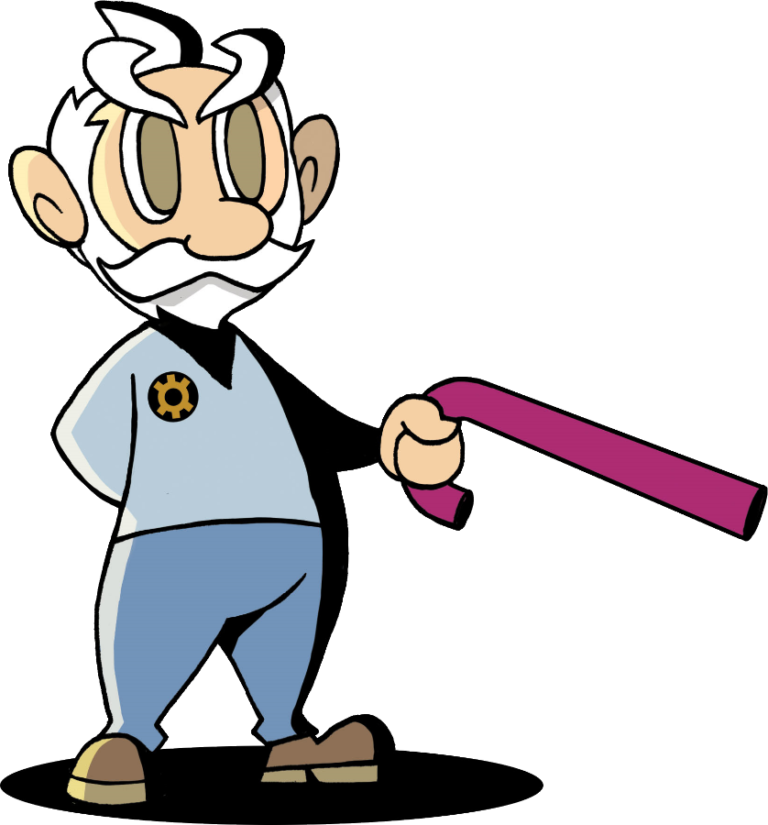
The veteran head of SOL with a long record of successful missions. He invented the Trozei Beamer, sets Lucy’s training puzzles in the SOL Laboratories and contacts her whenever the SOL Satellite finds a Phobos Mobile. The official Japanese profile calls him short, proud, a little vain and a bit eccentric, but a thinker who is widely respected.
The Phobos Battalion
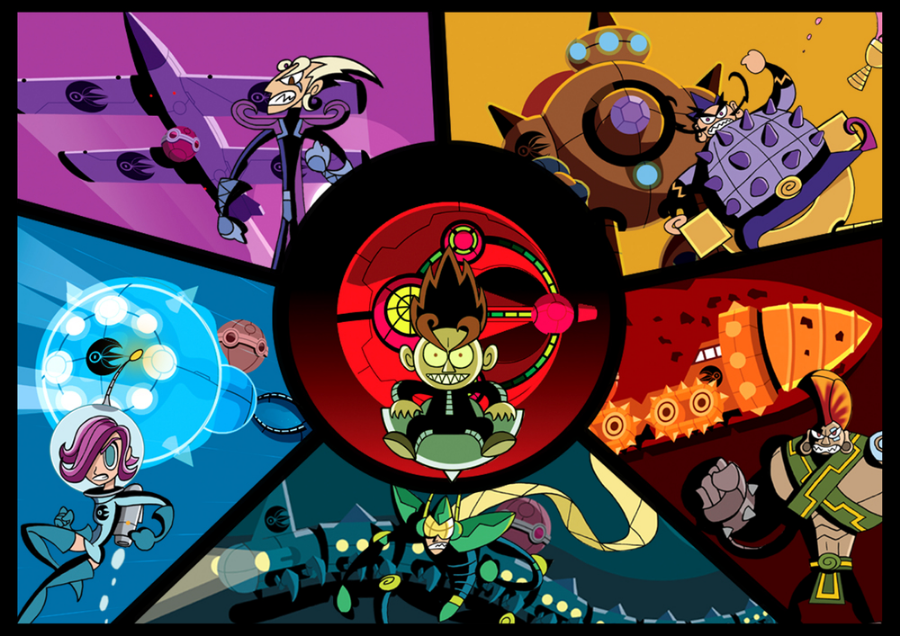
SOL’s enemy is the Phobos Battalion, a band of five Generals under the command of the tiny, fiery-haired Baron Phobos. The Battalion steals Poké Balls by the thousand, hides them in Secret Storages and Huge Storages around the region and travels in five vehicles, the Phobos Mobiles, each commanded by one General. Its goal is the Phobosphere, a flying fortress and secret weapon that would let the Battalion take control of the region.
Even the emblems mirror each other: SOL’s is Solrock, while the Battalion’s is its lunar counterpart, Lunatone.
 SolrockSOL’s emblem
 Lunatonethe Battalion’s emblem
- 5Phobos Generals
- 5Phobos Mobiles
- 25storages to raid
- 36Adventure stages
The Generals
Each General is fought on board his or her own Phobos Mobile. The aim is still to bring the Trozei Left counter down to zero, but the boss fights back with the tricks every General shares – Jammer Balls, a counter that refills and sudden blackouts – plus a special attack of their own.

Phobos Mobile No. 1: General Buzz
The feared leader of the Phobos Train and the first General Lucy faces, straight after Secret Storage 3. His stage is filled mostly with Grass-type Pokémon, with a few Bug types mixed in.
Tricks: Jammer Balls, a Trozei Left reset to 50 and blackouts
Trozei 100 Pokémon to win (150 on Hard). Common Pokémon: Oddish, Bulbasaur, Roselia, Caterpie, Ariados and Ditto; rare: Bellossom and Meganium.

Phobos Mobile No. 2: General Avery
The second General, who flies the Phobos Jet. His special attack shoves whole rows of Pokémon to one side, which destroys the Pokémon pushed off the edge and leaves a Jammer Ball in the gap on the other side.
Tricks: Row shoves, Trozei Left top-ups and blackouts
As on every stage, beating the bonus score target earns a Prize Coin.

Phobos Mobile No. 3: General Grock
The third General, who drives the Phobos Drill. He shifts rows left or right, leaving a Jammer Ball where a row used to be and removing Pokémon from the opposite side.
Tricks: Row shifts, Jammer Balls and blackouts
His name seems to combine Ground and Rock, the types of most of the Pokémon on his stage – fitting for a General who tunnels underground.
The fourth and fifth Generals command the Battalion’s submarine and its walking machine:
| Phobos Mobile | General | What to expect |
|---|---|---|
| No. 4: Phobos Sub | General Aquarella | The Battalion’s submarine commander. Her tricks follow the Generals before her: Jammer Balls dropped into the field, rows shoved sideways, blackouts that leave only silhouettes and a Trozei Left counter that refills if she isn’t kept stunned. |
| No. 5: Phobos Walker | General Boolum nicknamed Bang Boolum |
The fifth and last General, on a stage filled mostly with Fighting- and Ground-type Pokémon. He relies on Jammer Balls, sliding rows and blackouts, and beating him leaves only Baron Phobos and the Phobosphere. |
The final boss

Phobos Secret Fort: Baron Phobos
The short, pale, sharp-toothed leader of the Battalion, with flame-shaped black hair edged in red, a black suit and a floating glass bubble fitted with mechanical arms. He plans to power the Phobosphere with the stolen Pokémon’s energy.
Tricks: Blackouts, 50 extra on the Trozei Left counter and Jammer Ball swaps with his mechanical arms
Each Trozei stuns him briefly. Beating him on Hard unlocks Forever Mode.
Beating the bosses
Mr. Who, collector of lost Poké Balls
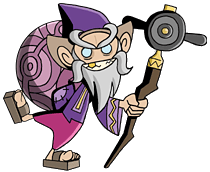
Mr. Who
A mysterious old man who loves collecting junk. He has picked up Poké Balls dropped by the Phobos Mobiles as they travel, apparently without realising what they are, and after meeting Lucy he takes a liking to her Prize Coins. For one coin, he lets her try her luck on the wide field in his den.
Gameplay
The gameplay in Pokémon Trozei/Link is very similar to that of Yoshi’s Cookie or Tetris for the Game Boy. Blocks will fall into the grid from the top, and they’re all shaped like different Pokémon. These blocks will keep falling until they land at the bottom of the screen or, if the area they land on already contains other blocks, they’ll layer up on top of the existing blocks.
The player’s aim is to line up four of the same Pokémon either horizontally or vertically, which will cause the blocks to disappear and will earn the player points; to line up four Pokémon is to get ‘a Trozei’. The player moves the blocks around the screen using the Nintendo DS stylus. You can only create matches with blocks on the bottom screen; stuff in the top screen cannot be matched up until it drops down into the bottom screen. It may be that you can already see sets of four lined up for a Trozei on the top screen, but you’ll need to clear blocks from the bottom so that they can drop down in order for that Trozei to activate.
If the player lines up a five-symbol Trozei, a Ditto will appear, which can be used as a wildcard Pokémon to help match up four or more of any other Pokémon’s blocks. When the player successfully gets a four-block Trozei, the bottom screen will light up green and produce a “Trozei Chance” or “Link Chance”, meaning that it’s possible to score a Trozei by lining up just three symbols instead of the usual four, and once a three has been made, even a pair will do. Likewise, it also enables the player to get L-shaped and T-shaped Trozeis. This bonus period lasts only one to two seconds, but each new Trozei starts it again, so it carries on for as long as the player keeps making matches. As the stage progresses, the Trozei Chance or Link Chance duration gets shorter.
If you manage to Trozei every possible match and clear the whole screen, you’ll obtain 10,000 bonus points, known as “Trozei All”.
In depth: sliding, stages and targets
Pokémon
The in-game Pokédex for Pokémon Trozei!, the Trozei List, contains all 386 Pokémon which existed at the time of the game’s release, spread over 413 entries, as every Unown form gets a slot of its own. While playing the Adventure Mode, make a combination, or Trozei/Link, of a Pokémon in order to rescue it, send it back to Professor P and have it added to your Pokédex.
The Pokédex is arranged by National Pokédex number and spans the entirety of Pokémon from Gen 1 to 3, starting from Bulbasaur all the way up to Deoxys.

Like in the core series games, the obvious logic that some Pokémon are much rarer than others applies; for example, Mewtwo, Mew, Lugia etc. are a lot harder to find, as each player’s Agent Card is tied to one rare Pokémon. Participating in Espionage mode to swap Agent Cards with other players is the way to track down these rarer Pokémon.
Also, if you are looking for a specific Pokémon and just cannot find it, linking your game with a player whose Agent Card holds it will prompt Professor P to say that the Pokémon you’re after has been found. Their card shows the location where that rare Pokémon can be found, allowing you to follow in their footsteps and catch it there yourself.
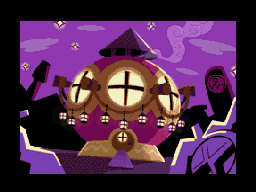
In order to complete your Pokédex, you’ll also need to take on the collector Mr. Who. He is notorious for collecting the stolen Poké Balls which fall from the Phobos Battalion’s Phobos Mobiles, and as such he has a good collection of rare ones. If you want a shot at winning these rare Pokémon you’ll have to challenge him, and in order to do so you’ll have to pay him Prize Coins – one coin buys a two-minute round. In the challenge against Mr. Who there are several differences compared to a normal challenge, the most prominent of which is that there are seven columns instead of five, meaning there is a much wider scope for scoring different combinations. Some Pokémon are exclusive to this challenge mode.
Notable Pokémon
 Dittowildcard
 Unown28 forms
 AipomLucy’s partner
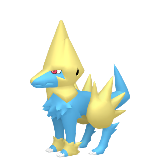 ManectricLucy’s partner
 GlalieBattle mode
 Deoxys#386, last entry
- Ditto – Wildcard piece that drops when you link more Pokémon than needed; the only way to clear Jammer Balls.
- Unown – All 28 forms have their own Trozei List entries and mostly turn up in special Mr. Who’s Den sets.
- Deoxys – The last entry in the Trozei List; files for its other formes exist but go unused.
Game Modes
- Adventure Mode: This is the story mode of Pokémon Trozei! For more info on the story, click here. In short, this is the mode in which Lucy Fleetfoot of SOL must win games of Trozei to defeat top-ranking members of the Phobos Battalion. Once this mode is beaten, it will unlock Hard Adventure mode. If you have what it takes to defeat the hard version of Adventure Mode, you’ll then unlock Forever Mode, featuring a larger grid area and requiring five-Pokémon matches to score a Trozei. Trozei Chance times are also significantly reduced in this mode.
- Endless Mode: A score-attack mode that carries on, level after level, until the Pokémon reach the top of the field.
- Forever Mode: This mode is unlocked if the player can defeat Baron Phobos at the Phobosphere in the hard version of Adventure Mode. The grid size is 5 x 7 squares, and in order to score a Trozei the player must get five of the same Pokémon in a row instead of the usual four. During a Trozei Chance things must be done in a set order: initially four Pokémon must be Trozeied, then three, then two. Pokémon also fall at double the speed of the other modes.

- The Agent Café: This area contains the Agent Card collection, including the player’s own personal Agent Card, and it’s also where Espionage mode is accessed from. Each time the player connects and interacts with another Pokémon Trozei! player, that person’s Agent Card will be added to the Agent Café’s collection, which holds up to six cards. Every player’s Agent Card can be customised with their own nickname, gender (male, female or secret) and a message, while the date of birth comes straight from the DS settings. Each player’s Agent Card is assigned one rare Pokémon, and the Agent Card can then be used to access the Phobos Battalion storage area which contains the Pokémon assigned to the card. The Pokémon you get assigned to your Agent Card is completely random.
- Espionage: This mode lets two Pokémon Trozei! players’ games communicate automatically, a little like an early StreetPass: whenever two DS systems are near each other, they swap Agent Cards, and each card shows where its owner’s rare Pokémon can be found. Battle and Pair are separate wireless modes and don’t need Espionage at all.
- Battle Mode: This mode enables the two linked players to take each other on, utilising the wireless connection of the Nintendo DS. During a match, when one player makes a Trozei, the Pokémon they used in their combo will drop onto the opposing player’s field.
- Pair Mode: Two players can team up in co-op using the DS wireless connection in an attempt to beat current high scores.
Modes at a glance
| Mode | Players | Field | A Trozei needs | Notes |
|---|---|---|---|---|
| Adventure | 1 | 5 × 5 | Four, then three and two in a chain | The story mode, 36 stages |
| Hard Adventure | 1 | 5 × 5 | Four, then three and two in a chain | Opens once the Adventure is finished |
| Endless | 1 | 5 × 5 | Four, then three and two in a chain | Score attack, level by level |
| Mr. Who’s Den | 1 | 7 × 5 | Five, then fewer in a chain | One Prize Coin per two-minute round |
| Forever | 1 | 7 × 5 | Five, then four, three and two | Opens after beating Baron Phobos on Hard |
| Battle / Pair | 2 | 5 × 5 | Four, then three and two in a chain | DS Wireless, or Download Play with one cartridge |
Linking with Blue Rescue Team
Pokémon Trozei! can also link with Pokémon Mystery Dungeon: Blue Rescue Team on the DS. If a copy of each passes the other with its wireless features switched on, the Trozei! copy is given Prize Coins and the Mystery Dungeon copy is given an item. Prize Coins are what Mr. Who charges for a round in his den, and the only other way to earn them is by beating a stage’s bonus score target, so the link is a handy way to hunt rarer Pokémon.
Regional Variations
Japan had Pokémon Trozei! four and a half months before North America, and Europe gave it a new name altogether:
- The game is called ポケモントローゼ (Pokémon Torōze) in Japan, Pokémon Trozei! in North America, Pokémon Link! across Europe (English, French, German, Italian and Spanish) and 포켓몬 토로제 (Pokémon Toroje) in South Korea.
- European versions replace the word Trozei with Link throughout, so the modes are Link Battle and Pair Link and the Download Play demo is Pokémon Link! Mini (Pokémon Trozei Mini in North America, Pokémon Trozei Petit in Japan).
- The European logo sets its second word in the standard Pokémon typeface, and the in-game graphics were changed to match. The Korean logo is based on the Japanese one rather than the Western versions.
- Lucy Fleetfoot is Lucy Lightfoot in Japanese, Lucie Piedléger in French, Lucy Flinkfuß in German and Corinna Pielesto in Italian.
- Japan and Taiwan got the game on 20 October 2005, but it reached South Korea only on 17 May 2007, more than eighteen months later.


Left in the data
- Four debug-menu graphics (debug_pause, debug_top_down, debug_slidebar and debug_top_up) remain in the game’s data, but the debug screens they belonged to have been removed.
- Unused piece files for the Generation IV Pokémon Munchlax (gonbe_faceball) and Bonsly (usohachi_faceball) sit alongside the game’s 386 playable Pokémon.
- Files for Deoxys’s Attack, Defense and Speed formes and Castform’s three weather forms exist, but only the standard forms are used in play.
 Munchlaxunused file
 Bonslyunused file
 Castformforms unused
 Treeckostand-in sprite
Glitches, exploits and oddities
Placeholder Pokémon hidden in the data and a PictoChat option that never opens PictoChat:
Treecko stand-ins
The game’s data holds piece files for Pokémon that never appear in play: the Generation IV Pokémon Munchlax and Bonsly, along with the Attack, Defense and Speed formes of Deoxys and the Sunny, Rainy and Snowy forms of Castform. Each file is named after the Pokémon it was meant for, but when the files are opened, every one of them contains Treecko’s sprite. That suggests the slots were set aside with placeholder art and then cut before the real sprites were drawn.
PictoChat Search
Outside Japan, the Endless, Pair and Battle menus include a PictoChat Search option, and in the US version it also appears under Options just above the Adventure reset. Rather than linking to PictoChat itself, it simply tells you to switch the DS off and start PictoChat from the system menu, where you could chat with nearby players before setting up a wireless match. It is a strange extra that the Japanese release does not have.
Videos & media
Check out these videos relating to Pokémon Trozei!, including the US TV commercial, the opening and a gameplay demo.
The US TV commercial for Pokémon Trozei!
The intro/opening video, including the back story of Adventure Mode.
The official gameplay demo video.
Trivia & facts
-

Lucy off duty, in her civilian outfit. Lucy Fleetfoot is unusual among Pokémon heroes in having no male alternative; every player plays as her.
- To complete the Trozei List you need Agent Cards from at least 21 different copies of the game, because each legendary is tied to a single save file’s card. A finished list changes from yellow to red and sparkles.
- The first time you play Battle mode against a new opponent, Glalie appears on the field.
Further trivia
- GameSpot’s review listed simply “Koffing!” among the game’s good points.
- Endless Mode keeps going for as long as you can: players have reached levels above 145.
Legacy
What came after
- Japanese and Taiwanese launch as ポケモントローゼ – 20 October 2005. Entered the Media Create chart at number two with 66,248 copies sold.
- North American launch as Pokémon Trozei! – 6 March 2006. Announced by Nintendo of America on 19 December 2005.
- Australian launch – 28 April 2006. Arrived a week before Europe.
- European launch as Pokémon Link! – 5 May 2006. Recommended retail price of about £30.
- South Korean launch as 포켓몬 토로제 – 17 May 2007. The last region to get the game.
- Pokémon Battle Trozei announced – 13 February 2014. Revealed in a Nintendo Direct (shown in Japan on the morning of 14 February) as Pokémon Battle Trozei in Japan and North America and Pokémon Link: Battle! in Europe and Australia.
 Pokémon Battle Trozei / Pokémon Link: Battle! released on the Nintendo 3DS eShop – 12 March 2014. Japan 12 March, Europe 13 March, Australia 14 March, North America 20 March 2014. Genius Sonority again developed it, now with all 718 Pokémon known at the time and battle-based stages.
- Nintendo 3DS eShop closes to new purchases – 27 March 2023. Battle Trozei can no longer be bought and can only be downloaded again by people who already own it. The original DS game was never sold digitally.
Where to play it today
As of October 2026, the only way to play Pokémon Trozei! is on an original DS Game Card. It has never been added to Virtual Console or Nintendo Switch Online, and there is no re-release. The cartridge runs on any DS, DS Lite or DSi and on every Nintendo 3DS and 2DS model, all of which support its local wireless Battle, Pair and Download Play features. Its sequel can now only be downloaded again by people who already bought it.
How it was made
Pokémon Trozei! was made by Genius Sonority, the studio behind the GameCube games Pokémon Colosseum and Pokémon XD: Gale of Darkness, and it was the studio’s first Pokémon game for the DS. Manabu Yamana directed it, Kunimi Kawamura and Hitoshi Yamagami produced it and Tsukasa Tawada wrote the music. Nintendo’s Japanese site sold the Adventure on its pop, cool world, deliberately unlike earlier Pokémon games, with spies, gadgets and a gang of villains. Artist James Turner, who has said he designed heroine Lucy Fleetfoot, gave it its distinctive look. The touch-screen sliding was pitched as easy enough for children and adults alike. The game launched in Japan on 20 October 2005. Nintendo of America announced the English version on 19 December 2005, and Nintendo of Europe confirmed Pokémon Link! for 5 May 2006 in a press release on 14 March 2006.
Pokémon Trozei! elsewhere
Sales & reviews
Sales figures
Trozei/Link sales figures are sketchy to say the least, with seemingly no documented sales figures for how Pokémon Link! performed in Europe. What we do know, however, is that Trozei sold an estimated 250,000 units in North America (accounting for around 42.8% of its total recorded sales) and around 310,000 units in Japan (accounting for approximately 53.3% of recorded sales).
The rest of the world’s sales for Trozei stand at around 20,000. These stats are supposedly accurate as of 26 August 2017, but I’m unsure why there’s so little info on European sales.
Those regional numbers are third-party estimates that add up to about 590,000 copies worldwide; Europe shows as zero only because no data was collected there, and neither Nintendo nor The Pokémon Company has published a total. The firmest figures come from Japan, where Media Create counted 66,248 copies in the launch week, enough for number two on the chart, then 228,411 by 1 January 2006 and 303,555 by the end of 2006.
- 303,555Japan by end of 2006 (Media Create)
- 66,248Japanese launch week
- 590kworldwide (estimate)
- 74Metacritic (32 critics)
Review scores
Pokémon Trozei! was given a very good reception; let’s check out some of the review scores from major sources:
- Game Informer scored it 8.25 out of 10 and stated that Trozei was “both charming and challenging enough that even those nauseated by the thought of Pokémon should really pick it up anyway.”
- Nintendo Power awarded the game a strong 8.5 out of 10 and shared similar views to Game Informer, calling it “a stylish game that’s a blast whether or not you’re a fan [of Pokémon]”.
- IGN’s Craig Harris scored the game 8.0 out of 10 and saw it as a fresh, well-made spin on the familiar tile-sliding puzzle.
- Ryan Davis from GameSpot wasn’t as impressed as everyone else but gave it a reasonable 7.1/10 all the same, stating “A meager selection of gameplay modes keeps Trozei from being essential, but the core gameplay remains engaging, regardless.”
- Trozei holds an aggregate score of 74/100 on Metacritic, based on 32 critic reviews.
- Similarly, Trozei held a score of 72.62% over 29 reviews at fellow aggregation site GameRankings, which closed in 2019.
Most critics enjoyed Pokémon Trozei! as a smart, fast take on the falling-block puzzle. The touch-screen sliding was widely praised, and the Trozei Chance chains gave the game more depth than its simple rules suggest. Reviewers also liked the new, stylish art and the spy-caper Adventure, and several said it would win over people with no interest in Pokémon. The main complaint, led by GameSpot, was the small number of modes and the very short Adventure. A few found some Pokémon icons hard to tell apart, and others felt the game was too easy at first. Cubed3 ranked it among the better DS puzzle games, if not up with Tetris DS or Meteos, and thought the full price was too high. The game’s Metacritic score was 74.
Awards and honours:
Media & artwork
- Official artwork gallery from Pokémon Trozei! – including Pokémon, logos and supporting art
- Box art from Pokémon Trozei!, including several different regional variations
- Screenshots from Pokémon Trozei!
Further reading
More puzzle games and DS spin-offs on the site: