 |
|
| Titles | Pocket Monsters Stadium ポケモンスタジアム (Pokémon Sutajiamu) No official English title; fans call it Pokémon Stadium 0 |
| Platform | Nintendo 64 (Japan only), with the 64GB Pak (Transfer Pak) in the box |
| Developer | Nintendo, in-house under Shigeru Miyamoto, with the battle engine ported by Satoru Iwata of HAL Laboratory |
| Publisher | Nintendo |
| Director | Takao Shimizu (battle directors: Tatsuya Hishida and Kensuke Tanabe) |
| Producers | Shigeru Miyamoto · Kenji Miki · Tsunekazu Ishihara · Satoru Iwata · executive producer Hiroshi Yamauchi |
| Music | Kenta Nagata · Tōru Minegishi · Mitsuhiro Hikino |
| Players | 1–2 |
| Genre | Battle simulation (“対戦&図鑑”, Battle & Pokédex, in Japan) |
| Pokémon | 40 usable in battle · all 151 in the 3D Pokédex |
| Tournaments | 2: Level 1–30 (four Ball divisions) and Level 50–55, eight battles each |
| Released | 1 August 1998 (Japan) |
| Price | ¥6,800 before tax, 64GB Pak included |
| Re-releases | None |
| Rating | None (released before CERO was founded in 2002) |
| Predecessor | None (its battles are built on Pocket Monsters Red and Green) |
| Successor | Pokémon Stadium (Pokémon Stadium 2 in Japan, 1999) |
| Sales | About 400,000 in Japan by the end of October 1998 |
Overview
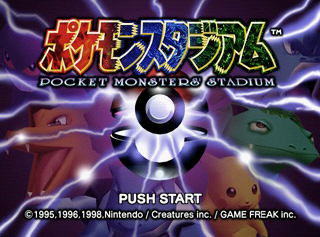 Pocket Monsters Stadium (ポケモンスタジアム) was the first Pokémon game for the Nintendo 64 and the first to show the series’ creatures as 3D models. It came out only in Japan, on 1 August 1998, priced at ¥6,800 before tax with the 64GB Pak, Japan’s name for the Transfer Pak, packed in the box. It was made inside Nintendo by Shigeru Miyamoto’s team under director Takao Shimizu, while Satoru Iwata, then president of HAL Laboratory, ported the Game Boy battle code to the console himself.
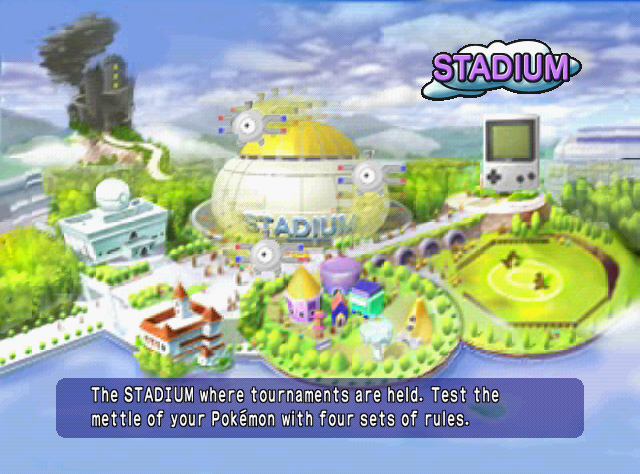
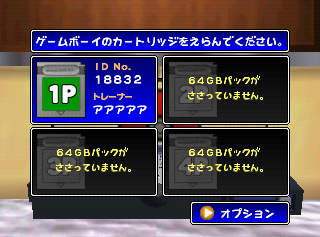
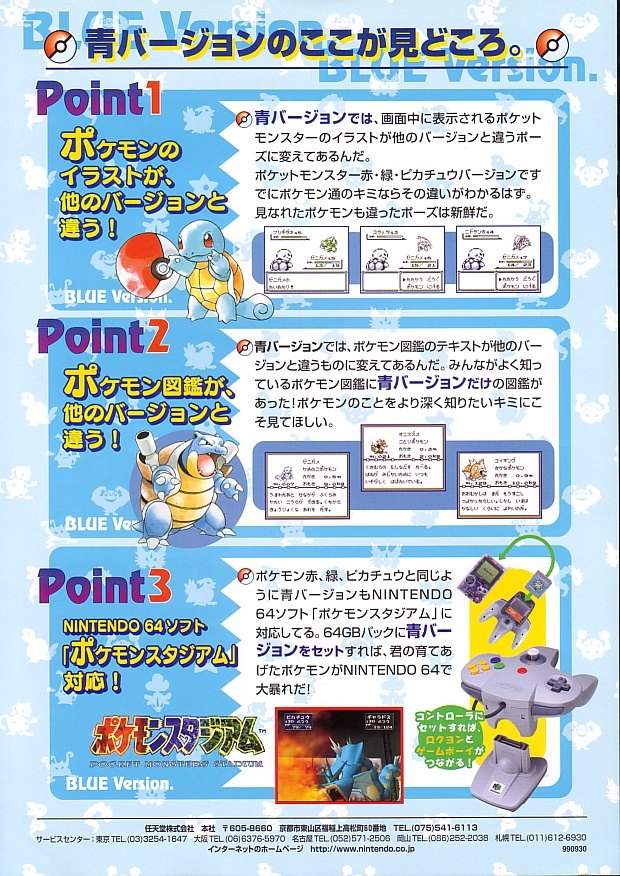
There is no adventure to speak of. This is an arena, and its battles run on the rules of Pocket Monsters Red and Green: plug a Japanese Red, Green, Blue or Pikachu cartridge into the 64GB Pak and the team you raised on the handheld steps out in 3D, with a commentator calling the action. Each player shows six Pokémon and secretly picks three, then takes on eight Trainers in a row, either in a Level 1–30 tournament with four Ball-themed difficulty tiers or in a Level 50–55 tournament whose opponents are based on real Nintendo Cup ’97 competitors. Free Battle covers two-player matches, rental Pokémon let anyone join in without a Game Boy, and the remaining modes store Pokémon and items, browse a 3D Pokédex of all 151 species and play the Game Boy games on the television.
The catch was the roster. Only 40 of the 151 Pokémon can battle, because the rest were being saved for a 64DD expansion disk that never shipped. The complete game arrived instead on a new cartridge, Pokémon Stadium 2, on 30 April 1999, and that sequel is the game the rest of the world played in 2000 as Pokémon Stadium, which is why English-speaking fans call this original “Pokémon Stadium 0”.
Even so, it had sold about 400,000 copies by the end of October 1998, introduced the Transfer Pak and set out the formula every Stadium game since has followed. It has never been released outside Japan or re-released anywhere, so for most players abroad it remains the Stadium they have heard about rather than played.
The Pokémon you raised yourself battle in 3D!
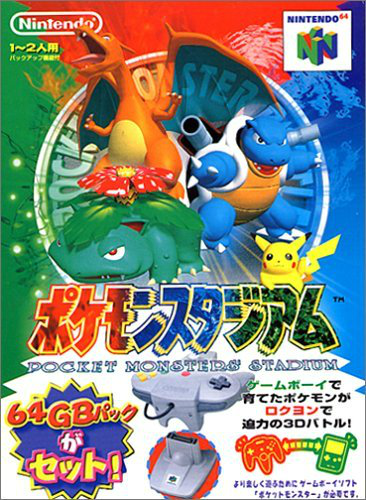
Pokémon Stadium is software in which 40 of the 151 kinds of Pokémon from Pocket Monsters Red, Green, Blue and Pikachu become 3D, so you can enjoy thrilling battles. Use the bundled 64GB Pak and you can battle with the Pokémon you raised yourself on the Game Boy! There is plenty besides battling, too, with features for storing and organising Pokémon and items, and for showing Pocket Monsters Red, Green, Blue and Pikachu on your television. Win the toughest Final Battle and you will get the precious Surfing Pikachu!
— Official description (The Pokémon Company), translated from the Japanese
Quick Answers
The questions people ask most about Pocket Monsters Stadium, answered first and explained further down the page.
Was Pocket Monsters Stadium ever released outside Japan?
No. It was sold only in Japan, from 1 August 1998, and was never translated. The Pokémon Stadium that reached North America, Europe and Australia in 2000 is a localisation of its Japanese sequel, Pokémon Stadium 2, which is why English-speaking fans call this first game Pokémon Stadium 0. More →
How many Pokémon can you use in Pocket Monsters Stadium?
Forty. Nintendo picked 40 of the 151 original Pokémon, mostly the species that were popular in Japan’s official tournaments, plus a few more so that every type was covered. All 151 appear as 3D models in the Pokédex, but the other 111 cannot battle: they were meant to arrive on a 64DD expansion disk that never came out. More →
Is it the same game as the Pokémon Stadium released in the West?
No. The Western Pokémon Stadium (2000) is Japan’s Pokémon Stadium 2 (1999), which lets all 151 Pokémon battle and adds the Pika, Petit, Poké and Prime Cups, Gym Leader Castle, the Kids Club minigames and a showdown with Mewtwo. Pocket Monsters Stadium has 40 battle-ready Pokémon, two tournaments and none of those extra modes. More →
Can you play Pocket Monsters Stadium on Nintendo Switch?
No. As of October 2026 it has never been re-released. Nintendo Classics on Nintendo Switch Online + Expansion Pack offers its sequels, Pokémon Stadium and Pokémon Stadium 2, but not this 1998 original, so playing it means an original Japanese cartridge on a Japanese Nintendo 64. More →
Which Game Boy games does it connect to?
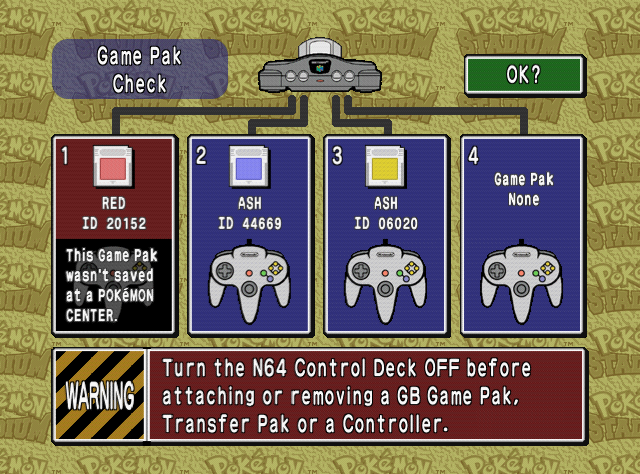
Through the 64GB Pak (the Transfer Pak) that comes with it, it reads the Japanese Pocket Monsters Red, Green, Blue and Pikachu. The manual mentions only Red and Green, but all four work. Western Red, Blue and Yellow cartridges are recognised when the game starts, version colour and all, but they cannot be used. More →
Do you need a Game Boy cartridge to play?
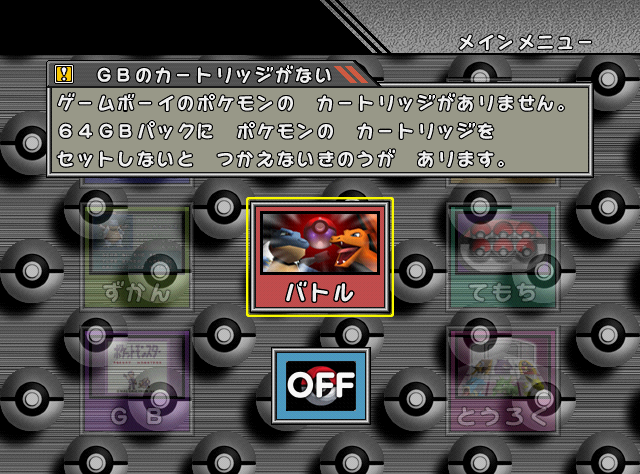
For most modes, yes. Free Battle and both tournaments can be played with rental Pokémon, but the storage tools, the Pokédex, team registration and GB mode all need a Japanese Generation I cartridge in the 64GB Pak, saved at a Pokémon Center. Without one, the main menu shows an error message. More →
How do you get a Surfing Pikachu?
Win the game’s toughest final battle with a Pikachu from your Game Boy cartridge on the team, and it learns Surf, a move Pikachu cannot normally learn; using it shows Pikachu riding a surfboard. Back on the Game Boy, a Pikachu that knows Surf opens up Pikachu’s Beach, the surfing minigame in Pocket Monsters Pikachu (Pokémon Yellow). More →
What happened to the 64DD expansion?
Pocket Monsters Stadium started out as a 64DD project, and the 111 Pokémon left out of battle were to follow on an expansion disk for the drive. As the 64DD kept slipping (it finally launched in December 1999), the disk was dropped, and the full roster arrived instead on a new cartridge, Pokémon Stadium 2, in April 1999. More →
Pocket Monsters Stadium vs the international Pokémon Stadium
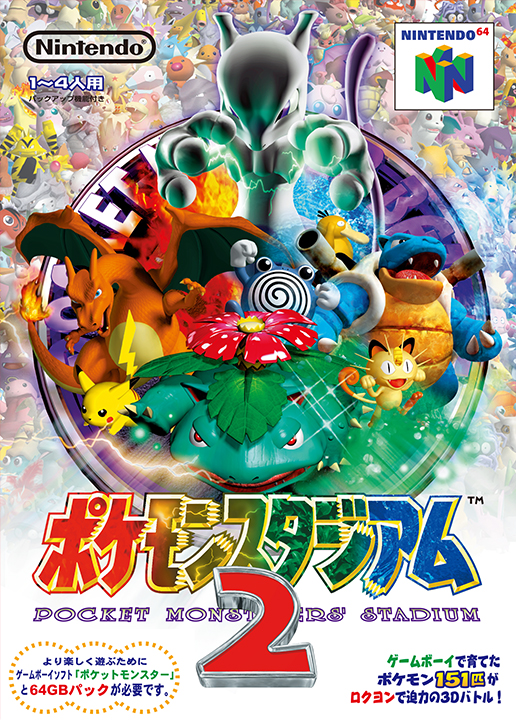
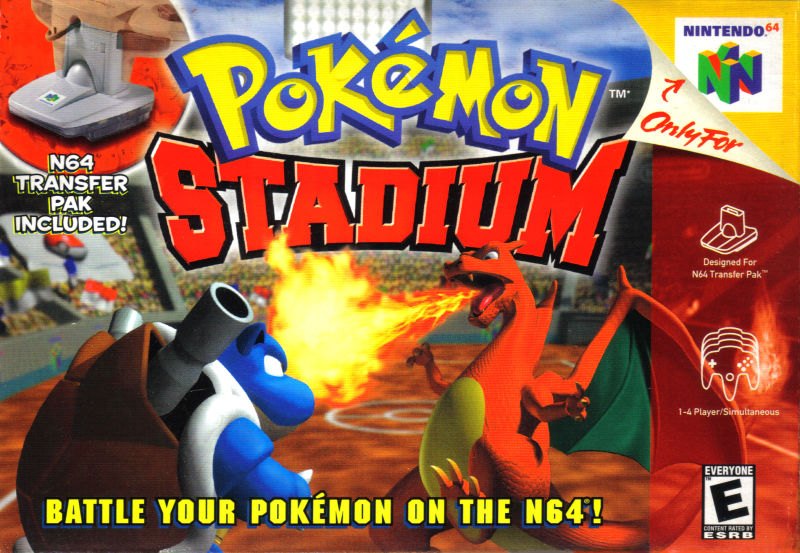
Players outside Japan often assume that the Pokémon Stadium they played in 2000 was the first. It was actually Japan’s Pokémon Stadium 2, released in April 1999 to finish the job this 1998 original started. The two share a battle engine, the Transfer Pak link and a 3D arena, but the sequel nearly quadrupled the battle roster, added whole new modes and relaxed several of the rules that make the original feel rigid today. Side by side, feature by feature:
| Feature | Pocket Monsters Stadium (1998) | Pokémon Stadium (international, 2000) |
|---|---|---|
| Japanese title | ポケモンスタジアム | ポケモンスタジアム2 (Pokémon Stadium 2) |
| Japanese release | 1 August 1998 | 30 April 1999 |
| Western release | None | March–April 2000 (North America, Australia, Europe) |
| Pokémon usable in battle | 40 | 151 |
| Main competitions | Level 1–30 and Level 50–55 tournaments | Pika, Petit, Poké and Prime Cups |
| Ball difficulty divisions | Level 1–30 tournament only | Poké Cup and Prime Cup |
| Gym Leader Castle | No | Yes |
| Minigames | None | Kids Club (9 minigames) |
| Mewtwo battle and Round 2 | No | Yes |
| Players in battle | 1–2 | 1–4 |
| Nintendo 64 storage | 4 boxes × 30 (120 Pokémon) | 240 Pokémon |
| Continues | No | Yes |
| Surfing Pikachu | Win the toughest final battle | Clear the Round 2 Prime Cup, Master Ball division |
| GB play speed-ups | Doduo (2×), Dodrio (3×) | Doduo (2×), Dodrio (3×) |
| Compatible Game Boy games | Japanese Red, Green, Blue, Pikachu | Western Red, Blue, Yellow |
| Re-release | None | Nintendo Classics (Nintendo Switch Online + Expansion Pack), 2023 |
The differences in detail
For the full story of the international game, its cups and its Gym Leader Castle, see the site’sPokémon Stadiumpage.
Gameplay & modes
Pocket Monsters Stadium is built around one thing, battling. Everything else on its menu exists to get your Game Boy team into the arena, or to look after it once it is there.
- 40Pokémon usable in battle
- 151Pokémon in the 3D Pokédex
- 2tournaments of eight battles
- 120Pokémon in Nintendo 64 storage
Battles and rules
Free Battle and the two tournaments
Rewards and Surfing Pikachu
The 64GB Pak and the other modes
Tournament opponents
Each tournament is a run of eight battles with no second chances. The Level 1–30 tournament uses the same eight Trainers in all four Ball divisions, while the Level 50–55 tournament draws on fifteen opponents based on real players from Nintendo Cup ’97.
Level 1–30 Division
These eight Trainers bring the same six species in every division, from Poké Ball to Master Ball; only their levels and move sets improve as the divisions get harder.
| Trainer | Pokémon | Of note |
|---|---|---|
| Bug Catcher | Beedrill, Scyther, Pinsir, Pikachu, Ditto, Exeggutor | All three Bug types on the roster, plus Pikachu, Ditto and Exeggutor |
| Burglar | Flareon, Arcanine, Nidoqueen, Nidoking, Snorlax, Kangaskhan | Flareon and Arcanine, both Nido evolutions and the bulky Normal types Snorlax and Kangaskhan |
| Bird Keeper | Fearow, Aerodactyl, Vaporeon, Golem, Dugtrio, Primeape | Fearow and Aerodactyl in the air, with Vaporeon, Golem, Dugtrio and Primeape covering their weaknesses |
| Picnicker | Jynx, Machamp, Jolteon, Gyarados, Lapras, Chansey | A balanced mix, from Jynx’s Ice and Psychic attacks to the bulk of Lapras and Chansey |
| Super Nerd | Electrode, Magneton, Onix, Golem, Snorlax, Cloyster | Electric and Rock types, with Snorlax and Cloyster to soak up physical hits |
| Youngster | Gengar, Kangaskhan, Lapras, Nidoqueen, Chansey, Alakazam | Gengar and Alakazam hit hard while four sturdy partners drag the battle out |
| Camper | Hypno, Electrode, Cloyster, Nidoking, Exeggutor, Jynx | Psychic power from Hypno, Exeggutor and Jynx, backed by Electrode, Cloyster and Nidoking |
| Lass | Dugtrio, Jolteon, Starmie, Gengar, Gyarados, Tauros | Several of the era’s strongest picks, Starmie, Tauros and Jolteon among them |
Level 50–55 Division: the Nintendo Cup ’97 players
The second tournament’s opponents are modelled on real competitors from Nintendo Cup ’97, each labelled with the region they represented, from Hokkaidō in the north to Kyūshū in the south, and the game keeps the nicknames many of them gave their Pokémon. Any one run sets eight of the fifteen against you. Their teams make a neat snapshot of what was winning in 1997: Tauros and Jolteon are on 13 of the 15 teams, Starmie on 12 and Alakazam on nine.

Hokkaidō: Kazuhito Katō
Team: Lapras Lv. 52, Jolteon Lv. 52, Starmie Lv. 51, Alakazam Lv. 51, Tauros “Gyūta” Lv. 51, Dugtrio Lv. 51
A textbook 1997 line-up, with a Tauros called Gyūta, a nickname three other competitors gave theirs too.

Tōhoku A: Yōjirō Yūki
Team: Jolteon Lv. 51, Jynx “Masako” Lv. 52, Starmie Lv. 52, Gengar Lv. 51, Exeggutor Lv. 52, Alakazam Lv. 51
One of only two teams without a Tauros, leaning instead on Jynx, Gengar, Exeggutor and Alakazam.

Tōhoku B: Jun Takahashi
Team: Articuno “Hanimaru” Lv. 52, Jolteon Lv. 51, Tauros “Kima” Lv. 52, Starmie “Nishikino” Lv. 52, Jynx “Masako” Lv. 52, Alakazam “Tamai” Lv. 51
Five of the six are nicknamed, and Articuno, the division’s favourite legendary bird, joins the usual core.

Hokuriku: Tōru
Team: Jynx “Masako” Lv. 50, Articuno Lv. 50, Tauros “Gyūta” Lv. 55, Electrode “Omaru” Lv. 50, Starmie Lv. 55, Kangaskhan “Rodan” Lv. 55
Three Level 55 heavy hitters and three Level 50s, so any Level 55 pick can still be backed by two partners within the cap.

Kantō A1: Yūsuke Suzuki
Team: Jolteon Lv. 51, Starmie Lv. 52, Chansey Lv. 52, Alakazam Lv. 52, Exeggutor Lv. 51, Tauros Lv. 52
The standard core of Jolteon, Starmie, Alakazam and Tauros, with Chansey and Exeggutor adding bulk and status attacks.

Kantō A2: Mika Fujita
Team: Tauros Lv. 51, Lapras Lv. 51, Articuno Lv. 53, Starmie Lv. 51, Jolteon Lv. 53, Dugtrio “Tagutorio” Lv. 53
Articuno and Lapras for Ice coverage, Tauros, Starmie and Jolteon behind them, and a Dugtrio called Tagutorio.

Kantō B: Yasuhiro Hayashi
Team: Alakazam Lv. 51, Lapras Lv. 51, Starmie Lv. 53, Exeggutor Lv. 51, Jolteon Lv. 51, Tauros Lv. 51
Built entirely from the era’s favourite picks; Starmie, at Level 53, is the only one above Level 51.

Chūbu A: Takahisa Yamada
Team: Tauros “Gyūta” Lv. 52, Jolteon Lv. 52, Venusaur Lv. 51, Chansey Lv. 51, Gyarados Lv. 52, Jynx Lv. 52
The only one of the fifteen to use Venusaur, and one of three without a Starmie.

Chūbu B: Yasunori Kitagawa
Team: Articuno “Gigafuredo” Lv. 51, Gengar “Gigashiido” Lv. 51, Jolteon “Gigantasu” Lv. 51, Starmie “Gigaante” Lv. 52, Tauros “Gigatarosu” Lv. 52, Alakazam “Gigafurea” Lv. 52
Every Pokémon has a nickname beginning with Giga, from Gigafuredo the Articuno to Gigatarosu the Tauros: the most distinctive team in the division.

Kansai: Shun Nishimura
Team: Jolteon Lv. 50, Golem Lv. 50, Tauros Lv. 55, Articuno Lv. 55, Starmie Lv. 50, Lapras Lv. 50
Two Level 55 attackers, Tauros and Articuno, and the division’s only Golem.

Chūgoku A: Daisuke Imai
Team: Dugtrio Lv. 50, Gengar Lv. 50, Chansey Lv. 51, Lapras Lv. 51, Jolteon Lv. 54, Dragonite Lv. 55
The division’s only Dragonite, at the maximum Level 55, and one of just two teams without a Tauros.

Chūgoku B: Kenji Iwamasa
Team: Tauros Lv. 55, Jolteon Lv. 50, Alakazam Lv. 50, Lapras Lv. 50, Vaporeon Lv. 50, Magneton Lv. 50
A Level 55 Tauros at the centre, with the division’s only Vaporeon and Magneton.

Shikoku: Hiroki Yoshii
Team: Jolteon Lv. 51, Tauros “Gyūta” Lv. 51, Starmie Lv. 52, Exeggutor Lv. 52, Ditto “Kopī” Lv. 51, Hypno Lv. 51
A Ditto nicknamed Kopī (“copy”) to Transform into whatever comes out, and Hypno for sleep tactics.

Kyūshū A: Taisei Yoshitomi
Team: Starmie Lv. 50, Tauros Lv. 55, Zapdos Lv. 50, Alakazam Lv. 55, Hypno Lv. 50, Articuno Lv. 50
The division’s only Zapdos, alongside Articuno, with Tauros and Alakazam as the Level 55 options.

Kyūshū B: Akihiro Fuchiwaki
Team: Jolteon Lv. 51, Tauros Lv. 51, Starmie Lv. 52, Alakazam Lv. 52, Chansey Lv. 51, Jynx “Masako” Lv. 51
The familiar Jolteon, Tauros, Starmie and Alakazam core, plus another Jynx called Masako, a name four competitors chose.
Pokémon
Forty of the 151 original Pokémon can battle. Nintendo picked mostly the species that were popular in Japan’s official tournaments at the time, then added a few more so that every type was represented, and apart from Pikachu every one of them is either fully evolved or has no evolution at all in Red and Green. All 151 were modelled in 3D for the Pokédex, but the other 111 were held back for a 64DD expansion disk that was never released, and the full roster only reached the arena with Pokémon Stadium 2 in 1999. Some lists put the total at 42 by counting Mewtwo and Mew as well; Nintendo’s own figure is 40.
The Level 1–30 tournament narrows the field to 33, shutting out the three starters’ final forms, the legendary birds and Dragonite; all 40 can enter the Level 50–55 tournament and Free Battle:
Eligible for both tournaments (33)
 Beedrill#015
 Fearow#022
 Pikachu#025
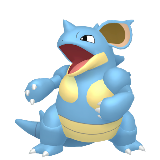 Nidoqueen#031
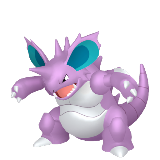 Nidoking#034
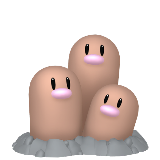 Dugtrio#051
 Primeape#057
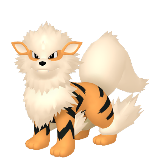 Arcanine#059
 Alakazam#065
 Machamp#068
 Golem#076
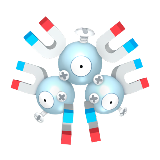 Magneton#082
 Cloyster#091
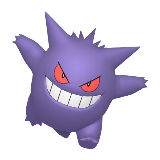 Gengar#094
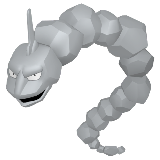 Onix#095
 Hypno#097
 Electrode#101
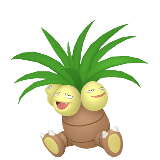 Exeggutor#103
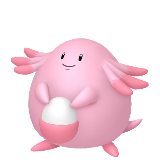 Chansey#113
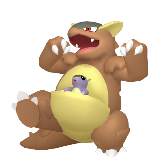 Kangaskhan#115
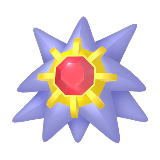 Starmie#121
 Scyther#123
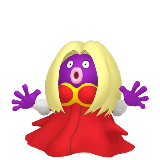 Jynx#124
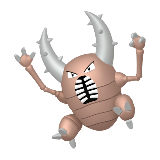 Pinsir#127
 Tauros#128
 Gyarados#130
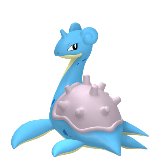 Lapras#131
 Ditto#132
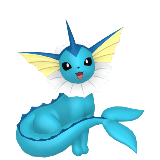 Vaporeon#134
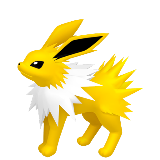 Jolteon#135
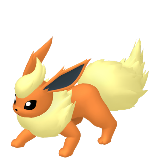 Flareon#136
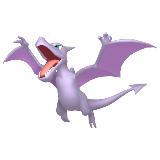 Aerodactyl#142
 Snorlax#143
Level 50–55 tournament and Free Battle only (7)
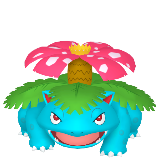 Venusaur#003
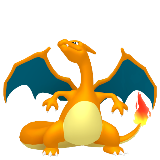 Charizard#006
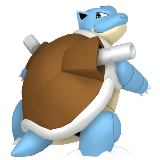 Blastoise#009
 Articuno#144
 Zapdos#145
 Moltres#146
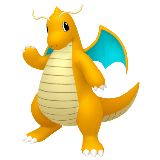 Dragonite#149
Stand-outs
- Tauros: on 13 of the 15 Level 50–55 opponents’ teams, four times under the nickname Gyūta.
- Jolteon: also on 13 of the 15 Nintendo Cup ’97 teams, a fair measure of how strong it was in 1997.
- Starmie: on 12 of the 15, and Alakazam on nine, completing the core that most of the 1997 players relied on.
- Articuno: the legendary bird of choice, on six of the fifteen teams; Zapdos appears only once and Moltres not at all.
- Dragonite: barred from the Level 1–30 tournament, and used by just one Nintendo Cup ’97 player, Daisuke Imai, at the maximum Level 55.
- Venusaur, Charizard and Blastoise: shut out of the Level 1–30 tournament too, and among the fifteen real players only Takahisa Yamada brings one of them, a Venusaur.
- Ditto: its Transform copies the opponent in full 3D; Hiroki Yoshii’s Ditto is nicknamed Kopī.
- Pikachu: the only battle-ready Pokémon that can still evolve, and the key to the Surfing Pikachu reward.
 Tauros: on 13 of the 15 Level 50–55 opponents’ teams, four times under the nickname Gyūta.
 Jolteon: also on 13 of the 15 Nintendo Cup ’97 teams, a fair measure of how strong it was in 1997.
 Dragonite: barred from the Level 1–30 tournament, and used by just one Nintendo Cup ’97 player, Daisuke Imai, at the maximum Level 55.
 Pikachu: the only battle-ready Pokémon that can still evolve, and the key to the Surfing Pikachu reward.
Seen only in the credits
Six Pokémon that cannot be used anywhere in the game still turn up battling in the ending credits:
 CaterpieCredits only
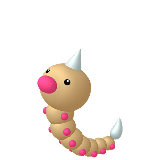 WeedleCredits only
 ClefairyCredits only
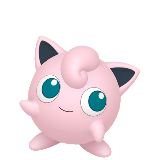 JigglypuffCredits only
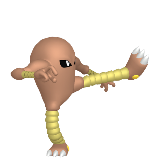 HitmonleeCredits only
 HitmonchanCredits only
Regional Variations
With a single Japanese release, the differences that matter are between this game and the cartridges and sequel the rest of the world knew:
- Pocket Monsters Stadium was sold only in Japan. There has never been an English, European or Korean version, and the game was never translated.
- It works only with Japanese Generation I Game Boy cartridges. Plug in a Western Red, Blue or Yellow and the game recognises it, even showing the version’s colour as it starts up, something no later Stadium game does, but it will not let you use it.
- The Pokémon Stadium sold abroad from 2000 is a localisation of the Japanese sequel, Pokémon Stadium 2, not of this game.
Left in the data
- All 151 Pokémon were modelled in 3D for the Pokédex, including the 111 that cannot battle, a leftover of the plan to unlock them with a 64DD expansion disk.
- The game is built to work with the 64DD, and the terminal in its menus is modelled with a disk drive, but no disk that works with it was ever released.
- Team battles, which Pokémon Stadium 2 later offered, were planned for this game but left unfinished.
Trivia & facts
-
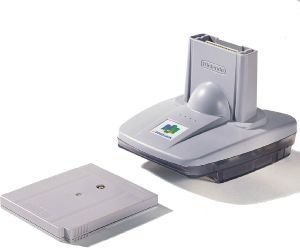
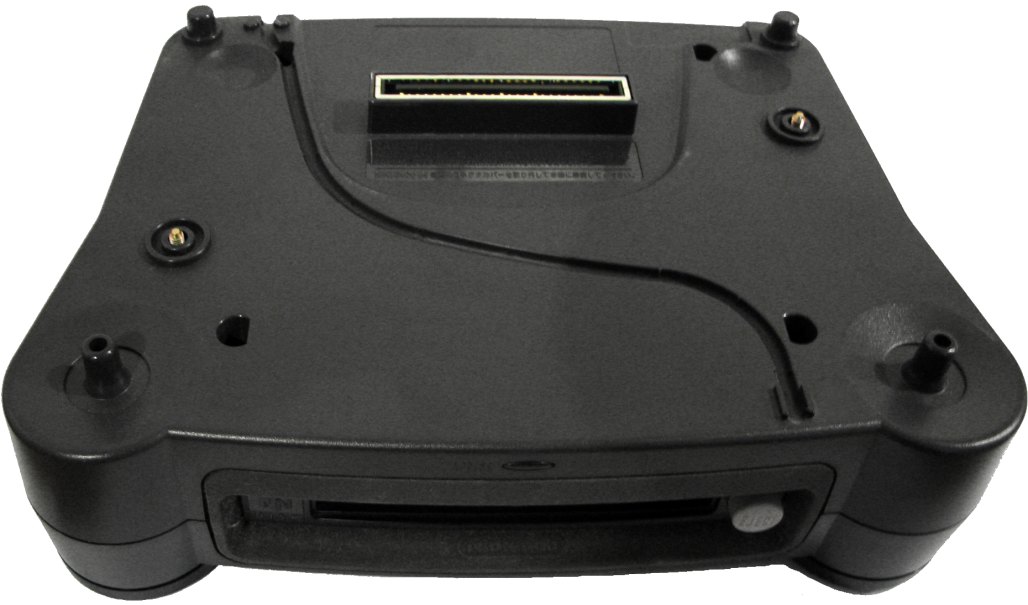
The 64GB Pak, better known as the Transfer Pak. The 64GB Pak, the accessory the rest of the world knows as the Transfer Pak, made its debut in this game’s box, a year and a half before it reached the West withPokémon Stadium.
- The manual lists only Pocket Monsters Red and Green as compatible, and the box simply says “Pocket Monsters Game Boy software”, yet the game reads every Japanese Generation I cartridge, including Pocket Monsters Pikachu, which came out six weeks later.
- The box art shows Venusaur, Charizard and Blastoise alongside Pikachu, but none of the three starters’ final forms is allowed in the Level 1–30 tournament.
-
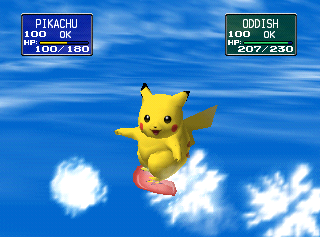
Surfing Pikachu in the arena. Raichu cannot be used, so Pikachu is the only Pokémon on the battle roster that could still evolve. This is also the only one of the Japanese Stadium games in which Pikachu can learn Surf.
- Event-only moves count as illegal, so a Fearow with Pay Day or a Pikachu with Fly is turned away. Dugtrio’s Acid is refused as well, even though Pokémon Stadium 2 accepts it.
- Its Pokédex was the first in the series that could be sorted by name, in Japanese syllabary order; the core games added the option withGold and Silver.
- The staff roll credits 40 people for Pokémon modelling, by coincidence the same number as the Pokémon you can battle with, plus Benimaru Itoh as “Super Special Chief Modeler” and Yōichi Kotabe as character supervisor.
- The credits also include a dedicated Transfer Pak team, and Nintendo’s Super Mario Club, its in-house testing group, appears in the special thanks.
- Satoru Iwata ported the battle code while he was running HAL Laboratory. Four years later, in 2002, he became president of Nintendo itself.
- Nintendo’s Japanese genre label for the game was “対戦&図鑑”, Battle & Pokédex, which sums up nicely what is and is not in it.
Legacy
What came after
- Planned for the 64DD – 1997. Listed among the disk drive’s early games as Pocket Monsters 64; at E3 in June 1997 Shigeru Miyamoto hinted that Pocket Monsters would be one of its first titles
- Space World ’97 keynote – 21 November 1997. Hiroshi Yamauchi presented Pokémon Stadium as a game to launch alongside the 64DD, joining up Game Boy play out and about with play at home
- Moved to cartridge – April 1998. With the 64DD running late, the game switched to a standard Nintendo 64 cartridge, with an expansion disk to follow
- Released in Japan – 1 August 1998. ¥6,800 before tax with the 64GB Pak in the box: the first Pokémon game on the Nintendo 64
- 400,000 copies – October 1998. About 270,000 sold in the first month, and around 400,000 by the end of October
- No plans for America – February 1999. An FAQ on the official Pokémon.com site said there were no plans to release the game in the US
- Pokémon Stadium 2 (Japan) – 30 April 1999. The sequel put all 151 Pokémon into battle, on a cartridge rather than the planned expansion disk
- The 64DD launches – 1 December 1999. The disk drive finally reached Japanese shops, but the Stadium expansion disk never did
- Pokémon Stadium in the West – March–April 2000. North America, Australia and Europe received the Japanese Pokémon Stadium 2 under the name Pokémon Stadium
- Pokémon Stadium Gold & Silver – 14 December 2000. The third Japanese Stadium game, for Gold, Silver and Crystal, released abroad in 2001 as Pokémon Stadium 2
- The sequels on Nintendo Switch Online – 12 April 2023. Pokémon Stadium joined Nintendo Classics on Nintendo Switch Online + Expansion Pack, followed by Pokémon Stadium 2 in August 2023; the 1998 original was left out
Where to play it today
As of October 2026 Pocket Monsters Stadium has never been re-released, digitally or physically. Nintendo Classics on Nintendo Switch Online + Expansion Pack carries both of its sequels, Pokémon Stadium since 12 April 2023 and Pokémon Stadium 2 since August 2023, but not this 1998 original. Playing it today means tracking down an original Japanese cartridge, ideally boxed with its 64GB Pak, and a Japanese Nintendo 64 to run it on, plus a Japanese Generation I Game Boy cartridge for the linked modes.
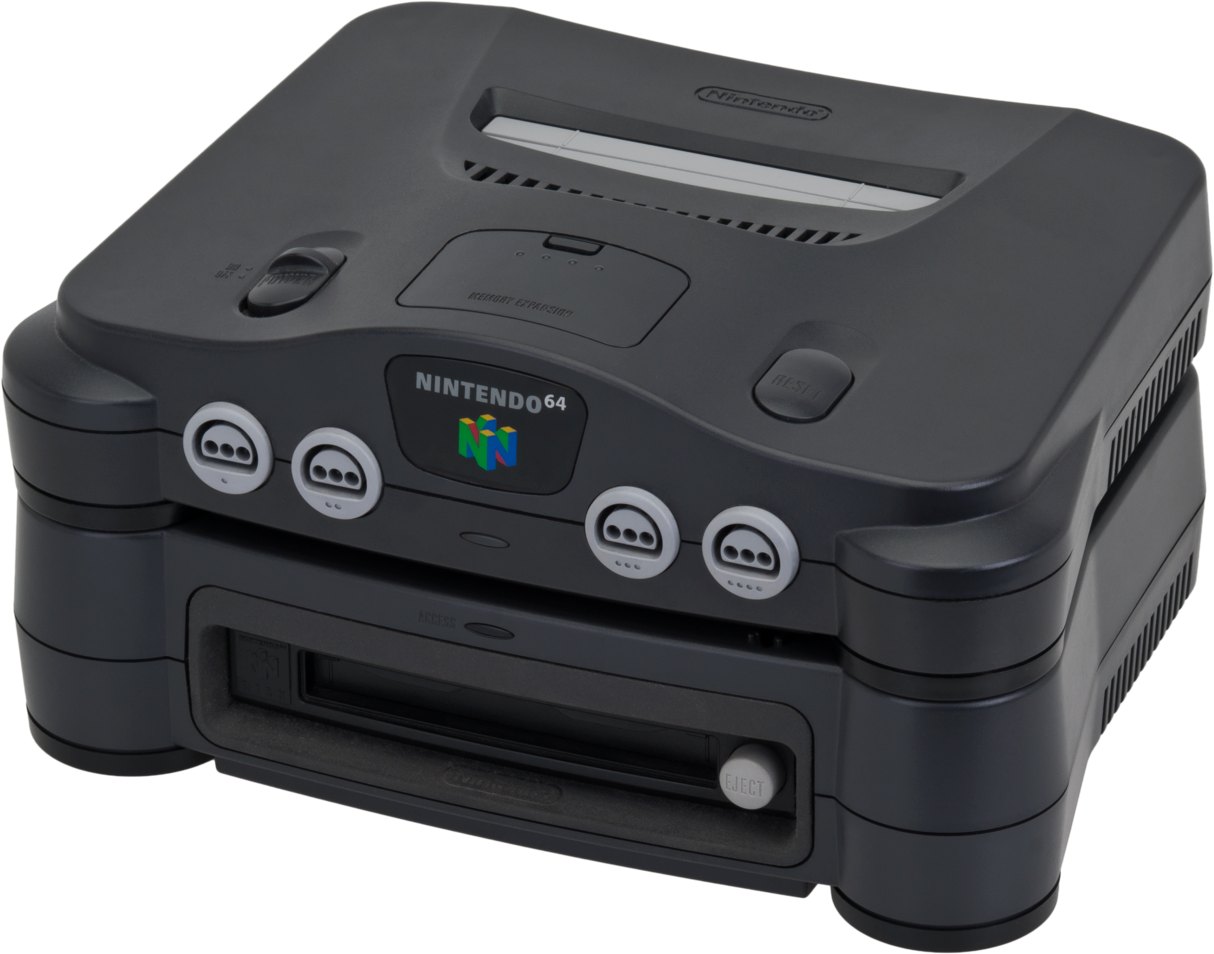
How it was made
Pocket Monsters Stadium was made inside Nintendo by Shigeru Miyamoto’s team. Takao Shimizu directed it, with Tatsuya Hishida and Kensuke Tanabe as battle directors; Miyamoto, Kenji Miki, Tsunekazu Ishihara and Satoru Iwata produced it, and Hiroshi Yamauchi was executive producer. It began as a 64DD project, listed among the drive’s planned games as Pocket Monsters 64, and at Nintendo Space World on 21 November 1997 Yamauchi described Pokémon Stadium as a game to launch alongside the 64DD, linking Game Boy play on the move with the console at home. When the drive slipped, Nintendo moved the game to an ordinary cartridge in April 1998, with 40 Pokémon able to battle and the rest promised on an expansion disk.
The key technical work fell to Iwata, then president of HAL Laboratory. With no specification from Game Freak to work from, he studied the Red and Green source code, had Shigeki Morimoto’s battle program running on the Nintendo 64 in about a week and built tools to compress the Pokémon graphics. Morimoto, who had spent far longer writing that program, later admitted in an Iwata Asks interview that his first reaction was to wonder what kind of company president this was. Shinya Takahashi directed the 3D modelling, Yōichi Kotabe supervised the characters, and Kenta Nagata, Tōru Minegishi and Mitsuhiro Hikino wrote the music.
Pocket Monsters Stadium elsewhere
Sales & reception
Sales
Pocket Monsters Stadium sold about 270,000 copies in its first month and some 400,000 by the end of October 1998, three months after launch, all of them in Japan. No lifetime total has been published, and its time as the only Stadium game was short: Pokémon Stadium 2 followed just nine months after launch.
- 270,000copies in the first month
- 400,000copies by the end of October 1998
- ¥6,800launch price before tax, 64GB Pak included
- 9 monthsuntil Pokémon Stadium 2 arrived
What the press said
Reaction in 1998 was mixed, and mostly came down to whether you owned the Game Boy games. 64 Magazine (issue 19, October 1998) enjoyed the personality of the Pokémon models and their animation but found too little to do, especially for anyone without a cartridge; France’s Joypad (issue 78, September 1998) thought it good fun for fans who already had one but thin for newcomers; and Brazil’s Gamers was so taken with the graphics that it compared them favourably with Banjo-Kazooie. Writing for American readers,IGN’s Peer Schneiderjudged the import not worth the money.
Looking back, the game is remembered more fondly.Famitsu’s 2026 anniversary piecerecalls the thrill of seeing Pokémon in 3D for the first time, commentary that made every match feel like a Pokémon League broadcast and Pokédex entries written specially for the game, whileNintendo Life’s 2015 retrospectivenoted what a small share of the Pokémon it actually let you use.
Then and now, the verdict is much the same: a landmark for putting Pokémon into 3D and a treat for anyone with a Japanese cartridge to plug in, but a slim package on its own, and one that its fuller sequel overtook within a year.
Further reading
More Stadium games and the Game Boy games they link to: