  |
|
| Titles | Pokémon: Magikarp Jump はねろ!コイキング (Hanero! Koiking) 튀어올라라! 잉어킹 (Korea) · 跳躍吧!鯉魚王 / 跳跃吧!鲤鱼王 (Chinese) |
| Platforms | iOS & iPadOS (App Store) · Android (Google Play) · Amazon Fire tablets (Amazon Appstore, from October 2017; since withdrawn) |
| Developer | Select Button inc. |
| Publisher | The Pokémon Company |
| Director | Koya Nakahata |
| Producers | Kanako Murata · general producers Takato Utsunomiya, Yasunori Suenaga, Takanori Sowa and Kazunori Sugiura · executive producer Tsunekazu Ishihara |
| Music | SOLIDTUNE (sound) |
| Players | 1 |
| Genre | Idle raising simulation |
| Business model | Free-to-play, with optional Diamond packs (US$0.99–34.99 in the US; lifetime purchases capped at 5,000 Diamonds) |
| Leagues | 10, from the Friend League to the Master League |
| Collectables | 33 Magikarp patterns · 7 fishing rods · 16 support Pokémon · 46 random events · 21 decorations |
| Languages | English, Japanese, French, German, Italian, Spanish, Korean, Simplified and Traditional Chinese |
| Released | 23 May 2017 (Japan, South Korea, Hong Kong, Taiwan) · 24 May 2017 (North and Latin America) · 25 May 2017 (Europe, Australia) Soft launch: 17 May 2017 (Italy, iOS only) · Amazon Appstore: 23 October 2017 |
| Status | Still on sale; no new content since August 2017, last updated in 2022 (iOS 1.3.101, Android 1.3.11); needs iOS or iPadOS 14.0 or later |
| Rating | ESRB E · PEGI 3 · ACB G · App Store 4+ |
| Predecessor | None |
| Successor | None (Select Button turned down a sequel; its next Pokémon app was Pokémon Sleep) |
| Downloads | More than 27 million (November 2024) · 10 million by early July 2017 |
Overview
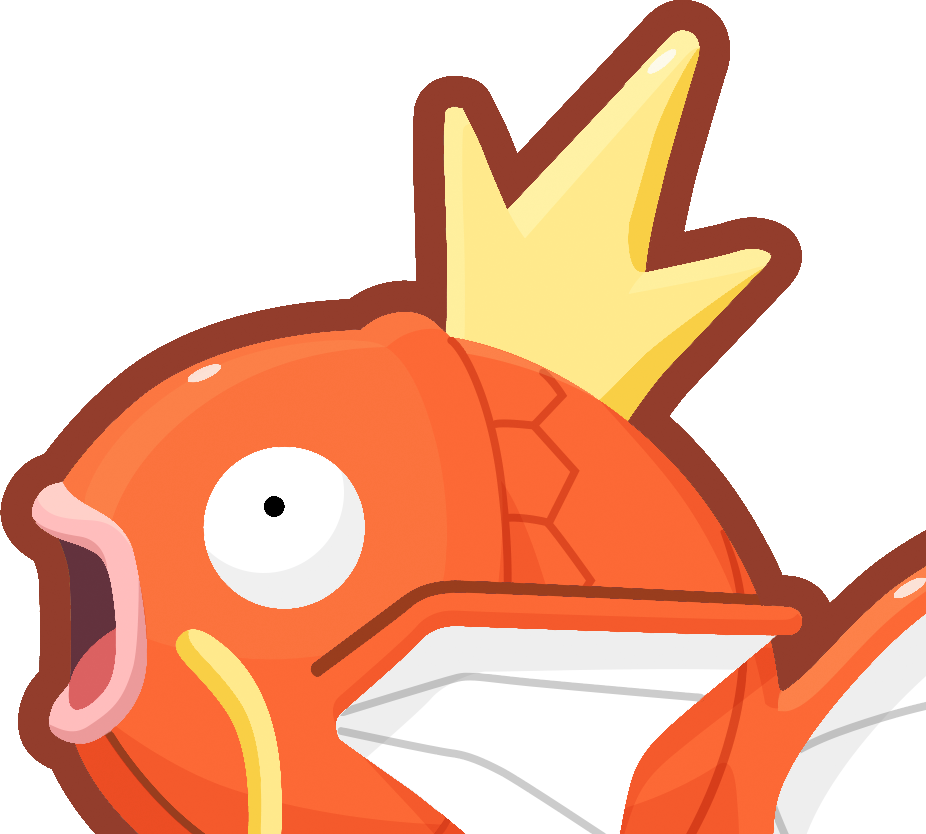 Pokémon: Magikarp Jump is a free-to-play game for phones and tablets about one Pokémon and one Pokémon only: Magikarp, the Fish Pokémon whose only real talent is flopping about uselessly. It was made by Select Button, a three-person Tokyo studio best known for Survive! Mola Mola!, a game about keeping a hopelessly fragile sunfish alive, and published by The Pokémon Company. Called Hanero! Koiking (roughly “Jump! Magikarp”) in Japan, it went live there and across much of Asia on 23 May 2017 and reached the rest of the world on 24 and 25 May, a week after a quiet iOS-only debut in Italy.
The setting is Hoppy Town, a place that takes Magikarp jumping contests very seriously indeed. You fish a single Magikarp out of the pond, tap the food that drifts in to feed it and send it off to train, all to raise its Jump Power, then enter it in a ladder of Leagues where the higher leap wins. Your Trainer Rank caps how far each fish can grow, so sooner or later it retires, or is carried off by a passing Pidgeotto, and a slightly stronger new generation takes over. Sixteen support Pokémon, pond decorations, 46 random events and 33 patterns to collect dress up what is, underneath, a relaxed idle clicker with a light role-playing wrapper.
Magikarp Jump arrived in the wave of smartphone experiments that followed Pokémon GO, and it turned one of the series’ oldest jokes into a whole game with real charm. Content updates finished in August 2017 with the Elite Four and Master Leagues, but the app has stayed on sale ever since, and by November 2024 it had been downloaded more than 27 million times, more than Pokémon Sleep had managed at that point.
It also mattered more than its size suggests. This was where The Pokémon Company’s partnership with Select Button began, and when the studio turned down a sequel, the two made Pokémon Sleep together instead, which makes a small fishing game an unexpectedly important step in the history of Pokémon on mobile.
You can raise the ultimate Pokémon!
What is this world coming to?! It’s a Pokémon game all about the weakest Pokémon ever—Magikarp! Anyone can play this simple game in their spare time to create the most majestic Magikarp ever in this official Pokémon app! What kind of Pokémon is Magikarp? It’s famous—for being pathetically weak, unreliable, and generally useless. It can’t learn any powerful moves—all it does is flop around and splash! When it flops its way too high in the sky, it’s sometimes snagged by the Bird Pokémon Pidgeotto—never to be seen again! Many surprising events lie in store for this pathetic Pokémon. But don’t worry—it’ll just keep on jumping until it can jump no more!
— Official description
Quick Answers
The questions people ask most about Pokémon: Magikarp Jump, answered first and explained further down the page.
Is Pokémon: Magikarp Jump free, and is it pay-to-win?
Yes, it is free, and you can see it through to the end without paying a penny. Diamonds, the premium currency, also trickle in from League wins, events and achievements. Real-money packs run from US$0.99 to US$34.99 in the US, total purchases are capped at 5,000 Diamonds, and what they mostly buy is extra support Pokémon, decorations and time-savers rather than victories. More →
Can you still play Magikarp Jump in 2026?
Yes. In October 2026 it is still a free download on the App Store, for iOS or iPadOS 14.0 or later, and on Google Play, and no end of service has been announced. It has had no new content since August 2017, though, and the most recent releases were bug-fix updates in 2022. More →
Is Magikarp Jump on Nintendo Switch?
No. It has only ever been made for phones and tablets: iPhone and iPad through the App Store and Android through Google Play. An edition for Amazon Fire tablets reached the Amazon Appstore in October 2017 but has since been withdrawn, and there has never been a Switch, 3DS or PC version. More →
How many Magikarp patterns are there, and how do you unlock them?
There are 33: 32 numbered patterns plus the rare Gold pattern, No. 99. The starting Old Rod can catch six basic patterns and Gold, and the rest arrive in batches as better rods are earned by beating the Quick, Great, Luxury, Heal, Ultra and Master Leagues. More →
How do you get Gyarados in Magikarp Jump?
You begin with an Everstone that stops evolution. Tap your Magikarp over and over and the stone cracks until it breaks; after that, a Magikarp at level 20 or higher can evolve into Gyarados. Gyarados cannot enter jumping Leagues, so it leaves the pond for Mayor Karp to look after and you fish up a new Magikarp. More →

Does Magikarp Jump connect to Pokémon HOME, Pokémon GO or other games?
No. There is no link to Pokémon HOME, Pokémon GO or any console game, and nothing can be sent out of it. Its only online features were Facebook friend rankings, which went in May 2018 when Facebook closed that service, photo sharing on social media and a data backup for moving to a new device. More →
How many Leagues are there, and what happens after the Master League?
There are ten main Leagues, from the five-battle Friend League up to the 20-battle Luxury, Heal, Ultra and Elite Four Leagues and the 15-battle Master League, and the launch version also had three Expert Leagues on the side. The Master League, added in August 2017, is the finale: winning it brings the ending, the Supreme Old Rod and the last four patterns, and you can carry on playing afterwards to catch them. More →
Is there a sequel to Magikarp Jump?
No. The Pokémon Company asked Select Button for a follow-up, but the studio said no, because it wanted a rest after pouring its energy into Magikarp Jump. The partnership carried on instead with Pokémon Sleep, the sleep-tracking app the same team made, which launched in July 2023. More →
Story

Hoppy Town adores Magikarp, but its jumping Leagues have lost their sparkle, because no local Trainer has raised a true champion. Mayor Karp, once a Magikarp Trainer himself, welcomes the player, hands over an Old Rod and helps reel in a first Magikarp from the town pond.
From then on the story is told through the mayor’s pep talks after each League and through a string of chance encounters. A suspicious stranger’s stare might bring a gift or a setback, the rod-mad Roddy Tackle drops by, the head of the Pokémon Research Lab pays out for pattern discoveries, a Pidgeotto snatches any Magikarp that leaps too high, a Voltorb explodes in the pond and a Ditto turns up on the line disguised as a Magikarp. Every Magikarp reaches its limit in the end and retires to the pond, and a new generation carries on.
League by League, from the Friend and Quick Leagues through the Heavy, Great, Fast, Luxury, Heal and Ultra Leagues, the player climbs the ranks, collecting better rods, new pond themes and, after the Ultra League, Mayor Karp’s prized Red Rock. The final update added the Elite Four League and the Master League. Conquering the Master League makes the player the champion Hoppy Town has been waiting for: Mayor Karp hails them as the finest Magikarp Trainer the town has ever had and sends them off to make a real big splash. The game carries on afterwards, with the Supreme Old Rod’s last four patterns to catch and the Has-Been Basin to visit.
Leagues, patterns & random events
Three systems give Magikarp Jump its shape. The Leagues are the backbone: ten main ladders, most of them named after Poké Balls, each paying out Diamonds, support Pokémon and decorations. Clearing key Leagues brings better fishing rods, and every rod adds new patterns to the pond, from koi-style calicos at the start to the blues and violets of the post-game. In between, 46 random events break up the feeding and training with gifts, gambles and the occasional disaster that ends a Magikarp’s career on the spot.
- 10main Leagues, from Friend to Master
- 33Magikarp patterns, Gold included
- 7fishing rods, Old Rod to Supreme Old Rod
- 46random events
The League ladder
Every League, with its Japanese name, length and prizes. Each final battle also pays 25 Diamonds, and every fifth win along the way brings Diamonds and Support Candy:
| League | Japanese name | Battles | Added | Final prize | Also unlocks |
|---|---|---|---|---|---|
| Friend League | フレンドリーグ | 5 | Launch | Light Ball (Pikachu) | – |
| Quick League | クイックリーグ | 10 | Launch | Mystic Water (Piplup) | So-So Old Rod |
| Heavy League | ヘビーリーグ | 15 | Launch | Octillery Pot (+10% JP from food) | – |
| Great League | スーパーリーグ (Super League) | 15 | Launch | Amulet Coin (Meowth) | Good Old Rod |
| Fast League | スピードリーグ (Speed League) | 15 | Launch | Sudowoodo Bonsai (+29% Coins from events) | – |
| Luxury League | ゴージャスリーグ (Gorgeous League) | 20 | Launch | Miracle Seed (Bulbasaur) | Great Old Rod |
| Heal League | ヒールリーグ | 20 | 1.1.0, June 2017 | Starmie Bubbler | Rare Old Rod |
| Ultra League | ハイパーリーグ (Hyper League) | 20 | 1.2.0, June 2017 | Soft Sand (Mudkip) | Pro’s Old Rod and the Red Rock theme |
| Elite Four League | してんのうリーグ (Shitennō League) | 20 | 1.3.0, August 2017 | Red Cap | – |
| Master League | マスターリーグ | 15 | 1.3.0, August 2017 | Gold Magikarp Statue | Supreme Old Rod and the ending |
| Expert Leagues 1–3 | エクストラリーグ (Extra League) | 10, 10 and 15 | Launch | Diamonds and Support Candy | – |
 Friend League
 Elite Four League
 Master League
 Gold Magikarp Statue
Rods and patterns
Each new Magikarp is fished from the pond with the best rod you own, and each rod adds its own batch of patterns to the pool. There are seven rods in all:
| Rod | How to get it | Patterns | What they look like |
|---|---|---|---|
| Old Rod | Start of the game | 1–6 and Gold (No. 99) | Basic designs, among them Standard, Skelly and the first calicos |
| So-So Old Rod | Beat the Quick League | 7–9 | Orange Two-Tone, Orange Orca and Orange Dapples |
| Good Old Rod | Beat the Great League | 10–12 | Three pink patterns |
| Great Old Rod | Beat the Luxury League | 13–18 | Six grey and purple patterns |
| Rare Old Rod | Beat the Heal League | 19–24 | Apricot and brown tigers, zebras and stripes |
| Pro’s Old Rod | Beat the Ultra League | 25–28 | Forehead and mask designs, such as Orange Forehead |
| Supreme Old Rod | Beat the Master League | 29–32 | Blue and violet patterns, including Saucy Blue |




Random events


Gameplay
Magikarp Jump runs on a simple loop, repeated for one fish after another:
- Fish: cast into the pond for a new Magikarp, whose pattern is picked at random.
- Feed and train: tap the food that appears in the pond and spend Training Points on training sessions, all to raise its Jump Power.
- Battle: enter it in the Leagues, where the higher jump wins.
- Retire: a fish at the level cap set by your Trainer Rank bows out after its next League defeat, and the next generation levels faster and climbs higher.
Growing a Magikarp
 Jump Counter at the start to Dwebble Push, Timber!, Rock Cruncher, Steelix Push and the Tackle Machine, unlocked with Coins between Trainer Ranks 4 and 84. Results come in three grades: a Good effort gives the normal JP, a Great one multiplies it by 1.5 and an Amazing one by 3.5. Regimens can be upgraded with Coins too, and Training Soda or Piplup’s skill tops up spent points.
League battles
Evolution and the Everstone
Support Pokémon and the pond
 Starter Pond, Forest Lagoon, Hot Springs, Swampy Jungle and
 Robo Lab.
Coins, Diamonds and spending
The Leagues pit you against in-game rivals rather than other players, so spending never puts anyone ahead of anyone else, and the whole game, ending included, can be finished without paying.
Achievements, sharing and settings
Characters
Hoppy Town’s cast is small and mostly there to cheer you on. Four of its regulars:

The player
A newcomer to Hoppy Town who takes up Magikarp training at Mayor Karp’s urging. The player’s Trainer Rank, which rises with every League battle, is the thread running through the whole game: it caps how far each Magikarp can level, so every new generation can reach a little higher than the last. The player’s portrait appears in conversations, events and League scenes.

Mayor Karp
Japanese name カープ町長 (Kāpu Chōchō). A former Magikarp Trainer who now runs Hoppy Town and acts as the player’s guide and cheerleader. He is warm, happy to poke fun at himself as a washed-up old man and very fond of a Magikarp pun. He hands over the first Old Rod, rewards League wins with pond themes and special items, including his treasured Red Rock after the Ultra League, and takes in any Magikarp that evolves into Gyarados.

Roddy Tackle
Japanese name つりアニキ (Tsuri Aniki), roughly “fishing big bro”. A keen angler for whom rods are everything: better versions of the Old Rod, from the So-So Old Rod to the Supreme Old Rod, arrive as the player passes key League milestones, each one opening up new patterns. He also has a random event of his own after a League win, in which he marvels at how far your Magikarp has come and hands over some Coins.

Little Boy and Little Girl
Japanese names げんきなボーイ and げんきなガール, meaning “Energetic Boy” and “Energetic Girl”. Hoppy Town’s youngsters each come in three variations, so a handful of portraits can stand in for a whole crowd of local children, in a town where young and old alike treat Magikarp jumping as the only sport that matters.
Hoppy Town has a few more residents, among them the Man of Mystery, Dr. Splash, Flop Hoppington and an unnamed ghost. Two of them have portraits in the same style:


Pokémon
Magikarp is the only Pokémon you raise, collected in 33 patterns, and Gyarados appears whenever one evolves. Sixteen more species join as support Pokémon: ten at launch, then Greninja and Gengar in June 2017, Eevee and Mudkip at the end of that month, and Mimikyu and Gardevoir with the final update in August. Plenty of others drop in through random events, push training equipment about or simply swim past, as schools of Wishiwashi do, and many more turn up as pond decorations.
 MagikarpThe star: 33 patterns
 GyaradosEvolves, then leaves
Support Pokémon
Five support Pokémon are won in the Leagues and the other 11 are bought with Diamonds. Each has its own skill: Pikachu grants JP, Piplup restores Training Points, Meowth brings Coins, Bulbasaur recovers League Plays, Snorlax serves up extra food and Slowpoke recharges another support Pokémon’s skill.
 PikachuLight Ball · Friend League
 PiplupMystic Water · Quick League
 MeowthAmulet Coin · Great League
 BulbasaurMiracle Seed · Luxury League
 MudkipSoft Sand · Ultra League
 SnorlaxLeftovers · Diamonds
 SlowpokeDamp Rock · Diamonds
 CharizardDiamonds · launch
 RowletDiamonds · launch
 LittenDiamonds · launch
 PopplioDiamonds · launch
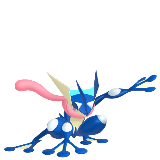 GreninjaDiamonds · June 2017
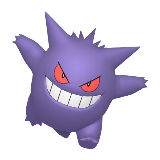 GengarDiamonds · June 2017
 EeveeDiamonds · June 2017
 MimikyuSpell Tag · August 2017
 GardevoirDiamonds · August 2017
In events, training and the background
Some of the Pokémon that turn up in random events, in training and in the background. Feebas boosts JP during feeding in its event, Manaphy summons food, and Ditto poses as a Magikarp on the end of the line:
 PidgeottoSnatches high jumpers
 Voltorb“Is It Treasure?”
 Ditto“Transforming Magikarp”
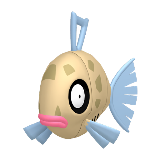 Feebas“Is It Feebas?”
 Manaphy“Food Fever”
 LuvdiscRandom events
 CorsolaRandom events
 WishiwashiSwims past in schools
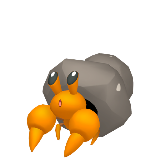 Dwebble“Dwebble Push” training
 BoldoreTraining
 ForretressTraining
 GolemTraining
 Steelix“Steelix Push” training
Updates & version history
Magikarp Jump grew fast in its first three months, with three content updates between June and August 2017, and has had only occasional bug-fix updates since. The main versions (dates are for iOS unless marked; Android usually had each update a day earlier):
| Date | Version | What changed |
|---|---|---|
| 23 May 2017 | 1.0.1 | Launch-day update adding a language menu |
| 31 May 2017 | 1.0.3 | Stops Expert League 3 from paying out its final rewards again and again |
| 9 June 2017 | 1.1.0 | The Heal League, Greninja and Gengar, six apricot and brown patterns and the Swampy Jungle theme; Trainer Rank cap raised to 63; Coin display fix |
| 30 June 2017 | 1.2.0 | The Ultra League, Eevee and Mudkip, four new patterns, the Red Rock theme and skip buttons; Trainer Rank cap raised to 79 |
| July 2017 | 1.2.1 and 1.2.2 | Fixes for data backups, then for graphical glitches in the pond and in training |
| 15 August 2017 | 1.3.0 | The final content update: the Elite Four and Master Leagues, the ending, Mimikyu and Gardevoir, the blue and violet patterns, the Robo Lab theme, the Has-Been Basin and the “Transforming Magikarp” event; Trainer Rank cap raised to 100 |
| 15 September 2017 | 1.3.2 | A cache-clearing option, skippable scenes after the Master League and a fix for the Coin counter |
| 25 May 2018 | 1.3.5 | Facebook friend rankings removed after Facebook ended its ranking service |
| 10 October 2018 | 1.3.6 | Exchange Tickets can be traded for items while offline |
| 10 July 2019 | 1.3.7 (Android) | Support for 64-bit devices |
| 23 June 2022 | 1.3.101 (iOS) | Minor bug fixes; the latest App Store release |
| 28 October 2022 | 1.3.11 (Android) | Minor bug fixes; the latest Google Play release |
Regional Variations
Magikarp Jump launched as one app in nine languages, but a few things differ from region to region:
- The Japanese title is Hanero! Koiking (“Jump! Magikarp”), and the Korean and Chinese titles translate the same way. European versions keep the English title but swap in the local name for Magikarp: Pokémon: Karpador Jump in German and Pokémon: Magicarpe Jump in French.
- The two logos at the top of this page are not quite the same fish: the Japanese logo is based on a female Magikarp and the English one on a male.
- Several League names follow the Japanese Poké Ball names, so the Great, Fast, Luxury and Ultra Leagues are the Super, Speed, Gorgeous and Hyper Leagues in Japanese, and the Expert Leagues are Extra Leagues.
- Italy got the game first, as an iOS-only release on 17 May 2017. Japan and much of Asia followed on 23 May, a day ahead of the Americas, and Europe and Oceania on 25 May.
- Diamond packs are priced locally, from US$0.99 to US$34.99 in the United States and from ¥120 to ¥4,200 in Japan.
- Player support in Japan runs through a Japanese-only web form, and enquiries from elsewhere are sent to The Pokémon Company International.
Left in the data
- Six decorations that never made it into the shop are still in the game data: an Oddish Kokedama, a Camerupt Volcano, a Pikachu Bed, a Gyarados Slide, a Pikachu Pocket Watch and a Dedenne Blush.
- Two pond themes are defined but unused: Undersea Volcano, a pond charged with volcanic energy, and Sunken Boat, where everyone can jump and splash together.
- An unused “Wild Magikarp” event has a wild Magikarp challenge yours to a jumping contest, with a JP bonus for winning, a penalty for losing and no effect for running away; its script still uses placeholder values.
- The Starmie Bubbler decoration was already pictured in the How to Play guide to decorations in version 1.0, although it only arrived in the game with version 1.1.0.
- Version 1.2.0 renamed the Sunflora Bunch decoration Sunflora Bloom, and the “Events Triggered” achievement became “Events Discovered”.
Glitches, exploits and oddities
Magikarp Jump’s first weeks brought a handful of bugs, all fixed quickly:
Expert League 3 reward repeat
In the launch version, winning the final battle of Expert League 3 could pay out its Diamonds and Support Candy over and over, an easy supply of premium currency and skill upgrades. Version 1.0.3 closed the loophole barely a week after launch, on 30 May 2017 on Android and a day later on iOS.
Coin counter display bugs
On 29 May 2017 the official Japanese site warned that the Coin total might look as if it had not gone up properly, even though the Coins had in fact been credited, and the display was put right in the 9 June update. A related fault, in which the Coin count seemed to fall when moving between the town and League screens, was fixed in version 1.3.2 on 15 September 2017.
Backup and pond graphics faults
Version 1.2.1, released in July 2017, fixed a bug that stopped players backing up their data to move it to another device, a serious matter in a game built on weeks of slow progress. Version 1.2.2 followed a day later on both platforms to clear up graphical glitches in the pond and during training sessions.
Videos & media
Three official videos: the Japanese introduction, an Italian promotional clip and the English Magikarp song.
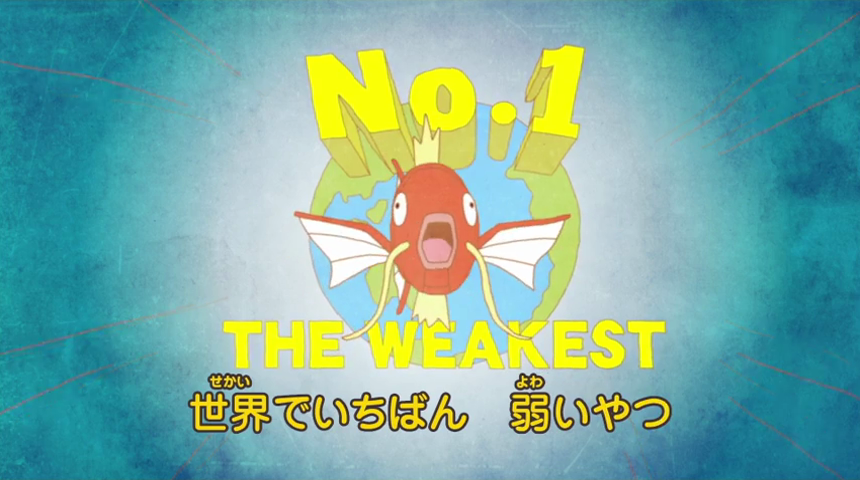
The official Japanese introduction to Hanero! Koiking, from The Pokémon Company’s Japanese channel.
A promotional video from the official Italian Pokémon channel. Italy was the first country to get the game, a week before everyone else.
The English version of the Magikarp song, released on 12 May 2017 in the run-up to the launch.
Trivia & facts
- Many of the game’s ideas come straight from Select Button’s earlier Survive! Mola Mola!, in which players try to keep a hapless ocean sunfish alive.
- Magikarp’s National Pokédex number, 129, is hidden in plain sight: it is printed on the Jump Counter training equipment, and the Jump Power counter stops at 12.9T.
- In April 2021 a Japanese player reached the maximum Jump Power of 12,900,605,640,709 with their 169th Magikarp, after about two years and a month of ten-minute daily sessions, and reported spending just ¥1,830 along the way. The figure is a little over 129 multiplied by 100 billion.
-

“Hop, Skip and Whump”: Pidgeotto strikes. Any jump over 100 metres has a Pidgeotto flying past in the background, a running gag that ties in with the official description’s warning about Magikarp that flop too high.
- The Jump Counter training is a lot like Magikarp’s Splash, one of the mini-games in Pokémon Stadium.
- The Magikarp Biscuit food looks very much like taiyaki, the fish-shaped Japanese cake.
-

No. 2: Skelly. One in-game Trainer Tip says a Magikarp’s pattern shows at two-thirds of its maximum level, but it only really becomes clear at three-quarters.
- Corsola, Feebas and Luvdisc can sometimes appear Shiny in their random events.
- Alongside the classics, the cast leans on the then-new Alola generation, with Rowlet, Litten, Popplio, Mimikyu and Wishiwashi all appearing, a sign of a game made in the Pokémon Sun and Moon era.
Legacy
What came after
- Italian soft launch – 17 May 2017. iOS only, on the Italian App Store, under the English title
- Launch in Japan and Asia – 23 May 2017. On the App Store and Google Play in Japan, South Korea, Hong Kong, Taiwan and much of Asia
- Worldwide launch – 24–25 May 2017. The Americas on 24 May, then Europe and Oceania on 25 May
- 10 million downloads – Early July 2017. Marked with free official wallpapers for iPhone and Android
- Final content update – 15 August 2017. Version 1.3.0 added the Elite Four and Master Leagues and the ending, completing the game
- Amazon Appstore release – 23 October 2017. A version for Amazon Fire tablets, since withdrawn
- Pokémon Sleep – July 2023. Select Button’s second app with The Pokémon Company, born of the partnership that began with Magikarp Jump
- 27 million downloads – 15 November 2024. Takato Utsunomiya told Famitsu that downloads had passed 27 million, more than Pokémon Sleep had at the time
Where to play it today
As of October 2026 Magikarp Jump is still a free download from the App Store, for iOS or iPadOS 14.0 or later, and from Google Play, where it shows more than 10 million installs. Diamond packs are still on sale and the game still runs, though nothing new has been added since August 2017 and the last updates were minor bug fixes in 2022. No end of service has been announced. The Amazon Appstore edition for Fire tablets has been withdrawn, and there has never been a Switch or any other console version.
How it was made
Select Button was founded in Tokyo on 16 July 2014 by Koya Nakahata, Takumi Tsukada and Keisuke Miyagawa, three former Kayac staff all born in 1989, after a side project of theirs, Survive! Mola Mola!, became a hit. In around February 2016 Kei Ogawa, a Kayac alumnus who had moved to The Pokémon Company, introduced the trio to Takato Utsunomiya, who had enjoyed Mola Mola and Hunt Cook, and Utsunomiya asked them to make a game.
Of the ideas they pitched, Magikarp was the one that amused Tsunekazu Ishihara most; Nakahata joked that it might otherwise have ended up a Metapod game. Nakahata directed and wrote the text, Tsukada handled the art and interface and Miyagawa the programming, with Kanako Murata producing for The Pokémon Company and SOLIDTUNE on sound. The team wanted something anyone could play, from young children to older people who never touch games, and dropped action elements early on. Pixel art went too, because sprites could not show off Magikarp’s patterns, which became the main reward for raising a fish since its only evolution is Gyarados; Nakahata said the game might never have been finished in pixel art. Miyagawa also built a tool to preview translations inside the game, so that every language could launch at the same time.
The Pokémon Company teased a mysterious new smartphone app in Japan on 16 February 2017 and confirmed the release date and the game’s content on 22 May, the day before launch. Later, the company asked for a sequel, but Select Button turned it down: the team felt it had given Magikarp Jump everything it had and needed a rest. The partnership carried on instead with Pokémon Sleep, which the studio developed and which launched in July 2023.
Magikarp Jump elsewhere

Sales & reviews
Downloads
As a free-to-play app, Magikarp Jump is measured in downloads rather than sales. It passed 10 million downloads worldwide in early July 2017, about six weeks after launch, and The Pokémon Company marked the milestone with free wallpapers. In November 2024 the company’s chief operating officer, Takato Utsunomiya, told Famitsu that it had passed 27 million, more than Pokémon Sleep had reached at that point, and the Android version alone shows more than 10 million installs on Google Play. No revenue figures have ever been published, and the lifetime cap of 5,000 purchased Diamonds limits how much any one player can spend.
- 27m+downloads by November 2024
- 10m+downloads in about six weeks
- 64on Metacritic, iOS (11 critics)
- 4.8App Store (US) user rating
Review scores
Critics were split between charmed and bored. Time’s Matt Peckham reckoned the premise was “probably dumb enough to work”, and Harry Slater of Pocket Gamer called it “a strange but compelling package”, while Joe Merrick of Nintendo Life summed up the doubters: “It has great style, but it severely lacks in gameplay.” If you have played it yourself, you can compare notes with a reader review of Magikarp Jump on the site.
Most critics found plenty to smile at but not much to do. Metacritic’s iOS listing averages 64 from 11 reviews, a mixed verdict. Time’s Matt Peckham enjoyed how daft the whole idea was and only minded having to start over after each retirement, Gamezebo liked how many series staples it packed in, and Pocket Gamer’s Harry Slater found it oddly compulsive for a game that offers so little real control. The doubters dwelt on how little you actually do: Game Informer’s Kyle Hilliard found the training and the Leagues dull, though he enjoyed watching each new generation grow faster than the last, and Nintendo Life’s Joe Merrick admired the art and the catchy music but saw little gameplay and poor value in the purchases. App Trigger hardly counted it as a game at all. Players have been far kinder, rating it 4.8 out of 5 on the US App Store and 4.7 on Google Play.
Further reading
More Pokémon games for phones and tablets on the site: