  |
|
| Games on this page | 8: PokéROM · Pokémon the Movie 2000 Adventure · Pokémon Learning League · Pokémon PC Master · the three Perdue discs (Team Rocket Blast Off, Poké Ball Launcher, Seek & Find) · Pokémon Card Game Online |
| Japanese titles | ポケモンPCマスター (Pokémon PC Masutā) ポケモンカードゲーム Online (Pokémon Kādo Gēmu Online) |
| Platforms | Windows and Mac OS mini CD-ROMs · a Windows download with its own browser · web browsers (Adobe Flash) · Windows 2000 and XP |
| Makers | Basis Applied Technology for Mattel Interactive · Cyberworld International for Warner Bros. · 360KID for Pokémon USA · Ambrella for Pokémon Learning Co. · Left Brain Games and Garr Group for Perdue Farms · The Pokémon Company |
| Years | 2000–2010 |
| Regions | North America (six games) · Japan (two) |
| Cost | Free (Movie 2000 Adventure, Perdue discs) · US$7.99 a disc (PokéROM) · subscriptions (Learning League, PC Master) · a boxed card deck (Card Game Online) |
| Status today | Six kept playable by fans and archivists · PC Master survives only as a trial · Card Game Online closed on 31 August 2010 |
Overview
 Away from the cartridges and consoles, Pokémon spent the 2000s turning up in some unlikely places: on CD-ROMs cut to the size of a trading card, in packs of chicken nuggets, on a subscription website for schools and in Japanese web browsers. This page gathers eight of those small official games in one place. Nearly all of them were made for children rather than collectors, and many set out to teach something along the way, whether that was simple sums, the water cycle, touch-typing or how to play the card game.
Six of the eight were made for North America. Mattel Interactive’s PokéROM discs sold for $7.99 apiece in 2000, the same year that Cyberworld’s Pokémon the Movie 2000 Adventure went out as a free download to promote the second film, only to vanish within about a month. Pokémon USA’s Pokémon Learning League brought the anime’s cast into classrooms from 2006 to 2009, and in the summer of 2006 Perdue Farms marked the series’ tenth anniversary by packing three Flash games into its nuggets. The other two stayed in Japan: Pokémon PC Master (2006), a monthly membership that taught computer skills, and Pokémon Card Game Online (2009 to 2010), a browser battle service unlocked by a code from a boxed deck.
None of them made much noise at the time, but together they show how far the brand reached beyond the main games, and several came close to disappearing altogether. Some survive only because fans kept copies, tracked down the people who made them or uploaded old files years later; others, such as the full version of PC Master and the servers behind Card Game Online, are gone for good. For the era’s other official PC games, see Pokémon Play It!, Pokémon Project Studio and Pokémon Team Turbo.
Quick Answers
The questions people ask most about these eight games, answered first and explained further down the page.
Can I still play any of these games?
Most of them, yes, though not from any official store. The three Perdue games are in the Flashpoint Archive and on the Internet Archive, disc images of the PokéROMs and the saved Learning League lessons are on the Internet Archive, and fans got Pokémon the Movie 2000 Adventure running again in 2023. Pokémon Card Game Online and the full version of PC Master can no longer be played. More →
Which of these games were released in English?
Six of the eight, all made for North America: PokéROM, Pokémon the Movie 2000 Adventure, Pokémon Learning League and the three Perdue games. PokéROM was sold in US shops, the Perdue discs came in American nugget packs and Learning League followed the US school grades. PC Master and Card Game Online were only ever released in Japan. More →
Which one is the hardest to find or play today?
Pokémon PC Master. Its full membership version has never resurfaced, and the only known survivor is a copy of the trial version, found and archived in January 2018. Pokémon Card Game Online cannot be played either, because every match ran on official servers that shut on 31 August 2010; only the boxed deck and CD-ROM that unlocked it are left. More →

How much did these games cost?
PokéROM discs cost US$7.99 each in 2000. Learning League was free at first and then sold yearly subscriptions, with prices reported at around $95 to $100 for a family and about $1,000 for a school. PC Master cost ¥1,890 a month with the first month free. Card Game Online needed an access number from a boxed card deck, and the Movie 2000 Adventure and the Perdue games were free. More →
Why was Pokémon the Movie 2000 Adventure taken down?
The accounts differ. Former Cyberworld developer Eddie Ruminski has said Nintendo sent a cease and desist letter because it felt Warner Bros. had gone beyond its promotional licence, having expected something smaller than a full game, while technical director Neil Marshall remembers a contract dispute. Either way, the download links were gone within about a month. More →
What were the Perdue Pokémon discs?
In summer 2006 Perdue Farms marked Pokémon’s tenth anniversary by putting Pokémon mini-discs, a reported one million of them, into packs of its chicken nuggets. There were three discs, each starting its own Flash game, and every one also carried a Pokédex, a Trading Card Game tutorial and a music video unlocked by beating a game. More →
Is Pokémon Card Game Online the same as Pokémon TCG Online?
No. Pokémon Card Game Online was a separate, Japan-only Flash service that ran from November 2009 to August 2010, with fixed, ready-built decks and no card collecting. Pokémon Trading Card Game Online, the international game built around collecting digital cards, came later and has its own page on the site. More →
The games at a glance & timeline
Eight games, three formats and two countries. Here they are side by side, then year by year, from the first PokéROMs to the rescue of the Movie 2000 Adventure:
| Game | Format | Released | Cost | Today |
|---|---|---|---|---|
| PokéROM | Trading-card-sized mini CD-ROMs for Windows and Mac | July to November 2000, North America | US$7.99 a disc | Out of print; disc images preserved |
| Pokémon the Movie 2000 Adventure | Windows download, played in its own browser | 2000, North America; withdrawn within about a month | Free | Restored by fans in 2023 |
| Pokémon Learning League | Flash website for schools and families | 2006 to 2009, United States | Free at first, then a yearly subscription | Closed; lesson files preserved |
| Pokémon PC Master | Membership software for Windows 2000 and XP | 20 June 2006 (trial), Japan | ¥1,890 a month; trial free | Full version lost; trial survives |
| The three Perdue games | Flash games on PC mini CD-ROMs | Summer 2006, United States | Free in packs of Perdue chicken nuggets | Playable through archives |
| Pokémon Card Game Online | Flash browser service for Windows and Mac | 20 November 2009 to 31 August 2010, Japan | Access number in a boxed Expert Deck | Closed; cannot be played |
Year by year
| Date | Game | What happened |
|---|---|---|
| 10 July 2000 | PokéROM | The first wave of discs goes on sale in North America at $7.99 each |
| 2000 | Movie 2000 Adventure | Launches as a free download to promote the second film, and is withdrawn within about a month |
| 5 September 2000 | PokéROM | A second wave of discs is released |
| 15 November 2000 | PokéROM | A third wave follows, backed by a national advertising campaign |
| March 2006 | Learning League | A classroom pilot begins in fifth-grade classes in four US states, running until June |
| 20 June 2006 | PC Master | The free trial version is released in Japan |
| Summer 2006 | Perdue discs | Perdue Farms packs Team Rocket Blast Off, Poké Ball Launcher and Seek & Find into its chicken nuggets for Pokémon’s tenth anniversary |
| September 2006 | Learning League | Pokémon USA announces the site, free during its opening months |
| 1 January 2007 | Learning League | The site becomes subscription-only |
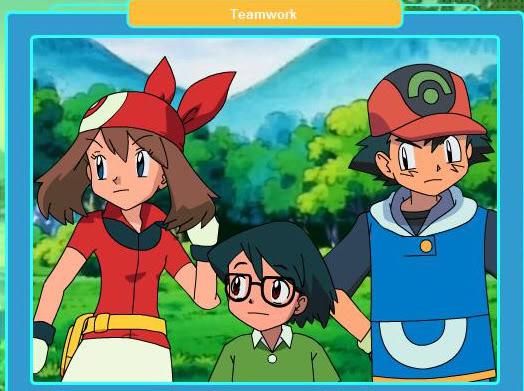
| March 2007 | Learning League | New Life Skills lessons on teamwork, bullying and brainstorming |
| 1 August 2008 | Learning League | No more new subscribers are accepted |
| 2009 | Learning League | The site closes at the end of the 2008–09 US school year |
| 20 November 2009 | Card Game Online | The service opens in Japan alongside the Expert Deck Leafeon vs Metagross +Online |
| 23 April 2010 | Card Game Online | An online tournament that doubles as a qualifier for the 2010 World Championships begins, running until 10 May |
| 31 August 2010 | Card Game Online | The service closes |
| January 2018 | PC Master | A copy of the trial version is found and archived |
| 17 January 2021 | Learning League | About 825 MB of saved lesson files are uploaded to the Internet Archive |
| 16 May 2023 | Movie 2000 Adventure | EveryGameEver publishes interviews with former Cyberworld developers and footage of the game |
| 17 September 2023 | Movie 2000 Adventure | A restored, playable version is uploaded to the Internet Archive |
PokéROM (2000)
| At a glance | |
|---|---|
| Also called | PokéROMs; sometimes listed in full as Pokémon PokéROM: Gotta Learn ’em All! |
| Format | Mini CD-ROMs shaped like trading cards, for Windows and Mac OS |
| Developer | Basis Applied Technology |
| Publisher | Mattel Interactive (The Learning Company) |
| Released | 10 July 2000 (North America), with more discs on 5 September and 15 November 2000 |
| Genre | Educational quiz and puzzle |
| Players | 1, or 1–4 in the Trainer Race quiz |
| Price | US$7.99 a disc |
| Today | Long out of print, but well preserved |
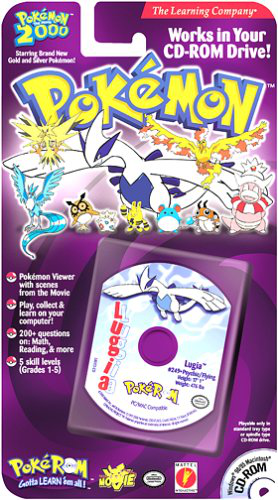
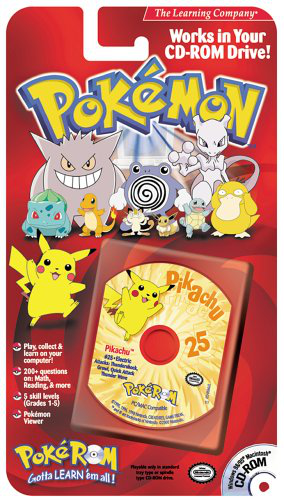
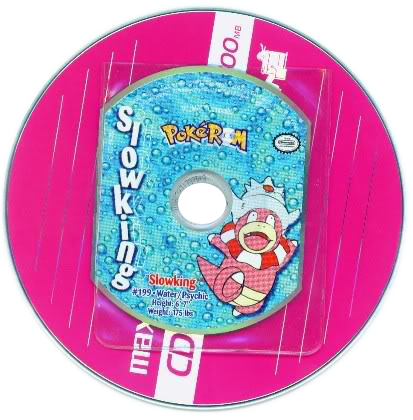
PokéROM was a line of collectable learning discs from Mattel Interactive, which had published Pokémon Project Studio the year before. Each disc was a miniature CD-ROM cut to the shape of a trading card, so that it could slip into a binder sleeve beside the real cards, and each was given over to a single Pokémon, with Professor Oak as the guide. Basis Applied Technology made them for young children, with five difficulty levels pitched at US school grades one to five.
At the heart of every disc is a memory game. Beat it and the disc’s Pokémon is set free, to be watched in its habitat or printed out in pictures taken from the anime; beyond lies the Pokémon Sanctuary, with an Observation Lab of anime screenshots and the Trainer Center, home of a quiz board game for up to four players. Fifty discs came out across three series in 2000, the first wave on 10 July, and by late summer the Pikachu disc had climbed to eighth place in PC Data’s US chart for games and education software.
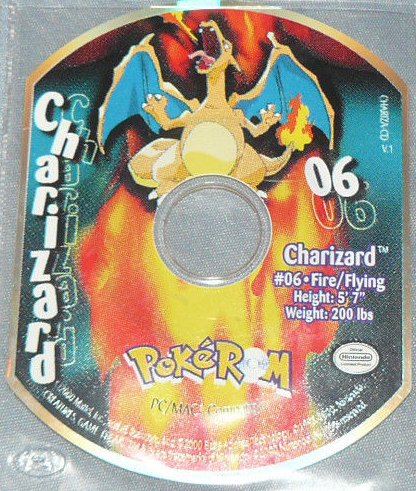
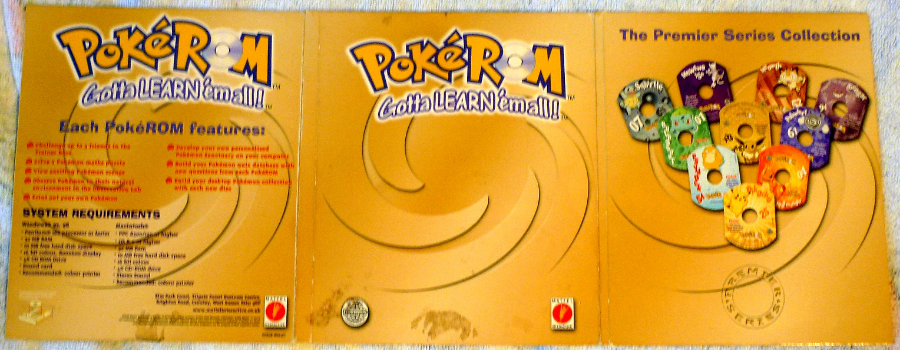
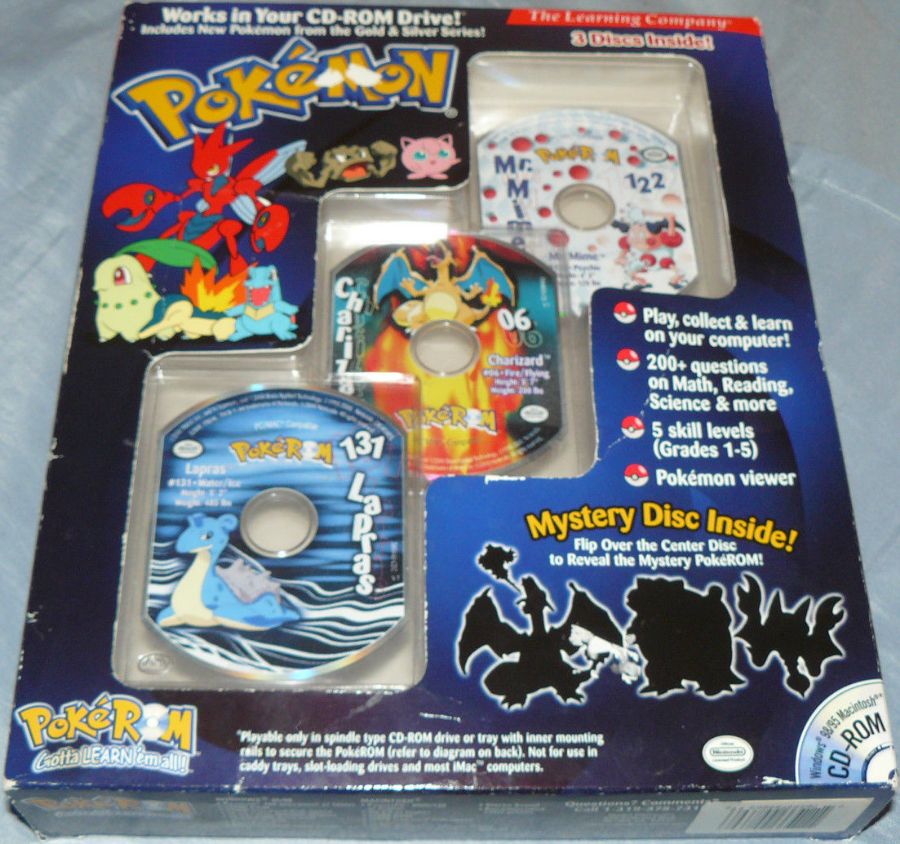
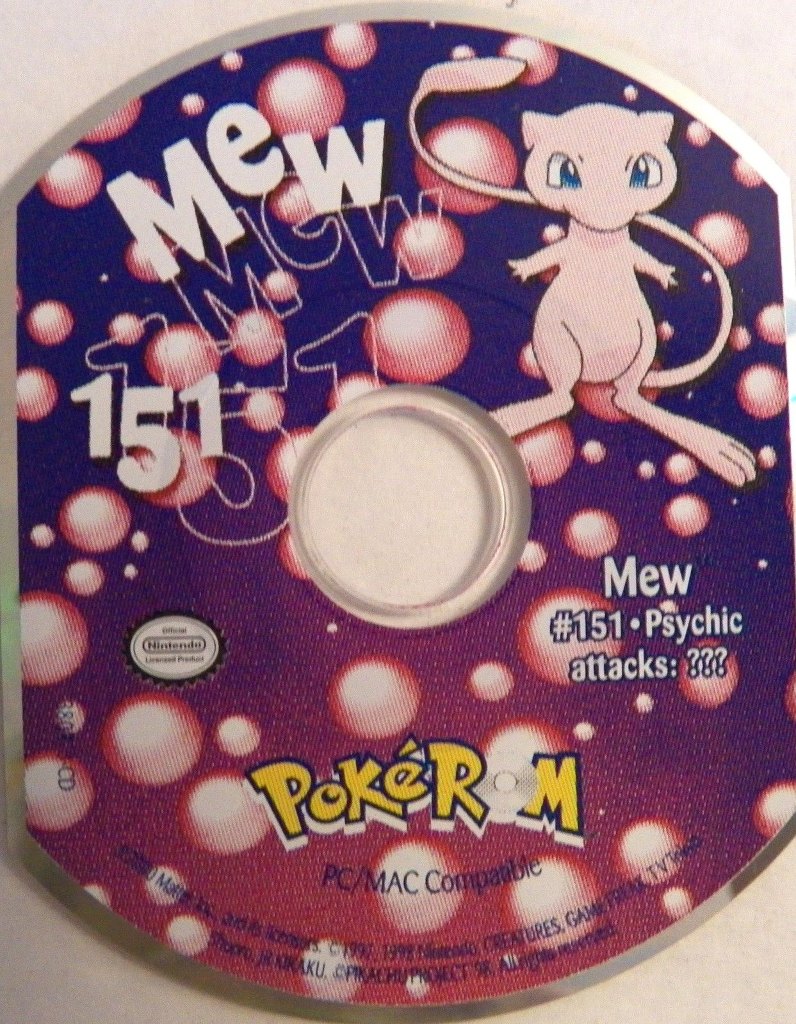
Fifty Pokémon from the first two generations each had a disc of their own, and Mew got a sampler disc on top. Six of note:
 PikachuPremiere Series; a US chart hit
 MewtwoPremiere Series
 LugiaMovie Series
 CharizardMystery Series, hidden disc
 BlisseyMystery Series, hidden disc
 MewSampler disc
Pokémon the Movie 2000 Adventure (2000)
| At a glance | |
|---|---|
| Also called | Pokémon 2000 Adventure; Pokémon: The Movie 2000 Adventure |
| Format | Windows download, played through Cyberworld’s own Pokémon-themed browser |
| Developer | Cyberworld International Corporation |
| Made for | Warner Bros., to promote Pokémon the Movie 2000 |
| Released | 2000 (North America); withdrawn within about a month |
| Genre | First-person adventure and quiz |
| Players | 1 |
| Price | Free |
| Today | Restored by fans in 2023 |
Pokémon the Movie 2000 Adventure was a free online game commissioned by Warner Bros. to promote the second Pokémon film in North America, where it reached cinemas on 21 July 2000. Cyberworld International Corporation built it with QBORG, the company’s system for explorable, grid-based spaces seen in the first person, with the Pokémon drawn as flat sprites in the style of the anime. It did not run in an ordinary web browser: players downloaded a Pokémon-themed browser of Cyberworld’s own, which fetched each part of the game from a server as it was needed.
The plot borrows from the film. Professor Oak sends the player to gather ancient spheres from Moltres, Zapdos and Articuno in turn. After picking a team and one of three difficulty levels, the player crosses three islands, each blocked by two obstacles such as a wall of fire or a river, and has to choose a team member with a move that will get past. Each legendary bird then sets a trivia question, and Poké Balls found along the way may evolve a Pokémon, win back a stolen one or let Team Rocket snatch another. A run lasts about ten minutes and ends with a printable certificate ranked bronze, silver or gold.
Why it vanished
The game was a hit while it lasted: former Cyberworld developer Eddie Ruminski recalls about a million downloads in its first month. Then the links disappeared. Ruminski has said Nintendo sent a cease and desist letter because it felt Warner Bros. had gone beyond what its promotional licence allowed: Nintendo had expected something smaller than a full game. Technical director Neil Marshall remembers it instead as a contract dispute.
The budget has been put at $2 million. When work began only one member of Cyberworld’s team knew Pokémon, so Warner Bros. sent over a VHS copy of the film along with a Pokémon expert.
Thirty-three Kanto Pokémon make up the three teams, while the legendary birds guard the islands. Six of note:
 MoltresGuards the first island
 ZapdosGuards the second island
 ArticunoGuards the third island
- CharizardTeam 3: Flamethrower and Fly
- PikachuTeam 2
 DittoOak’s helper after three misses
Pokémon Learning League (2006–2009)
| At a glance | |
|---|---|
| Also called | PLL |
| Format | Website in Adobe Flash, for Windows and Mac |
| Made by | 360KID (lessons and animation), with Two Animators! LLC (art) and Entropy Multimedia (back end) |
| Publisher | Pokémon USA |
| Audience | Pupils in US grades three to six, at school and at home |
| Subjects | Math, Science, Language Arts and Life Skills |
| Ran | Pilot March–June 2006; open to the public from autumn 2006; closed in 2009 |
| Price | Free at first; a yearly subscription from 1 January 2007 |
| Lessons | About 140 |
| Today | Closed; saved lesson files preserved |
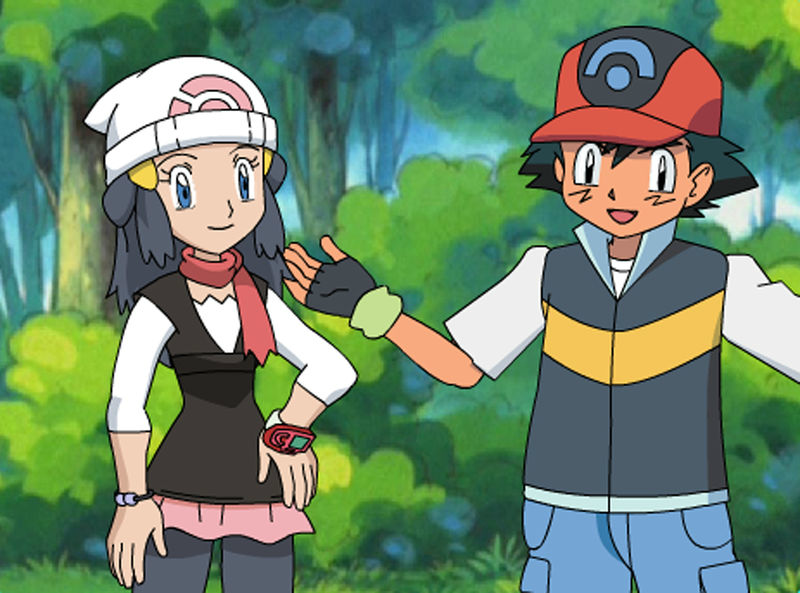
Pokémon Learning League was an educational website from Pokémon USA that used the anime’s cast to teach children in US grades three to six. Its lessons came in four strands, Math, Science, Language Arts and Life Skills, each led by a Mission Guide: Ada, Siara, Lex and Quinn, characters created for the site. Topics ran from fractions, the water cycle and the rock cycle to punctuation, making friends and staying safe online, and the Pokémon themselves mostly stayed in the background, with Pikachu at Ash’s side the one regular.
Five pilot lessons, among them The Rock Cycle, Probability and Story Elements, were tried out in fifth-grade classes in Massachusetts, West Virginia, New Hampshire and New York between March and June 2006. Pokémon USA announced the site that September and opened it free to the public in the autumn, and from 1 January 2007 it was subscription-only. New lessons kept coming, such as Life Skills topics on teamwork, bullying and brainstorming in March 2007, but the site stopped taking new subscribers on 1 August 2008 and closed after the 2008–09 school year, by which time about 140 lessons had been made. Its old address now leads to Pokémon.com.


Pokémon PC Master (2006)
| At a glance | |
|---|---|
| Japanese title | ポケモンPCマスター (Pokémon PC Masutā) |
| Format | Membership software for Windows 2000 and XP, with a downloadable free trial |
| Developer | Ambrella |
| Publisher | Pokémon Learning Co., Ltd. (ポケモンラーニング株式会社) |
| Released | 20 June 2006 (free trial, Japan) |
| Genre | Educational: typing and computer skills |
| Players | 1 |
| Price | ¥1,890 a month including tax, first month free; trial free |
| Requirements | Windows 2000 or XP; 1.4 GHz processor (2 GHz recommended); 192 MB RAM (448 MB recommended); 500 MB of disk space; DirectX 9.0c graphics such as an Intel 855, GeForce 5 series or Radeon 9000; 1024×768 display; internet connection; Windows Media Player |
| Today | Full version lost; only the trial survives |
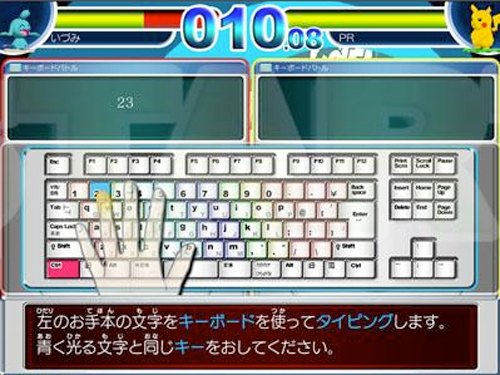
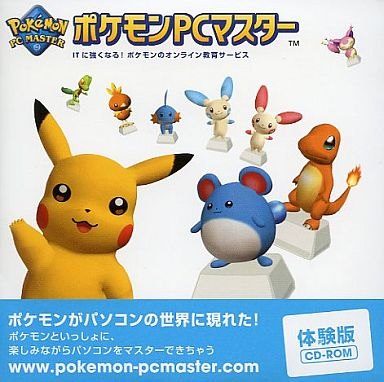
Pokémon PC Master was a Japanese membership service that used Pokémon to teach primary-school children their way around a computer. It was published by Pokémon Learning Co., Ltd. and developed by Ambrella, the studio behind Pokémon Channel and, later, My Pokémon Ranch, and its free trial version could be downloaded from the official website from 20 June 2006.
The lessons were wrapped in an adventure with Pikachu, with plenty of other Pokémon to collect along the way. The course was split into ten stages, one for each grade of the Junior P-ken, the children’s computer-skills qualification run by Japan’s PC Certification Association, climbing from grade 10 to grade 1. Each stage played out as a battle fought by typing and by answering quiz questions about computers, so quicker, more accurate keyboard work won the day, and the syllabus also covered entering text, drawing on screen and looking things up on the internet.
Rather than a boxed product, PC Master was a monthly membership costing ¥1,890 including tax, with the first month free, and downloading the trial meant registering an email address. Pokémon typing lessons came back on the Nintendo DS in 2011, keyboard included, with Learn with Pokémon: Typing Adventure.
The Perdue discs (2006)
| At a glance | |
|---|---|
| Games | Pokémon Team Rocket Blast Off, Pokémon Poké Ball Launcher and Pokémon Seek & Find |
| Format | PC mini CD-ROMs (Adobe Flash); later cut-down web versions on the developer’s site |
| Developer | Left Brain Games, Inc. |
| Publisher | Garr Group |
| Promotion | Perdue Farms, for Pokémon’s tenth anniversary |
| Released | Summer 2006 (United States) |
| Players | 1 |
| Price | Free in packs of Perdue chicken nuggets |
| Today | All three playable through archives |
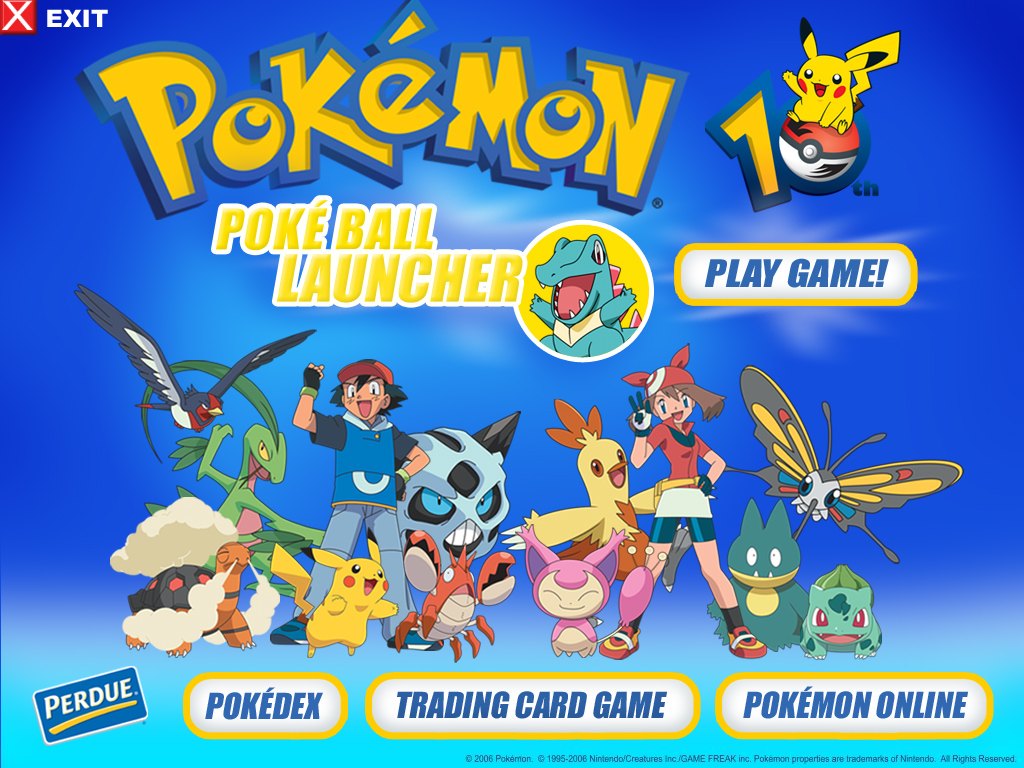
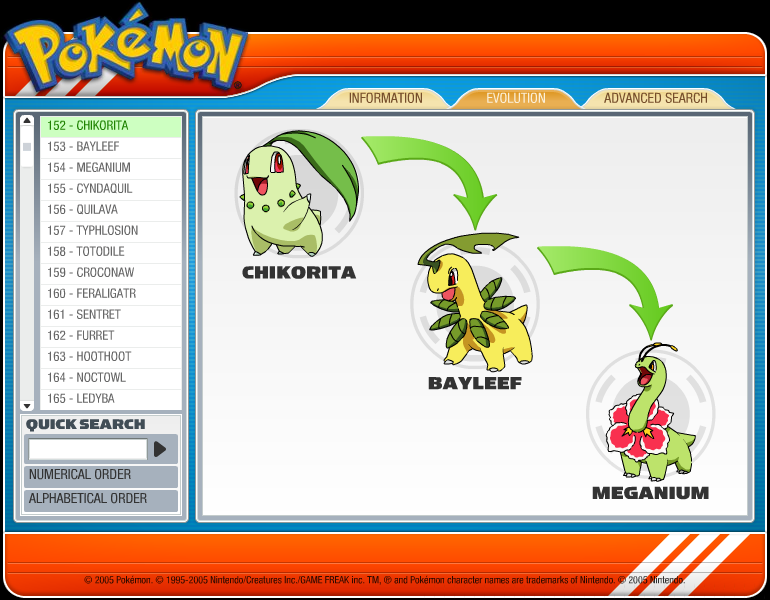
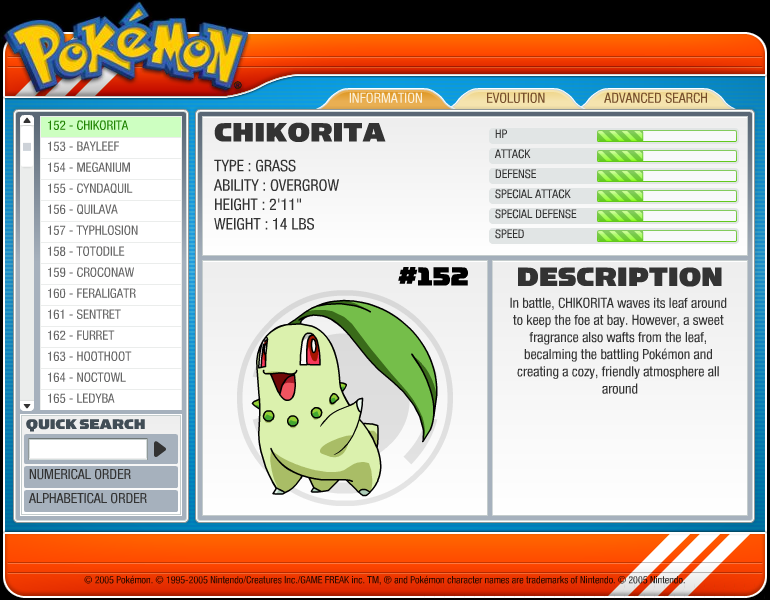
In summer 2006 Perdue Farms celebrated Pokémon’s tenth anniversary by tucking Pokémon mini-discs into packs of its chicken nuggets, a reported one million of them. There were three discs, one for each of three Flash games written by Left Brain Games and published by Garr Group: Team Rocket Blast Off, Poké Ball Launcher and Seek & Find.
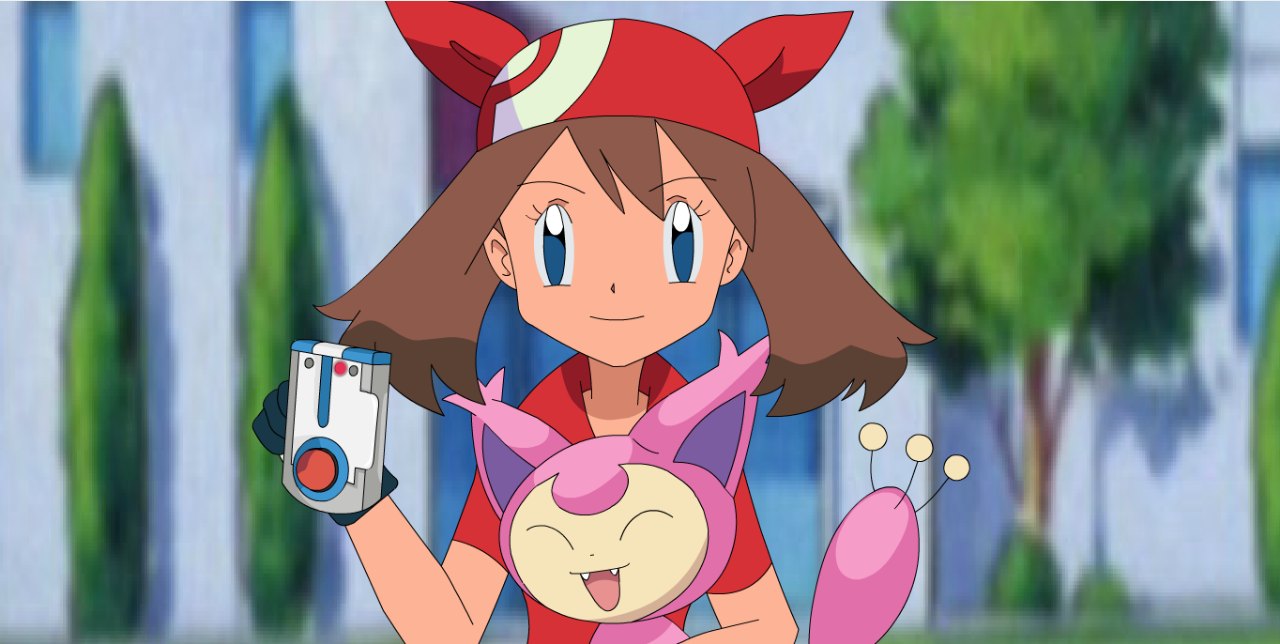
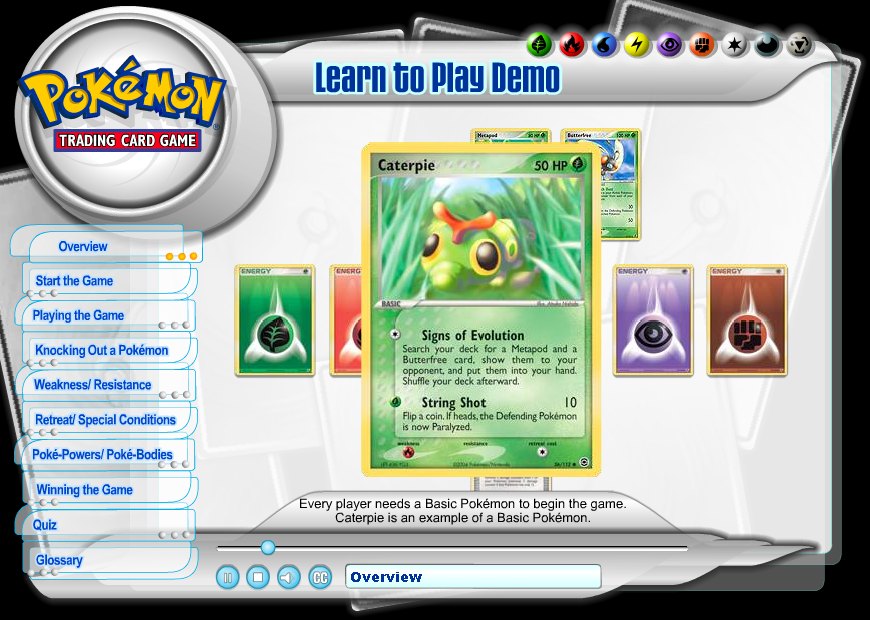
Every disc actually held all three games, although its opening menu would only start the one named on the label. Around them sat a Pokédex, a “Learn to Play” demo of the Pokémon Trading Card Game and a tenth anniversary music video of clips from the anime, unlocked by beating level three of any of the games. Ash and May star in all three, and each game has three levels that get steadily harder.
Pokémon Team Rocket Blast Off
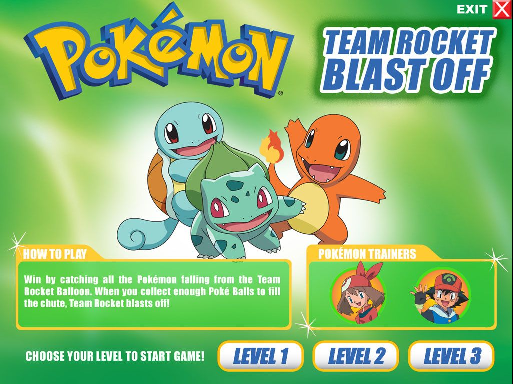
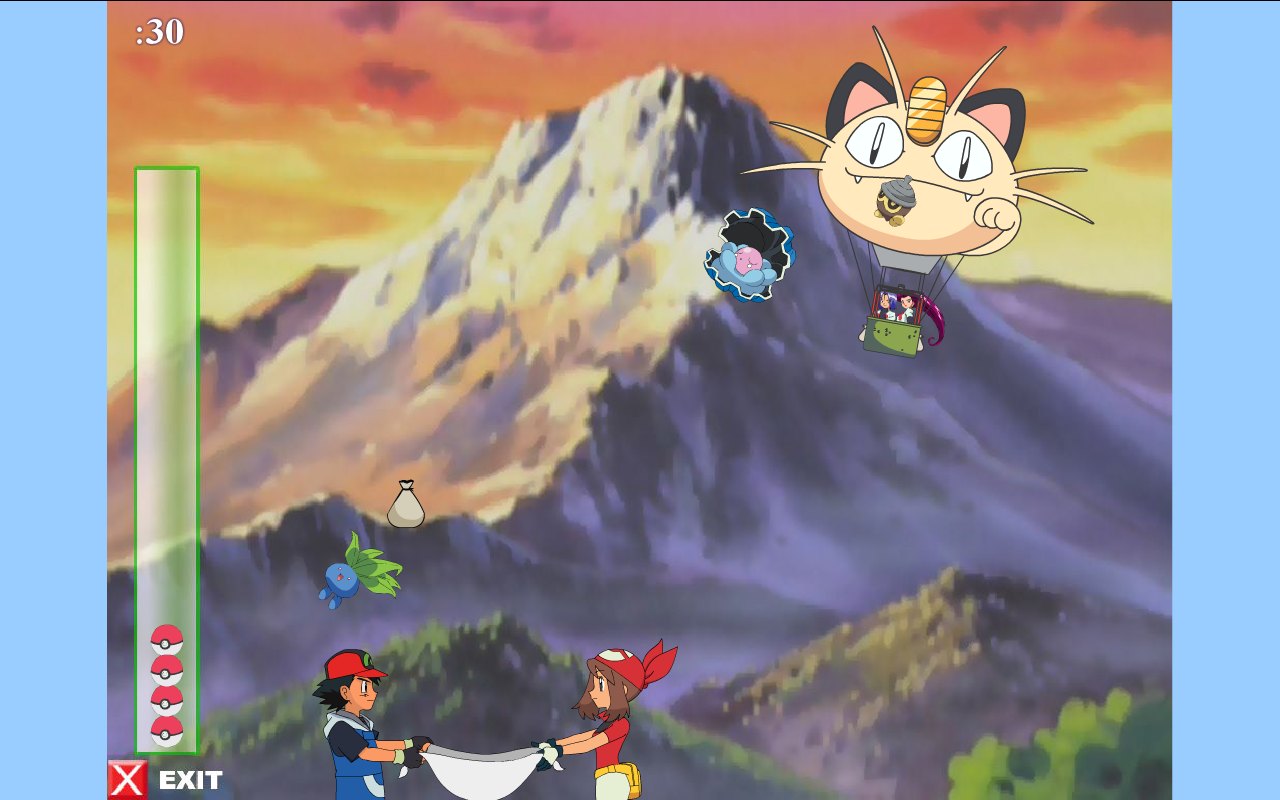
Jessie, James and Meowth drift overhead in their balloon, dropping Pokémon and sandbags, while Ash and May hold a tarp between them that the player slides left and right with the mouse. Every Pokémon caught adds a point, shown as a Poké Ball, but the falling Pokémon bounce off the edges of the screen and off the tarp itself, and a dropped Pokémon or a caught sandbag costs points. Reach 19 points and the balloon bursts, sending Team Rocket blasting off again.
- Level 1: no time limit, and each mistake costs one point.
- Level 2: a 30-second limit, and mistakes cost two points.
- Level 3: 50 seconds, five points per mistake and more Pokémon and sandbags in the air at once. Clearing it unlocks the anniversary music video.
Ten of the Pokémon that tumble from the balloon are from Hoenn, five from Kanto and four from Johto. Among them:
 PlusleHoenn
 MinunHoenn
 SkittyHoenn
 SphealHoenn
 MarillJohto
 PsyduckKanto
Pokémon Poké Ball Launcher
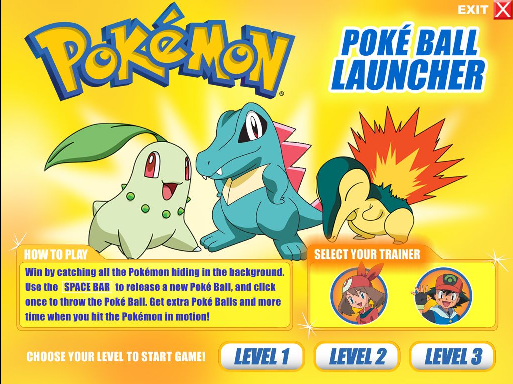
Playing as Ash or May, you have to catch wild Pokémon against the clock by throwing Poké Balls at them as they cross the screen. The balls drop from a dispenser and roll away to the left, so the trainer has to walk over them to pick them up before each throw. A catch made just as a Pokémon is entering or leaving the screen earns a bonus: ten extra seconds and the ball back.
- Level 1: ten catches in two minutes, with unlimited balls; each species disappears once it has been caught.
- Level 2: twenty catches in two minutes from fifty balls, with each species catchable twice.
- Level 3: fifteen catches in one minute from just fifteen balls, one of each species.
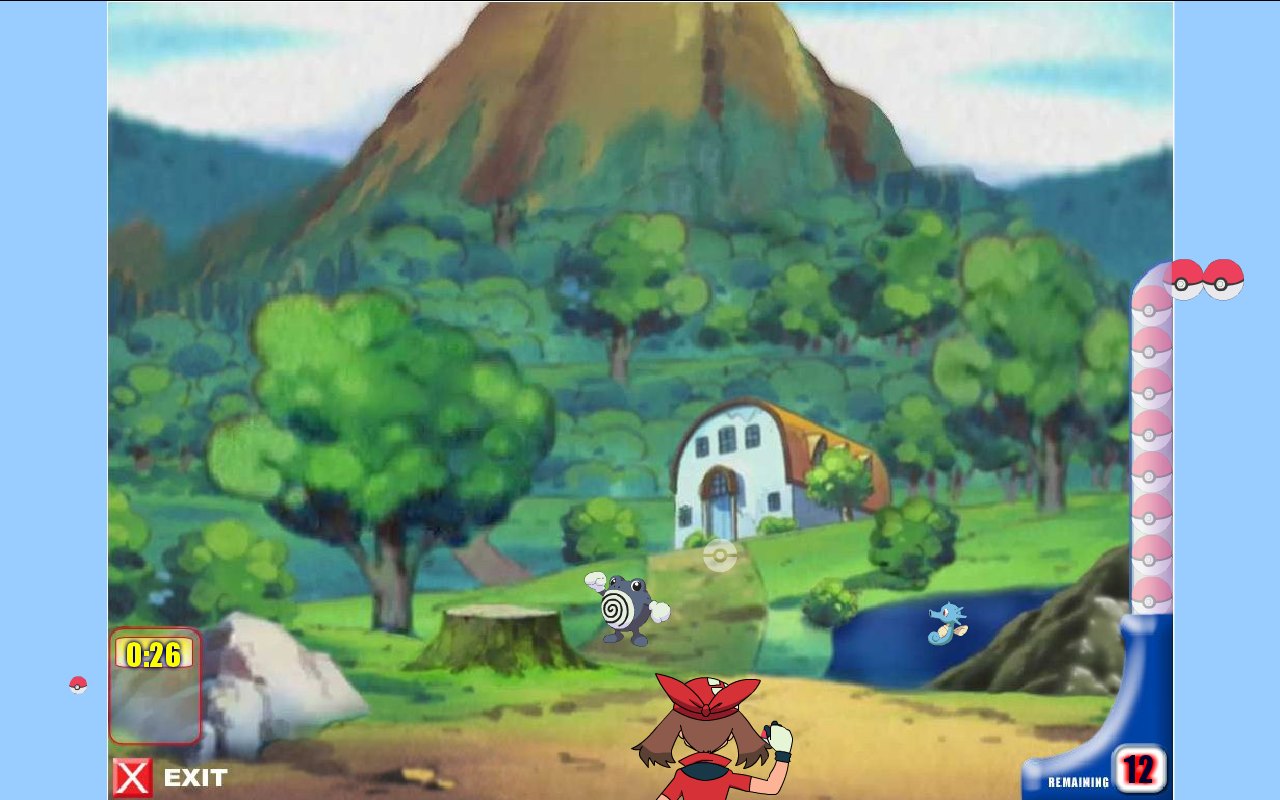
In the last two levels, catching more of one species than the rules allow costs ten seconds. Poké Ball Launcher’s own disc sets its Pokédex to show only Johto Pokémon, although Pichu is the only Johto Pokémon in the game itself. The copy Left Brain Games later put on its website is heavily cut down: it drops the other games, the Pokédex, the card game demo, the music video and all the music, opens on the instructions screen rather than the splash screen, and has an exit button that does nothing.
All twenty Pokémon on the field, from Kanto’s Butterfree to Hoenn’s Grumpig, appear in every level:
 Butterfree#012
 Weedle#013
 Paras#046
 Venonat#048
 Diglett#050
 Mankey#056
 Poliwhirl#061
 Geodude#074
 Haunter#093
 Rhyhorn#111
 Horsea#116
 Staryu#120
 Pinsir#127
 Dratini#147
 Pichu#172
 Zigzagoon#263
 Dustox#269
 Loudred#294
 Camerupt#323
 Grumpig#326
Pokémon Seek & Find
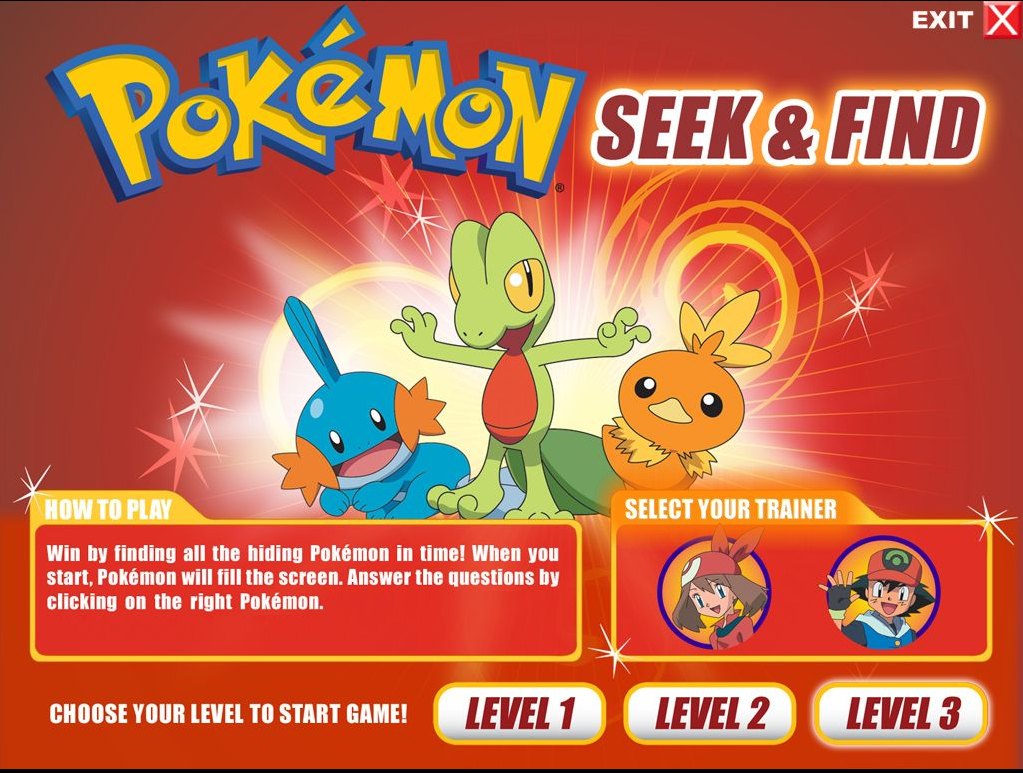
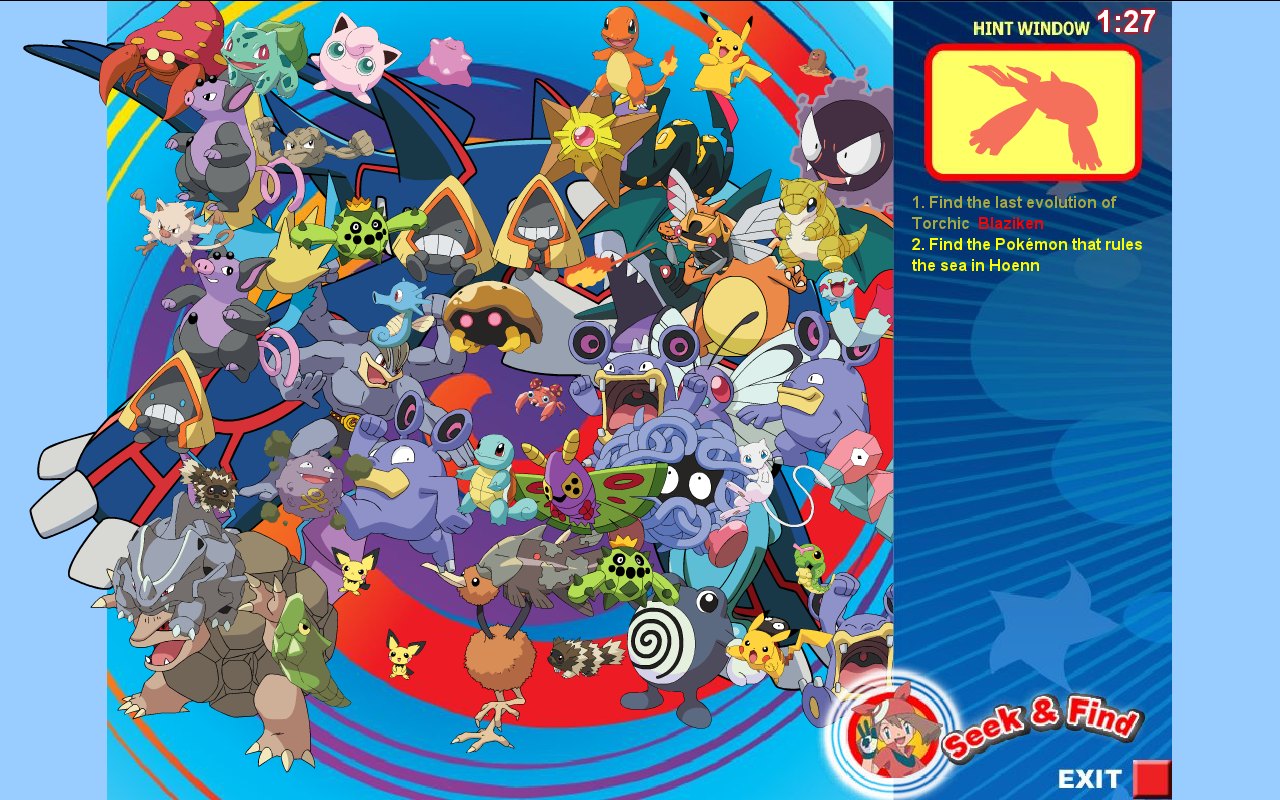
Seek & Find is a picture-search puzzle. You pick Ash or May, purely for show, and are faced with a crowded scene of Pokémon and a clue naming the one to find. Click the right one and the crowd scatters off screen before a new arrangement appears; click the wrong one and the whole scene reshuffles, and there is no way to skip a clue. Each level asks for ten finds.
- Level 1: 25 Pokémon on screen, all different, with no time limit and simple “Find the…” clues.
- Level 2: 45 Pokémon and a seven-minute limit. Duplicates appear in different poses, so a clue may ask for one expression in particular, such as “Find the frowning Snorunt.”
- Level 3: 55 Pokémon and two minutes per find, the clock resetting after each success. Its ten clues never change, and they call for real Pokémon knowledge.
Sixty-eight different Pokémon appear across the game. Eleven of them come in more than one pose, Grumpig, Cacnea, Wobbuffet, Bulbasaur and Charizard among them, and Pikachu has the most, with four. Level three asks for the same ten Pokémon in the same order every time, with clues that test evolution lines, type combinations and Pokédex records, so returning players can learn the answers by heart.
The answers to six of the level-three clues, and the Pokémon with the most poses:
 Blaziken“The last evolution of Torchic”
 Jirachi“The Wish Maker Pokémon”
 Sneasel“The only Dark/Ice Pokémon”
 Groudon“The heaviest Pokémon in existence”
 Kyogre“Rules the sea in Hoenn”
 ZubatLast in the National Pokédex, alphabetically
- PikachuFour poses, the most of any
Pokémon Card Game Online (2009–2010)

| At a glance | |
|---|---|
| Japanese title | ポケモンカードゲーム Online (Pokémon Kādo Gēmu Online) |
| Format | Browser service in Adobe Flash, for Windows and Mac |
| Publisher | The Pokémon Company |
| Opened | 20 November 2009 (Japan) |
| Closed | 31 August 2010 |
| Access | An access number packed in the Expert Deck Leafeon vs Metagross +Online (エキスパートデッキ リーフィアVSメタグロス +Online) |
| Genre | Online trading card game with fixed decks |
| Players | 2 |
| Today | Closed; cannot be played |
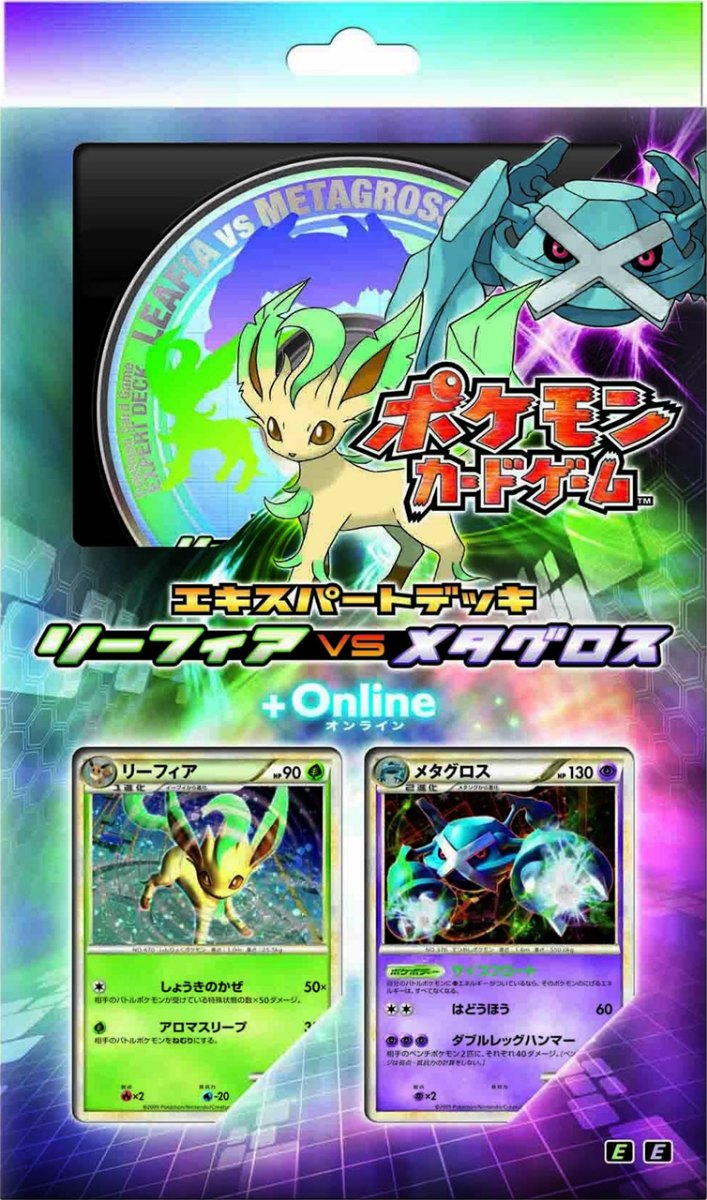
Pokémon Card Game Online was a short-lived Japanese browser service for playing the Pokémon Trading Card Game over the internet. It opened on 20 November 2009, the same day as the Expert Deck Leafeon vs Metagross +Online, a boxed set with two 60-card decks, a rulebook, damage and status counters, a coin, a CD-ROM for the service and the printed access number needed to register an account.
Unlike the international Pokémon Trading Card Game Online that followed in 2011, it had no card collecting at all: everyone played with the same ready-built decks, in ranked or casual matches against random or chosen opponents, or in scheduled knockout tournaments. The service closed on 31 August 2010, a little over nine months after it opened.
The lead Pokémon of the six decks, the five team namesakes and the Groudon that crowned the top rank:
 LeafeonBoxed deck
 MetagrossBoxed deck
 FeraligatrLaunch deck
 DonphanLaunch deck
 HoundoomWith Reviving Legends
 MachampWith Clash at the Summit
 Ho-OhTeam namesake
- LugiaTeam namesake
 EnteiTeam namesake
 SuicuneTeam namesake
 RaikouTeam namesake
- GroudonSSS rank coin
Preservation: what survives and where it can be played
Games like these are among the easiest to lose. Promotional discs went out with the packaging, websites were switched off, and Adobe stopped supporting Flash, which most of these games relied on, at the end of 2020. What survives has mostly been saved by collectors, former staff and volunteer archivists, and in October 2026 the picture is mixed: some of the games run easily through the Flashpoint Archive or the Internet Archive, some need an old operating system or a fiddly setup, and two are partly or wholly gone.
Trivia & facts
- Professor Oak is voiced on the PokéROM discs by Stuart Zagnit, who also voiced him in the anime’s English dub.
- PokéROM’s memory game calls its number tiles “equations”, although most of them are simple sums or single numbers.
- The PokéROM series won a 2002 Computer Software and Games award from the Canadian Toy Testing Council.
-
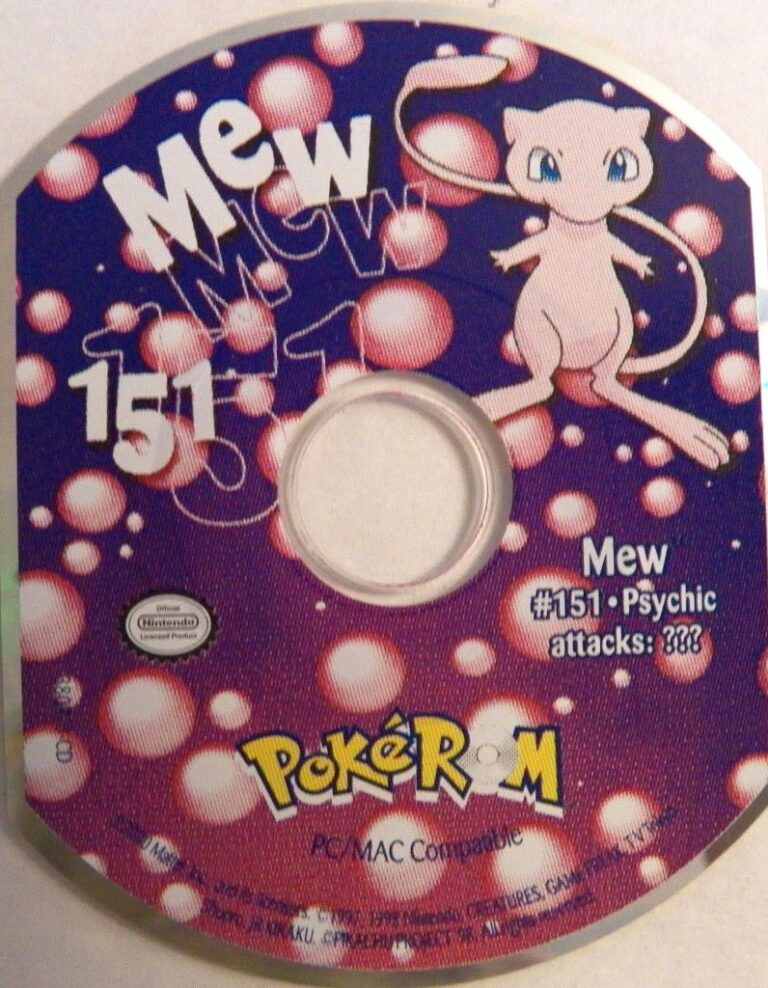
The Mew sampler disc. Mew was not one of the fifty PokéROMs: its disc was a sampler packed with some copies of The ClueFinders 4th Grade Adventures: Puzzle of the Pyramid, another Learning Company title.
- One of the Movie 2000 Adventure’s trivia questions asks how many Pokémon there are, and the answer it wants is 152, counting MissingNo. and Mew but none of the second generation.
- The same game’s advanced questions dig into real promotions from 1998, such as Topeka, Kansas, briefly renaming itself “ToPikachu” and the “Pokémon Patrol” fleet of Volkswagen Beetles.
- The Movie 2000 Adventure spells Electabuzz “Electrabuzz”.
-
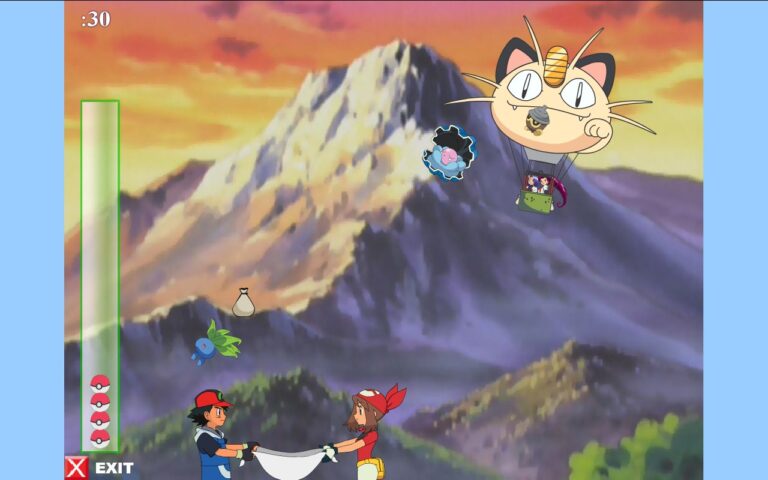
Team Rocket Blast Off, level three. Team Rocket Blast Off asks for 19 points to win each level, and exactly 19 different Pokémon can fall from the balloon.
- On the web version of Poké Ball Launcher, the button for the music video simply resets the game.
-
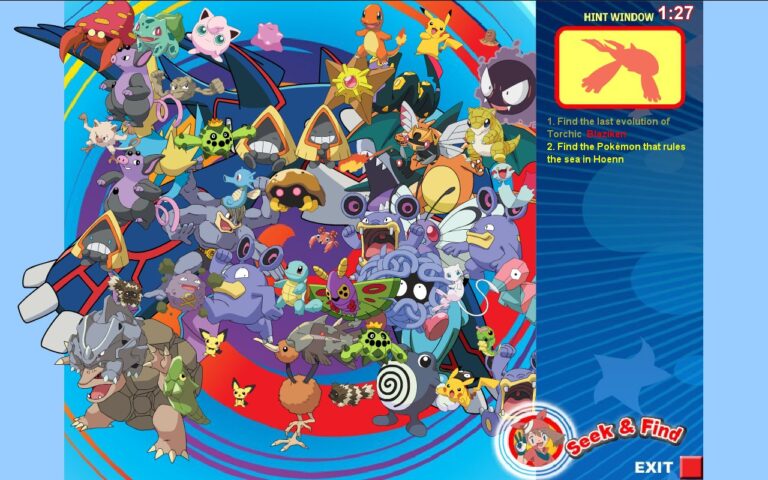
Seek & Find’s fixed level three. Several of Seek & Find’s level-three clues were only true in 2006: Sneasel stopped being the only Dark/Ice Pokémon when Weavile arrived in the fourth generation, and Zubat lost its place at the end of the alphabet to the fifth generation’s Zweilous. Groudon, the answer to the heaviest-Pokémon clue, did hold that record at 950 kg when the game was made.
- Even in Card Game Online’s Japanese title, ポケモンカードゲーム Online, the word “Online” is written in Latin letters.
Further reading
More Pokémon games for PCs, browsers and phones on the site: