  |
|
| Games on this page | Eight: PokéPark Fishing Contest DS (2005) Pokémate (2006) Pokémon Say Tap? (2011) Dancing? Pokémon Band (2015) 99 Quest: Pokémon Version (2015) Pokémon Wave Hello (2019) Pokémon Tower Battle (2019) Pokémon Medallion Battle (2019) |
| Platforms | Nintendo DS(Download Play) · NTT Docomo i-modephones · iOS and Android · Google Pixel 4(Google Play) · Facebook Gaming |
| Makers | The Pokémon Company and Nintendo · Square Enix · Creatures Inc. · Benesse · Google · Bombay Play · GCTurbo |
| Years | 2005 to 2019 (launches); the last closure came in early 2024 |
| Regions | Japan only: Pokémate, Say Tap?, Dancing? Pokémon Band and 99 Quest · Japan and Taiwan: the fishing game · worldwide: Tower Battle · Asia, Europe, North America and Australia: Wave Hello · Asia-Pacific: Medallion Battle |
| Price | Free, apart from Pokémate (210 yen a month) |
| Status today | None can be played or downloaded officially (October 2026) |
Overview
 Not every official Pokémon game has come out on a Nintendo console, or stayed around long enough to be remembered. This page gathers eight small pieces of official Pokémon software that lived somewhere else: on Japanese feature phones, on iPhones and Android handsets, on Google’s Pixel 4, on Facebook and, in the oldest case, on a Nintendo DS only until it was switched off. Most were free, most never left Japan, and nearly all were made to last a season rather than a lifetime.
The makers are as varied as the formats. The oldest, PokéPark Fishing Contest DS, was beamed by DS Download Play to visitors at the 2005 PokéPark in Nagoya and, a year later, in Taipei. Square Enix co-produced Pokémate, a 2006 messaging app for NTT Docomo phones with Pokémon to catch on the side. Creatures is credited with two short-lived rhythm games, Pokémon Say Tap? in 2011 and Dancing? Pokémon Band in 2015, each set to the anime’s ending song of the day, and Benesse, the education company behind Shinken Zemi, turned the times tables into Pokémon battles in 99 Quest. In 2019 Google released Pokémon Wave Hello to show off the Pixel 4’s radar-based Motion Sense, and that December the Indian studio Bombay Play and the Californian studio GCTurbo launched Pokémon Tower Battle and Pokémon Medallion Battle as Facebook Instant Games.
The other thing they share is that none can be obtained officially any more. The rhythm games were only ever meant to be around for a few months, others simply slipped off their storefronts, and one never existed outside a DS’s memory. Taken together they are a snapshot of how The Pokémon Company has used small, throwaway games to promote films, songs, phones and new platforms, and several of them now rank among the hardest pieces of Pokémon history to find.
Quick Answers
The questions people ask most about these little-known Pokémon apps and event games, answered first and explained further down the page.
Can I still play any of these games?
Not officially. Every one has closed or been withdrawn: Pokémate shut down in January 2008, Say Tap? and Dancing? Pokémon Band were only offered for a few months, 99 Quest and Tower Battle have vanished from their storefronts, Wave Hello had left Google Play by June 2022 and Medallion Battle closed in early 2024. The fishing game was only ever a temporary download at events. More →
Which of them came out in English?
Three. Pokémon Wave Hello was released on Google Play in English-speaking countries as well as in Japan and much of Europe, Pokémon Tower Battle could be played in English worldwide on Facebook, and Pokémon Medallion Battle offered English in the Asia-Pacific countries where it launched. The other five were Japanese-only, although the fishing game also had a Traditional Chinese version in Taiwan. More →
Which one is the rarest?
PokéPark Fishing Contest DS. It was only ever beamed wirelessly to DS consoles at PokéPark 2005, Pokémon Center stores and Pokémon Festa 2005, then at PokéPark 2006 in Taipei, and it was wiped the moment the console was switched off. No copy has ever been released to the public. More →

How much did they cost?
Nearly all of them were free. The exception was Pokémate, which cost 210 yen a month on NTT Docomo phones after a free first month. Say Tap?, Dancing? Pokémon Band, 99 Quest and Wave Hello were free downloads, the fishing game was free at the venues, and the two Facebook games were free to play, with optional video adverts that handed out in-game bonuses. More →
What was the first official Pokémon app for mobile phones?
Pokémate, made by Square Enix with The Pokémon Company, which went live on 5 June 2006 for NTT Docomo’s FOMA phones in Japan. The first official Pokémon app for modern touchscreen smartphones came five years later: Pokémon Say Tap?, released free on the Japanese App Store on 15 July 2011. More →

Why were Say Tap? and Dancing? Pokémon Band only around for a few months?
Both were promotions tied to a single season. Say Tap? was built around Pokémon Ieru Kana? BW, the anime’s ending song in 2011, and Dancing? Pokémon Band promoted the 2015 film Hoopa and the Clash of Ages and the Pikachu short shown with it. Dancing? also needed an internet connection, so it stopped working altogether on 29 October 2015. More →
Did Nintendo have a hand in any of them?
Only in PokéPark Fishing Contest DS, which The Pokémon Company published together with Nintendo. When Say Tap? was announced, The Pokémon Company made a point of saying that Nintendo was not involved. The rest came from Square Enix, Creatures, Benesse, Google, Bombay Play and GCTurbo. More →
Timeline
Every launch and closure across the eight games, in date order. Two of them, 99 Quest and Tower Battle, disappeared without a closing date ever being announced, so they have no final row.
| Date | Game | What happened |
|---|---|---|
| 16 May 2005 | PokéPark Fishing Contest DS | Download Play distribution begins at PokéPark 2005 in Nagoya |
| 17 July 2005 | Pokémon Fishing Contest DS | The Pokémon Center version reaches every Pokémon Center store in Japan and Pokémon Festa 2005 |
| 21 August 2005 | Pokémon Fishing Contest DS | Pokémon Festa 2005 stops handing it out |
| 31 August 2005 | PokéPark Fishing Contest DS | Distribution ends at PokéPark 2005 and the Pokémon Center stores |
| 24 April 2006 | Pokémate | Square Enix and The Pokémon Company announce their mobile partnership and its first app |
| 5 June 2006 | Pokémate | The service opens on NTT Docomo FOMA phones |
| 23 June 2006 | PokéPark Fishing Contest DS | A Traditional Chinese version is handed out at PokéPark 2006 in Taipei |
| 24 September 2006 | PokéPark Fishing Contest DS | PokéPark 2006 closes, ending the game’s last distribution |
| January 2008 | Pokémate | The service closes at the end of the month |
| 15 July 2011 | Pokémon Say Tap? | Released free on the Japanese App Store |
| 11 August 2011 | Pokémon Say Tap? | Arrives on Android Market |
| 30 September 2011 | Pokémon Say Tap? | Its App Store run ends |
| 28 October 2011 | Pokémon Say Tap? | Its Android Market run ends |
| 30 June 2015 | Dancing? Pokémon Band | Released free on iOS and Android in Japan |
| 24 July 2015 | Dancing? Pokémon Band | Version 1.1.0 adds Mewtwo and three songs |
| 30 September 2015 | Dancing? Pokémon Band | Downloads end |
| Early October 2015 | 99 Quest | Benesse’s times-tables app arrives on iOS and Android in Japan |
| 29 October 2015 | Dancing? Pokémon Band | The service shuts down at 23:59 and the game stops working |
| 15 October 2019 | Pokémon Wave Hello | Released on Google Play as the Pixel 4 is unveiled |
| 20 November 2019 | Pokémon Medallion Battle | Open beta in the Philippines |
| 23 December 2019 | Tower Battle and Medallion Battle | Both launch on Facebook Gaming: Tower Battle worldwide, Medallion Battle in selected Asia-Pacific countries |
| By June 2022 | Pokémon Wave Hello | Removed from Google Play, almost three years after launch |
| Early 2024 | Pokémon Medallion Battle | The service closes after a little over four years |
PokéPark Fishing Contest DS
| At a glance | PokéPark Fishing Contest DS |
|---|---|
| Japanese title | ポケパーク釣り大会DS (Poképāku Tsuri Taikai DS, “PokéPark Fishing Tournament DS”) |
| Other versions | Pokémon Fishing Contest DS (ポケモン釣り大会DS)at Pokémon Center stores and Pokémon Festa 2005; a Traditional Chinese edition, 神奇寶貝樂園釣魚大賽DS, in Taiwan |
| Platform | Nintendo DS, by DS Download Play only |
| Maker | The Pokémon Company, published with Nintendo |
| Handed out | 16 May to 31 August 2005 at PokéPark 2005, Nagoya · 17 July to 31 August 2005 at Pokémon Center stores, and until 21 August at Pokémon Festa 2005 · 23 June to 24 September 2006 at PokéPark 2006, Taipei |
| Price | Free to download at the venues |
| Status | Only ever a temporary download; no official copy exists |


PokéPark Fishing Contest DS is the oldest game here and by far the hardest to find, because it was never sold or saved anywhere. It existed only as a DS Download Play broadcast: visitors to PokéPark 2005, the temporary Pokémon theme park built in Nagoya during Expo 2005 Aichi, could beam it to their consoles from 16 May 2005. That summer a version renamed Pokémon Fishing Contest DS was sent out at every Pokémon Center store in Japan and at the touring Pokémon Festa 2005, and in June 2006 a Traditional Chinese version followed at PokéPark 2006 in Taipei. Fans sometimes call it PokéPark Fishing Rally DS.
It plays with little more than the A button: cast, wait for a bite, then hammer A to reel the catch in. Every Pokémon landed is turned into points, the setting changes as time passes, and your best five catches can go on a top-50 ranking. Everything else vanished the moment the DS was switched off, which made the game a souvenir that nobody could take home.
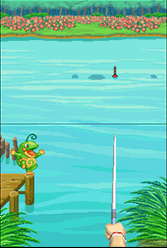
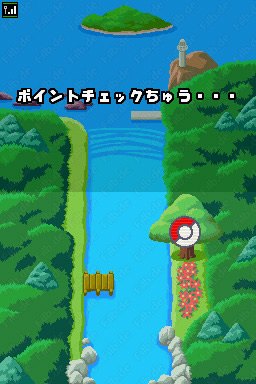
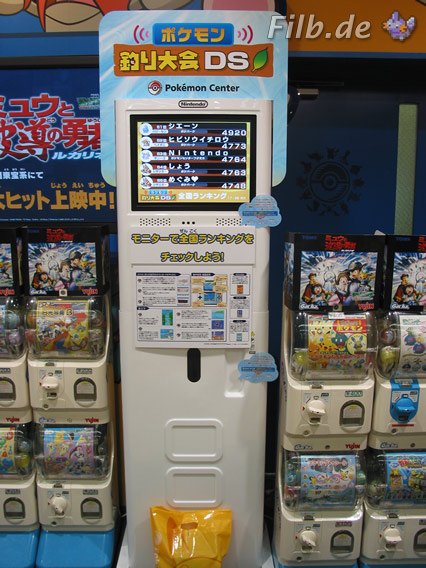


Twenty-five water Pokémon from the first three generations can be hooked, from Magikarp and Gyarados to Feebas and Relicanth:
 Poliwag#060
 Kingler#099
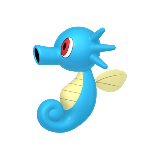 Horsea#116
 Goldeen#118
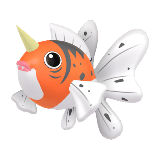 Seaking#119
 Magikarp#129
 Gyarados#130
 Dratini#147
 Dragonair#148
 Chinchou#170
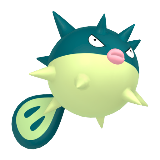 Qwilfish#211
 Corsola#222
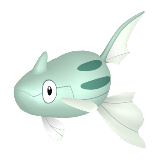 Remoraid#223
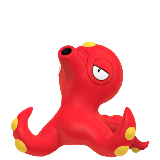 Octillery#224
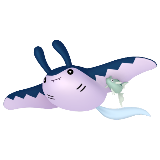 Mantine#226
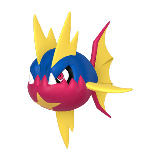 Carvanha#318
 Sharpedo#319
 Wailmer#320
 Barboach#339
 Whiscash#340
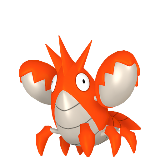 Corphish#341
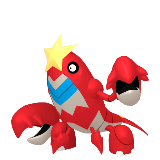 Crawdaunt#342
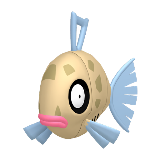 Feebas#349
 Gorebyss#368
 Relicanth#369
Pokémate
| At a glance | Pokémate |
|---|---|
| Japanese title | ポケメ~ト (Pokemēto) |
| Platform | NTT Docomo FOMA phones on i-mode(an i-appli for the 90X and 70X series and the SA800i); pre-installed on the FOMA P902iS |
| Maker | Square Enix with The Pokémon Company; published by Square Enix |
| Released | 5 June 2006 (Japan), after an announcement on 24 April 2006 |
| Price | 210 yen a month after a free first month |
| Status | Closed in January 2008 |

Pokémate was the first official Pokémon application for mobile phones, and the opening product of a mobile partnership between Square Enix and The Pokémon Company announced in April 2006. It went live on 5 June 2006 for NTT Docomo’s FOMA handsets in Japan and was, at heart, a messaging app for primary-school children: a partner Pokémon such as Pikachu told you when new mail had arrived and kept you company while you wrote back to family and friends.
Around the messaging sat a collecting game. On Pokémon Road you threw Poké Balls to catch wild Pokémon, which went into a Pokémon Box that doubled as a Pokédex, with all 386 species of the first three generations to find. Two editions, the ordinary download and one pre-installed on the FOMA P902iS handset, split some of the Pokémon between them. After a free first month the service cost 210 yen a month, and it closed at the end of January 2008.
Pokémon Say Tap?
| At a glance | Pokémon Say Tap? |
|---|---|
| Japanese title | ポケモン言えTAP? (Pokémon Ie TAP?), a pun on the song title Pokémon Ieru Kana?, “Can You Say Them All?” |
| Platforms | iOS (Japanese App Store) and Android (Android Market); a browser version for members of the Pokémon Daisuki Club website |
| Maker | The Pokémon Company, with development credited to Creatures Inc. |
| Released | 15 July 2011 (iOS) · 11 August 2011 (Android), Japan only |
| Needs | iOS 4.3 or later (iPhone 3GS, third-generation iPod touch, iPad and newer) · Android 2.1 or later |
| Price | Free |
| Status | Off the App Store after 30 September 2011 and Android Market after 28 October 2011 |
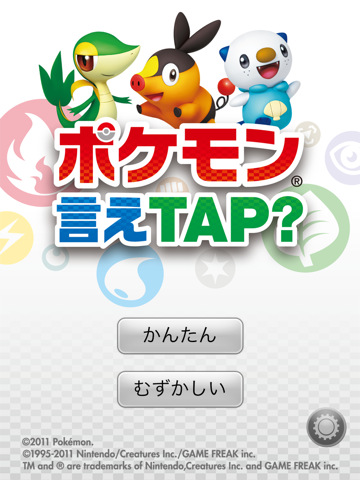
Pokémon Say Tap? was a free rhythm game offered for a few months in the summer of 2011, and the first official Pokémon app made for modern touchscreen smartphones. It is built around Pokémon Ieru Kana? BW, the famous song that reels off Pokémon names, updated for the Pokémon Black and White era, sung by Takeshi Tsuruno and used as the anime’s Japanese ending theme at the time. As the song plays, markers slide towards a target and you tap as each name is sung, and a well-timed tap flips up the Pokémon’s card from the Pokémon Trading Card Game.
Three misses end a run, and reaching Stunfisk, the last Pokémon in the song, clears it. The Pokémon Company presented it as a promotional app for the song and the card game rather than a full video game, and stressed when it was announced that Nintendo had no part in it. It reached the App Store on 15 July 2011 and Android Market on 11 August, and had been withdrawn from both by the end of October.
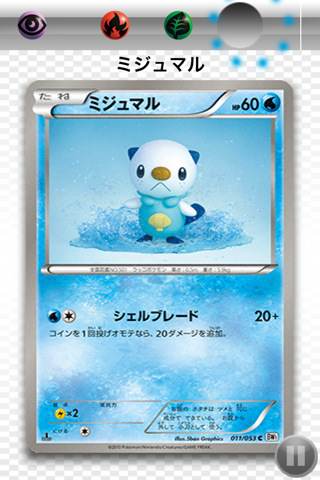

 StunfiskThe song’s last name
Dancing? Pokémon Band
| At a glance | Dancing? Pokémon Band |
|---|---|
| Japanese title | おどる?ポケモンおんがくたい (Odoru? Pokémon Ongakutai) |
| Platforms | iOS and Android |
| Maker | Creatures Inc. for The Pokémon Company |
| Released | 30 June 2015 (Japan) · version 1.1.0 on 24 July 2015 |
| Price | Free |
| Status | Downloads ended on 30 September 2015; the service shut down at 23:59 on 29 October 2015 |

Dancing? Pokémon Band was a free rhythm game released in Japan on 30 June 2015 to promote that summer’s film, Hoopa and the Clash of Ages, and Pikachu and the Pokémon Band, the short shown before it. Its song is Gao Gao All Stars, sung by Little Glee Monster, which was both the short’s theme and the anime’s ending at the time.
Notes drop towards three Pokémon faces at the foot of the screen, and tapping each face as its note arrives makes that Pokémon dance and call out its cry, so a good run turns the song into a chorus of Pokémon voices. The game was always meant to be temporary: downloads stopped on 30 September 2015 and the servers went off on 29 October, after which even installed copies would not run.
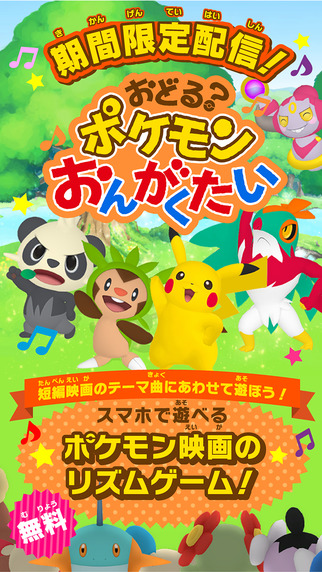
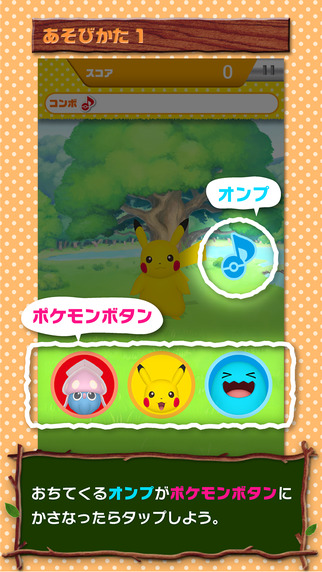
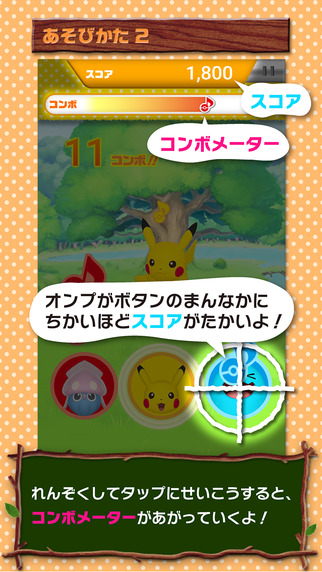
The playable dancers, three of them added by password or update; fourteen more Pokémon, from Chimchar to Marshtomp, watch from the audience:
 Pikachu#025
 Pancham#674
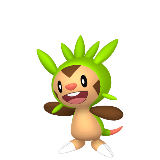 Chespin#650
 Hawlucha#701
 Braixen#654
 Inkay#686
 Wobbuffet#202
 Frogadier#657
 HoopaPassword dancer
 MeowthPassword dancer
 MewtwoAdded in 1.1.0
99 Quest: Pokémon Version
| At a glance | 99 Quest |
|---|---|
| Japanese title | 九九クエスト~小学生算数アプリ ポケットモンスターバージョン~ (Kuku Kuesuto: Shōgakusei Sansū Apuri Poketto Monsutā Bājon) |
| English title | 99 Quest – Elementary School Mathematics App: Pokémon Version |
| Platforms | iOS and Android |
| Maker | Benesse Corporation |
| Released | Early October 2015, Japan only |
| Price | Free, with no adverts |
| Status | No longer on the App Store or Google Play |

99 Quest is a free learning app from Benesse, the education company behind the Shinken Zemi correspondence courses, made to help Japanese primary-school children master the times tables. The 99 is a pun: kuku, the Japanese word for the tables, literally means “nine nine”, because they run from 1 × 1 to 9 × 9. Here, drilling them becomes a string of Pokémon battles.
With Pikachu as your partner you take on trainers whose Pokémon each carry a multiplication question, answered with number buttons around the edge of the screen. A right answer sends Pikachu into an attack that knocks down the opponent’s HP; only letting the timer run out lets the opponent hit back, so a wrong guess can be put right while time remains. Each trainer in a gym covers one row of the tables, and later opponents include Team Rocket and the Elite Four, with tougher trainers leaving less time to answer. All 67 stages were free and could be played offline.
Pokémon Wave Hello
| At a glance | Pokémon Wave Hello |
|---|---|
| In Japan | Released under the same English title |
| Platform | Android (Google Play), built for the Motion Sense radar of the Google Pixel 4and Pixel 4 XL |
| Maker | Google with The Pokémon Company; published by Google |
| Released | 15 October 2019, the day the Pixel 4 was unveiled, in Japan, North America, much of Europe, Australia and parts of Asia |
| Price | Free |
| Rating | ESRB E · PEGI 3 · GSRR 6+ (Taiwan) |
| Status | Removed from Google Play by June 2022 |

Pokémon Wave Hello was a short, free interactive demo made to show off Motion Sense, the radar-based gesture control that Google built into the Pixel 4 with its Soli chip. Released on Google Play when the phone was unveiled on 15 October 2019, it doubled as a trailer of sorts for Pokémon Sword and Shield, which reached Nintendo Switch a month later.
Five Pokémon appear one at a time: Pikachu and Eevee, then Galar’s three new first partners, Grookey, Scorbunny and Sobble. Each asks for one or two simple gestures made in the air above the phone, such as a wave hello or a hand reaching in to give it a pat, and reacts when you get it right. Once you have met all five, a ring of Poké Balls lets you call any of them back to play again and read a little about it. Phones without Motion Sense could get through it with taps on the screen instead, but only a Pixel 4 showed what it was really for.
No closing date was ever announced. By June 2022 Google had quietly taken the app off Google Play, almost three years after launch, although the Pixel 4’s separate Pokémon live wallpapers could still be downloaded through the phone’s wallpaper settings at that point.
- Pikachu#025
 Eevee#133
 GrookeyGrass first partner
 ScorbunnyFire first partner
 SobbleWater first partner
Pokémon Tower Battle
| At a glance | Pokémon Tower Battle |
|---|---|
| Platform | Facebook Gaming(Instant Games), in web browsers and the Facebook app |
| Maker | Bombay Play, for The Pokémon Company |
| Released | 23 December 2019, worldwide, after a soft launch in the Asia-Pacific region |
| Players | 2, in real-time online matches |
| Price | Free to play, with optional video adverts |
| Status | No longer on Facebook; no closing date was announced |

Pokémon Tower Battle was a free stacking game made by the Indian studio Bombay Play and launched worldwide on Facebook Gaming on 23 December 2019, alongside Pokémon Medallion Battle. It is a Pokémon version of Animal Tower Battle, Yuta Yabuzaki’s mobile game in which players take turns piling animals on top of one another.
Each turn deals you a random piece of Pokémon artwork to drop onto a floating island, with twenty seconds to turn it and choose where it lands. The tower gets shakier with every drop, and whoever sends a Pokémon tumbling off the island loses. Matches last only a few minutes and could be played in real time against Facebook friends or random opponents.
Announcing the two Facebook games together, The Pokémon Company’s chief executive put the idea simply:
Launching these games through Facebook will allow people all over the world to experience Pokémon in digital form.
— Tsunekazu Ishihara, December 2019
Among the Pokémon you could be dealt, each with a suitably awkward outline:
- Meowth#052
 Slowpoke#079
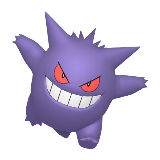 Gengar#094
 Koffing#109
 Pinsir#127
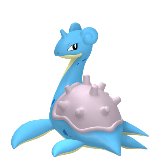 Lapras#131
Pokémon Medallion Battle
| At a glance | Pokémon Medallion Battle |
|---|---|
| Platform | Facebook Gaming (Instant Games) |
| Maker | GCTurbo, for The Pokémon Company |
| Released | 23 December 2019 in selected Asia-Pacific countries, among them Hong Kong, Taiwan and Malaysia, after an open beta in the Philippines from 20 November 2019 |
| Players | 1-on-1 online battles; Raids for up to six |
| Price | Free to play, with optional video adverts |
| Status | Closed in early 2024 |
Pokémon Medallion Battle was a free card-battle game for Facebook Gaming, made by the Californian studio GCTurbo. After an open beta in the Philippines from 20 November 2019, it launched on 23 December in selected Asia-Pacific countries, the same day as Tower Battle, and kept going for a little over four years before it closed in early 2024.
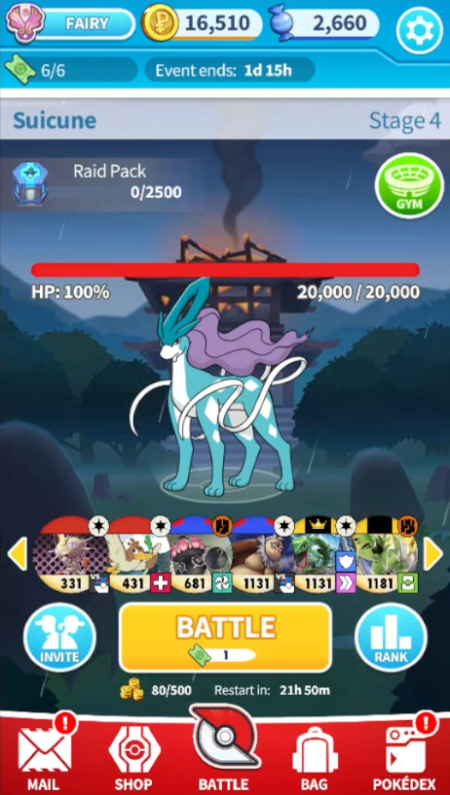
Pokémon came as collectable medallions, each with a Combat Power value, a type borrowed from the Pokémon Trading Card Game and often a special power. You built a team of six and laid them face down in order of CP; each turn one medallion from each side was revealed, powers went off and the higher CP took the point, with three points winning the match. Ranked wins raised your Rating and earned badges at a run of gyms, Legendary and Mythical bosses turned up in weekly Raids, and new Pokémon were added every month.
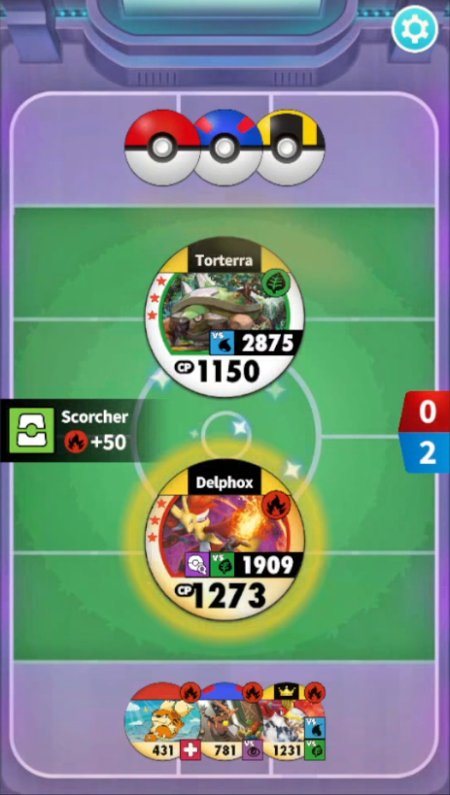
A few of the medallions that mattered most: Charizard was a special medallion found only in Star, Raid and League Packs, and Legendary and Mythical Pokémon headlined the Raids:
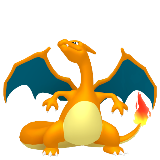 CharizardSpecial medallion
- EeveeEvolves at random
- MewtwoRaid boss
 SuicuneRaid boss
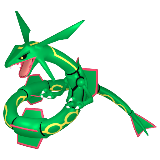 RayquazaRaid boss
 GenesectRaid boss
 XerneasRaid boss
Delisted and lost: what survives of each game
Small promotional games are always the first to vanish. None of these eight was ever sold on a cartridge or disc, most relied on a server or a storefront, and the two rhythm games were only ever meant to be around for a few months. What is left is a scatter of screenshots, logos and press coverage, plus, in a couple of cases, hardware that collectors are still trying to coax data out of. Here is where each one stands.
Trivia & facts
- At Docomo’s 902iS handset launch on 11 May 2006, Square Enix had a game on two of the phones: the P902iS came with Pokémate built in, and the N902iS with Dragon Quest Mystery Dungeon Mobile.
-
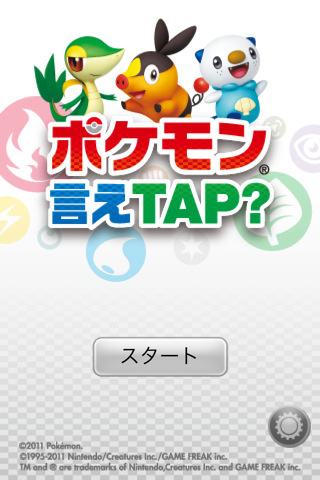
The title screen on iPod touch. The Japanese title of Say Tap?, ポケモン言えTAP?, swaps the “ru kana” at the end of the song title Pokémon Ieru Kana? for the English word TAP.
- Dancing? Pokémon Band went live 18 days before the film it was promoting: Hoopa and the Clash of Ages opened in Japan on 18 July 2015, with Pikachu and the Pokémon Band shown before it.
-

The in-app information screen. Dancing?’s three passwords were おでまし for Hoopa, ろけっとだん (roketto-dan, Team Rocket) for Meowth and ぽけてれ for a special Pikachu, and they were given out on the TV programmes Pokémon Get TV and Oha Suta.
- Gao Gao All Stars was written and composed by Manabu Marutani, and the special dance version added to Dancing? in July uses the same choreography as the anime’s ending sequence.
- Pokémon Wave Hello was no secret at launch: the news site 9to5Google had revealed it on 2 October 2019, almost two weeks before Google unveiled the Pixel 4.
- Wave Hello was not the only game made to show off Motion Sense: Headed South, by the studio ustwo, was another, and it was still on Google Play after Wave Hello had gone.
- Both Facebook games were tried out in the Philippines first: Medallion Battle opened a beta there on 20 November 2019, and Tower Battle’s Asia-Pacific soft launch began there too.
- Medallion Battle’s seven types, Colorless, Grass, Fire, Water, Lightning, Fighting and Psychic, are the seven types of the original Pokémon Trading Card Game rather than the eighteen of the video games.
- Both PokéParks were temporary: the 2005 park stood on the site of the former Sasashima freight station in Nakamura Ward, Nagoya, as a satellite of Expo 2005 Aichi, and the 2006 park in Taipei on the site of today’s Taipei Children’s Amusement Park in Shilin District.
- Feebas, famously hard to track down in Ruby and Sapphire, is one of the 25 Pokémon you can hook in the fishing game, and the only Dragon types in its pool are Dratini and Dragonair.
Further reading
More Pokémon games for phones, tablets and the web on the site: