  |
|
| Titles | Pokémon Rumble Rush ポケモンスクランブルSP (Pokémon Sukuranburu SP) Working title: Pokéland (ポケランド) |
| Platforms | Android (Google Play) · iOS (App Store) – free download, always online; Android 4.4 or later, iOS 9 or later |
| Developer | Ambrella (level design support from Sarugakucho) |
| Publisher | The Pokémon Company (The Pokémon Company International outside Japan) |
| Director | Yoshihiro Hatta |
| Producers | Yuichi Arita (development) · Takato Utsunomiya and Kazunori Sugiura (general) · Tsunekazu Ishihara (executive) |
| Music | Miki Obata (sound) |
| Players | 1 (online event rankings) |
| Genre | Action RPG / beat ’em up |
| Business model | Free-to-start, with in-app purchases (Poké Diamonds) |
| Seas | 23, across 25 events from May 2019 to July 2020, plus a tutorial area |
| Coin Rush | 20 ranks, from Trainee (300 CP) to Premier President (9,500 CP) |
| Released | 15 May 2019 (Android, Australia) · 22 May 2019 (Android, worldwide) · 23 July 2019 (iOS, worldwide) |
| Alpha tests | As Pokéland (Android, Japan): 31 May – 9 June 2017 · 17–27 October 2017 |
| Service ended | 22 July 2020, 10:59 JST (announced 15 April 2020) |
| Rating | ESRB E · PEGI 7 · ACB PG · 7+ in South Korea |
| Predecessor | Pokémon Rumble World (Nintendo 3DS, 2015) |
| Successor | None yet – the latest Rumble game as of 2026 |
| Sales | No download or revenue figures published |
Overview
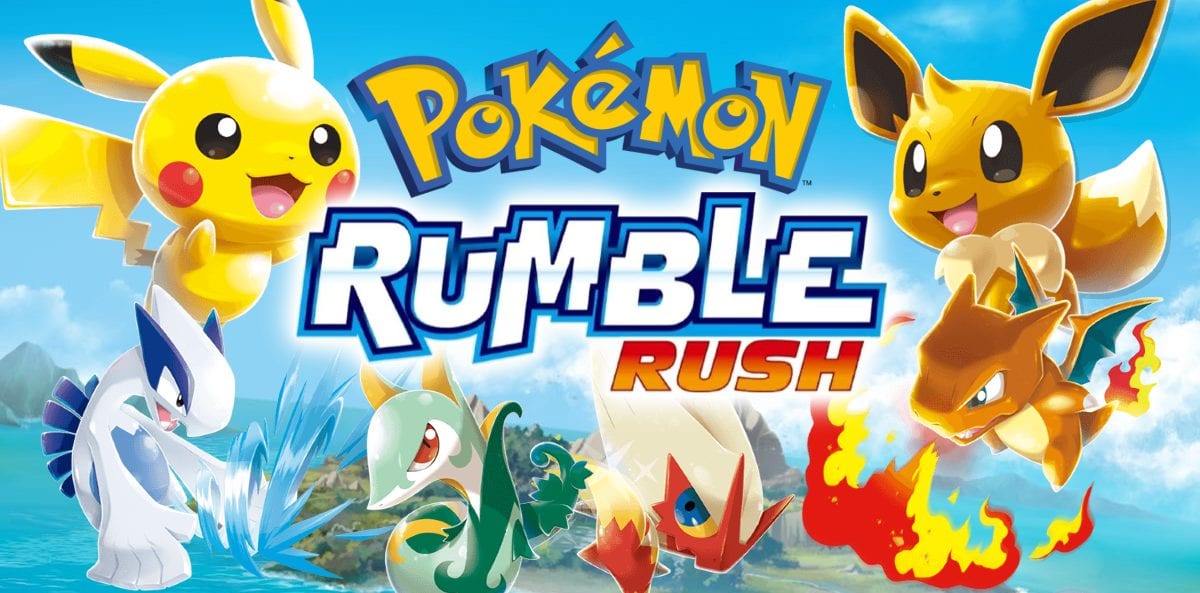 Pokémon Rumble Rush was a free-to-start action game for Android and iOS, developed by Ambrella and published by The Pokémon Company. Known in Japan as Pokémon Scramble SP, it was the fifth game in the Rumble series, following Pokémon Rumble on WiiWare, Pokémon Rumble Blast on the Nintendo 3DS, Pokémon Rumble U on the Wii U and Pokémon Rumble World on the 3DS eShop, and it was the first of them to appear on hardware not made by Nintendo.
Its road to release was an unusual one. The project first appeared as Pokéland, a working title tested only in two Japanese Android alpha tests in 2017, and then went quiet for almost two years. It resurfaced without warning on 15 May 2019, when The Pokémon Company International announced Pokémon Rumble Rush and put it live on Google Play in Australia on the same day. The worldwide Android release followed on 22 May 2019 and the iOS version on 23 July 2019.
As in the earlier Rumble games, every Pokémon is a wind-up toy. Represented by their Mii, players send a toy Pokémon along short stages that it walks through by itself: a tap of the screen makes it attack, and beaten wild Pokémon can join the collection. Stages end in Boss fights, and each Sea is capped by a ladder of timed Super Boss battles against ever-higher Combat Power targets. Bosses drop ore, which is refined in real time into power gears and summon gears, and the Seas themselves changed with every event, usually every two weeks, alongside Coin Rush, daily stages and, from March 2020, a Battle Royale mode.
Rumble Rush is remembered mostly as a curiosity: the only Rumble game made for smartphones and one of the shortest-lived Pokémon apps. Critics found it charming but thin and grind-heavy, it never climbed far up the grossing charts, and on 15 April 2020 The Pokémon Company announced its closure. The servers went offline on 22 July 2020, just over a year after the global launch, and the Rumble series has had no new entry since.
A world full of uncharted islands!
Aided by strong Pokémon and a spirit of discovery, journey through uncharted islands that have many Pokémon!
Enjoy fast-paced gameplay on the go
It’s easy to control your Pokémon with one hand. Clear stages by controlling your Pokémon as it moves forward. If you see enemy Pokémon, you can attack by just tapping the screen. Tap to engage in exciting gameplay action!
The islands and seas explored during your adventures change every two weeks
You may find unfamiliar and stronger Pokémon on new islands. So, journey through various islands and seas and collect more and more Pokémon!
Upgrade Pokémon of your choice
You’ll sometimes receive ore when you clear a stage. Refine ore to get power gears that you can use to make your Pokémon stronger. You may even be able to refine ore into a summon gear that calls forth a Pokémon to use a powerful move. Use power gears and summon gears to help your favorite Pokémon do well!
Test your strength using the Pokémon you’ve collected
Occasionally, you can earn rewards by working your way through the Super Boss Rush. You’ll need many different types of strong Pokémon to win each Super Boss Rush. Harness the power of the Pokémon you’ve collected from various islands and seas to defeat the powerful Super Bosses.
— Official description
Quick Answers
The questions people ask about Pokémon Rumble Rush, answered first and explained further down the page.
Can you still play Pokémon Rumble Rush in 2026?
No. Rumble Rush needed a permanent internet connection, and its servers closed on 22 July 2020 at 10:59 Japan time (01:59 UTC). The app can no longer be downloaded from Google Play or the App Store, it never had an offline mode, and no re-release or data transfer was offered, so even copies still installed on a phone cannot be played. More →
Was Pokémon Rumble Rush free, and was it pay-to-win?
It was free to download and play. Poké Diamonds, the premium currency, cost from $0.99 for 100 to $24.99 for 2,500 and mostly bought faster ore refining, extra Guide Feathers and more storage. Daily challenges and event rankings also paid out Diamonds, so money mainly bought time and convenience, although a few bundles came with a gear. More →
Is Pokémon Rumble Rush on Nintendo Switch?
No. Rumble Rush came out only on Android phones and tablets and on iPhone and iPad, and it never reached Switch or any other console. It was the only Rumble game made for smartphones; the four before it appeared on WiiWare, Nintendo 3DS and Wii U, and none of those has been re-released on Switch either. More →
How did the Seas work in Pokémon Rumble Rush?
Islands were grouped into Seas that changed with each event, normally every two weeks. Each Sea was themed on a headline Pokémon, such as Charizard, Jirachi or Lugia, and a handful of types. Guide Feathers uncovered new stages to explore, and catching enough different species in a Sea unlocked its tougher Super Bosses. More →
Does Pokémon Rumble Rush connect to Pokémon HOME or other games?
No. The toy Pokémon caught in Rumble Rush never left the app, and nothing could be sent to Pokémon HOME or the main series. Its only outside link was a Nintendo Account, which backed up progress, put the player’s Mii on screen and earned My Nintendo Platinum Points that could be swapped for in-game rewards. More →
What was Pokéland?
Pokéland (ポケランド) was the working title of Rumble Rush. Two Android alpha tests ran in Japan under that name, from 31 May to 9 June 2017 and from 17 to 27 October 2017; the first offered six islands, 52 stages and a 15-floor Champion Tower. An iOS test planned for the first half of 2018 never took place. More →

When did Pokémon Rumble Rush shut down, and what happened to Poké Diamonds?
The closure was announced on 15 April 2020, and Poké Diamond sales stopped the same day. Diamonds already owned could still be spent until the servers closed on 22 July 2020. The last new Sea, themed on Greninja and Kalos, opened on 6 May 2020, and a Final event then brought back ten earlier Seas. More →
Is there a sequel to Pokémon Rumble Rush?
No. Rumble Rush was the fifth Rumble game, after Pokémon Rumble (2009), Pokémon Rumble Blast (2011), Pokémon Rumble U (2013) and Pokémon Rumble World (2015), and it is still the most recent. No new Rumble game has been announced since its servers closed in July 2020. More →
Story
Rumble Rush keeps its story light. The player is an adventurer, shown on screen as their own Mii, who sets out across a world of uncharted islands where toy Pokémon live. Rather than serving a king, as the hero of Pokémon Rumble World does, the adventurer takes instructions from the Adventurers Club, which hands out tasks, daily challenges and tournaments: Super Boss Rush at first, and Coin Rush later on.
Every journey begins in a tutorial area, where the adventurer learns to guide a Pokémon through stages and faces a short chain of Super Bosses, most of them unlocking more Pokémon to catch when beaten. From there the adventure moves out to sea. Each event opened a new Sea built around a headline Pokémon, from Charizard’s island home at launch to Legendary and Mythical Pokémon such as Jirachi, Lugia, Rayquaza and Arceus, and the club ranked adventurers by the strength of their best Pokémon.
There is no final villain and no closing scene. The last event, which began on 10 June 2020, reopened ten earlier Seas one by one as players caught more Pokémon, and the adventure simply stopped when the servers went offline on 22 July 2020.
The tutorial Super Bosses
Five Super Bosses guard the tutorial, each with a target CP that the player’s team has to match:
 RaticateTarget CP 100
 IvysaurTarget CP 130
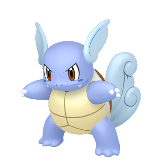 WartortleTarget CP 180
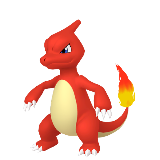 CharmeleonTarget CP 230
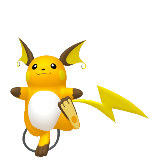 RaichuTarget CP 300
Beating Raticate unlocks Butterfree and Raticate to catch, Ivysaur adds Ivysaur and Gloom, Wartortle adds Wartortle and Poliwhirl, and Charmeleon adds Charmeleon and Graveler. Raichu brings no new Pokémon, but defeating it completes the tutorial and opens up the event Seas.
The Seas, events and the end of service
Rumble Rush ran to a timetable. Rather than one fixed map, its islands were grouped into Seas that opened and closed with each event, normally after two weeks and now and then after three. Every Sea had a headline Pokémon, a handful of focus types, its own gears and a ladder of Super Bosses, and adventurers were ranked on their strongest catches before the next Sea arrived. Twenty-three Seas came and went in just over a year, and a Final event then brought ten of them back for the last six weeks of the service.
- 23Seas, over 25 events
- 2 weeksthe usual life of a Sea
- 50Super Bosses in the largest Seas
- 13,010CP: the toughest Super Boss, Zygarde
Every Sea, in order
Every event in the game’s 14 months, with its Sea, dates and headline Pokémon, and the Pokémon and types it leaned on:
| Sea | Event | Dates | Headline Pokémon | Notable Pokémon and types |
|---|---|---|---|---|
| Charizard Sea | Charizard Island’s Home | 15 May – 5 June 2019 | Charizard | Kanto Pokémon; Super Bosses include Venusaur, Blastoise, Alakazam and Gyarados |
| Dragonite Sea | Dragonite’s Stormy Island | 5–19 June 2019 | Dragonite | Dragon and Fairy types, with Dragonair and Gardevoir gears |
| Snorlax Sea | Snorlax Eats Everything | 19 June – 3 July 2019 | Snorlax | Fighting, Normal and Ice types, with Munchlax, Machoke and Machamp gears |
| Pinsir Sea | Caught in Pinsir’s Grip | 3–17 July 2019 | Pinsir | Bug, Dark, Rock, Ghost and Grass types, with Zorua and Zoroark gears |
| Zapdos Sea | Zapdos Takes Flight! | 17 July – 7 August 2019 | Zapdos | Electric and Ground types, with Dedenne, Diglett and Dugtrio gears |
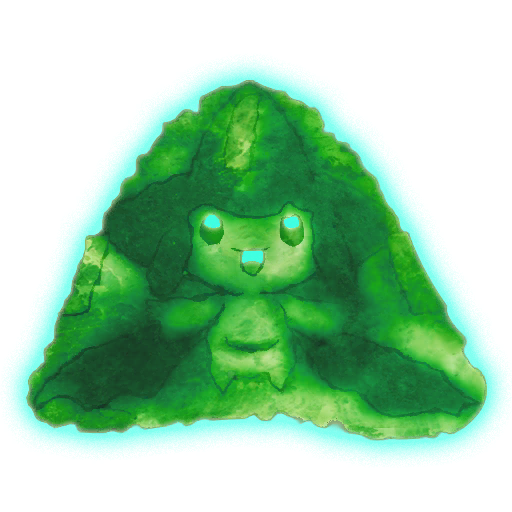
| Jirachi Sea | Jirachi and the Starry Sky | 7–21 August 2019 | Jirachi | Regirock, Regice, Registeel, Metagross, Lucario and Lapras |
| Gengar Sea | Gengar’s Cavernous Hideout | 21 August – 4 September 2019 | Gengar | Psychic, Dark, Fighting, Normal and Ghost types |
| Celebi Sea | Celebi’s Forest | 4–18 September 2019 | Celebi | Grass, Water, Poison, Ground and Fire types |
| Castform Sea | Castform and the Legendary Islands | 18 September – 2 October 2019 | Castform | Flying, Fire, Rock, Fighting and Ice types |
| Garchomp Sea | Garchomp’s Sonic Showdown | 2–16 October 2019 | Garchomp | Fire, Water, Grass and Ground types |
| Entei Sea | Entei’s Enigmatic Island | 16–30 October 2019 | Entei | Fire, Rock, Psychic, Fighting and Bug types |
| Mimikyu Sea | Mimikyu’s Spooky Party | 30 October – 13 November 2019 | Mimikyu | A Halloween special: Ghost, Psychic, Poison and Dark types |
| Aegislash Sea | Aegislash: Full Regalia | 13–27 November 2019 | Aegislash | Ice, Steel, Flying, Normal and Fire types |
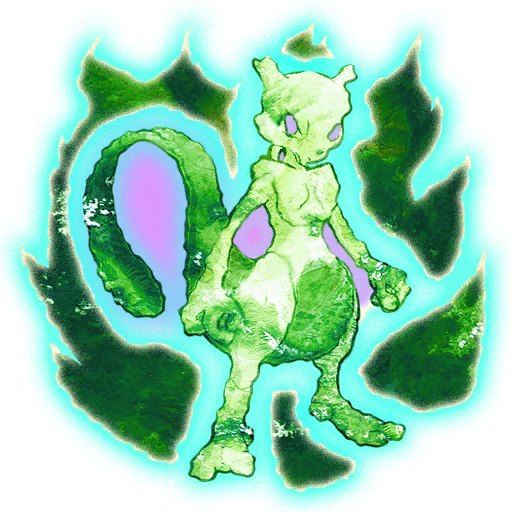
| Mewtwo Sea | Golisopod and the Super Gene Cave | 27 November – 11 December 2019 | Golisopod and Mewtwo | Pikachu and Eevee; Bug, Psychic, Water, Poison and Fire types |
| Rowlet Sea | Happy Owlidays! | 11–25 December 2019 | Rowlet | The Decidueye line and other Alola Pokémon, with a festive theme |
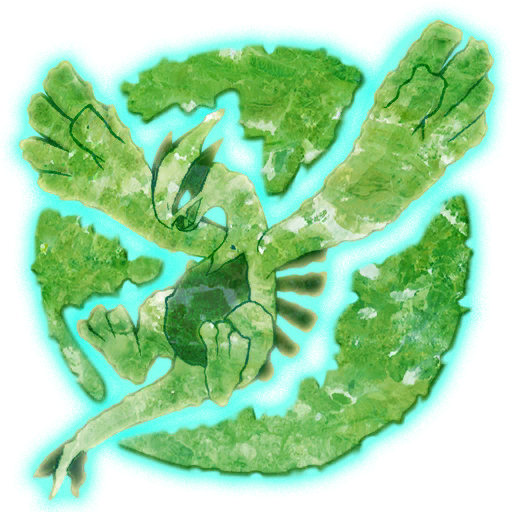
| Lugia Sea | Legendary Dawn: Lugia | 25 December 2019 – 8 January 2020 | Lugia | Flying, Fighting, Water, Electric and Ground types |
| Buzzwole Sea | Silvally vs Buzzwole | 8–22 January 2020 | Buzzwole and Silvally | Type: Null, Kommo-o, Alolan Persian, Decidueye and Bewear |
| Zygarde Sea | Sylveon and the Eco Guardian | 22 January – 5 February 2020 | Zygarde and Sylveon | Ground, Poison, Fairy, Dragon and Dark types |
| Butterfree Sea | Latias and Gemini Island | 5–19 February 2020 | Latias | Psychic, Bug, Fire, Water and Poison types |
| Charizard Sea (return) | Charizard and Lugia’s Island Home | 19 February – 4 March 2020 | Charizard and Lugia | Suicune, Entei, Raikou, Celebi and Tyranitar, plus 15 Mighty Super Bosses |
| Bulbasaur Sea | Ho-Oh & 151 Pals | 4–25 March 2020 | Ho-Oh | Kanto Pokémon, over three weeks |
| Rayquaza Sea | Sky-High Rayquaza, Descend! | 25 March – 15 April 2020 | Rayquaza | Hoenn Pokémon, over three weeks |
| Arceus Sea | Arceus and the Isle of Myths | 15 April – 6 May 2020 | Arceus | Sinnoh Pokémon, over three weeks |
| Greninja Sea | Greninja and the Wonders of Kalos | 6–27 May 2020 | Greninja | Kalos Pokémon, including Xerneas, Yveltal, Diancie and Volcanion; Zygarde was the top Super Boss at 13,010 CP |
| Ten returning Seas | Final event | 10 June – 22 July 2020 | – | Opened with the Charizard Sea; the Buzzwole, Garchomp, Jirachi, Celebi, Mimikyu, Entei, Zygarde, Mewtwo and Rowlet Seas unlocked as players caught Pokémon |
 Golisopod and
 Mewtwo
 Silvally
 Ho-Oh
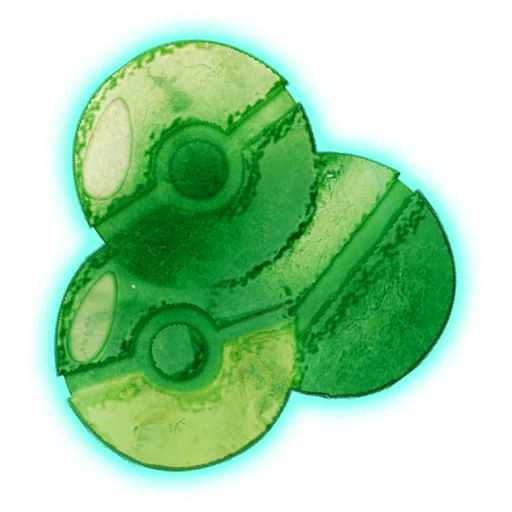
Some of the Sea maps, as they looked during their events:

The 2020 Seas and the Final event

The end of service
On 15 April 2020, the day the Arceus Sea opened, an in-game notice announced that Rumble Rush would close on 22 July 2020. Poké Diamond sales stopped immediately, although Diamonds already owned could still be spent, and the events carried on: one last new Sea for Greninja in May, then the Final event from June.
The servers shut down on 22 July 2020 at 10:59 Japan time (01:59 UTC). Because the game could not run offline, it stopped working at that moment, just over 14 months after the Australian launch.
Gameplay
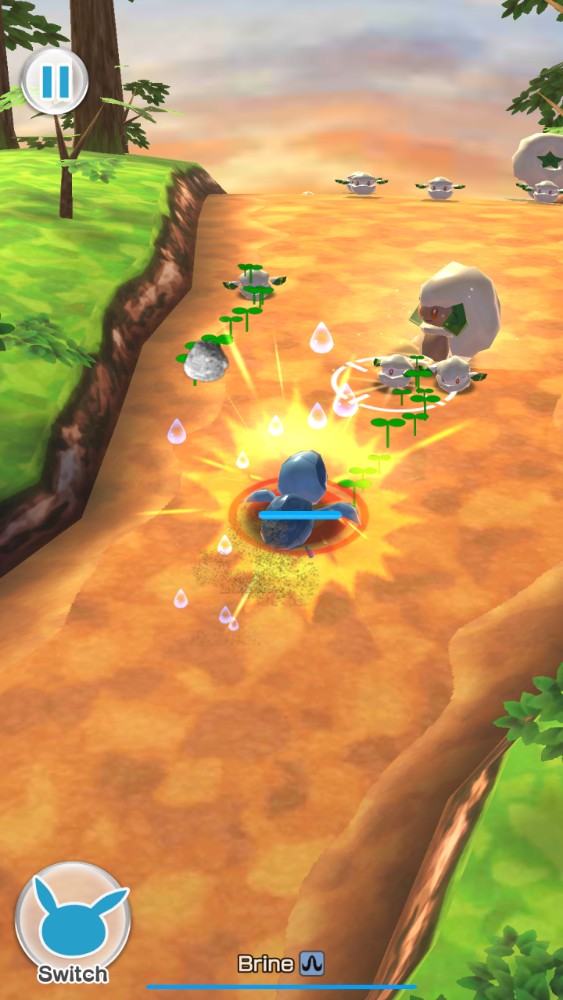
Rumble Rush strips the series’ brawling down to one finger. The toy Pokémon does the walking, the player does the tapping, and everything else, from finding stages to strengthening Pokémon, runs on timers, feathers and ore.
Stages, catching and exploring
 Controls and stagesEach stage is a short, linear run in which the chosen toy Pokémon walks forward on its own, so the game can be played one-handed. A tap makes it attack, holding the screen charges a stronger strike and a swipe dodges, and a strong enough Pokémon can clear stages unaided on auto-battle. Wild Pokémon block the way and most stages end with a Boss. Pokémon can be swapped instantly: in Super Boss battles a swap pauses the countdown, but in tournament rounds the clock keeps running. From November 2019 the results screen also showed the damage dealt per second.
 Guide Feathers and explorationNew stages are found by spending Guide Feathers to search the current island. Up to five can be held at once, and beating Super Bosses tops them up; from version 1.3.1 in October 2019, 10 Poké Diamonds could stand in for a feather. Players could name the stages they discovered, and the island map showed hot-air balloons left by other adventurers: tapping one led to a stage someone else had cleared, which also counted towards a daily challenge. A hint feature in towns listed the Pokémon living in each area.
Ore, gears and the refinery
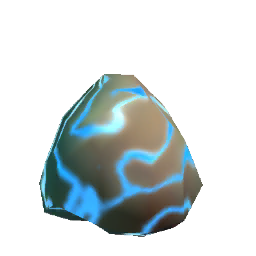 Ore and the refineryBosses and Super Bosses drop ore in three grades, Ore, Unusual Ore and Rare Ore, and the rarer the grade, the more it yields. Ore has to be refined in real time, which takes anything from about 30 minutes to 10 hours, and the refinery works on one piece at a time. It could hold only three pieces at launch, rising to six with version 1.2.0 in July 2019. Refining produces power gears, summon gears, upgrade kits and Coins. Poké Diamonds speed things up, and critics complained that the short queue pushed players to throw ore away or pay.
 Power and summon gearsGears are the main way to make Pokémon stronger. Power gears raise stats and summon gears call in an ally to unleash a powerful move mid-stage; each Pokémon carries up to two power gears and one summon gear. All gears start at level 1 and are levelled up with matching upgrade kits, which come from refining or from handing unwanted gears to the club. The November 2019 update added Pokémon power gears that greatly boost particular species, and style gears such as Grappler, which deals more damage the closer a Pokémon is to its foe; the Socket Plus feature followed in March 2020.
Super Bosses and Battle Royale
Adventurer Rank and daily goals
Shop and Poké Diamonds
Poké Diamonds were the premium currency. They paid for faster refining, extra Guide Feathers and more storage, but they also trickled in for free from daily challenges and event rankings, so spending mostly bought time. These were the Diamond packs and bundles, at US prices; all sales ended on 15 April 2020:
| Pack | Price | What it gave |
|---|---|---|
| 100 Poké Diamonds | $0.99 | – |
| 300 Poké Diamonds | $2.99 | – |
| 1,000 Poké Diamonds | $9.99 | – |
| 2,500 Poké Diamonds | $24.99 | – |
| Starter Set | $3.99 | 400 Diamonds, the Spark Gear (Pikachu) and an extra refining slot for 24 hours |
| Plenty of Pokémon Set | $3.99 | 400 Diamonds and two extra Pokémon slots for three days |
| Really Refining Set | $5.99 | 600 Diamonds and an extra refining slot for three days |
| Poké Diamond Deal Set | $7.99 | 800 Diamonds, then 80 a day for 30 days, with 20% faster movement |
 Pack
 2,500 Poké Diamonds
 Starter Set
Nintendo Account and My Nintendo
Linking a Nintendo Account saved progress to the cloud, put the player’s Mii on screen as their avatar and earned My Nintendo Platinum Points: 300 for linking, then 50, 100 or 150 a week for refining 5, 10 or 30 ores. The points could be swapped for rewards in the game:
| Reward | Platinum Points |
|---|---|
| 100 Poké Diamonds | 300 |
| A Grass, Fire or Water gear | 50 each |
| 1,000 Coins | 100 |
| Refining Ticket | 100 |
 Refining Ticket
The game needed a permanent internet connection and ran on iOS 9 or later, or on Android 4.4 or later with at least a Snapdragon 410 processor. Nothing caught in it could be sent to Pokémon HOME or the main series.
Super Boss Rush & Coin Rush
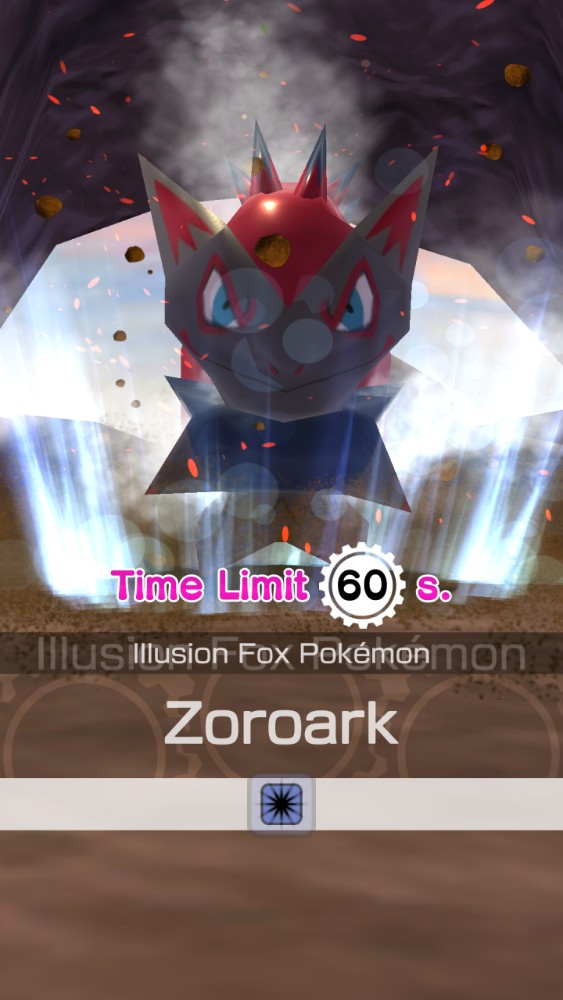
Alongside the Seas, the Adventurers Club ran a tournament for testing a whole team. At launch it was Super Boss Rush, a run of short battles that climbed from the Prelims through Normal Class to Great Class. Version 1.2.0 replaced it on 17 July 2019 with Coin Rush: 20 ranks of 60-second fights against three or four Bosses, paying out Coins on a sliding scale from 500 to 350,000.
- 20Coin Rush ranks
- 60 secondsto clear each rank
- 9,500target CP at the top rank
- 350,000Coins for Premier President
Super Boss Rush (launch to July 2019)
Every round of the launch tournament was fought against Pokémon from the Kanto Pokédex, ending with Seadra, Charizard and Dragonite in Great Class:
| Round | Bosses | Types |
|---|---|---|
| Prelims: First Round | Psyduck, Starmie | Water, Psychic |
| Prelims: Finals | Hitmonlee, Onix, Machamp | Fighting, Rock, Ground |
| Normal Class | Weezing, Marowak, Gengar | Poison, Ground, Ghost |
| Great Class | Seadra, Charizard, Dragonite | Water, Fire, Flying, Dragon |
Coin Rush ranks
Coin Rush’s ranks are named after job titles, from Trainee through Employee, Manager and Executive to President, and each title comes in four grades: plain, Great, Ultra and Premier. The three President ranks above the first add a fourth Boss, one of Unova’s Legendary trio of Virizion, Cobalion and Terrakion:
| Rank | Bosses | Target CP | Coins |
|---|---|---|---|
| Trainee | Psyduck, Starmie Water, Psychic |
300 | 500 |
| Great Trainee | Victreebel, Tangela, Vileplume Grass, Poison |
1,100 | 1,000 |
| Ultra Trainee | Persian, Nidoqueen, Rhydon Normal, Poison, Ground, Rock |
1,600 | 2,000 |
| Premier Trainee | Pidgeot, Gyarados, Charizard Flying, Normal, Water, Fire |
2,100 | 5,000 |
| Employee | Magnemite, Steelix, Ampharos Electric, Steel, Ground |
2,500 | 10,000 |
| Great Employee | Sneasel, Crobat, Feraligatr Dark, Ice, Poison, Flying, Water |
2,900 | 15,000 |
| Ultra Employee | Umbreon, Gengar, Houndoom Dark, Ghost, Poison, Fire |
3,300 | 20,000 |
| Premier Employee | Gyarados, Aerodactyl, Dragonite Flying, Water, Rock, Dragon |
3,700 | 30,000 |
| Manager | Delcatty, Roselia, Gardevoir Normal, Grass, Poison, Psychic, Fairy |
4,100 | 50,000 |
| Great Manager | Mightyena, Camerupt, Sharpedo Dark, Fire, Ground, Water |
4,500 | 60,000 |
| Ultra Manager | Tyrantrum, Altaria, Salamence Dragon, Rock, Flying |
5,000 | 70,000 |
| Premier Manager | Skarmory, Cradily, Metagross Steel, Flying, Rock, Grass, Psychic |
5,500 | 80,000 |
| Executive | Staraptor, Roserade, Empoleon Normal, Flying, Grass, Poison, Water, Steel |
6,000 | 100,000 |
| Great Executive | Honchkrow, Crobat, Weavile Dark, Flying, Poison, Ice |
6,500 | 120,000 |
| Ultra Executive | Milotic, Dragonite, Rhyperior Water, Dragon, Flying, Ground, Rock |
7,000 | 140,000 |
| Premier Executive | Spiritomb, Lucario, Garchomp Ghost, Dark, Fighting, Steel, Dragon, Ground |
7,500 | 160,000 |
| President | Musharna, Mienshao, Emboar Psychic, Fighting, Fire |
8,000 | 200,000 |
| Great President | Klinklang, Archeops, Zoroark, Virizion Steel, Rock, Flying, Dark, Grass, Fighting |
8,500 | 250,000 |
| Ultra President | Cofagrigus, Bisharp, Hydreigon, Cobalion Ghost, Dark, Steel, Dragon, Fighting |
9,000 | 300,000 |
| Premier President | Accelgor, Escavalier, Volcarona, Terrakion Bug, Steel, Fire, Rock, Fighting |
9,500 | 350,000 |
 Coins
Pokémon
Rumble Rush drew its toys from across the generations, from Kanto’s originals to Alola’s Ultra Beasts. Rather than offering the whole roster at once, the game rationed Pokémon through its rotating Seas, each themed on a headline Pokémon and a few types.
The roster grew with updates. The November 2019 update added more than 100 Pokémon, among them Alolan Raichu and Golisopod; Mewtwo was handed out as a welcome gift during the Super Gene Cave event that began alongside it, and Mew joined it in March 2020. The three-week Seas of spring 2020 then gathered whole regional line-ups for Kanto, Hoenn, Sinnoh and Kalos. These are some of the Pokémon with a special part to play:
 Charizard#006
 Mewtwo#150
 Mew#151
 Ho-Oh#250
 Jirachi#385
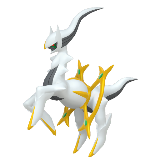 Arceus#493
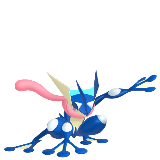 Greninja#658
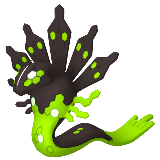 Zygarde#718
 Golisopod#768
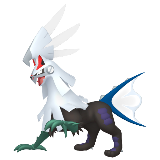 Silvally#773
 Buzzwole#794
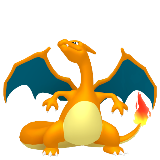
- Charizard – Face of the launch Sea and of its February 2020 return, and a Super Boss in both.
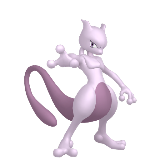
- Mewtwo – A welcome gift during the Super Gene Cave event in late 2019, and the namesake of the Mewtwo Sea.
- Mew – A welcome gift with version 1.5.0 in March 2020.
- Ho-Oh – Headliner of Ho-Oh & 151 Pals, the Kanto-themed event in the Bulbasaur Sea.
- Jirachi – Namesake and Super Boss of the Jirachi Sea in August 2019.
- Arceus – Headliner of Arceus and the Isle of Myths, appearing in several type forms.
- Greninja – Headliner of the last new Sea, Greninja and the Wonders of Kalos, in May 2020.
- Zygarde – Namesake of the Zygarde Sea, and the toughest Super Boss of the Greninja Sea at 13,010 CP.
- Golisopod – Headliner of Golisopod and the Super Gene Cave in November 2019.
- Silvally – A Super Boss of the Buzzwole Sea, where Type: Null could also be found.
- Buzzwole – The Ultra Beast namesake and Super Boss of the Buzzwole Sea in January 2020.
Updates & version history
Rumble Rush was updated from version 1.0.2 at the Australian launch to 1.6.1 six weeks before the end. The events that opened each Sea are in the Seas table above; these are the versions that changed the game itself:
| Version | Released | What changed |
|---|---|---|
| 1.0.2 | 15 May 2019 | Launch version for the Australian Google Play release, with Charizard Island’s Home as the first event |
| 1.0.3 | 22 May 2019 | Worldwide Android release |
| 1.0.4 | 23 May 2019 | Fixed a refinery bug introduced the day before |
| 1.1.0 | 19 June 2019 | Changes to the Item Shop |
| 1.2.0 | 17 July 2019 | Coin Rush replaced Super Boss Rush and the refinery doubled to six slots; the iOS version launched on this build on 23 July |
| 1.3.0 | 4 September 2019 (iOS) · 5 September (Android) | Daily stages |
| 1.3.1 | 2 October 2019 | Goals, and Poké Diamonds could now buy Guide Feathers and extra storage |
| 1.4.0 | 27 November 2019 (iOS) · 28 November (Android) | More than 100 new Pokémon, plus Pokémon power gears and style gears; Mewtwo followed as a welcome gift |
| 1.5.0 | 4 March 2020 | Battle Royale, Socket Plus, Poké Glam, player titles and a Mew welcome gift; rare Pokémon could now take the place of ordinary Bosses |
| 1.6.0 | 10 June 2020 | Several Seas could be open at once, for the Final event; summon gears now worked in Battle Royale |
| 1.6.1 | 12 June 2020 | iOS only: the final update |
Regional Variations
Rumble Rush reached most of the world on the same day, but there were a few regional quirks:
- Android players in Australia got the game a week early, on 15 May 2019, while the rest of the world waited until 22 May.
- In Japan it is called ポケモンスクランブルSP (Pokémon Scramble SP), keeping the Scramble name the series has always used there.
- The 2017 Pokéland alpha tests were open only to Android players in Japan.
- Besides Japanese and English, the game was translated into French, German, Italian, Spanish, Korean and Chinese, and it was released in South Korea, Hong Kong and Taiwan.
- Because the shutdown came at 10:59 Japan time on 22 July 2020, players in the Americas lost the game on the evening of 21 July.
Glitches, exploits and oddities
One bug slipped into the launch build, and it was fixed within a day:
Launch-week refinery bug
Version 1.0.3, which arrived with the worldwide Android launch on 22 May 2019, introduced a fault in the ore refinery, the feature that turns dropped ore into gears and upgrade kits. Since refining was central to strengthening Pokémon, it was a serious problem in launch week, and version 1.0.4 followed the very next day, 23 May 2019, purely to fix it. No other patch in the game’s history came out faster.
Videos & media
Official trailers for Pokémon Rumble Rush in English, Japanese, German and Italian.
The English launch trailer: islands, catching and gears.
The Japanese special video for Pokémon Scramble SP.
A shorter cut of the Japanese special video.
The German trailer, Das Abenteuer ruft!
The Italian trailer, È ora di scatenarsi!
Trivia & facts
- Pokémon Rumble Rush was the first Pokémon game released in the Reiwa era, which began in Japan on 1 May 2019.
-

The second Pokéland test’s icon. Before the game came out, trademarks were filed for Chinese (寶可樂樂島) and Korean (포켓몬랜드) versions of the Pokéland name.
- The iOS version launched on version 1.2.0, which had already replaced Super Boss Rush with Coin Rush, so iPhone and iPad players never saw Super Boss Rush at all.
- Coin Rush’s Bosses broadly work through the regions in order, from Kanto Pokémon at Trainee rank to Unova’s at President rank. The odd one out is Ultra Manager, where Tyrantrum, a Kalos Pokémon, joins Hoenn’s Altaria and Salamence.
- Some Seas were named after one Pokémon and headlined by another: Latias and Gemini Island took place in the Butterfree Sea, and Ho-Oh & 151 Pals in the Bulbasaur Sea.
- The game’s credits name Creatures Inc., one of the three companies that own the Pokémon brand, as the designer of its logo.
-
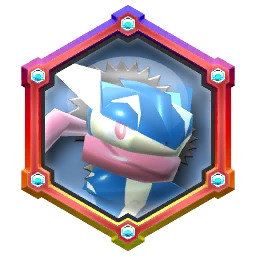
The Greninja gear. Greninja headlined the last new Sea without being one of its Super Bosses: it was unlocked by beating a Zapdos Super Boss, and the Sea’s toughest fight was Zygarde at 13,010 CP.
- Battle Royale, added in March 2020, reused a name from the very first Rumble game: the original Pokémon Rumble (2009) had its own Battle Royale, a last-toy-standing brawl.
- The iOS version was online for just under a year: it closed on 22 July 2020, one day before its first anniversary.
Legacy
What came after
- Pokéland alpha test – 31 May 2017. The first test of the working title, on Android in Japan, ran until 9 June 2017
- Second Pokéland alpha test – 17 October 2017. Ran until 27 October 2017; a planned iOS test never followed
- Announcement and Australian launch – 15 May 2019. Revealed in a media alert and released on Google Play in Australia the same day
- Worldwide Android release – 22 May 2019. Including Japan, Europe, North America, South Korea, Hong Kong and Taiwan
- iOS release – 23 July 2019. Worldwide on the App Store, launching on version 1.2.0
- End of service announced – 15 April 2020. Poké Diamond sales stopped the same day
- Final event – 10 June 2020. Version 1.6.0 reopened ten earlier Seas for the last six weeks
- Service ends – 22 July 2020. The servers closed at 10:59 Japan time (01:59 UTC)
- A new Pokémon Rumble game – none announced as of October 2026. Rumble Rush is still the latest in the series
Where to play it today
Pokémon Rumble Rush can no longer be played. It needed an always-on connection, and when its servers closed on 22 July 2020 at 10:59 Japan time (01:59 UTC) the game stopped working, even on phones where it was still installed. It can no longer be downloaded from Google Play or the App Store, and there has been no offline version, no re-release and no way to move toy Pokémon anywhere else. To play a Rumble game today you need one of the four console entries, Pokémon Rumble, Pokémon Rumble Blast, Pokémon Rumble U or Pokémon Rumble World, on its original hardware, though the download versions can no longer be bought: the Wii Shop Channel closed in January 2019, and the Wii U and 3DS eShops stopped selling games on 27 March 2023.

How it was made
Rumble Rush was developed by Ambrella, the studio behind every Pokémon Rumble game since the 2009 WiiWare original, and published by The Pokémon Company. Yoshihiro Hatta directed it, with Yuichi Arita as development producer, Takato Utsunomiya and Kazunori Sugiura as general producers and Tsunekazu Ishihara as executive producer. Miki Obata handled the sound, and the studio Sarugakucho supported the level design.
The project first surfaced in May 2017 as Pokéland. Its first Android alpha test in Japan, from 31 May to 9 June 2017, offered six islands, 52 stages and a 15-floor Champion Tower, and it required a Nintendo Account so that players’ Miis could appear. A second alpha ran from 17 to 27 October 2017, but an iOS test planned for the first half of 2018 never happened. After almost two years of silence, The Pokémon Company International announced Pokémon Rumble Rush in a media alert on 15 May 2019 and released it on Google Play in Australia the same day.


Sales & reviews
Downloads and chart performance
Neither The Pokémon Company nor Ambrella ever published download or revenue figures for Rumble Rush. Chart data published by PocketGamer.biz around Pokémon Day 2020 painted a modest picture: in the 90 days to late February 2020 the iPhone version mostly sat between 750th and 1,500th in the top-grossing charts, peaking at 784th on 30 November 2019, and it appeared only once in the US chart, at 1,347th on 28 December 2019. When the closure was announced in April 2020, the same site described the game’s grossing performance as poor.
- 784thbest top-grossing iPhone chart place
- 42on Metacritic (iOS, 4 critics)
- 6/10the best score, from Nintendo Life
- 14 monthsfrom soft launch to shutdown
Review scores
Rumble Rush had a cool reception, and no scored review rated it higher than 6/10. Three verdicts sum up the mood:
- Nintendo Life’s Joe Merrick was the kindest, giving it 6/10. He found it even simpler than the earlier Rumble games but concluded: “Overall, Pokémon Rumble Rush is a charming game, and fun for those who like collecting things.”
- Previewing the soft-launch build for Pocket Gamer, Dave Aubrey found the tapping intensely repetitive and warned that, with the cramped ore queue, “you are pressured into binning ore, or opening them up with premium currency”.
- Gamezebo’s Glen Fox was the harshest, with 1/5: “Not only is it dull, repetitive, and mind-numbingly easy but it’s clearly not even finished.”
Most reviewers liked the toy Pokémon and the one-handed controls but found little depth behind them. The iOS version holds a Metacritic score of 42 from four critics, in the site’s generally unfavourable band. The complaints that came up again and again were the slow, real-time ore refining and its tiny queue, an awkward island map and the fortnightly rotation of islands. Jeuxvideo.com called it an honest free-to-play game that was short of ideas, while Multiplayer.it felt that early curiosity soon gave way to repetitive grinding.
Media & artwork
Further reading
More Rumble games and Pokémon on phones: