  |
|
| Titles | Pokémon Duel Pokémon Comaster (Japan) ポケモンコマスター (Pokémon Komasutā) |
| Platforms | iOS (iPhone, iPad and iPod touch; App Store) · Android (Google Play) · Amazon Fire (Amazon Appstore, October 2017 onwards) · a constant internet connection was required |
| Developer | HEROZ · 3D models by Creatures Inc. |
| Publisher | The Pokémon Company |
| Director / Producer | Tomohiro Takeuchi (director) · Naoki Suzuki (producer) · Tsunekazu Ishihara (executive producer) |
| Designers | Masayuki Miura & Kouichi Ooyama (the original figure game; advisers) |
| Music | Shota Kageyama (SPICA MUSICA) |
| Scenario | Masaru Hatano |
| Players | 1–2 (story against the computer; real-time online and nearby duels) |
| Genre | Strategy board game |
| Business model | Free-to-play · Gems as in-app purchases · randomised figure Boosters · optional Player Pass (2019) |
| Figures | 596 in the final Library (numbered up to 648), in five rarities |
| Leagues | 9 League Match tiers, Beginner to Legend |
| Released | 12 April 2016 (Japan, Android) · 19 April 2016 (Japan, iOS) · 24 January 2017 (North America, UK, Australia, Hong Kong, Taiwan and more) · 2 October 2017 (Amazon Appstore) |
| Final version | 7.0.16 (September 2019) |
| Service ended | 31 October 2019, 01:59 UTC (announced 26 July 2019) · 10 January 2019 in the Netherlands |
| Predecessor | Pokémon Trading Figure Game (tabletop, 2006–2007); no earlier video game |
| Successor | None |
| Downloads | 40 million+ (March 2019) |
Overview
 Pokémon Duel is a free-to-play strategy board game for phones and tablets, made by the Japanese AI developer HEROZ and published by The Pokémon Company. Japan got it first, as Pokémon Comaster, on Android on 12 April 2016 and on iOS a week later. The English version then appeared with no advance announcement on 24 January 2017, going live across North America, the UK, Australia and dozens of other countries at once, and an Amazon Appstore edition for Fire tablets followed in October 2017.
Each player brings six Pokémon figures to a board of linked points, and the aim is simple: be the first to move a figure onto your opponent’s Goal. Turns are spent advancing pieces, cutting off routes and attacking anything that stands next to you, and every clash is settled by both figures spinning a wheel of attacks, where the colour and power of the segment that comes up decides who is knocked out. Plates add one-off tricks, and a built-in AI can suggest a move or play your whole turn for you.
Figures came from Boosters, won in League Matches or bought with Gems, and could be strengthened through fusion, Evolution, Mega Evolution and, in the final year, Z-Moves. Around that sat ranked online play across nine Leagues, a single-player story set on the resort of Carmonte Island, and a near-constant run of Gym Cups, Team Matches and other events, with new figures arriving every few weeks for three and a half years.
The rules weren’t new. Duel is a digital revival of the Pokémon Trading Figure Game, a tabletop game designed by Masayuki Miura and Kouichi Ooyama that was only ever sold outside Japan and was dropped in 2009. On phones it found a far bigger audience, passing 40 million downloads by March 2019, but The Pokémon Company announced the end of the service that July and switched the servers off on 31 October 2019. Because every mode needed a connection, the game can no longer be played, and its story was left unfinished.
Pokémon Duel is a strategy board game that uses Pokémon figures. Build a deck with your favorite figures and then leap into a League Match!
Compete with players from around the world for a chance to enter the top League rankings in League Matches. You’ll fight your rivals in real time! Win duels, get all kinds of cool figures and items, and make your deck stronger!
The rules are simple! The object is to be the first player to get one of your figures to your opponent’s goal. How will you get to the goal? You’ll need to carefully choose your route!
In duels, you and your opponent take turns moving your figures. Set up a strategic formation and attack your opponent, or simply block their path—it’s all about tactics! Plan your strategy and defeat your opponents in this game of cat and mouse!
In duels, your deck is composed of 6 Pokémon figures. There are all kinds of figures, each with different moves and abilities. Keep this in mind as you build your own custom deck!
Make use of your custom deck and the AI! The AI is a reliable ally who will determine good moves and take your turn for you. Make full use of the AI and crush your opponents!
— Official description
Quick Answers
The questions people ask about Pokémon Duel, answered first and explained further down the page.
Can you still play Pokémon Duel in 2026?
No. The Pokémon Company announced the closure on 26 July 2019 and shut the servers down at 01:59 UTC on 31 October 2019. Every mode needed a live connection, the single-player story included, so the app cannot be played even on a phone where it is still installed, and no offline version was ever released. More →
Was Pokémon Duel free, and was it pay-to-win?
It was free to download, with Gems on sale for real money in packs from £0.99 to £74.99. Gems bought Boosters of figures and skipped the hours-long timers on Boosters won in matches. Paying could build a collection faster, but a monthly spending cap and the luck of every wheel spin meant money alone never guaranteed a win. More →
Was Pokémon Duel ever on Nintendo Switch or 3DS?
No. It was a mobile-only game: iPhone, iPad and iPod touch through the App Store, Android phones and tablets through Google Play and, from October 2017, Amazon Fire devices through the Amazon Appstore. It never came to a Nintendo console or to PC, and no port was made before the service ended. More →
How many Pokémon figures were there in Pokémon Duel?
There were 596 by the time the game closed. The in-game Library numbered them up to 648, as some numbers were never filled. They covered Generations I to VII across five rarities, from Common up to the UX tier added in August 2017, and included Mega Evolutions, Alolan forms, Ultra Beasts and Shiny variants. More →
Is Pokémon Duel the same game as Pokémon Comaster?
Yes. Pokémon Comaster is the Japanese name of the same app, which launched in Japan in April 2016. The worldwide release on 24 January 2017 was version 3.0.0, which added English under the Pokémon Duel name, and from then on every region shared the same updates. More →
Why couldn’t players in France, Germany or Spain download Pokémon Duel?
The international release was in English only, and it skipped Europe’s French-, German-, Italian- and Spanish-speaking markets: Austria, Belgium, France, Germany, Italy, Luxembourg, Spain and Switzerland. The Netherlands did get the game, but lost it early, on 10 January 2019, because of Dutch rules on loot boxes. More →
How do battles work in Pokémon Duel?
When two figures stand side by side, one can attack and both spin a wheel of coloured attack segments. White and gold attacks compare damage, purple attacks beat white and usually inflict a status effect, blue attacks beat everything but usually just end the clash, and a red Miss loses to anything. The loser is sent to the P.C. More →
Is there a sequel to Pokémon Duel, or does it connect to other games?
There is no sequel, and Duel never linked to Pokémon HOME, Pokémon Bank or any core-series game. Its closest relative is the Pokémon Trading Figure Game, the tabletop game of 2006–2007 whose rules and figures it adapted, and no Pokémon game has revived the figure board game since the servers closed. More →
Story
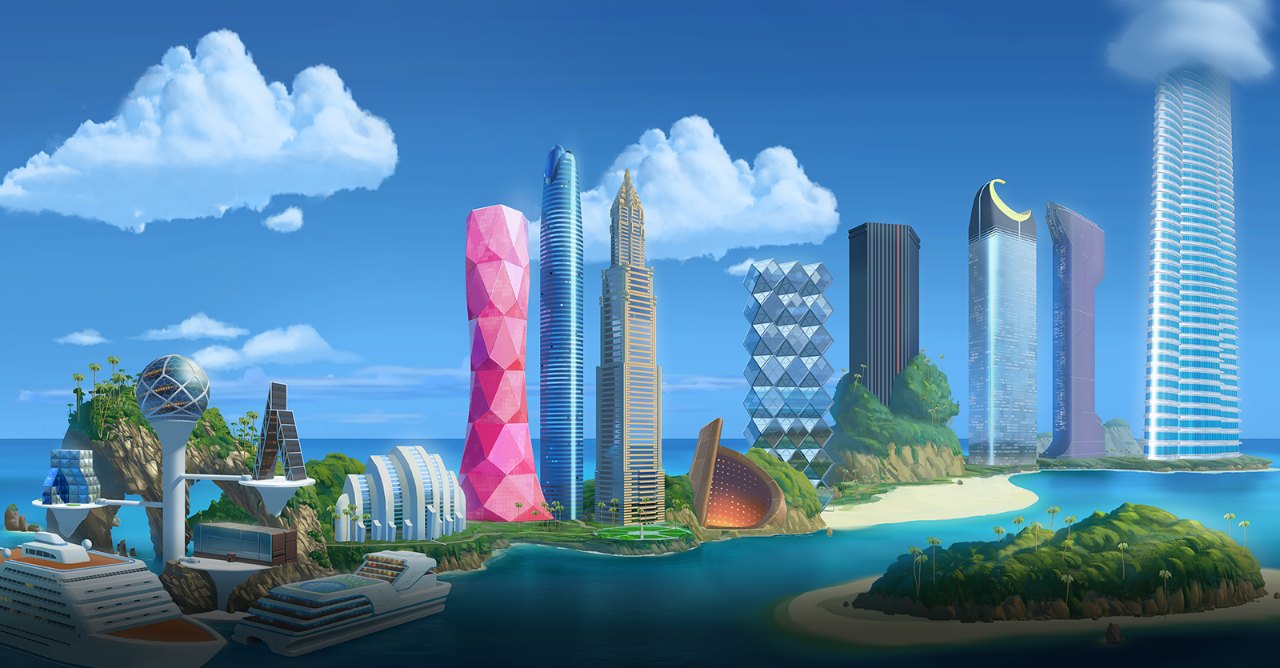
The player arrives on Carmonte Island, a man-made resort island, to enter the Pokémon Figure Game (PFG) World Championships without knowing how to play. Luca, a fellow entrant they meet on the way, teaches them the rules, and like every competitor they are handed an AI device: theirs is Carlo, who is far chattier than anyone else’s. At the opening ceremony the undefeated champion, Master Rosé, sets the challenge. Entrants must win Emblems from the owners of the island’s hotels and then beat him at the top of Jewel Tower, and only those holding at least five Emblems will survive the first phase.
The first wins come against Yuji at Ulex and the Plate-loving Nadya at Château de Rosa. Then the Roger family steps in: a wealthy clan that owns much of the island and wants AI removed from the game altogether. Joe, at Atlantis, and Brenda, at Olivia Palace, try to win both Carlo and Luca’s device, Another, because the two are halves of a split AI known as Gemini. Joe goes as far as kidnapping Luca’s sister Tia to force Luca’s hand, and Another bargains for her release, then turns Luca against his friends.
Beating the family’s leader, Don Roger, at The Volcano wins the Rogers over to the player’s side. At Elysium the group meets Number 7, the AI specialist who completed Gemini from his father’s unfinished work. In the last chapters to be released, the island’s mainframe is hacked, Carlo loses his memories and even Master Rosé finds himself locked out of the system. That is where the story stops.
The story is told through single-player quests, one hotel to a chapter. You work through its duels, unlock scenes with Carlo, Luca, Sharon and the Rogers, and finish by beating the owner for an Emblem. Story opponents play fixed decks, and new figures are introduced a few at a time as the plot moves on. The owners and their decks are listed below under Hotel owners.
How the figure game worked, and how it ended
Pokémon Duel carried the rules of the Pokémon Trading Figure Game over almost unchanged. The original was played with small Pokémon figures on a printed mat, and many of the digital figures were modelled on the old physical ones. Every piece has a movement value, a wheel of attacks and a rarity, while Plates take the place of the old Trainer cards. This is how those pieces fitted together, and how the whole thing came to an end three and a half years after launch.
- 6figures in every deck, plus up to six Plates
- 5rarities, from Common to UX
- 596figures in the Library at closure
- 10the top figure level, from August 2017

 Figures and their wheelsEach figure has a Movement Points value from 0 to 3, a wheel split into coloured attack segments of different sizes and, in some cases, an Ability. Arceus, for example, carries Extreme Speed, Judgment and Return on its wheel along with a small Miss segment, a Z-Move and its Multitype Ability. Types follow the core video games rather than the Trading Card Game.
 PlatesThese one-use effects take the place of the physical game’s Trainer cards, and they never fail. A deck holds up to six, but each costs between 0 and 3 points and the set must fit within a limit of 6 points, raised to 8 in August 2017. They are sorted into Movement, Pokémon, Plates, Battle, Spin and Recovery categories, come in Common, Uncommon, Rare and EX rarities, and grew over time to include Mega Stones and type-themed Plates.
The five rarities at a glance
| Rarity | Figures at closure | EXP from a Rare Metal of that rarity | Carmonites to reach Level 10 | Introduced |
|---|---|---|---|---|
| Common (C) | 63 | 500 | 10 | April 2016 (launch) |
| Uncommon (UC) | 157 | 1,000 | 20 | April 2016 (launch) |
| Rare (R) | 142 | 4,500 | 50 | April 2016 (launch) |
| EX | 142 | 10,500 | 100 | April 2016 (launch) |
| UX | 92 | 51,000 | 150 | August 2017 (version 4.0.0) |
 EX
 UX
How it ended
On 26 July 2019 The Pokémon Company announced that Pokémon Duel would close at 01:59 UTC on 31 October 2019, and sales of Gems and the Player Pass stopped the same day. One last update, version 7.0.16, arrived in September, and then the servers went dark. Because every mode depended on them, the shutdown ended the game completely rather than leaving an offline mode behind, and four of the story’s ten hotels were never released.
Dutch players lost it sooner. Pokémon Duel was withdrawn from the Netherlands on 10 January 2019, almost ten months before the global shutdown, because Dutch rules treat paid random rewards like its Boosters as gambling.
Gameplay
A duel is quick to learn and slow to master, and Duel kept adding layers to it for three and a half years. Here is how a match played out, how a collection grew, and the modes and events that kept players coming back.
Playing a duel
Building a collection
 League Match and BoostersLeague Match is real-time ranked play against people around the world, and it costs no Energy. Nine Leagues set by rating run from Beginner (below 1300) through Trainer, Leader, Elite, Champion, Great, Ultra and Master up to Legend (3000 and above), which was added in August 2017. A win earns ranking points, three Key Fragments and a Time Booster, and up to three losses a day still earn one fragment; ten fragments open a Locked Booster. Boosters take anything from one to 24 hours to open depending on their colour, and their contents get better in the higher Leagues.

Modes and events
Gems and spending
Characters
Carmonte Island’s cast is small but busy, with talking AI devices, a feuding rich family and a champion nobody ever got to face:

Carlo
Every PFG entrant is given an AI partner, and the player’s is Carlo, far more talkative than the rest and officially approved by the PFG governing body. He turns out to be one half of Gemini, an AI begun by Number 7’s father and completed by Number 7, which puts a target on him for the Roger family. He loses his memories after the island’s mainframe is hacked.

Luca
He meets the player on the way to Carmonte Island and offers to teach them the game. Kind-hearted and fiercely protective of his younger sister Tia, he agrees to help the Rogers get hold of Carlo when they take Tia hostage. His own AI, Another, then turns him against his friends, and he reappears at Elysium cold and distrustful.

Sharon
Known as the PFG Princess, Sharon lost her family’s fortune to the Roger family, who took over the League Match system her father created and the profits that came with it. She plans to win a hotel of her own by beating the Rogers and Master Rosé, and she is the object of Yuji’s devotion. She loses to Don Roger at The Volcano.

Another
The AI in Luca’s device, and the darker half of Gemini. After striking a deal with Don Roger for Tia’s freedom, it pushes Luca to abandon his friends and chase glory for himself, and it later claims responsibility for hacking the island’s mainframe, with help from someone it calls its “mom”.

Master Rosé
The Undefeated Champion runs the World Championships from Jewel Tower, the island’s operations centre and the tournament’s final prize. He sets the challenge of collecting nine Emblems at the opening ceremony, and when the island loses power he finds that the mainframe password has been changed. With the story never completed, nobody got to duel him.

Number 7
The owner of Elysium is a leading AI specialist who trusts machines more than people. As a boy he played the figure game with his father, an AI researcher who walked out on the family, and he later perfected his father’s unfinished device, creating Gemini. At Elysium he guides Carlo through terminals that show his past, and after losing to the player he is impressed by how much Carlo has grown.

Don Roger
Head of the Roger family, which owns almost half of Carmonte Island and organises the tournament. Convinced that AI cheapens a player’s skill, he sends Joe and Brenda after Carlo and Another, then puts Carlo up as the stake in a duel at The Volcano. Beaten, he decides the player’s passion should shape the future of PFG and turns his family’s support their way.

Karolin
Called Karol in Japanese, she runs the Queen’s Cup tournaments aboard the cruise ship S.S. Carmonte Carnival. After the international launch every Carnival event took the Queen’s Cup format, ranking players from F to S and rewarding them with masks and figures.
Also on the island
- Tia: Luca’s younger sister works at the PFG Shop, selling Boosters, Plates and figures and buying spare items back for Coins. Joe kidnaps her to put pressure on Luca, and Don Roger frees her once a deal is struck. She remembers Luca as a naive, easily fooled child, which he insists he has outgrown.
- Marabelle: Tia’s manager is in charge of the PFG Shop and the steering committee, and runs the Gem Counter, where Gems are sold for real money.
- Yuji, Nadya, Joe and Brenda: the other hotel owners, whose decks are in the Hotel owners table.
Opponents
Hotel owners
Ten hotels make up the road to the championship, and only six were released before the game closed. Each owner plays a fixed deck and hands over an Emblem when beaten:
| Hotel | Owner | Deck | Notes |
|---|---|---|---|
| Ulex | Yuji | Bagon, Tauros ×2, Espurr, Raticate, Spearow, all at Level 1 | The first owner, and a devoted fan of Sharon, whom he calls Sharry. Touchy about his weight but confident at the board; Sharon beats him too. |
| Château de Rosa | Nadya | Weezing ×2, Zangoose ×2, Fennekin ×2 Plates: Max Revive, Swap Spot, Antidote, X Attack |
A Plate specialist who leans on a varied set. Sensitive about her age, she admires the player’s win and joins the group’s run at the other hotels. |
| Atlantis | Joe | Wobbuffet, Psyduck, Aipom, Treecko, Scyther, Rhyhorn Plates: Double Chance ×2, Pokémon Switch, Max Revive |
A Roger who talks like a 1920s gangster. He bets that he will own up to the family’s figure tampering if he loses, keeps his word, and later kidnaps Tia. |
| Olivia Palace | Brenda | Murkrow ×2, Meowth, Mightyena ×2, Tauros Plates: Double Chance ×2, Max Revive, Pokémon Switch |
Lady Brenda to her fans. She duels at the top of her hotel, with the loser to jump down the emergency escape chute, then tries to wriggle out of the bet. |
| The Volcano | Don Roger | Charizard (EX), Machamp, Skarmory, Dratini, Charmander ×2 Plates: Double Chance ×3, Pokémon Switch, Max Revive |
The head of the family beats Sharon first, stakes the duel on Carlo, and swings the Rogers behind the player when he loses. |
| Elysium | Number 7 | Mew (EX), Sneasel, Skarmory, Luxray, Magnemite ×2 Plates: Iron Power, Invisibility Cape, Scoop Up |
The AI specialist behind Gemini, and the last owner players could face. Iron Power suits his Steel-type Magnemite and Skarmory. |
| Labyrinth | – | – | Never released. |
| La Galleria Luna | – | – | Never released. |
| Blue Planet | – | – | Never released. |
| Jewel Tower | Master Rosé | – | The champion’s tower, to be challenged with all nine Emblems. It never opened, so he was never battled. |


Dev Showdowns
Twice in 2018, from 9 to 11 October and again in December, eight members of the development team joined League Match under Dev_ names, wearing special masks so players could spot them. Every win against a developer counted towards a shared total, and players reached 89 wins in October and 105 in December. The October rewards included a Shiny Magikarp at 10 wins and days of free daily Boosters at 40 and 50 wins, and December’s went as high as 500 Gems at 100 wins. The developers’ ratings and the figures seen in their decks:
| Account | Rating | Deck highlights |
|---|---|---|
| Dev_Armr | 2000 | Drifblim (EX), Drifloon, Shiny Gengar (EX), Shiny Mimikyu, the Rowlet line |
| Dev_PS | 2000 | Magikarp, Haxorus (EX), Marshadow (EX), Rowlet, Rotom, Mimikyu |
| Dev_343 | 2500 | Houndour, Growlithe, Combusken, Ho-Oh (EX), Entei (EX), Charizard (EX): an all-Fire line-up |
| Dev_Miu | 2500 | Beheeyem, Elgyem, Latias (EX) |
| Dev_Hisa | 3000 | Kept hidden, so nobody knew what to expect |
| Dev_SN | 3000 | Marshadow (EX), Drifblim (EX), Sableye, Lunala (EX), Rowlet, Lucario (EX) |
| Dev_crit | 3500 | Rayquaza (EX), Altaria (EX), Lucario (EX), Sableye, Fraxure, the Noibat line |
| Dev_Mr32 | 3500 | Banette (EX) ×3, Sableye, Marshadow (EX), Naganadel (UX) |
Pokémon

By the time it closed, Pokémon Duel’s in-game Library listed 596 figures drawn from Generations I to VII, numbered up to 648 because some numbers were never used. The Japanese launch had four rarities, Common, Uncommon, Rare and EX, and the UX tier arrived with Mega Evolution in August 2017; the final count was 63 Common, 157 Uncommon, 142 Rare, 142 EX and 92 UX figures.
New figures came with almost every update, from Alolan forms and Ultra Beasts to Mega Evolutions, alternate Formes and more than two dozen Shiny variants. Each figure is a piece in its own right, with its own MP value, wheel and sometimes an Ability, so the same species can turn up several times at different rarities. These are some of the figures with a story to tell:
 DialgaLibrary no. 1
 PikachuUncommon to UX
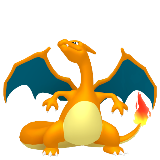 CharizardMega X and Y
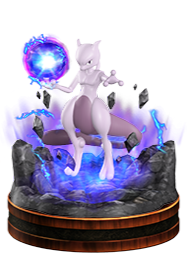
 MewtwoMega X and Y
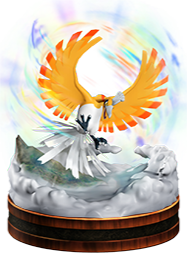
 Ho-OhShiny, Steel Cup prize
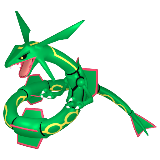 RayquazaShiny and Mega
 KyuremBlack and White
 NecrozmaZ-Move update
 ArceusMultitype
 EeveeShiny prize
 ZygardeThree Formes
 BidoofApril Fools 2019
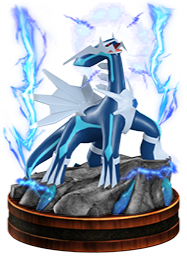
- Dialga – Number 1 in the Library as an EX figure, later joined by a separate UX Dialga.
- Pikachu – Released at Uncommon and Rare, and later as a UX figure with its own Z-Move.
- Charizard – An EX figure, joined in 2017 by UX Mega Charizard X and Mega Charizard Y; Shiny versions arrived late in the game’s life.
- Mewtwo – An EX figure with UX Mega Mewtwo X and Y, which headed a Team Match in January 2019.
- Ho-Oh – Shiny Ho-Oh arrived in version 4.0.8 and was the star prize of the Steel Cup in June 2018.
- Rayquaza – Shiny Rayquaza was a regular Queen’s Cup prize, and Mega Rayquaza became one of the UX figures.
- Kyurem – UX Black Kyurem and White Kyurem headlined version 6.0.0 in April 2018.
- Necrozma – UX Necrozma led the Z-Move update of February 2019, followed by Dusk Mane, Dawn Wings and Ultra Necrozma figures.
- Arceus – A UX figure whose Multitype Ability copies a chosen Pokémon’s type, offered as a Monthly Points reward from April 2019.
- Eevee – Shiny Eevee was the most common Team Match prize, and UX Eevee joined in August 2018.
- Zygarde – Released as 10%, 50% and Complete Forme figures, the last of them at UX rarity.
- Bidoof – The joke UX figure of April Fools’ Day 2019.



Updates & events
Duel never stood still: it changed every few weeks, with new figures, events and balance tweaks between the big version updates. These were the milestones, from the Japanese reveal to the final day:

2016
| Date | What changed |
|---|---|
| March | Pokémon Comaster revealed for Japanese smartphones. |
| 12 April | Launch in Japan on Android, version 1.0.0. |
| 19 April | The iOS version launches in Japan. |
| 14 June | Version 1.1.0 adds events; the first Queen’s Cup runs until 23 June. |
| 12 July | Version 1.2.0 adds Daily Missions and new levelling items. |
| 9 August | Version 1.2.1 introduces Fusion. |
| 24 October | Version 1.4.0 adds Evolution. |
| 10 November | Version 2.0.0 overhauls the interface, puts League Match on the home screen and adds the Training Center. |
| 25 December | The first Gym Cup, the Water Cup, begins. |
2017
| Date | What changed |
|---|---|
| 24 January | Version 3.0.0 adds English, and the game launches worldwide as Pokémon Duel. |
| 8 August | Version 4.0.0 brings Mega Evolution, UX figures, Level 10, Room Match Halls and the Legend League, and raises the Plate limit from 6 to 8 points. |
| 2 October | Released on the Amazon Appstore for Fire devices. |
| 29 November | Version 5.0.0 redesigns the menus and adds UX fusion materials. |
2018
| Date | What changed |
|---|---|
| 17 January | Version 5.0.6 adds Ultra Space and raises the figure cap to 3,000. |
| 2 April | Version 6.0.0 adds UX Black Kyurem and White Kyurem, plus social features for following other players. |
| 16 August | Version 6.2.0 reworks Mega Evolution and adds Beginner Missions. |
| 9–11 October | The first Dev Showdown, with developers playing in League Match. |
| December | The second Dev Showdown. |
2019
| Date | What changed |
|---|---|
| 10 January | Withdrawn from the Netherlands over loot box rules. |
| 13 February | Version 7.0.0 adds Z-Moves, UX Necrozma, the Player Pass and Monthly Point Rewards. |
| 15 March | The Pokémon Company celebrates 40 million downloads. |
| 1 April | April Fools’ event with a Bidoof Mask and a joke UX Bidoof. |
| 10 April | Version 7.0.7’s spring events add UX Arceus and EX Aegislash. |
| 26 July | End of service announced; Gem and Player Pass sales stop. |
| 13–17 September | The final update, version 7.0.16 (Android on the 13th, iOS on the 17th). |
| 31 October | Service ends at 01:59 UTC. |
Regional Variations
There was only ever one version of Pokémon Duel, updated in step worldwide from January 2017, but where you lived still made a difference:
- In Japan the game is Pokémon Comaster, and it was out there nine months before the English release.
- The international version was English-only, and it never launched in Austria, Belgium, France, Germany, Italy, Luxembourg, Spain or Switzerland. Hong Kong and Taiwan received it on 24 January 2017 along with the English-speaking markets.
- Players in the Netherlands lost the game on 10 January 2019, almost ten months before everyone else, because of the Dutch ban on loot boxes.
- The Amazon Appstore version for Fire devices arrived on 2 October 2017, more than eight months after the iOS and Android release.
- In the English Messages menu, Marabelle’s name appears as Maribelle, a leftover of the Japanese spelling.
Glitches, exploits and oddities
Pokémon Duel’s best-known problem wasn’t a quirk of the rules but the servers behind them:
Launch-period connection problems
The surprise international launch in January 2017 ran straight into server trouble. Connection failures dragged matches out and the app crashed often enough that Pocket Gamer declined to give it a score, while Destructoid and Gamezebo both complained about slow loading, frequent downtime and dropped connections. As every mode ran online, the story included, a lost connection could interrupt even a single-player duel. Updates through the first half of 2017 brought regular bug fixes alongside new figures and balance changes.
Videos & media
The official English trailer, released for the worldwide launch:
Battle, Spin, and Win: the trailer for the English-language launch in January 2017, from The Official Pokémon YouTube channel.
Trivia & facts
-
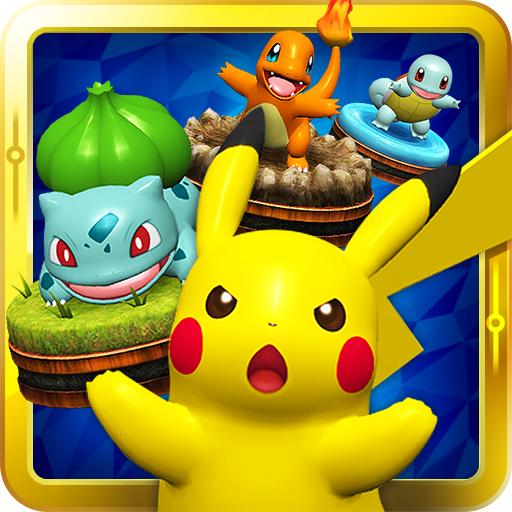
The Comaster icon at launch. The Japanese name, Comaster, was suggested by producer Naoki Suzuki. It joins the prefix co-, meaning together, to the English word master, and hides koma, the Japanese word for a game piece, inside it.
- HEROZ got the job because of Shogi Wars, its shogi app, which already offered players AI assistance.
- The Pokémon Trading Figure Game was never sold in Japan, so Comaster gave Japanese players their first chance to try its rules.
- Until 31 January 2017 the Featured Duel button read Futured Duel, and for a while the Silver Moon Hall was labelled Silver Moom Hall.
- Carmonte Island looks very much like a play on Monte Carlo, the resort famous for its casino.
- Another’s first words to Luca echo the lyrics of the Pokémon theme song.
- For April Fools’ Day 2019 the game ran a Bidoof event with a Bidoof Mask and a UX Bidoof billed as the product of an AI-generated rebalance, and a commemorative Bibarel figure was handed out as a login bonus.
-

UX Pikachu, Library no. 557. In the December 2018 Dev Showdown, every community win target raised the rarity of a figure due out later; hitting all of them turned it into UX Pikachu.
- One of the prizes players could unlock in the Dev Showdowns was a Dev Showdown mask, a match for the ones the developers themselves wore in League Match.
- A Shiny Arceus figure seems to have been in the works: artwork exists for one, numbered 632 in the Library, but it never went on release before the service closed.
Legacy
What came after
- International release as Pokémon Duel – 24 January 2017. Version 3.0.0 added English, and the game went live in more than 60 countries and territories with no advance announcement
- Amazon Appstore release – 2 October 2017. The game reached Amazon Fire devices
- Withdrawn from the Netherlands – 10 January 2019. Pulled early because of the Dutch ban on loot boxes
- 40 million downloads – 15 March 2019. A milestone celebrated by The Pokémon Company
- End of service announced – 26 July 2019. Gem and Player Pass sales stopped the same day
- Final update – September 2019. Version 7.0.16 reached Android on 13 September and iOS on the 17th
- Service ends – 31 October 2019. The servers closed at 01:59 UTC, leaving the story unfinished
- Successor – none as of October 2026. No Pokémon release has revived the figure board game
Where to play it today
Nowhere, sadly. The Pokémon Company switched off Pokémon Duel’s servers at 01:59 UTC on 31 October 2019, and because every mode, the single-player story included, needed a constant connection, the app cannot start a duel even on a phone or tablet where it is still installed. The game was only ever released for iOS, Android and Amazon Fire devices; it never had an offline mode or a console version, and nothing has replaced it.
How it was made
Pokémon Duel grew out of the Pokémon Trading Figure Game, a tabletop game requested by The Pokémon Company’s Tsunekazu Ishihara and designed by Masayuki Miura and Kouichi Ooyama. Problems manufacturing the figures meant it was only sold overseas, in Europe and Australia from 2006 and in North America from 2007, and it never reached Japan. Miura had long wanted to make a smartphone version, and a connection through HEROZ’s shogi app Shogi Wars led to the project being picked up around 2014.
Miura and Ooyama stayed on as advisers while HEROZ built the game, with Hisashi Itoh as project manager and Tomohiro Takeuchi as director, and producer Naoki Suzuki overseeing it for The Pokémon Company. Ishihara had told the team the original was too difficult, so much of the work went into making the rules approachable: they tried a smaller three-against-three board before settling on the full six-against-six layout, and capped how much players could spend. Creatures Inc. built the 3D models, Shota Kageyama composed the music and Masaru Hatano wrote the scenario. The game was revealed in March 2016 and launched in Japan the following month.
Before Duel: the figure game
Sales & reviews
Downloads
As a free download, Pokémon Duel was measured in downloads rather than sales. The Pokémon Company celebrated passing 40 million downloads on 15 March 2019, a little under three years after the Japanese launch, and no official revenue figure was ever published.
- 40m+downloads by March 2019
- 60+countries and territories at the 2017 launch
- 63on Metacritic, iOS (7 critics)
- 3½years online, April 2016 to October 2019
Review scores
Within a week of the surprise English launch the first reviews were in, and most of them liked the board game underneath far more than the waiting that came with it:
- Gamezebo’s Nick Tylwalk thought “the way so many different abilities have been incorporated into a simple framework is borderline genius”, while still grumbling about the waits, and scored it3.5/5.
- Destructoid’s CJ Andriessen gave it6/10, warning that “The timers on the won booster packs are a brutal buzzkill to the excitement of competition.”
- Joe Merrick of Nintendo Life also settled on6/10: “It’s a mixed bag, all told, and in the context of the grand nature of the Pokémon brand that’s a disappointment”.
- Pocket Gamer’s Harry Slaterdeclined to score it at all, because connection failures dragged his matches out and the app kept crashing.
Critics were split, and Pokémon Duel settled at 63 on Metacritic. The board game itself won most of them over: reviewers admired how much variety fitted into such simple rules, enjoyed outthinking opponents on the board and found the single-player campaign a pleasant surprise, and Nintendo Life singled out the graphics and sound. The complaints were about everything around it. Boosters won in matches took hours to open unless you paid Gems, chasing figures felt like a lottery, and one bad spin of the wheel could undo a careful plan. Slow loading, server downtime and dropped connections coloured early impressions too. The verdict was a clever board game held back by its waits and its technical problems.
Media & artwork
Further reading
More Pokémon games on phones and tablets, including other online services that have since closed: