
  |
|
| Platform | Game Boy (Game Boy Color and Super Game Boy enhanced in the West); Nintendo 3DS Virtual Console (2016) |
| Developer | Game Freak |
| Publisher | Nintendo |
| Director | Satoshi Tajiri |
| Producers | Takehiro Izushi, Takashi Kawaguchi, Tsunekazu Ishihara (executive producer Hiroshi Yamauchi) |
| Art & music | Ken Sugimori and Atsuko Nishida (art), Junichi Masuda (music & programming); Pikachu voiced by Ikue Ōtani |
| Players | 1–2 (Game Boy Link Cable; Colosseum 2 adds Pika, Petit and Poké Cup rules) |
| Generation | Generation I |
| Region | Kanto |
| New Pokémon | None (same 151, of which 13 can’t be caught) |
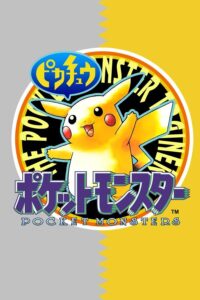
| Released (Japan) | 12 September 1998 as Pocket Monsters Pikachu |
| Released (Australia) | 3 September 1999 |
| Released (North America) | 18 October 1999 (some sources say the 19th) |
| Released (Europe) | 16 June 2000 |
| 3DS Virtual Console | 27 February 2016 worldwide (announced 12 November 2015; on sale until the eShop closed on 27 March 2023) |
| Rating | ESRB E; 3DS Virtual Console PEGI 12 |
| Sales | 14.64 million worldwide (widely quoted); second best-selling non-bundled Game Boy game |
| Predecessor | Pokémon Red & Blue (1998) |
| Successor | Pokémon Gold & Silver (1999) |
| Remake | Let’s Go, Pikachu! & Let’s Go, Eevee! (Switch, 2018) |
Overview
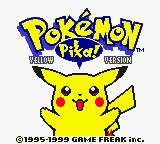 Pokémon Yellow, the special Pikachu edition is a remake of Pokémon Red and Blue. Its story is more in tune with the anime than its predecessors for example straying from the traditional grass, fire, water starter and being able to take Pikachu instead, just as Ash once did.
During a Nintendo Direct announcement on November 12th, 2015 it was revealed that Pokémon Yellow would be released for the Nintendo 3DS Virtual Console to celebrate the 20th Anniversary of Pokémon. The release date was set for 27 February 2016.
Pokémon Yellow although released at the tail end of the Game Boy era, managed to bag the title of second best selling Pokémon title on the system. Yellow was outsold only by the cumulative effort of Red/Blue/Green, but as no one seems to know the breakdown of how many each individual version sold I’d say Yellow and its 14.64 million sales could’ve even been #1.
You’ve finally been granted your Pokémon Trainer’s license, and now you’re on your way to becoming the world’s greatest Pokémon Trainer! The shockingly-cute Pikachu tags along behind you as you search the enormous world for monsters to train and evolve. Face off against Blastoise’s torrential water cannons. Stand strong when facing Pidgeot’s stormy Gust. Develop the ultimate Pokémon strategy to defeat the eight Gym Leaders and become the greatest Pokémon Master of all time!
— Official description (Nintendo of America, 1999)
Quick Answers
The questions people ask Google most about Pokémon Yellow, answered briefly; each one links to the fuller section below.
Is Pokémon Yellow better than Red and Blue?
For most players, yes, if you want the anime-flavoured version. Yellow keeps the same Kanto and story but adds a following Pikachu, Jessie and James, anime-style Gym teams, all three Kanto starters as gifts and Game Boy Color palettes. The trade-off is 13 Pokémon you cannot catch and fewer team choices early on. More →
Can you evolve Pikachu in Pokémon Yellow?
Not your starter. Use a Thunder Stone on it and Pikachu shakes its head and refuses, just as Ash’s Pikachu turns down Raichu in the anime. The only way to own a Raichu in Yellow is to trade one in, or trade in a different Pikachu and use a Thunder Stone on that one. More →
How do you get Bulbasaur, Charmander and Squirtle in Yellow?
All three are free gifts at level 10. A girl in a Cerulean City house hands over Bulbasaur if Pikachu’s friendship is 147 or higher. A trainer on Route 24, north of Nugget Bridge, gives you Charmander. Officer Jenny in Vermilion City gives you Squirtle once you hold the Thunder Badge. More →
Which Pokémon are missing from Pokémon Yellow?
Thirteen species cannot be obtained without trading: Weedle, Kakuna, Beedrill, Ekans, Arbok, Raichu, Meowth, Persian, Koffing, Weezing, Jynx, Electabuzz and Magmar. Most are tied to the anime, because Ekans, Koffing and Meowth belong to Team Rocket and Persian to Giovanni. Trade them in from Red, Blue or Gold, Silver and Crystal. More →
How do you make the rival’s Eevee evolve into Jolteon, Flareon or Vaporeon?
It depends on the first two rival battles. Lose in Oak’s lab and Eevee becomes Vaporeon. Win in the lab and then win the optional Route 22 battle and it becomes Jolteon. Win in the lab but lose or skip Route 22 and it becomes Flareon. His Champion team changes to match. More →
How do you check Pikachu’s happiness in Yellow?
Turn to face Pikachu and press A. The face it pulls tells you how it feels: a big smile means it likes you, while an annoyed or uninterested look means friendship is low. Levelling it up, teaching it TMs and winning Gym battles raise friendship; fainting and being stored in the PC lower it. More →

How do you get a Surfing Pikachu in Pokémon Yellow?
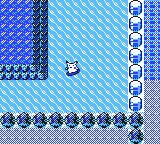
Pikachu cannot learn Surf in Yellow itself. On the original cartridge you get one from Pokémon Stadium on the N64 by clearing the Round 2 Prime Cup’s Master Ball class with Pikachu in the final battle, or from a 1999 event. On the 3DS Virtual Console, your starter Pikachu can play Pikachu’s Beach without Surf. More →
Can you catch a second Pikachu in Pokémon Yellow?
No. Yellow has no wild Pikachu or Raichu anywhere, so your starter is the only one you can get in the game. You can trade another Pikachu in from Red, Blue or a Generation II game. It will not follow you around, but unlike your starter it can evolve into Raichu with a Thunder Stone. More →
Is Pokémon Yellow on Nintendo Switch, and how can you play it today?
No. Yellow itself has never come to the Switch; Let’s Go, Pikachu! and Let’s Go, Eevee! (2018) reimagine it, and FireRed & LeafGreen arrived on Switch as standalone downloads in February 2026. The original runs on any Game Boy, Game Boy Color, Game Boy Advance or Game Boy Player, and 3DS owners who bought it before the 2023 eShop closure can redownload it. More →
How long does Pokémon Yellow take to beat?
Most players reach the credits in roughly 25 to 40 hours, depending on how much they train and explore, and completing the Pokédex with trading takes much longer. Speedrunners are far quicker: Guinness World Records verified a glitchless run of 1:54:01 by Gunnermaniac in June 2018, and the record has been lowered since. More →
Plot / Story – what Yellow changes
Yellow tells the same story as Red and Blue – eight badges, Team Rocket, the Elite Four and your rival waiting at the end of it – so this page only covers what changes. The short version: the first ten minutes are rewritten to match the first episode of the anime, Team Rocket’s grunts get famous faces, and your rival’s starter is an Eevee whose evolution you decide.
A different first ten minutes

Yellow rewrites the first ten minutes to follow the anime’s first episode. When the player tries to walk out of Pallet Town into the tall grass, Professor Oak stops them, and a wild Pikachu leaps out. In a short battle scene with his own new back sprite, Oak catches it himself. Back at the laboratory there is only one Poké Ball on the table, holding the Eevee Oak meant for you, and his grandson grabs it first. Oak therefore hands over the freshly caught Pikachu at level 5, knowing ThunderShock and Growl. It refuses to go back in its ball and walks behind you for the rest of the game. The first rival battle is Pikachu against Eevee, and its result already starts deciding what Eevee will become. There is no starter choice at all.
The first part of the story where the player meets Professor Oak has been tweaked as follows:-
- In previous versions the player stopped just before the tall grass, they now step into the first patch of tall grass when Professor Oak comes along and enters the tall grass beside the player. Oak is engaged by a wild Pikachu and promptly catches it before accompanying the player back to his Lab in Pallet Town.
- When the player reaches Oak’s Laboratory, there is only one Poké Ball on the desk, where there would previously have been three. Oak tells the player to take the Poké Ball (which contains Eevee) but is shoved aside by Blue, his rival (Gary from the Anime really) who takes it instead. Oak has only one other Pokémon immediately available for the player to take…. the Pikachu he just caught.
- After the player’s first battle against Blue, Pikachu briefly returns to his Poké Ball only to then break free and refuse to return, he follows the player on foot from then on.
- You have to speak to the old man in Viridian City before you can go to Viridian Forest. He’s a grumpy fellow, but deep down good hearted and attempts to demonstrate to the player how to catch a Pokémon, attempts however being the key word here. The Old man fails to catch the Pokémon, and he’s out of Poké Balls so he travels to the Poké Mart for more. If you visit the Poké Mart and speak to him you can get him to show you again.
- Encounters with Team Rocket have also been adapted to coincide much more with the anime, Jessie and James, the diet coke of villains from the anime make frequent appearances throughout the game. They replace the generic Team Rocket Grunts and are referred to as ‘Rocket’ but their sprites are quite unmistakable.

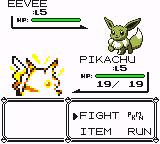


Screenshots from our own Pokémon Yellow gallery and Bulbapedia.
Your rival’s Eevee
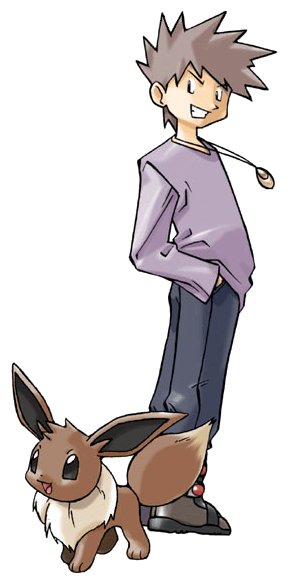
In RGB versions, your rival started with whichever of the Kanto starters had a type advantage over yours, in Pokémon Yellow he starts with an Eevee. What that Eevee evolves into will depend on the results of the first two battles with your rival:-
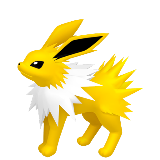 JolteonWin in Oak’s lab and win the optional battle on Route 22 (before Brock).
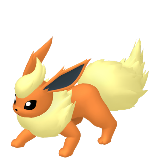 FlareonWin in Oak’s lab, then lose or skip the Route 22 battle.
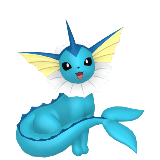 VaporeonLose in Oak’s lab – whatever happens on Route 22 (presumably to give the player a type advantage and better shot at victory the next time they meet).
Only those two early battles count; the later ones on the S.S. Anne, in the Pokémon Tower and at Silph Co. change nothing. His Eevee evolves before you meet him on the S.S. Anne, and his Champion team at the Indigo Plateau is built around whichever form it took.
Jessie and James’s four battles

Jessie and James stand in for the Rocket grunts at four story beats, and their teams grow with the plot:
| Where | Their team | Notes |
|---|---|---|
| Mt. Moon | Ekans, Meowth and Koffing, all Lv. 14 | Their game debut, with an encounter theme of their own. |
| Rocket Hideout, Celadon City | Koffing, Meowth and Ekans, all Lv. 25 | Guarding the lift to Giovanni. |
| Pokémon Tower, Lavender Town | Meowth, Arbok and Weezing, all Lv. 27 | Ekans and Koffing have evolved; they hold Mr. Fuji on the top floor. |
| Silph Co., Saffron City | Weezing, Arbok and Meowth, all Lv. 31 | Their last stand, just before Giovanni’s office. |
The Champion’s three teams
Because the rival’s Eevee can go three ways, the Champion has three possible teams. Sandslash (Lv. 61), Alakazam (Lv. 59) and Exeggutor (Lv. 61) are always there; the rest depends on the Eeveelution, which is always his strongest at level 65:
| If his Eevee became… | …the rest of his team is |
|---|---|
| Jolteon | Cloyster Lv. 61, Ninetales Lv. 63, Jolteon Lv. 65 |
| Flareon | Magneton Lv. 61, Cloyster Lv. 63, Flareon Lv. 65 |
| Vaporeon | Ninetales Lv. 61, Magneton Lv. 63, Vaporeon Lv. 65 |
What Yellow changes from Red and Blue
This is the heart of the page: everything Game Freak changed when it turned Red and Blue into the anime’s game. The lists are grouped the way I originally wrote them – story, visuals, characters and places, and gameplay.
Visual changes
- The front sprites of all Pokémon have been updated to fall better in line with the games’ official artwork by Ken Sugimori. The back sprites however remain unchanged from Red, Green and Blue.
- There have been a few modifications to minor visual elements around the Kanto region for example doors, windows and signs look a little different.
- In line with the anime, all generic Pokémon Centre staff were replaced by Nurse Joy and a Chansey. Likewise the entire Police Force is now made up of Officer Jennys.
- Blaine’s sprite has been updated on the overworld, and now shows him in glasses.
- During your encounter with Giovanni at the Viridian Gym he uses a Persian, which is a reference to the Persian who is often with him in the Anime.
- Many Trainer Sprites were updated too, Red and Blue were updated to look more similar to their official artworks used in manuals, strategy guides etc in Japan.
- Misty and Brock’s sprites have been updated so that they look more like they do in the anime, Misty loses the Bikini and gains shorts and a shirt and Brock’s outfit receives updated colouring.
- Pikachu now has its own unique icon on the party screen, and he, Oddish, Bulbasaur and Sandshrew also got new overworld sprites.


Character, NPC and location changes

Some of the generic trainers from Red, Blue, Green are replaced to more closely coincide with the anime, for example:-
- An additional Lass and a Bug Catcher can now be found in Viridian Forest.
- A male and female Jr. Trainer on Route 6 are replaced by characters resembling Joe and Giselle from the anime.
- A Jr. Trainer on Route 9 was replaced with a Youngster, which references A J, the Sandshrew trainer from the Anime.
- Route 19 now has the addition of the summer Beach house where the Pikachu’s Beach mini game can be played. This mini game was shown in The Pi-kahuna episode of the anime.
- Pikachu and Raichu are no longer available to be caught in the wild, so the only Pikachu in the game is the starter one, and that can’t evolve (just like Ash doesn’t make his evolve in the anime).
- When Ash first starts his Pokémon Journey in the anime he catches a Pidgeotto and a Caterpie in Viridian Forest. In RBG you could get Weedle or Caterpie in Viridian Forest, in Yellow you can only get Caterpie, additionally Pidgey and Pidgeotto are now found there too… leading the player to take a similar capture path to Ash in the beginning at least.
- All the Kanto starter Pokémon; Bulbasaur, Charmander and Squirtle can be obtained in Pokémon Yellow, to tie in with the fact that Ash caught all 3 in the anime.
- Abra could previously be found in various routes at the top of Cerulean City. It can now only be encountered at the routes immediately surrounding Saffron City.
- Koffing, Ekans, Meowth are well known as being Jessie & James’ Pokémon in the anime, and as such are not available to catch in game – keeping them as ‘bad guy’ Pokémon as they are in the anime.
- Farfetch’d and Lickitung which could only be obtained by in-game trades in previous titles are now available in the wild. This is testament to Ash encountering a wandering Farfetch’d in the anime (that helped rob him, if I remember right) and Jessie and James encountered and captured a Lickitung.


Changes to gameplay

- You can’t choose between the normal Kanto starters, guess you got out of bed too late huh? Instead you have to take Pikachu because he’s the only one left. But there’s a problem with this Pikachu, he hates his Poké Ball and insists on travelling about by the player’s side (Sound familiar?). Likewise Pikachu has a cry that sounds just like Ash’s Pikachu from the anime. The voice actor for the cry is Ikue Ōtani.
- You can’t evolve your starter Pikachu, nor can you release it into the wild. Ash never made his Pikachu evolve, even when it wanted to in order to beat Raichu in the anime so this ties in with that fact. Additionally Ash tried to release his Pikachu to stay with a load of other Pikachu but it returned to him, hence not having the option of releasing it.
- In RGB versions, your rival started with whichever of the Kanto starters had a type advantage over yours, in Pokémon Yellow he starts with an Eevee. What that Eevee evolves into depends on the first two battles with your rival – see the rival’s Eevee above.
- A primitive friendship gauge features in Pokémon Yellow, which simply tracks Pikachu’s feelings towards the player.
- Gym Leaders’ teams are comprised of slightly different Pokémon, to bring them more in line with those that appear in the anime.
- Game Boy Printer compatibility is added for the first time.
- The Cable Club received a new mode; Colosseum 2.
- Technical Machine (TM) compatibility is changed for some Pokémon, like Charizard who can now learn Fly by use of HM02.
Every wild-encounter change
For the record, here is the full list of wild-encounter changes, which is where most of the thirteen missing Pokémon come from:
- Viridian Forest: Weedle and Pikachu removed; Caterpie is the only bug left, and Pidgey and Pidgeotto now appear; a Lass and a Bug Catcher are added.
- No wild Pikachu or Raichu anywhere (Red and Blue had them in Viridian Forest and the Power Plant).
- Ekans, Arbok, Meowth, Persian, Koffing and Weezing are removed from the wild because they belong to Team Rocket.
- Wild Farfetch’d appear on Routes 12 and 13 (in Red and Blue it was trade-only, from the Vermilion Spearow trade).
- Wild Lickitung appear in Cerulean Cave (in Red and Blue it was trade-only, from the Route 18 Slowbro trade).
- Abra moved from Routes 24 and 25, north of Cerulean, to the four routes around Saffron City.
- Surfing encounters were added in the Seafoam Islands and on Routes 6, 12 and 13.
- Cerulean Cave has a completely different layout.
- The Safari Zone admits players with less than ₽500, charging what they have and giving proportionally fewer Safari Balls (at least one).
- Electabuzz (Red’s Power Plant) and Magmar (Blue’s Pokémon Mansion) were removed.
In the anime and movies
Yellow is the anime turned into a game, so the tie-ins run deeper than for any other title: its opening, its villains, its Nurse Joys and Officer Jennys and half its Gym teams come straight from Season 1. The movie link is a matter of timing.
In the anime
 Season 1: Indigo League1997–1999Yellow is the anime turned into a game. It borrows Pikachu as an unplanned partner that refuses its ball, cannot be made to evolve and follows its trainer everywhere. It adds Jessie, James and Meowth, Nurse Joy with Chansey and Officer Jenny. The gift Bulbasaur, Charmander and Squirtle come from Melanie, Damian and the Squirtle Squad episodes. Brock and Misty look as they do on TV, Gym teams copy the show’s, there are Caterpie-only woods, Jigglypuff sings in Pewter, and The Pi-Kahuna becomes Pikachu’s Beach.
 Season 2: Adventures in the Orange Islands1999There is little to link directly. Yellow came out in Japan before the Orange Islands arc and takes nothing from it. Both keep the same focus on Ash and an unevolved Pikachu, and Yellow’s Western launch overlapped with the arc’s run, but none of the Orange Islands’ locations, Gym Leaders or characters, Tracey included, appear in the game.
In the movies

The episodes behind the game
The episodes Yellow borrows from, scene by scene:
- EP001Pokémon, I Choose You! – An unwanted Pikachu becomes the starter, refuses its Poké Ball and walks alongside its trainer: Yellow’s whole opening.
- EP002Pokémon Emergency! – Jessie, James and Meowth debut, and Nurse Joy and Officer Jenny appear, all three of which replace generic sprites in Yellow.
- EP005Showdown in Pewter City – Pikachu struggles against Brock’s Rock types, which Yellow recreates with a starter that cannot touch his Geodude and Onix.
- EP010Bulbasaur and the Hidden Village – Melanie, who cares for abandoned Pokémon, is the basis for the Cerulean girl who gives you Bulbasaur.
- EP011Charmander – The Stray Pokémon – Damian abandons his Charmander, and Yellow’s Route 24 trainer gives you a Charmander in a nod to this episode.
- EP012Here Comes the Squirtle Squad – Officer Jenny and the Squirtle Squad explain why Jenny hands you a Squirtle in Vermilion City.
- EP014Electric Shock Showdown – Lt. Surge’s Raichu beats Pikachu, which then refuses a Thunder Stone, hence Surge’s lone Raichu and the starter’s refusal to evolve.
- EP067The Pi-Kahuna – Pikachu surfs a giant wave, which Yellow turns into the Pikachu’s Beach minigame on Route 19.
Can I catch ’em all?
There are thirteen Gen I Pokémon which cannot be obtained in Pokémon Yellow. And the ones you can’t get also seem to have a form of anime tie-in. Let’s take a look:-
The thirteen you can’t get
Not obtainable in Pokémon Yellow
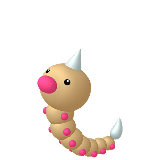 Weedle#013
 Kakuna#014
 Beedrill#015
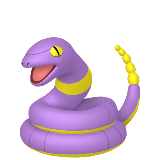 Ekans#023
 Arbok#024
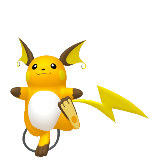 Raichu#026
 Meowth#052
 Persian#053
 Koffing#109
 Weezing#110
 Jynx#124
 Electabuzz#125
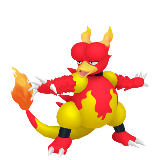 Magmar#126
In the vast majority of cases the Pokémon excluded from Yellow tie in with either encounters Ash has had with that type of Pokémon, or decisions he’s made regarding them. So we start out with Weedle, Ash encountered one but didn’t attempt to capture it, however went for Caterpie as soon as he saw that – this kind of eliminates Kakuna from proceedings, and I’m sure we all remember the Beedrill incident from the anime. The next ones are quite easy, Ekans, Arbok, Meowth, Persian, Koffing and Weezing are all Pokémon used by Jessie and James of Team Rocket, so that’s why they were excluded. As for Raichu, when Ash took on Lt. Surge and lost, his Pikachu was so frustrated that it wanted to become Raichu so it was strong enough to battle Surge’s Raichu, but the pair decided that their bond was more important than the raw strength gain obtained by evolving into Raichu.
As for Jynx, Electabuzz and Magmar, I think Jynx may simply have dropped due to controversy over its sprite, Electabuzz I’m not too sure on, and Magmar I think was due to the fact that Ash had his Charizard in his team as a fire type at the point when he encountered Magmar in the series, lessening his requirement for a strong fire type such as Magmar.
- Weedle – Viridian Forest was reworked so that Caterpie, Ash’s first catch, is the only bug there.
- Kakuna – Goes with Weedle; Yellow has no wild Weedle line at all.
- Beedrill – Goes with Weedle; Yellow has no wild Weedle line at all.
- Ekans – Jessie’s Pokémon in the anime; only Team Rocket uses it in Yellow.
- Arbok – Jessie’s evolved Ekans; it appears only on Jessie and James’s and Agatha’s teams.
- Raichu – Ash’s Pikachu refuses to evolve; the starter refuses a Thunder Stone and there are no wild Pikachu or Raichu (a traded-in Pikachu can still evolve).
- Meowth – Team Rocket’s Meowth.
- Persian – Giovanni’s cat in the anime; Yellow gives him one in every battle.
- Koffing – James’s Pokémon in the anime.
- Weezing – James’s evolved Koffing.
- Jynx – No anime reason; Yellow drops the Cerulean City Poliwhirl-for-Jynx trade that was its only source in Red and Blue.
- Electabuzz – No clear anime reason; its Power Plant spot from Pokémon Red was removed.
- Magmar – No clear anime reason; its Pokémon Mansion spot from Pokémon Blue was removed.
The mechanical reason for the last three is more mundane: Jynx only ever came from the Cerulean City Poliwhirl trade, which Yellow drops, while Electabuzz lived in Red’s Power Plant and Magmar in Blue’s Pokémon Mansion, and neither spot survived the rebuild. By our count a single Yellow cartridge tops out at 128 of 151: take away Mew, the thirteen above and the four trade evolutions (Alakazam, Machamp, Golem and Gengar), then two more for the Eeveelutions your one Eevee can’t become, two for the fossil line you didn’t pick and one for whichever of Hitmonlee and Hitmonchan you leave at the Dojo.
Pikachu and the three starters
You don’t choose a starter in Yellow, but you can end up with all three – each is a level 10 gift with an anime episode behind it:
 PikachuYour partner · Lv. 5
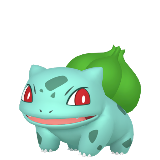 BulbasaurCerulean City · Lv. 10
 CharmanderRoute 24 · Lv. 10
 SquirtleVermilion City · Lv. 10
- Pikachu: From Professor Oak after he catches it on Route 1. Cannot evolve or be released.
- Bulbasaur: From the girl in the house by the Pokémon Center, once Pikachu’s friendship is 147 or higher (she’s based on Melanie from Bulbasaur and the Hidden Village).
- Charmander: From the trainer north of Nugget Bridge, no strings attached (a nod to Damian in Charmander – The Stray Pokémon).
- Squirtle: From Officer Jenny once you hold the Thunder Badge (Here Comes the Squirtle Squad).
Still obtainable, as in every Gen I game: a level 25 Eevee sits in a Poké Ball in the small rooftop room of Celadon Mansion, reached by the back stairs. It is the only Eevee in Yellow, so without trading you can own just one of Vaporeon, Jolteon and Flareon.
Legendary and Mythical Pokémon
 ArticunoSeafoam Islands (lowest floor)
 ZapdosPower Plant
 MoltresVictory Road
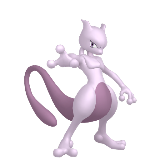 MewtwoCerulean Cave (deepest floor), after the Elite Four
 MewNot in the game; events or the Mew glitch only
The birds and Mewtwo are where Red and Blue left them, all at the same levels – Articuno, Zapdos and Moltres at level 50, Mewtwo at level 70 in a Cerulean Cave with a brand-new layout.
Mew was never placed in the game. In the West it came from 1999–2001 events: in the US through Nintendo Power and Toys “R” Us promotions, and in Europe through tours such as the UK and Ireland Pokémon Championship 2000 shopping-centre tour (15 July to 14 August 2000) and the Millennium Dome (1 to 3 September 2000). On 22 November 2016, Nintendo UK’s Pokémon Festival in London handed out a level 5 Mew that only the Virtual Console versions could receive. The trainer-escape Mew glitch also works in Yellow.
In-game trades and trade evolutions
Yellow has seven in-game trades of its own; Red and Blue’s Spearow-for-Farfetch’d, Slowbro-for-Lickitung and Poliwhirl-for-Jynx trades are gone:
| You give | You get | Where |
|---|---|---|
| Clefairy | Mr. Mime (MILES) | Route 2 |
| Cubone | Machoke (RICKY) | Underground Path, Routes 5–6 |
| Lickitung | Dugtrio (GURIO) | Route 11 |
| Tangela | Parasect (SPIKE) | Route 18 |
| Golduck | Rhydon (BUFFY) | Pokémon Lab, Cinnabar Island |
| Growlithe | Dewgong (CEZANNE) | Pokémon Lab, Cinnabar Island |
| Kangaskhan | Muk (STICKY) | Pokémon Lab, Cinnabar Island |
As ever, four Pokémon only evolve when traded over the Link Cable – Kadabra into Alakazam, Machoke into Machamp, Graveler into Golem, Haunter into Gengar – so a complete Pokédex still needs a friend with a cartridge.
Pikachu’s Beach and Surfing Pikachu
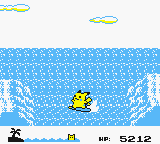
Pikachu’s Beach is Yellow’s hidden minigame, a surfing score-attack in the beach house on Route 19 that only a Pikachu that knows Surf can play. The catch is that nothing in Yellow teaches Pikachu Surf:
Yellow cannot teach Pikachu Surf by itself. The usual route is Pokémon Stadium on the N64: in the Western release, clear the Round 2 Prime Cup’s Master Ball class using only cartridge Pokémon, without saving mid-cup, with Pikachu in the final battle, and your Pikachu learns Surf. US players could also get one from the Nintendo Power Pikachu event in autumn 1999. On the 3DS Virtual Console, your own Pikachu can play the minigame without Surf. Flying Pikachu was a Japan-only Gen I event (CoroCoro, October 1997).


Trading, connectivity & the Game Boy Printer

You can battle each other or trade between two carts via a Game Boy Link Cable. Other benefits of using this feature include being able to trade Pokémon for which trading is an evolution requirement, and trading with other first generation games in order to complete the Pokédex.
The Japanese version of Pokémon Yellow can trade with their regional counterparts Red, Green and Blue. The internationally released version of Yellow can trade with the western releases of Pokémon Blue and Red versions as well as other Yellow carts – additionally it would later be able to trade with Pokémon Gold, Silver and Crystal by making use of the Time Capsule feature.
Pokémon Yellow is completely incompatible with any games Gen III or newer. Trying to trade between a Japanese and Western cart WILL result in corrupted data, so avoid it at all costs; likewise Battle between them wouldn’t work either, but doesn’t seem to do the same damage to game data when attempted.
Non-Game Boy titles Pokémon Stadium and Pokémon Stadium 2 are compatible with Pokémon Yellow which enables your team from Pokémon Yellow to take on someone with a Gen II cart via Pokémon Stadium 2.
As mentioned previously Pokémon Yellow also includes Game Boy Printer functionality which enables the player to print off various stickers ranging from PokéDex entries, print screens of party Pokémon, the Diploma and their highscore on the Pikachu’s Beach minigame.
Colosseum 2 in the Cable Club adds three rule sets for link battles – Pika Cup (Lv. 15–20), Petit Cup (Lv. 25–30) and Poké Cup (Lv. 50–55) – the same cups Pokémon Stadium runs on the N64. With the Transfer Pak, Stadium plays Yellow on the TV through its GB Tower and gives your partner Pikachu animations of its own. The 3DS Virtual Console version swaps the cable for 3DS wireless, keeps the Printer menu option but does nothing with it, and works with Poké Transporter so Pokémon in Box 1 can move to Pokémon Bank and on to Generation VII.


The Kanto region in Yellow
Yellow’s Kanto is Red and Blue’s Kanto, tile for tile: the same ten towns, the same routes and dungeons, named after colours with the one exception of Pallet Town. We’ve written up the lore of every place on the Red & Blue page, so rather than repeat it, each card below lists only what Yellow changes when you get there – new trainers, moved Pokémon, Pikachu’s reactions and where Jessie and James turn up.

What changes, place by place
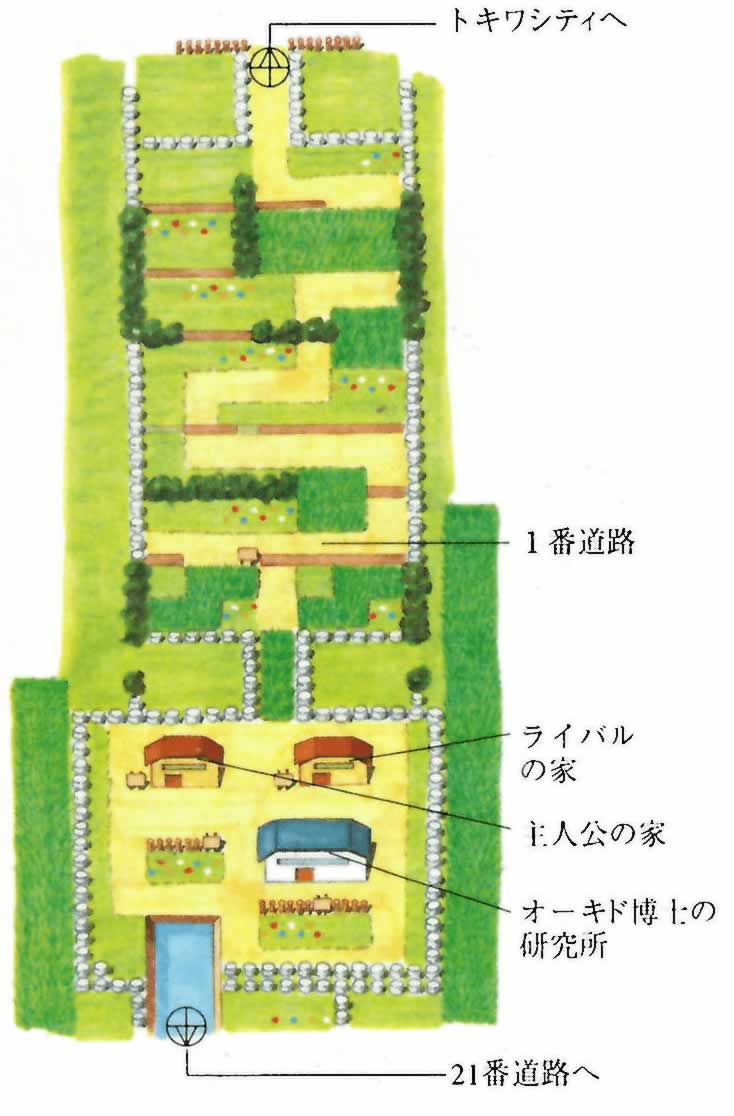
Pallet Town
This is where Yellow’s biggest change happens. Oak stops you at the edge of town, catches a wild Pikachu in front of you and, after his grandson takes the only Poké Ball (an Eevee), gives that Pikachu to you. Pikachu refuses its ball and follows you out of the lab. The first rival battle, Pikachu against Eevee, is the first step in deciding which Eeveelution you will face at the Indigo Plateau.

Route 1 & Viridian City
The Viridian Poké Mart now sells Potions, which matters when Pikachu is your only Pokémon. In the Pokémon Center, Nurse Joy and her Chansey take over from the generic attendant, and Pikachu hops over the counter while you heal. Route 22 hosts the optional second rival battle: win it, having also won in the lab, and his Eevee becomes Jolteon; lose or skip it and you get Flareon instead.

Viridian Forest
The forest was rebuilt around Ash’s first catch. Weedle and wild Pikachu are gone, so Caterpie is the only bug left, and Pidgey and Pidgeotto now turn up in the grass. Two extra trainers, a Lass and a Bug Catcher, join the usual line-up. With no Weedle, the whole Weedle, Kakuna and Beedrill line cannot be caught anywhere in Yellow.
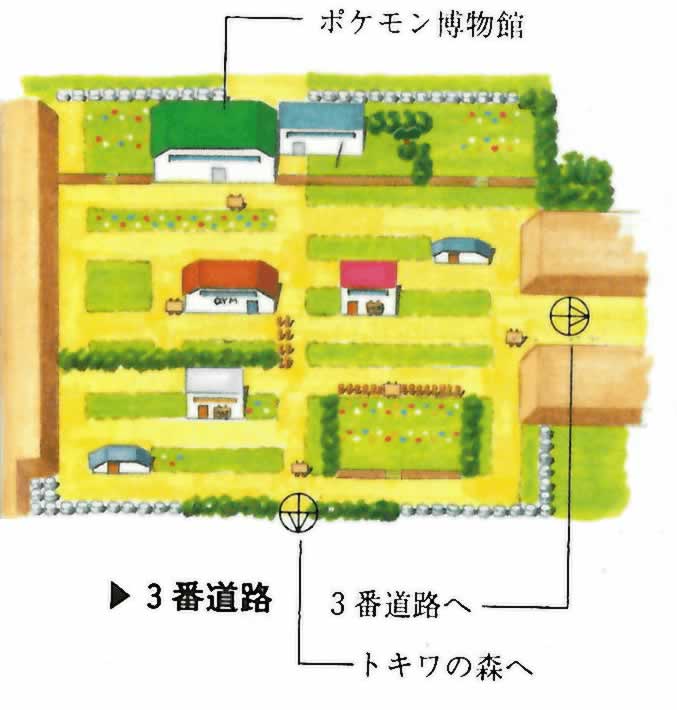
Pewter City
Brock is easier than before, with Geodude Lv. 10 and Onix Lv. 12 (two levels lower than in Red and Blue), but Pikachu’s Electric moves cannot touch Rock and Ground types, so you will want a Grass or Fighting type or a lot of Tackle. Brock’s battle sprite is redrawn to match his anime outfit. In the Pokémon Center a Jigglypuff sings Pikachu to sleep, and you cannot move or store it until it wakes.
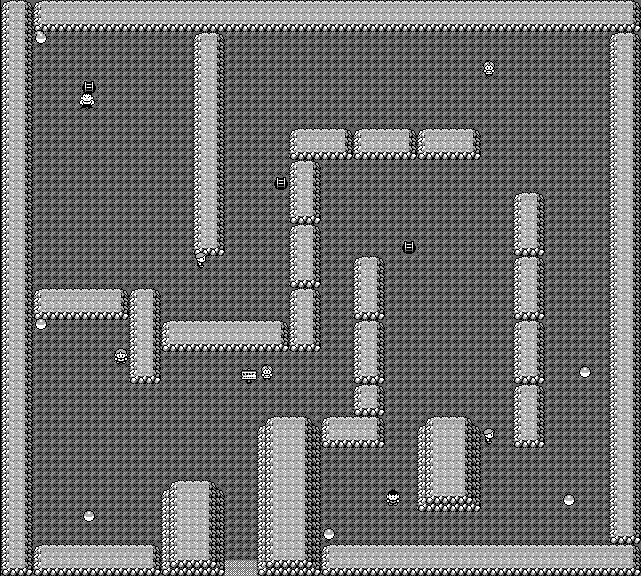
Mt. Moon
Jessie and James make their game debut here, standing in for Team Rocket grunts, with Ekans, Meowth and Koffing, all at level 14. They have their own encounter music that Red and Blue never had, and they ‘blast off’ when beaten, as in the anime. Meowth battles alongside Ekans and Koffing but, unlike its TV self, cannot talk. The fossil choice at the end is unchanged.

Cerulean City & Route 24
Two of the three Kanto starters are around here. A girl in a town house gives you Bulbasaur if Pikachu’s friendship is 147 or higher, and a trainer on Route 24, north of Nugget Bridge, gives you Charmander. Misty keeps Staryu and Starmie but now wears a shirt and shorts instead of a swimsuit. Abra no longer lives on Routes 24 and 25. At Bill’s cottage, Pikachu looks baffled by the Pokémon-shaped Bill and shocked when he becomes human again.

Vermilion City & the S.S. Anne
Lt. Surge now uses a single Raichu at level 28, echoing Electric Shock Showdown, and Officer Jenny gives you Squirtle once you have his badge. The Spearow-for-Farfetch’d trade has been dropped, and in the Underground Path from Route 5 to Route 6 a trader now swaps a Cubone for a Machoke called RICKY. In the Pokémon Fan Club, Pikachu walks up to a Clefairy and falls for it. Fishing with Pikachu out shows it wearing a bait bucket.
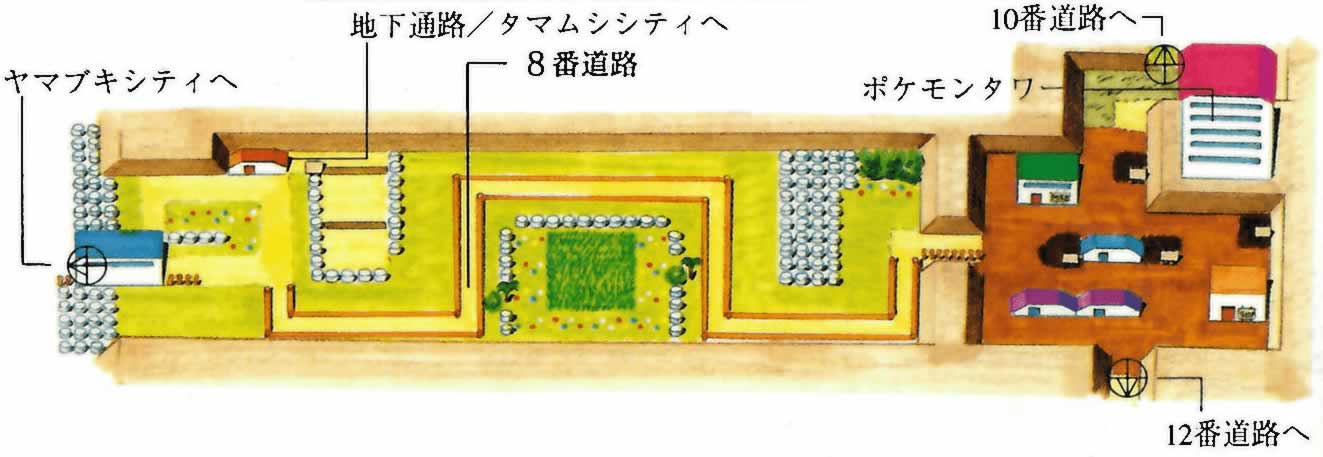
Rock Tunnel & Lavender Town
Rock Tunnel itself plays much as in Red and Blue, though the Jr. Trainer on Route 9 outside it is now a Youngster with a 100-win Sandshrew, a nod to A.J. from the anime. The change is at the top of the Pokémon Tower, where Jessie and James replace the Rocket grunts holding Mr. Fuji. Their Ekans and Koffing have now evolved, and they bring Arbok, Weezing and Meowth, all at level 27. Pikachu looks frightened if you talk to it anywhere inside the Tower.

Celadon City & the Rocket Hideout
Erika’s team now mirrors her anime appearance: Tangela Lv. 30, Weepinbell Lv. 32 and Gloom Lv. 32. Deep in the Rocket Hideout, Jessie and James (Ekans, Meowth and Koffing, all Lv. 25) block the way to Giovanni, who now has a Persian (Lv. 29) where Red and Blue gave him a Kangaskhan. The Eevee in its Poké Ball on the Celadon Mansion roof is still there, at level 25.

Saffron City & Silph Co.
Wild Abra now live on the four routes around Saffron. Silph Co. ends with Jessie and James’s last battle (Weezing, Arbok and Meowth, all Lv. 31) before Giovanni, whose Persian again takes Kangaskhan’s slot. Sabrina switches to the anime’s psychic family: Abra, Kadabra and Alakazam, all at level 50. Kadabra’s signature move is now Kinesis. The Fighting Dojo’s Hitmonlee or Hitmonchan prize is unchanged.
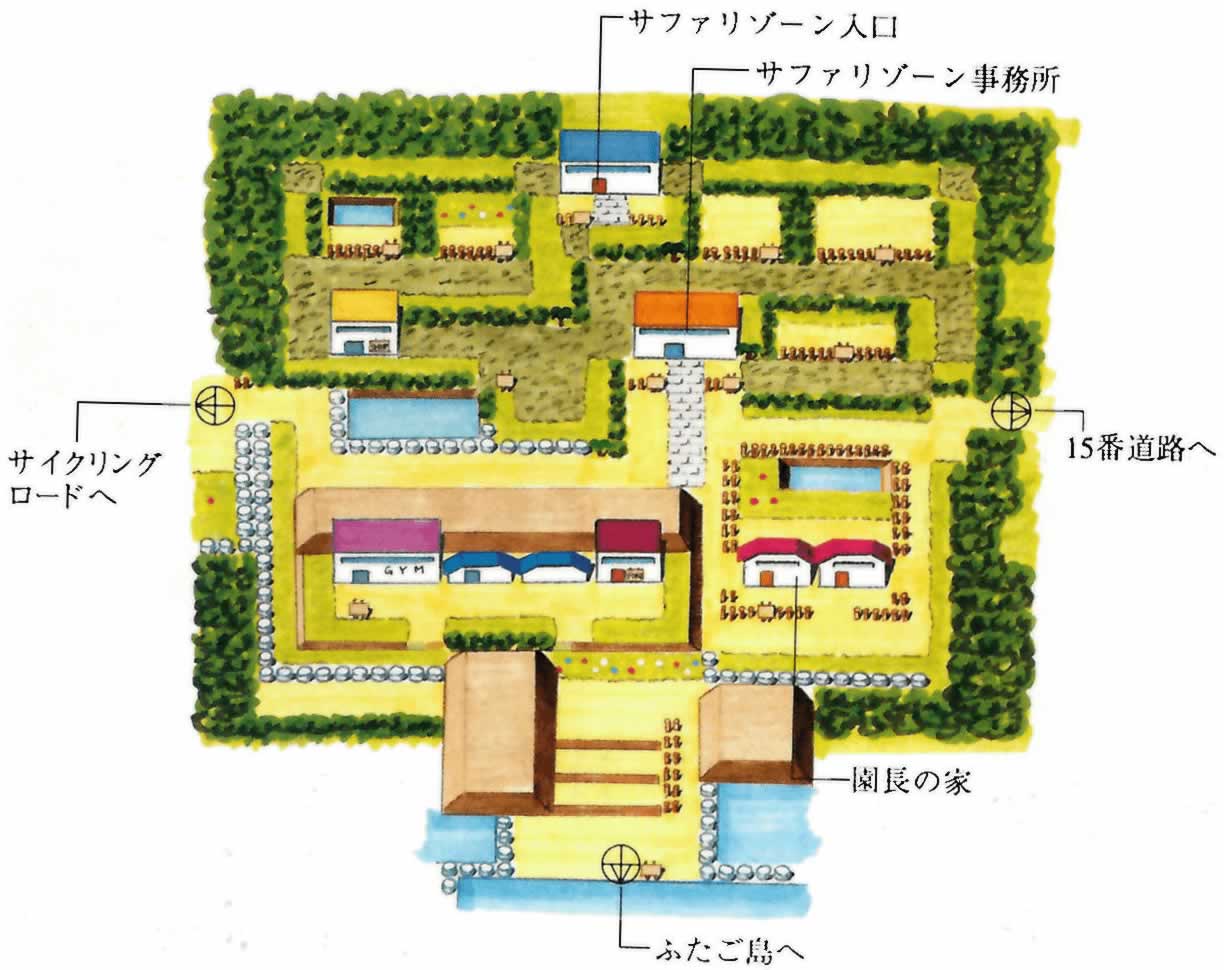
Fuchsia City, the Safari Zone & Route 19
Koga drops his Koffing line for Venonat at levels 44, 46 and 48 and a level 50 Venomoth. If you have less than ₽500, the Safari Zone lets you in for whatever money you have, with fewer Safari Balls. Wild Farfetch’d appear on Routes 12 and 13, and Route 18’s trader now swaps Tangela for a Parasect. On Route 19, a surfer’s beach house hosts the Pikachu’s Beach minigame, but only for a Pikachu that knows Surf.

Seafoam Islands
Yellow adds wild encounters while surfing inside the Seafoam Islands, as it does on Routes 6, 12 and 13, so the underground currents are no longer a safe place to travel. Otherwise the caves and the puzzle of pushing boulders into the currents are the same, and Articuno still waits at the bottom at level 50. There are no Jessie and James or Pikachu scenes here.

Cinnabar Island
Blaine now has glasses on his overworld sprite and a new team of Ninetales Lv. 48, Rapidash Lv. 50 and Arcanine Lv. 54. In his Gym you must answer the quiz machines before you can battle the trainer beside each one. The lab’s trades are new: Golduck for Rhydon, Growlithe for Dewgong and Kangaskhan for Muk. The old man glitch on the east coast no longer works, so MissingNo. does not appear here.

Power Plant
Zapdos is still here, but the plant loses its most famous residents. Red and Blue had wild Pikachu and Raichu here, and Red had Electabuzz too. Yellow removes all three, so none of them can be caught anywhere in the game. That leaves your starter as the only Pikachu in Yellow.
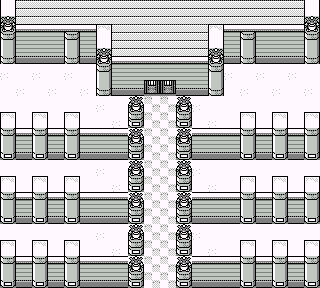
Victory Road & the Indigo Plateau
The Elite Four’s teams are the same as in Red and Blue, so Agatha still has an Arbok, a species you cannot catch yourself in Yellow. The Champion’s team is new and depends on his Eevee: Sandslash, Alakazam and Exeggutor plus a mix of Ninetales, Magneton or Cloyster around a level 65 Jolteon, Flareon or Vaporeon. Early Japanese copies let a walking Pikachu erase some boulder-switch walls on Victory Road; version 1.3 fixed this.
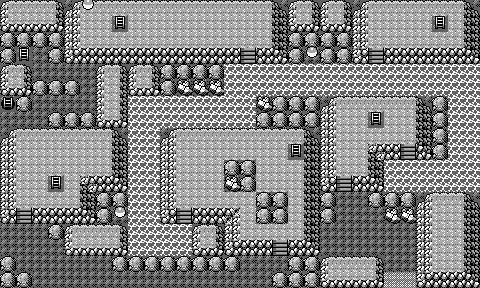
Cerulean Cave
The post-game dungeon has a completely new layout in Yellow, so maps for Red and Blue are no use here. Mewtwo is still at the deepest point at level 70. Yellow also makes the cave the only place to find a wild Lickitung, which in Red and Blue you could only get through the Route 18 trade.
Two maps that are genuinely different in Yellow: Cerulean Cave has a completely new layout, so Red and Blue walkthroughs are no use in the post-game, and Route 19 gains the beach house.

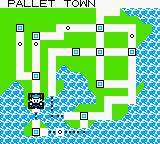
The maps are part of the official artwork by Ken Sugimori. In-game maps from Bulbapedia; screenshots from our own gallery and Bulbapedia.
Characters
Yellow’s cast is Red and Blue’s cast with two additions – a Pikachu with a personality and the anime’s Team Rocket duo – and a few familiar faces redrawn to match the TV show.
The main cast

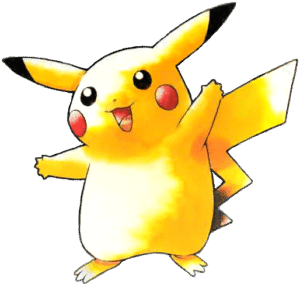
Pikachu, your partner
Yellow’s star is the player’s own Pikachu, the first Pokémon in a core game to walk behind its trainer. Its friendship value, which only exists for Pikachu in this game, goes up when Pikachu levels up, learns a TM or helps beat a Gym Leader, and goes down when it faints or is left in the PC. Talk to it and it reacts: it beams after you catch something, turns its back after a loss to the rival, looks ill when poisoned, dozes when asleep, trembles in the Pokémon Tower and sometimes zaps you after learning Thunderbolt. Once friendship reaches 80 it walks faster. It refuses a Thunder Stone, cannot be released and grumbles about the PC. Its cry is Ikue Ōtani’s voice, squeezed onto the Game Boy by Junichi Masuda. Pokémon Stadium can teach it Surf, which opens the Pikachu’s Beach minigame, but Yellow has no Gen I way to teach it Fly. Trade it away and back and it keeps its friendship, but once it evolves into Raichu elsewhere it loses its partner status for good.

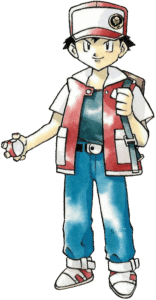
Red
Yellow’s Red is the same silent ten-year-old from Pallet Town, but his trainer sprite was redrawn to match Sugimori’s artwork and, for the first time, he never walks alone. The Japanese manual calls him Yellow, the name the Pokémon Adventures manga later gave its own Viridian Forest trainer.

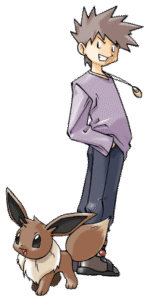
Blue, your rival
Oak’s grandson grabs the Eevee Oak had set aside for you, so for once the rival’s first Pokémon has nothing to do with yours. How the first two battles go decides whether it becomes Jolteon, Flareon or Vaporeon. His team is built around that Eeveelution instead of a starter that beats yours. His Champion team drops Red and Blue’s Pidgeot, Rhydon, Gyarados and fire, water or grass starter. It keeps Alakazam and Exeggutor and adds Sandslash plus two of Ninetales, Magneton and Cloyster. Yellow’s version of his Alakazam uses Kinesis instead of Reflect. His Eeveelution is always the strongest member, at level 65, and he still carries Full Restores. His smug attitude is unchanged from Red and Blue.

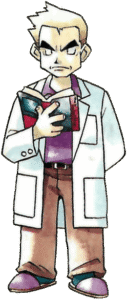
Professor Oak
Yellow gives Oak an action scene: he battles and catches the wild Pikachu himself, shown with a back sprite drawn for this game, after stopping you from walking into the grass unprotected. The Eevee he meant to give you goes to his grandson, so Pikachu becomes your partner by accident, just like Ash’s in the first episode. After that his role is the same as before: handing out the Pokédex, sending you on the Parcel errand and rating your progress.

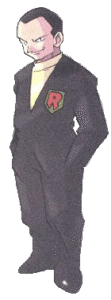
Giovanni
The Team Rocket boss now uses a Persian in all three battles, matching the cat he strokes in the anime. In the Rocket Hideout he has Onix Lv. 25, Rhyhorn Lv. 24 and Persian Lv. 29. At Silph Co. he brings Nidorino Lv. 37, Rhyhorn Lv. 37, Persian Lv. 35 and Nidoqueen Lv. 41. As Viridian’s Gym Leader he uses Dugtrio Lv. 50, Persian Lv. 53, Nidoqueen Lv. 53, Nidoking Lv. 55 and Rhydon Lv. 55, a much stronger team than in Red and Blue.
Small sprites: each character’s Yellow battle sprite, via Bulbapedia.
Team Rocket: Jessie and James
Prepare for trouble, and make it double. Team Rocket are back, and this time it’s not generic grunts – Jessie and James. Although their names come up as ‘Rocket Grunt’ their sprites are very distinctive and it’s obviously them. Check out the image of Team Rocket from the Anime on the left, and the encounter sprites on the right. Additionally Team Rocket are well known for referring to Ash as ‘the twerp’ in the Anime, and many of their sayings have been added to the game’s dialogue.


Like in the Red, Green and Blue versions of the game Team Rocket is still led by Giovanni, and they still commit the same sinister deeds. The only true differences are that said sinister deeds are committed by some more familiar faces.
Yellow brings the anime’s Team Rocket duo into the games for the first time. They battle as a single opponent, with a shared battle sprite and separate overworld sprites, under the same Rocket trainer class as the grunts. You meet them four times: Mt. Moon, the Celadon hideout, the top of the Pokémon Tower and Silph Co. Each battle guards one of Team Rocket’s bigger schemes, and two of them, the hideout and Silph Co., lead straight to Giovanni. Their teams follow the show, with Jessie’s Ekans, James’s Koffing and Meowth. The first two evolve into Arbok and Weezing before the Tower battle, but Meowth stays a Meowth and cannot talk, unlike in the anime. They get encounter music of their own, they borrow lines from the anime’s motto, and every defeat ends with a version of ‘Team Rocket’s blasting off again!’. Their scenes echo Pokémon Emergency! and Clefairy and the Moon Stone.
Gym Leaders
The eight Gyms are in the same places, led by the same leaders, but Yellow swaps most of their teams for the ones they use in the anime – and it stops pretending Pikachu can beat everything. Brock in particular is a wall for a lone Electric type. Teams below are Yellow’s; the Red and Blue versions are on that page.
The badge route – the order the game expects, with Yellow’s ace Pokémon, a sensible team level and the TM each leader hands over:
- Boulder BadgeBrock · Pewter CityRock · ace Onix Lv. 12Aim for Lv. 10–14 · TM34 Bide
- Cascade BadgeMisty · Cerulean CityWater · ace Starmie Lv. 21Aim for Lv. 18–22 · TM11 BubbleBeam
- Thunder BadgeLt. Surge · Vermilion CityElectric · ace Raichu Lv. 28Aim for Lv. 26–30 · TM24 Thunderbolt
- Rainbow BadgeErika · Celadon CityGrass · ace Gloom Lv. 32Aim for Lv. 30–34 · TM21 Mega Drain
- Soul BadgeKoga · Fuchsia CityPoison · ace Venomoth Lv. 50Aim for Lv. 44–50 · TM06 Toxic
- Marsh BadgeSabrina · Saffron CityPsychic · ace Alakazam Lv. 50Aim for Lv. 48–52 · TM46 Psywave
- Volcano BadgeBlaine · Cinnabar IslandFire · ace Arcanine Lv. 54Aim for Lv. 50–54 · TM38 Fire Blast
- Earth BadgeGiovanni · Viridian CityGround · ace Rhydon Lv. 55Aim for Lv. 53–58 · TM27 Fissure
The eight Gym Leaders in Yellow


Brock
Yellow team: Geodude Lv. 10, Onix Lv. 12
Two levels lower than Red and Blue’s Geodude Lv. 12 and Onix Lv. 14, but harder in practice because your only Pokémon is an Electric type that cannot hurt him. His battle sprite is redrawn in his anime outfit, and he does not join you as he does in the show.
Reward: TM34 Bide · aim for Lv. 10–14


Misty
Yellow team: Staryu Lv. 18, Starmie Lv. 21
Her team and levels are the same as in Red and Blue, but Pikachu now makes her the easiest Gym in the game. Her swimsuit becomes the anime’s shirt and shorts. The Sensational Sisters are absent, and she does not leave town with you.
Reward: TM11 BubbleBeam · aim for Lv. 18–22


Lt. Surge
Yellow team: Raichu Lv. 28
Red and Blue’s Voltorb, Pikachu and Raichu are cut to a single level 28 Raichu, restaging the Pikachu-against-Raichu rematch from Electric Shock Showdown. Pikachu’s Electric moves barely hurt it, so bring a Ground type such as a Diglett from Diglett’s Cave.
Reward: TM24 Thunderbolt · aim for Lv. 26–30

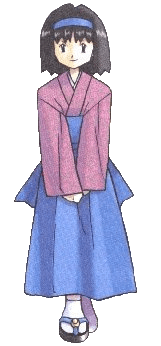
Erika
Yellow team: Tangela Lv. 30, Weepinbell Lv. 32, Gloom Lv. 32
Victreebel and Vileplume are swapped for the line-up she uses in Pokémon Scent-sation!, Gloom included. Her levels go up from a top of 29 to 32, though her Pokémon are less evolved than before.
Reward: TM21 Mega Drain · aim for Lv. 30–34


Koga
Yellow team: Venonat Lv. 44, Venonat Lv. 46, Venonat Lv. 48, Venomoth Lv. 50
With Koffing and Weezing reserved for James, Koga switches to the anime ninja’s Venonat line. His levels jump sharply from Red and Blue’s top of 43, which makes him one of Yellow’s difficulty spikes.
Reward: TM06 Toxic · aim for Lv. 44–50


Sabrina
Yellow team: Abra Lv. 50, Kadabra Lv. 50, Alakazam Lv. 50
Mr. Mime and Venomoth are gone. She now uses the whole Abra family, as her anime Kadabra story suggests, all at level 50, compared with a top of 43 before. Her Kadabra knows the new signature move Kinesis.
Reward: TM46 Psywave · aim for Lv. 48–52

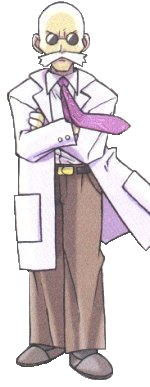
Blaine
Yellow team: Ninetales Lv. 48, Rapidash Lv. 50, Arcanine Lv. 54
Growlithe and Ponyta give way to fully evolved Ninetales and Rapidash, both from his anime team, ahead of a level 54 Arcanine. His overworld sprite gains glasses, and the Gym quiz now has to be answered before you can fight the trainer beside each machine.
Reward: TM38 Fire Blast · aim for Lv. 50–54


Giovanni
Yellow team: Dugtrio Lv. 50, Persian Lv. 53, Nidoqueen Lv. 53, Nidoking Lv. 55, Rhydon Lv. 55
Rhyhorn makes way for his anime Persian, and every level rises: Dugtrio goes from 42 to 50, Nidoqueen from 44 to 53, Nidoking from 45 to 55 and Rhydon from 50 to 55. His prize money rises from ₽4,950 to ₽5,445.
Reward: TM27 Fissure · aim for Lv. 53–58
The Elite Four & the Champion
The Elite Four are the one part of Yellow that Game Freak left completely alone: Lorelei, Bruno, Agatha and Lance use exactly the teams they had in Red and Blue, right down to Agatha’s Arbok, a Pokémon you can’t catch yourself in this version. Their write-ups are on the Red & Blue page; here are the teams for reference.
| Member | Type | Team (unchanged from Red & Blue) | Yellow notes |
|---|---|---|---|
| Lorelei | Ice | Dewgong Lv. 54, Cloyster Lv. 53, Slowbro Lv. 54, Jynx Lv. 56, Lapras Lv. 56 | Unchanged. Her Jynx is one of the thirteen you can’t obtain in Yellow, and on the Western Virtual Console its sprite was recoloured from black to purple. |
| Bruno | Fighting | Onix Lv. 53, Hitmonchan Lv. 55, Hitmonlee Lv. 55, Onix Lv. 56, Machamp Lv. 58 | Unchanged. |
| Agatha | Ghost | Gengar Lv. 56, Golbat Lv. 56, Haunter Lv. 55, Arbok Lv. 58, Gengar Lv. 60 | Unchanged. She keeps an Arbok even though Arbok is off-limits to the player. |
| Lance | Dragon | Gyarados Lv. 58, Dragonair Lv. 56, Dragonair Lv. 56, Aerodactyl Lv. 60, Dragonite Lv. 62 | Unchanged. |
 Lorelei
 Bruno
 Agatha
 Lance
Then it’s your rival, with one of the three teams described above: Sandslash, Alakazam and Exeggutor plus two of Ninetales, Magneton and Cloyster, built around a level 65 Jolteon, Flareon or Vaporeon. Red and Blue’s Pidgeot, Rhydon and Gyarados are gone, and his Alakazam now knows Kinesis.
Glitches, speedruns and Twitch Plays Pokémon
Yellow’s folklore is thinner than Red and Blue’s because Game Freak fixed the famous one – but the fix created a different scene, with its own glitch Pokémon, a Pikachu that can rewrite memory and a Twitch Plays Pokémon anniversary run.
Old man glitch removed (no Cinnabar MissingNo.)

Yellow’s biggest glitch difference is a missing glitch. In Red and Blue, watching the Viridian old man’s catching demonstration and then surfing along Cinnabar’s east coast gives you MissingNo. and duplicates your sixth item. Game Freak fixed this for every version of Yellow: the leftover wild-encounter data is cleared before it is overwritten, and the shore tiles no longer trigger wild battles at all. A related 2×2-block encounter quirk was fixed too. MissingNo. still exists in Yellow’s data, but you now have to reach it through trainer escape, and players use special versions with fossil or ghost front sprites to avoid crashes.
Yellow-only glitch Pokémon (4 4 Hy and others)

Yellow has its own set of glitch Pokémon, and some of them exist only in Yellow. A well-documented one is 4 4 Hy (index C0), a Water and Psychic hybrid of Slowbro that sometimes shows Slowbro’s sprite and plays the Vermilion City music on its summary screen. You meet it through the Mew glitch’s Special-stat method, using a Pokémon with a Special of 192, or bring it in through a Time Capsule exploit with Bayleef. Traded to Red or Blue, it turns into a different glitch Pokémon. Bulbapedia’s GlitchDex lists dozens more, including 3TrainerPoké $ (index 176, pictured), whose Pokédex entry is a scramble of a trainer’s name.
Pikachu off-screen glitch

This is the one major glitch Yellow added. Some scripted events stop Pikachu from following you. If you then walk around the overworld while Pikachu is off-screen, the game keeps updating its position and writes values of 01 to 04 into memory addresses it should not touch. Glitch hunters use this to change data on purpose. The best-known use spawns a glitch sign in the Pokémon Fan Club, which can lead to arbitrary code execution, letting a player run instructions of their choice. A separate early Japanese bug let a walking Pikachu remove some boulder-switch walls on Victory Road; version 1.3 of the Japanese release fixed it.
The Mew glitch (trainer escape) in Yellow
The famous Mew trick works in Yellow. You use Fly or Teleport to escape a trainer who has already spotted you, then come back and fight a Pokémon whose Special stat sets which wild Pokémon appears, and a Special of 21 gives you Mew. In Yellow it is also the main way to reach MissingNo. and the Yellow-only glitch Pokémon, because the old man route is gone. The Glitch City Laboratories wiki notes one catch: the trainers usually used for the setup can be fought by accident earlier in the game, so a careless save file can lose the chance.
Glitch City and the Safari Zone exit trick

Yellow keeps the Safari Zone exit glitch, which lets you walk through walls and wander into Glitch City, a scrambled out-of-bounds area. It is more valuable in Yellow than before, because the trainer-escape setups can be missed. Speedrunners and glitch hunters use it to reach a Glitch City where, with 50 items stored in the PC, using Cut on a tree changes the stored item count to 109. That exposes memory beyond the normal PC list, which players then use for item manipulation and, eventually, code execution.
Save corruption, MissingNo. and the Hall of Fame
Resetting the console at the right moment during a save can still break Yellow wide open, and it is still the fastest way to break the game, but the timing is tighter. Yellow is also more fragile around MissingNo. In Red and Blue its oversized sprite mainly damages the Hall of Fame data. In Yellow the same overflow writes into working memory and often freezes the game, which is why players reaching MissingNo. here prefer the special fossil or ghost-sprite versions that load safely.
Glitch items and code execution (ws m)
Moving memory around to make room for Pikachu also changed how Yellow’s glitch items behave. Glitch items 84 to 128 take their effects from different places than in Red and Blue. Yellow has ws m, which runs code chosen by how many Pokémon are in the current PC box, but nothing equivalent to Red and Blue’s 8F, which reads the party count. A stack of 255 of one item taken out of the PC allows an item underflow without the usual setup. A manipulation known as THE Manip reaches a glitch shop that sells the code-running item 4F. Even the bag moved: the third item slot sits one byte earlier in memory.
Twitch Plays Pokémon

Twitch Plays Pokémon never used the unmodified Yellow for a main run. For the channel’s third anniversary it played Pokémon Chatty Yellow, a modified version of Yellow, as the first run of Season 4, from 12 to 23 February 2017, with thousands of viewers typing commands into chat to steer a single player character. Bulbapedia lists no other Twitch Plays run or side game based on Yellow. Chatty Yellow sits alongside the original 2014 Red run as part of the channel’s Generation I history, and Yellow’s following Pikachu made it a natural anniversary pick.
Speedrunning
Yellow has its own speedrun routes, separate from Red and Blue’s, because every run has to start with Pikachu and play around its weakness to Brock’s Rock types. Guinness World Records lists Gunnermaniac’s any% glitchless run of 1:54:01 on 8 June 2018, verified by Speedrun.com, as a world record. The glitchless and glitched records have both improved since, and glitched categories use save corruption and code execution to finish in a fraction of that time. Check speedrun.com for the current leaderboards; the records move often.
Videos & media
Check out these Pokémon Yellow videos including TV Commercials, trailers and the intro/opening video.
A U.S TV Commercial for Pokémon Yellow.
The Intro / Opening Video.
The Official Trailer from way back in 1999.
A piece of music present in the game’s data files which did not make it to the final release. I believe it would’ve been used for an encounter of some kind.
Trivia & facts
So we’ve covered the stuff that ties in with the Anime, but there’s also a good few bits that don’t. Check them out:-
- Team Rocket’s Meowth talks in the series, but doesn’t talk in the game. Likewise in the anime he can’t use Pay Day and instead fakes it by throwing James’s bottle cap collection, whereas in Pokémon Yellow he uses Pay Day.
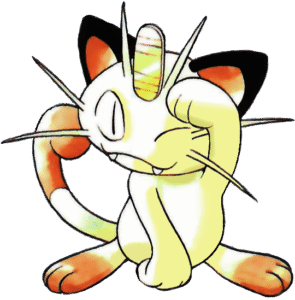
Meowth, that’s right! - In the anime Pewter Gym’s leader; Brock throws in the towel when he sees his Pokémon losing / being hurt in battle against Ash. In the game however he doesn’t quit.
- Brock doesn’t join you on your journey after you beat him.
- In the anime Ash encounters Misty a good distance away from Cerulean City, however in Pokémon Yellow she is the gym leader of the Cerulean Gym (in the anime her sisters; collectively known as the Sensational Sisters run the gym.)
- Misty doesn’t join you on your journey once you defeat her either.
- In the anime Ash rescued his Charmander from the neglect of a mean owner/a rain storm, he defeated and captured Bulbasaur in a battle, and Squirtle chose to follow Ash. In the game each of these three original Kanto starters are simply obtained by completing certain tasks and criteria.
Further Trivia
- Pokémon Yellow is to this day the only core series Pokémon title where the player doesn’t get a choice between starter Pokémon.
- This is the only Generation I title where Farfetch’d and Lickitung can be caught in the wild. Other games require trading etc to obtain these two.
- The starter Pokémon in Yellow are the only ones before Gen V arrived which could be evolved by use of a Thunder Stone (Pikachu and Eevee, your rival’s Pokémon).
- The release date of Pokémon Yellow had been intentionally scheduled to coincide with Pokémon the First Movie’s release.
- Its English title, Pokémon Yellow Version: Special Pikachu Edition, is the longest of any core-series game at 30 characters including spaces and symbols.
- The Japanese instruction manual names the player character イエロー (Yellow), the same name the Pokémon Adventures manga later gave its Yellow-arc hero.
- The Japanese release came out before the Game Boy Color, so Japanese Yellow has no Game Boy Color palettes and shows a single yellow palette on a GBC; the colour palettes were added for the Western releases.

The Japanese Pocket Monsters Pikachu, with its single yellow palette. - Pikachu’s Beach includes an unused 750-point stunt bonus that appears impossible to earn without hacking, and the minigame’s music sits in a sound bank that no other Gen I game has.
- Nintendo and Volkswagen built a yellow New Beetle decorated to look like Pikachu as a promotion.
- The bedroom console is a Super Famicom in Japanese Yellow, where earlier Japanese versions showed a Famicom; every international Gen I release shows an SNES.

The SNES in the bedroom – a Super Famicom in Japanese Yellow.
Legacy
Bundles, re-releases and remakes
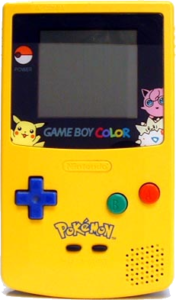 Pikachu Game Boy Color bundle – 25 October 1999. A Pikachu-themed Game Boy Color sold with Yellow in North America a week after launch.
 Nintendo 3DS Virtual Console – 27 February 2016. Worldwide, on the 20th anniversary of Red and Green. 3DS wireless replaces the Link Cable, the Printer is disabled, and Poké Transporter moves Pokémon on to Pokémon Bank. Sold until the eShop closed on 27 March 2023.
- Nintendo 2DS Pokémon Yellow bundle – 27 February 2016. A transparent yellow 2DS with Yellow pre-installed, Game Boy-style packaging, stickers and a HOME Menu theme, released in Japan, Europe and Australia alongside red and blue 2DS bundles.
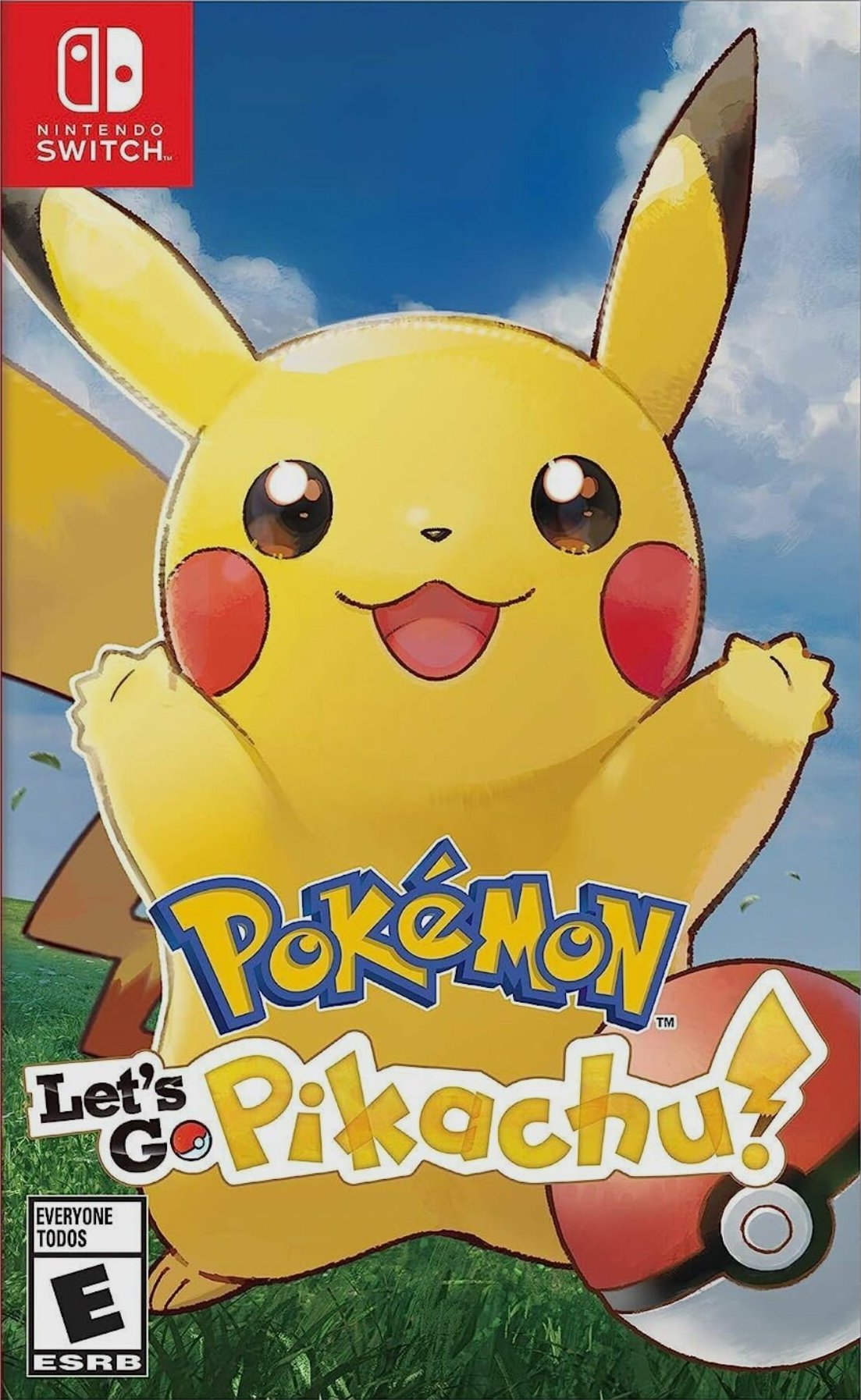
- Pokémon: Let’s Go, Pikachu! and Let’s Go, Eevee! (Nintendo Switch) – 16 November 2018. Yellow reimagined for its 20th anniversary in Japan: a partner Pikachu or Eevee, Jessie and James, Pokémon GO-style catching and the original 151 plus Meltan and Melmetal. Over 13 million sold by March 2019.
Where to play Yellow today

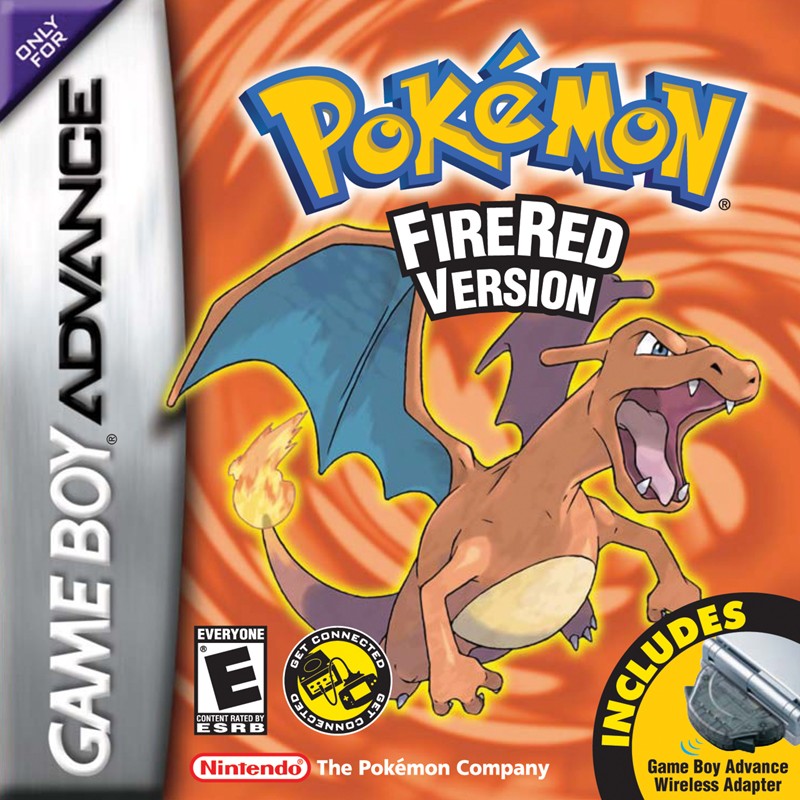
As of October 2026 you can’t buy Yellow new. The 3DS Virtual Console version left sale when the eShop closed on 27 March 2023, though anyone who bought it can still redownload it, and the original cartridge runs on any Game Boy, Game Boy Color, Game Boy Advance or GameCube Game Boy Player. Yellow itself has not reached the Switch: the closest things on current hardware are Let’s Go, Pikachu! and Eevee! and the standalone Switch release of FireRed & LeafGreen that arrived for the 30th anniversary on 27 February 2026 – which, being a remake of Red and Green, has no following Pikachu and no Jessie and James.
Yellow in other media
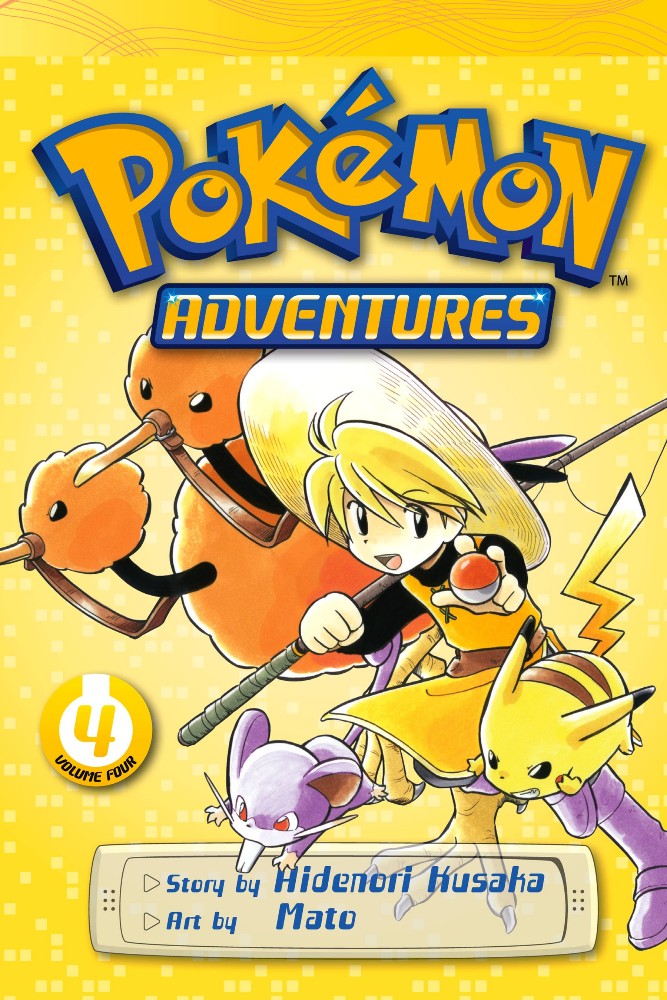
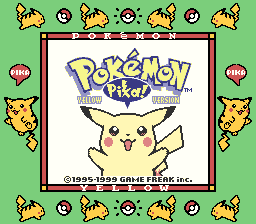
Sales & reviews
Sales figures
Pokémon Yellow was a commercial success; selling 14.64 million copies worldwide and reportedly netting total sales of $454 million USD. Prior to its release Nintendo had already conservatively predicted that the title should earn them at least $75 million USD during the holiday season of 1999. Nintendo’s executive of the day George Harrison made another conservative prediction that Yellow’s sales would pass the 3 million unit mark, and outsell even popular Nintendo title Donkey Kong 64 – just about George, just about! ;-) The release of Pokémon Yellow coincided with that of the release of Pokémon The First Movie, some partially credit that as a reason Yellow did so well.
In the U.S alone Pokémon Yellow received more than 150,000 pre-orders for the console + game bundle, where the cartridge on its own sold more than 600,000 units in the first week of being released and had broken the 1 million sales mark within ten days. This gave Pokémon Yellow the title of fastest selling handheld console game of all time. The success of Yellow was acknowledged as having boosted sales of the Game Boy Color overall in the 1999 festive season. As a result of high demand and inadequate supply Target actually publicly apologised for not being able to meet what they described as ‘unprecedented demand’, similarly CNET conducted a survey of videogame stores across the U.S during December 1999 and found that basically none had Yellow in stock. Yellow remains to this day the fastest selling Pokémon title in the United Kingdom (not to be confused with highest overall total sales).
- 14.64mworldwide (widely quoted)
- 1.55mJapan in 1998 alone – the year’s third best-seller there
- 1m in 10 daysUnited States launch, October 1999
- 600k+United Kingdom (ELSPA Double Platinum)
It finished 1999 as the third best-selling game in North America, with other Pokémon titles filling the rest of the top four; about two million copies had shipped in Europe by June 2000, half a million of them in the UK; and Guinness World Records 2001 listed it as the fastest-selling handheld game ever.


Review scores
Pokémon Yellow was well received by critics, fans and new players alike since the very beginning. Let’s take a look at some of the review scores:-
- Nintendo Power scored it 8 out of 10.
- Game Informer weren’t so impressed and gave 6.5 out of 10, the lowest score Yellow would receive from any of the major review sites.
- GameSpot’s Cameron Davis gave it an 8.9 out of 10, on the GS scale this equates to ‘Great’. His comment “Pokemon – Special Pikachu Edition (Pokemon Yellow to you and me) may be a cynical marketing ploy to make millions of kids buy the same game all over again, but Nintendo has done it so well it’s hard to care.” had to make me laugh a little due to the distinct element of truth behind it.
- IGN’s Craig Harris loved the game, scoring it a very best 10 out of 10 which is ‘Masterpiece’ on IGN’s scale. Here’s a quote from his review: “In case you haven’t noticed it, there’s a little craze going on in the world with these guys known as Pokémon. It doesn’t matter if you love ’em, hate ’em, or drop-kick ’em, you’ve at least heard of them, and they’re not going away anytime soon”
Pokémon Yellow also holds strong scores at the review aggregation sites: GameRankings had it scored at 85.12% over 16 reviews before the site closed, whilst on Metacritic Yellow holds a user score of 8.8 out of 10 over 222 ratings (there is no critic score).
Critics liked Yellow but seldom saw it as essential. IGN’s Craig Harris gave it a perfect score and called it the best of the three Gen I versions for newcomers. Several others treated it as a holding release before Gold and Silver: GameSpot thought it only just filled the gap, and AllGame’s Brad Cook recommended it to first-timers while telling everyone else to wait. RPGFan found it as addictive as ever but felt the additions were thin, and The Daily Telegraph dismissed it as more of a marketing exercise than a new game. Despite that, it averaged 85 per cent on GameRankings, the site’s top-rated Game Boy game of 1999 and among its highest-rated Game Boy games overall.
Awards and honours:
Media & artwork
- Official artwork gallery from Pokémon Yellow – Pikachu, Red, Blue and Eevee as drawn by Ken Sugimori
- Box art from Pokémon Yellow including numerous regional variations + editions
- Screenshots from Pokémon Yellow Version
- Official artwork gallery from Pokémon Red & Blue – the Sugimori art the new sprites were redrawn to match
Further reading
Need the full lists? Every TM and HM, item, attack and recommended moveset for Red, Blue and Yellow has a page of its own in The Library, alongside the games either side of this one: